
Kanton Sankan Houhi gives Kyoto’s Chinese dining map a northern counterpoint: a compact Murasakino room where Cantonese cooking sits outside the city’s hotel-dining axis. Its 2026 Tabelog 100 selection for Chinese cuisine in WEST places it among a tighter regional group, while the modest format keeps the emphasis on seating, rhythm, and everyday utility rather than ceremony.
Pearl is the En Primeur Club membership app — saves, bookings, and concierge access live there. Same editors, same standards.
- Address
- Japan, 〒603-8175 Kyoto, Kita Ward, Murasakino Shimotoridacho, 37-1 鳳飛
- Phone
- +81 75-493-5025
- Website
- m.facebook.com
 Saves & bookings on Pearl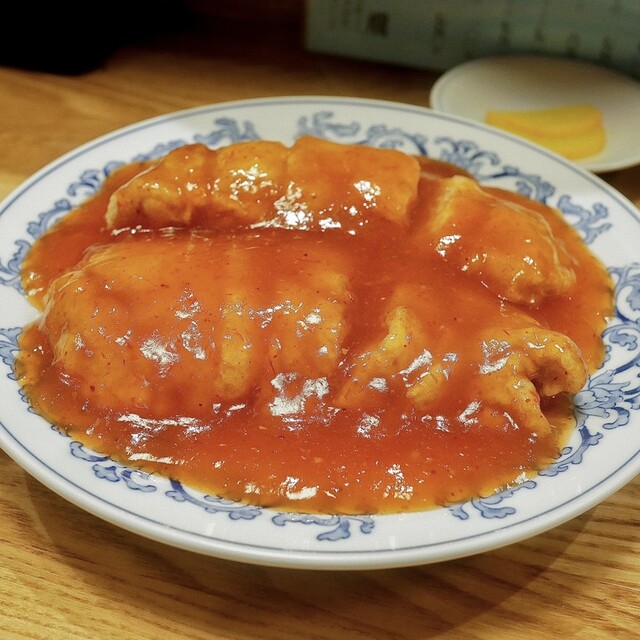
North of Kyoto’s central dining corridors, the room matters before the menu. Murasakino moves at a different tempo from Gion or Shijo: lower buildings, neighborhood errands, temple traffic, and restaurants that function as local fixtures rather than destination stages. Kanton Sankan Houhi belongs to that register. Its cues are modest, counter seating, a small dining room, and a private table in the back, but compactness is the point. Kyoto’s Chinese restaurants often divide between polished hotel rooms, student-friendly canteens, and long-running neighborhood addresses. This sits in the last category, where a 31-seat scale means fewer moving parts, less performance, and a tighter relationship between kitchen, counter, and table.
That matters in a city where dining architecture signals price and intention before a dish arrives. Kaiseki rooms use distance and ritual. Sushi counters compress theatre into a few seats. Soba shops trade on pace and restraint. Cantonese cooking in Kyoto has a quieter public profile, so this room is useful evidence of the city’s broader appetite: Chinese food here is not only late-night fallback or banquet form, but part of the everyday restaurant fabric. For a wider map of that fabric, see Our full Kyoto restaurants guide, with parallel planning in Our full Kyoto hotels guide, Our full Kyoto bars guide, Our full Kyoto wineries guide, and Our full Kyoto experiences guide.
A compact Cantonese room in a city built around tighter formats
Kyoto rewards small rooms because its dining culture has long prized control: portioning, timing, proximity, and a lack of excess. That instinct translates cleanly to disciplined Chinese cooking. Kanton Sankan Houhi is listed in the Chinese category and was selected for Tabelog 100 Chinese cuisine WEST in 2026, with earlier selections in 2024, 2023, and 2021. The recognition is useful less as trophy line than sorting signal, placing the restaurant inside a regional Chinese-food conversation rather than treating it as a neighborhood convenience stop.
The design angle is telling. Counter seating puts a Chinese restaurant closer to Kyoto’s counter-culture grammar, usually associated with sushi, tempura, kappo, and soba. A private room for a small group adds another layer: not a banquet hall or hushed tasting-menu chamber, but a practical partition within a compact plan. That combination explains much of the appeal. Solo diners and families can read the room differently, and the footprint can handle lunch, a short dinner, or take-out without pretending to be a grand occasion.
Compared with Kyoto peers in other categories, the contrast is clear. 3TOKU6MI Shijo karasuma ten works in a central commercial zone; [ki:] points toward a more contemporary Kyoto register; Abbesses brings a European frame into the city’s dining mix. Kanton Sankan Houhi occupies a less theatrical lane: the northern neighborhood Chinese room with enough external recognition to make the trip intentional.
What the award signal says about Kyoto Chinese dining
Tabelog’s Hyakumeiten lists are not a substitute for criticism, but in Japan they remain a useful indicator of category depth. A 2026 Chinese WEST selection narrows the field to regional specialists, and repeat appearances across several editions point to consistency rather than a single year of attention. In Kyoto, that matters because the city’s international dining reputation is weighted toward Japanese traditions. Chinese restaurants need a clearer signal to reach travelers already programmed for kaiseki, ramen, sushi, wagashi, and coffee.
The more interesting reading is economic as much as culinary. Kyoto has expensive dining, but everyday food culture is not defined by luxury alone. Chinese restaurants, pork bun counters, aburi mochi shops, soba rooms, and curry specialists share the same urban rhythm: quick decisions, repeat customers, and formats that survive because they fit daily life. That context links the restaurant less to special-occasion temples than to useful addresses such as 551蓬莱 and Aburi Mochi Honke Nemoto Kazariya, where focus matters more than decorative ambition.
For visitors, the lesson is to resist treating Kyoto dining as a single hierarchy. Raiz, WASHOKU TOKU, Itsutsu, KASHIWAI, and other local comparables show how category and format shape value differently across the city. A Chinese room in Murasakino is not competing with a central soba shop or sushi counter on the same terms. It answers a different question: whether to spend a meal in a working northern neighborhood and see how Kyoto eats outside the classic postcard routes.
How to read the room before committing a meal
The strongest case here is spatial and practical rather than biographical. No chef myth is needed when the room explains the proposition. A small seat count, counter seating, take-out availability, no-smoking policy, and a family-friendly listing create clear dining grammar: limited space, direct kitchen relationship, and local cadence. Travelers seeking ceremony may find richer material elsewhere; those interested in Kyoto’s lived-in restaurant culture will understand the appeal faster.
The area helps. Northern Kyoto changes the mood of a dining day. Pairing a meal here with nearby temple walks or Murasakino errands produces a different city than the clusters around Kyoto Station or Kawaramachi. The restaurant suits an itinerary built around texture rather than spectacle: old shopping streets, bus routes, small rooms, and addresses that have accumulated local use over decades.
Readers building a broader Japan food itinerary can compare how compact formats translate across cities: -Grilled beef Sukiyaki- KAMAKURA TANUKIAN 鎌倉 たぬき庵 in Kamakura. 鮪と炭火焼き うお炭 秋葉原店 in Tokyo.cafe in Osaka.know in Kumamoto, (Shoku) Vietnam in Kawasaki, and [Curry Senmon Ten] Maruyama Kyoju. in Sapporo. Outside Japan, Jōdo Saké Bar in Los Angeles and Onigiri Time in Pasadena show how Japanese dining cues travel into different urban contexts.
The restaurant is strongest as a Kyoto neighborhood restaurant with category credibility, not a luxury detour. The award history gives it external weight; the room gives it shape. Together they make a concise argument for adding Chinese cooking to a Kyoto dining plan that might otherwise stay too tightly inside the city’s expected canon.
City Peers
Comparable venues for context, by category and price tier.
| Venue | Cuisine | Price | Notes |
|---|---|---|---|
| Kanton Sankan HouhiThis venue — the venue you are viewing | Chinese (Cantonese) restaurant | $ | Not listed |
| Ito Sen | Kyoto-style Chinese (Cantonese influence) | $$ | Kamigyō |
| Aburi Mochi Honke Nemoto Kazariya | Traditional Kyoto Japanese sweets (Aburi Mochi) | $ | Kita |
| bonne volonte | Neighborhood Bakery | $ | Kamigyō |
| Ryokujuan Shimizu | Japanese Traditional Sweets | $ | Sakyō |
| maison de frouge | Strawberry specialty café & patisserie | $ | Nakagyō |
Recognition history
Dated appearances from independent guides and award organizations, with the underlying list record or original source where available.
Tabelog 100 #24 · No. 24
Tabelog · Tabelog 100 - Chinese cuisine - WEST - 2026
Continue exploring
More in Kyoto
Restaurants in Kyoto
Browse all →
Bars in Kyoto
Browse all →
Hotels in Kyoto
Browse all →
Wineries in Kyoto
Browse all →
At a Glance
- Standalone
Current opening hours
- Monday
- Closed
- Tuesday
- Closed
- Wednesday
- Closed
- Thursday
- 12–1:30 PM, 5–8 PM
- Friday
- 12–1:30 PM, 5–8 PM
- Saturday
- 12–1:30 PM, 5–8 PM
- Sunday
- Closed
Hours can change for holidays and private events. Last verified .