
Tabelog 100 #58
Our verdict
Juraku belongs to Yokohama Chinatown’s everyday sweets-and-buns circuit rather than its banquet-room tradition. Its take-out format, Chinese sweets and pork-bun focus, and selection for Tabelog Sweets EAST “Tabelog 100” in 2022 and 2023 make it a useful counterpoint to the area’s higher-spend dining rooms.

Pearl is the En Primeur Club membership app, where members save venues, book tables and use the concierge.
The menu
What to order
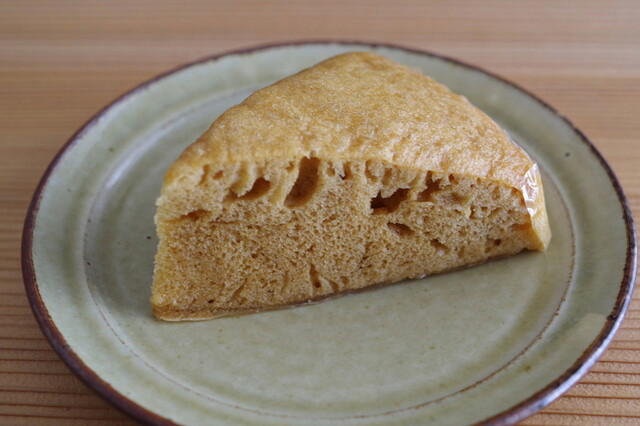
- Malaikoh (Chinese castella sponge cake) sold whole
- Danmaigao white sponge cake (oil-free)
- Sesame fried dumplings (weekends/holidays, including savory five-ingredient filling)
- Chinese mooncakes
- Steamed meat buns
- Char siu buns
Yokohama announces itself in layers: shopfront steam, pavement traffic, and the fast decisions of people eating on the move rather than settling into a dining room. In that setting, Chinese sweets and pork buns are not side notes to the restaurant scene. They are one of its public languages, built for movement, queues, families, and short attention spans. Juraku fits that rhythm with a narrow category focus that says more about the city’s casual eating culture than a long menu would.
The useful way to read this part of Yokohama is by format. Banquet restaurants sell time at the table; tea houses sell pause; snack counters sell momentum. Juraku belongs to that compact, category-led world. Its recognition in Tabelog Sweets EAST “Tabelog 100” for 2023 gives the address a credential inside a category that is often judged casually by foot traffic alone. The point is not luxury. It is concentration: Chinese sweets and pork buns, handled as a specialist stop in a city where many menus try to cover every possible craving.
Yokohama's snack economy rewards short menus and fast decisions
Yokohama has two parallel dining identities. One is the seated, multi-course version associated with larger restaurants and celebratory meals. The other is the pavement-level economy of buns, sweets, tea, skewers, and portable snacks. Juraku’s category architecture places it in the second camp, where the offer has to be legible quickly and convincing without ceremony.
That matters because busy dining areas can overwhelm visitors with sameness: similar façades, similar display cases, similar promises. A specialist sweets-and-pork-bun address reduces the decision to category and execution. The Tabelog sweets selection is a relevant trust signal here because it judges the shop inside a sweets field rather than against full-service dining rooms. In a city where a more structured meal might mean a stop at Aichun or other Yokohama dining rooms, this is a different kind of stop: brief, low-commitment, and category-specific.
Comparison clarifies the role. Manchin ro Honten, Goku Chasou, Kinryo, and Aichun all sit elsewhere on Yokohama’s dining map, each useful for a different kind of plan. Juraku’s position is more compressed than those peers: not a dining room to schedule an evening around, but a sweets-and-bun address that can sit between meals without turning into a meal plan.
The menu reads as a specialist stop, not a miniature restaurant
The categories tell the story: Chinese sweets and pork bun. That pairing is familiar in Yokohama’s casual dining landscape, but its strength depends on clarity. A broad menu can be reassuring in a sit-down restaurant; at a snack counter, breadth often becomes noise. Here, the architecture is narrow enough to make the visit intelligible. The reader does not need to decode regional cooking styles or compare set menus. The decision sits in the snack register.
This is also where Yokohama differs from Tokyo’s destination dining logic. Tokyo often rewards reservation systems, chef counters, and long-form tasting menus. Yokohama rewards the ability to read a busy eating area quickly and choose well. A shop selected for Tabelog’s sweets list has a different kind of authority from a starred restaurant: it signals consistency in a popular category, not the choreography of a formal service. That distinction is useful for travellers who have already booked serious meals elsewhere and want the city to remain spontaneous.
The compact format changes the way the food functions. Portable eating in Yokohama is not necessarily a compromise format; it is part of the city’s social design. Families, day-trippers, and repeat local visitors move between shops and stations, assembling a meal from fragments. In that context, a pork bun or Chinese sweet is not competing with a tasting menu. It is competing with the next storefront, and the bar is immediate recognition.
How to place it in a Yokohama eating day
Juraku makes the strongest editorial sense as a Yokohama punctuation mark: before a longer lunch, after tea, or between city stops. It is not the address to use when the brief is a seated banquet, nor when wine service, private rooms, or an extended evening are part of the plan. For those needs, Yokohama’s range is broader, including full dining rooms and restaurants such as Du Vin HACHISCH. For portable sweets and buns, the value lies in speed and specificity.
The planning logic is simple. Pair casual Yokohama snacking with a wider Yokohama day rather than treating it as the whole itinerary. Readers comparing city dining can use Our full Yokohama restaurants guide for the city’s restaurant range, then branch into Our full Yokohama hotels guide, Our full Yokohama bars guide, Our full Yokohama wineries guide, and Our full Yokohama experiences guide for the rest of the trip architecture.
Within Japan’s casual-food map, this kind of address has kinship with other category-led stops: functional counters, regional snack specialists, single-theme shops, and compact cafés. For travellers building longer food routes, contrast can also come from unnamed casual addresses in nearby cities and farther-flung dining scenes. The common thread is not cuisine; it is decisiveness of format.
Juraku’s appeal is therefore precise. It belongs to the part of Yokohama where the menu is short, the visit is brief, and the judgement is immediate. The Tabelog sweets recognition supplies the external credential; the sweets-and-bun structure explains why it works in this city. Treat it as a calibrated snack stop, not a substitute for Yokohama’s full dining range.
Frequently asked questions
How do I find Juraku?
Juraku is located in Yokohama.
Is Juraku more mid-range or high-end?
Pricing at Juraku is listed as - JPY 999 - JPY 999.
What are Juraku's hours?
Specific opening hours are not provided here; check directly before visiting.
What is Juraku known for?
Juraku is known for Chinese sweets and pork bun in Yokohama. It also appears in the Tabelog 100 Sweets EAST 2023 selection, which is the clearest trust signal on the page.
Peers Worth Knowing
Comparable venues at a glance for context.
| Venue | Cuisine | Price | Awards | Notes |
|---|---|---|---|---|
| JurakuThis venue (the venue you are viewing) | Traditional Chinese sweets and bakery | $1–10 | Tabelog 100 #58 | Not listed |
| Manchin ro Honten | Historic Cantonese fine dining in Yokohama Chinatown | $50–100 | Tabelog 100 #87 | JPY 10,000 - JPY 14,999 JPY 4,000 - JPY 4,999 |
| Du Vin HACHISCH | French | Not listed | Tabelog 100 #55 | JPY 15,000 - JPY 19,999 JPY 8,000 - JPY 9,999 |
| Goku Chasou | Traditional Chinese Teahouse & Cafe | $10–20 | Tabelog 100 #12 | JPY 2,000 - JPY 2,999 JPY 1,000 - JPY 1,999 View spending breakdown |
| Kinryo | Traditional Cantonese roast meats | $10–20 | Tabelog 100 #21 | JPY 1,000 - JPY 1,999 JPY 1,000 - JPY 1,999 |
| Aichun | Traditional Cantonese in Yokohama Chinatown | $10–20 | Tabelog 100 #82 | JPY 1,000 - JPY 1,999 JPY 1,000 - JPY 1,999 |
Recognition history
Dated appearances from independent guides and award organizations, with the underlying list record or original source where available.
Tabelog 100 #58 · No. 58
Tabelog · Tabelog 100 - Sweets - EAST - 2023
Continue exploring
More in Yokohama
Restaurants in Yokohama
All restaurants in Yokohama →



Bars in Yokohama
Browse all →




Details
- Classic
- Cozy
- Solo
- Family
- Casual Hangout
- Late Night
- After Work
- Standalone
- Street Scene
- A La Carte
- Counter Dining
Current opening hours
- Monday
- 11 AM–8 PM
- Tuesday
- Closed
- Wednesday
- 11 AM–8 PM
- Thursday
- 11 AM–8 PM
- Friday
- 11 AM–8 PM
- Saturday
- 11 AM–8 PM
- Sunday
- 11 AM–8 PM
Hours can change for holidays and private events. Last verified .
Simple, old-school Chinatown sweet shop with a small storefront and production space in the back, focused on takeaway; atmosphere is casual and unpretentious, with a classic family-run feel and displays of freshly made Chinese cakes and buns.