Jumbo Seafood 珍寶軒
Jumbo Seafood on Hudson Street plants itself at the edge of Boston's Chinatown, where Cantonese seafood cooking intersects with New England's own shellfish heritage. The kitchen works within a tradition that prizes live-tank sourcing and whole-animal preparation, placing it in a different register from the city's raw-bar circuit. For diners who want lobster cooked rather than chilled, this is a reliable address.
Pearl is the En Primeur Club membership app — saves, bookings, and concierge access live there. Same editors, same standards.
- Address
- 5 Hudson St, Boston, MA 02111
- Phone
- +16175422823
- Website
- jumboseafoodboston.net
- Directions
- Get directions
 Saves & bookings on Pearl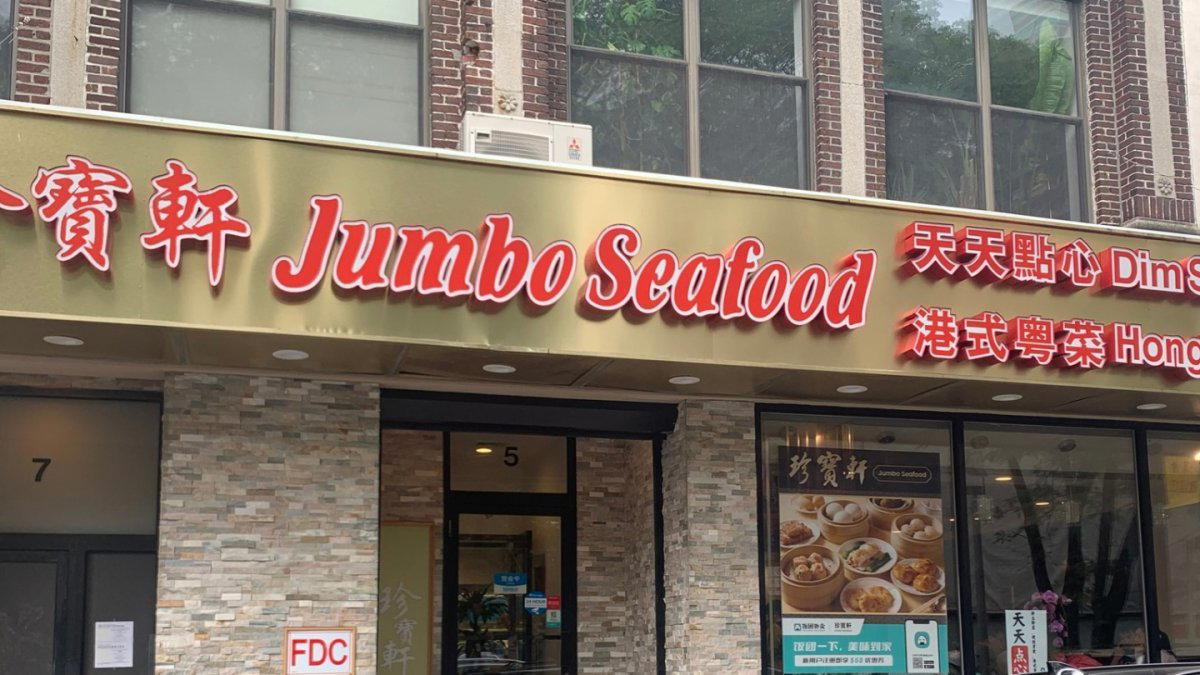
Where Chinatown Meets the Harbor: Boston's Cantonese Seafood Tradition
Boston's seafood identity is usually told through the raw bar, the chowder bowl, or the white-tablecloth fish house. Hudson Street tells a different version. Jumbo Seafood sits at 5 Hudson St, at the southern edge of Chinatown, in a block where restaurant signs shift from English to Cantonese and the kitchen logic shifts with them. Here, the organizing principle is not the sauce or the reduction but the animal itself, kept alive until the moment of service and cooked to an order that respects its texture over any desire to dress it up.
Cantonese seafood cooking arrived in Boston alongside successive waves of Chinese immigration, and the tradition it carries is one of the oldest live-seafood cultures in Chinese cuisine. The assumption embedded in that tradition is that the leading ingredient needs the least intervention: a lobster steamed with ginger and scallion, a fish wok-fried with black bean, a crab in the style of Hong Kong's typhoon shelter kitchens. That philosophy places venues like Jumbo Seafood in a fundamentally different competitive set from Neptune Oyster's raw-bar counter or Ostra's grilled fish program, even when all three are drawing from the same regional waters.
The Sourcing Logic Behind Live-Tank Cooking
The live tank is the editorial centerpiece of any serious Cantonese seafood kitchen, and understanding it explains why the experience diverges so sharply from other Boston seafood formats. Where a raw bar sources for salinity and origin story, and a steakhouse-adjacent seafood grill sources for portion weight, a live-tank kitchen sources for vitality. The lobster you eat at a table in Chinatown was alive minutes before it arrived; the same is true of dungeness crab, geoduck, and any number of fin fish kept in aerated tanks behind the counter.
New England is, by geography, one of the more logical homes for this approach outside of Asia. The Gulf of Maine and the Massachusetts coastline produce cold-water shellfish of a quality that Cantonese technique is well-suited to handle. Boston lobster, in particular, has long found its way into Chinatown kitchens at volumes that rival the more photographed preparations further up the waterfront. The difference is that live-tank Cantonese cooking treats the lobster as a canvas for wok skill, whereas the broader Boston seafood culture tends to present it steamed, cracked, and served with drawn butter. Neither is the wrong answer, but they are answering different questions.
Among Boston's seafood addresses, this sourcing orientation puts Jumbo Seafood closer in spirit to the live-fish counters of Hong Kong's typhoon shelter district than to, say, 75 on Liberty Wharf or 1928 Rowes Wharf. It belongs to a global tradition of Cantonese seafood dining that finds its most serious expression in Hong Kong, where 8½ Otto e Mezzo Bombana represents the Western fine-dining pole and the typhoon shelter restaurants represent the live-seafood pole. Boston's Chinatown operates at a more neighborhood scale, but the technical ambition runs in the same direction.
Cantonese Technique in a New England Context
The broader American fine-dining conversation about seafood sourcing has, in recent years, moved toward the kind of hyper-local, relationship-driven procurement model associated with farms-to-table restaurants. Blue Hill at Stone Barns and Single Thread Farm in Healdsburg are the reference points on that axis, and in seafood specifically, Providence in Los Angeles and Le Bernardin in New York City represent the white-tablecloth mastery of sourced product through classical technique. What Cantonese live-tank kitchens share with this movement is the central conviction that sourcing quality is the non-negotiable variable. What differs is everything else: the format, the price register, the table dynamic, and the cooking method.
Chinatown seafood restaurants in Boston occupy a price tier that sits below the city's tasting-menu circuit. 311 Omakase and Agosto operate in the fixed-menu, reservation-intensive format; Abe and Louie's anchors the steakhouse-adjacent end. Jumbo Seafood operates on a different axis entirely, where the table dynamic is family-style, the menu is broad rather than curated, and the kitchen's skill is demonstrated through wok heat and timing rather than plating precision. That does not make the food less technically demanding. A properly wok-fried lobster with ginger and scallion requires high BTU output, good timing, and a cook who understands how the shell fragments affect heat distribution. It is a different kind of technical mastery from the one rewarded by Michelin's French-derived criteria, but it is technical mastery nonetheless.
Seasonal Timing and the Chinatown Table
Cantonese seafood eating has its own seasonal logic. In autumn and winter, crab comes into its leading condition in New England waters, and Chinatown kitchens tend to fill with tables ordering whole animals. Spring brings softer shellfish and the first of the year's soft-shell crabs. Lobster runs through the warmer months at higher volumes and lower prices from Maine suppliers, making the summer the natural peak for lobster-focused ordering in Chinatown as much as anywhere else on the waterfront. For visitors timing a trip to Boston with seafood quality in mind, October through December covers the seasonal peak for crab-focused Cantonese cooking in the city.
Hudson Street and the blocks immediately surrounding it remain one of the more navigable entry points for diners unfamiliar with this tradition. The proximity to the Financial District and South Station means the area draws mixed crowds, and Chinatown's restaurants are accustomed to tables that include first-time visitors to Cantonese seafood formats. Ordering tends to go better with at least a loose familiarity with the preparation styles on offer: whole fish versus fillet, steamed versus wok-fried, the difference between a salt-and-pepper shell-on preparation and a ginger-scallion one.
For comparison, the scale of ambition at venues like Alinea in Chicago, The French Laundry in Napa, or Atomix in New York City is defined by controlled scarcity and singular vision. Cantonese seafood at the neighborhood level operates on a different logic: abundance, immediacy, and a transparency of product that puts the sourcing decision on full display. Addison in San Diego, The Inn at Little Washington, Lazy Bear in San Francisco, and Emeril's in New Orleans each represent a particular American fine-dining idiom; Boston's Chinatown seafood tradition represents another, and one that has been feeding the city longer than most of those institutions have existed.
Planning a Visit
Jumbo Seafood is located at 5 Hudson St in Boston's Chinatown neighborhood, walkable from South Station and the Financial District.
Similar Picks
Comparable venues nearby, for context on price, style, and recognition.
| Venue | Cuisine | Price | Notes |
|---|---|---|---|
| Jumbo Seafood 珍寶軒This venue — the venue you are viewing | Traditional Cantonese Seafood | $$ | Not listed |
| China Pearl | Authentic Cantonese Dim Sum & Banquet | $$ | Chinatown |
| Dumpling Palace | Authentic Chinese Dumplings | $$ | Symphony |
| Myers+Chang | Pan-Asian (Chinese, Taiwanese, Thai, Vietnamese) | $$ | South End |
| Victoria Seafood | Authentic Cantonese Seafood | $ | Allston |
| Taiwan Cafe | Authentic Taiwanese | $$ | Downtown Crossing |
Continue exploring
More in Boston
Restaurants in Boston
Browse all →
Bars in Boston
Browse all →
Hotels in Boston
Browse all →
Wineries in Boston
Browse all →
At a Glance
- Lively
- Classic
- Well Known
- Casual Hangout
- Group Dining
- Family
- Late Night
- Open Kitchen
- Sustainable Seafood
Current opening hours
- Monday
- 10 AM–2 AM
- Tuesday
- 10 AM–2 AM
- Wednesday
- 10 AM–2 AM
- Thursday
- 10 AM–2 AM
- Friday
- 10 AM–2 AM
- Saturday
- 9 AM–2 AM
- Sunday
- 9 AM–2 AM
Hours can change for holidays and private events. Last verified .
Bright and lively with constant chatter in Chinese and English; decorated with live seafood tanks and a large Hong Kong mural; reminiscent of traditional 1980s-90s Hong Kong dining culture.