Dumpling Palace
On Massachusetts Avenue in Boston's Back Bay, Dumpling Palace occupies a stretch of the city's most food-dense corridor, drawing a steady crowd for Chinese dumpling formats that range from the everyday to the carefully crafted. The address at 179 Mass Ave places it squarely between the Berklee College of Music campus and Symphony Hall, giving it a neighbourhood character that's as much about working locals as destination diners.
Pearl is the En Primeur Club membership app — saves, bookings, and concierge access live there. Same editors, same standards.
- Address
- 179 Massachusetts Ave, Boston, MA 02115
- Phone
- (617) 266-8888
- Website
- dumpling-palace.com
- Directions
- Get directions
 Saves & bookings on Pearl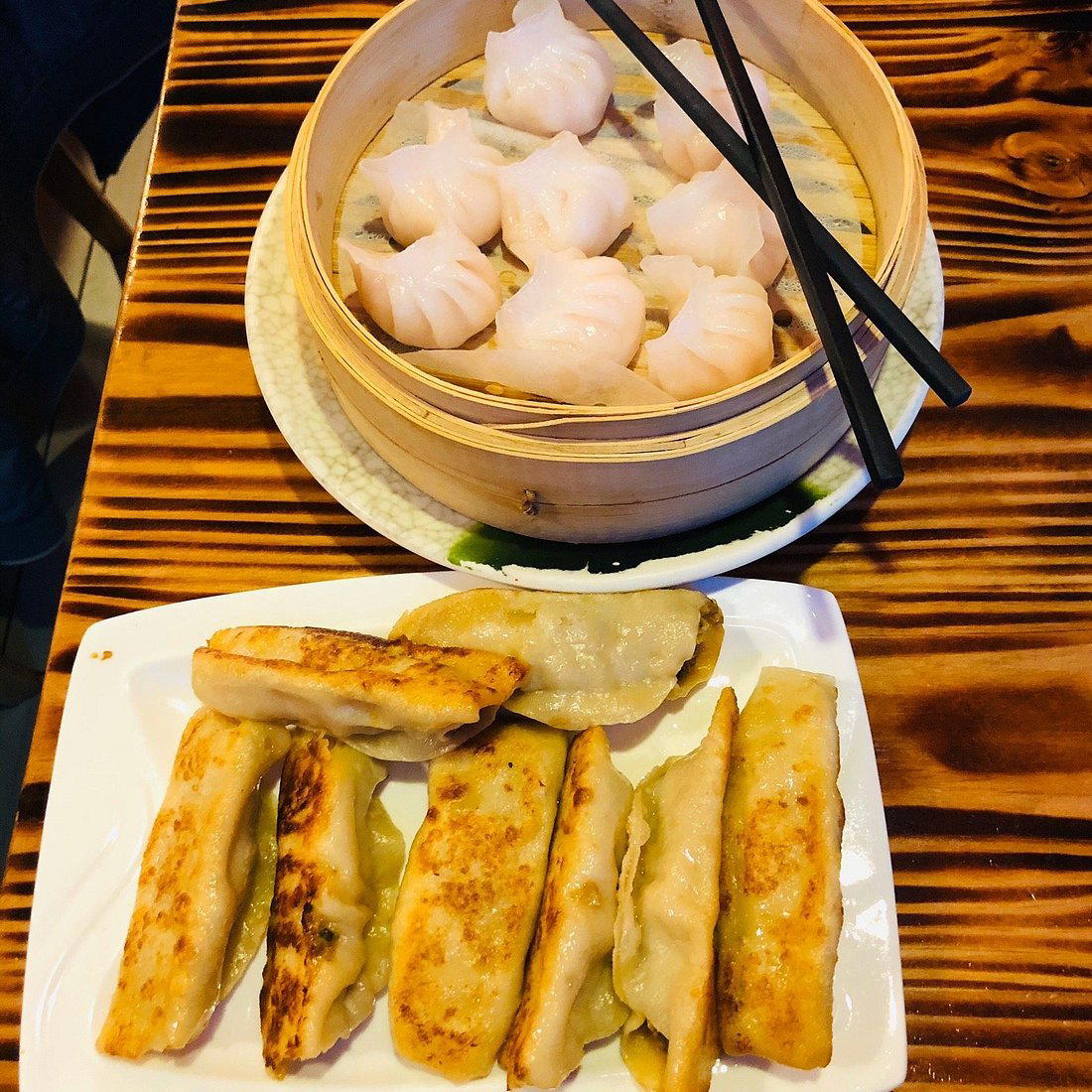
Massachusetts Avenue and the Art of the Fold
There's a particular rhythm to eating on Massachusetts Avenue in Boston's Back Bay. The street runs through one of the city's most socially mixed dining corridors, where conservatory students, medical professionals, and long-time residents share the same pavement. Dumpling Palace, at 179 Massachusetts Ave, sits inside that rhythm: a casual Chinese dumpling restaurant in Boston's Back Bay, open daily from 4 PM to 2:30 AM and priced around $15 per person. Its draw is less about spectacle and more about repetition, the kind of place where regulars return because the food holds up week after week.
In Boston's broader Chinese dining scene, dumpling-focused restaurants occupy a specific niche. They compete less with the elaborate tasting formats found at places like 311 Omakase and more with the neighbourhood reliability that keeps a room turning through lunch and dinner without theatrical ceremony. The comparison set for Dumpling Palace isn't the white-tablecloth tier, it's the category of honest, craft-led regional Chinese cooking that American cities have historically undervalued relative to European-lineage fine dining.
The Sensory Register of a Dumpling Counter
Walk into a well-run dumpling restaurant anywhere in the world and the signals arrive quickly: steam rising from bamboo baskets, the faint vinegar-and-sesame note in the air, the sound of thin dough being worked at a prep station visible from the dining room. These aren't decorative touches. They're functional evidence of a kitchen that makes rather than assembles. Whether Dumpling Palace follows this approach with hand-folded production or relies on a more streamlined method is something the available record doesn't confirm, but the address and neighbourhood context suggest a compact, counter-adjacent format more common to Mass Ave's mid-size dining rooms than to full-service Chinese banquet halls.
Boston's dumpling culture has developed differently from New York or San Francisco, where large Cantonese dim sum houses and Shanghainese XLB specialists each occupy distinct and well-documented niches. In Boston, the category is smaller and more diffuse, scattered between Chinatown proper and outposts in surrounding neighbourhoods. A Massachusetts Avenue address puts the restaurant away from Chinatown's concentration, which typically means it draws from the immediate residential and institutional population rather than from dedicated food-pilgrimage traffic. That's a different operating logic, and it usually produces a different kind of dining room: more worn-in, less performative.
Where It Sits in Boston's Dining Range
Boston's restaurant scene in 2024 covers a wider range than its reputation sometimes suggests. At the formal end, there are chef's counter experiences with serious ambitions, Agosto, with its Portuguese-inspired tasting menu format, represents the kind of low-seat, high-investment dining that now competes nationally with rooms like Smyth in Chicago or Atomix in New York City. At the other end, the city's most durable neighbourhood spots, the ones that survive without press cycles, hold their ground through consistency and price-to-quality ratio.
The restaurant operates in that second register. It isn't competing with the occasion-dining tier represented by Abe and Louie's or the waterfront settings of 75 on Liberty Wharf. The comparable set is closer to the casual-but-purposeful category: restaurants where the food's logic is more important than the room's design, and where the price point makes repeated visits realistic. Across American cities, this is the tier that supports consistent neighbourhood dining culture, even as it receives the least editorial attention relative to tasting-menu formats at places like The French Laundry or Blue Hill at Stone Barns.
For the reader building a Boston itinerary, it's worth understanding how these tiers interact. A city's dining health is often read more accurately through its mid-tier than its trophy restaurants. The endurance of a well-made dumpling on a non-Chinatown block is, in its own way, as meaningful a signal as a Michelin star in the theatre district. Boston's raw bar and seafood identity gets more column space, Neptune Oyster is the standard reference, but the city's Asian casual dining is where particularly interesting neighbourhood-level story is developing.
Context: Dumpling Formats Across American Cities
Across the United States, regional Chinese dumpling cooking spans a wider range than most diners encounter. Cantonese har gow and siu mai represent one tradition; Shanghainese soup dumplings (xiaolongbao) another; northern Chinese pan-fried guotie yet another. Each has different dough thickness, fold technique, filling logic, and service temperature requirements. A restaurant that does one format well typically doesn't do all of them with equal seriousness, the kitchens are organized differently. Nationally, the restaurants that have attracted consistent critical notice for dumpling work tend to be the ones that commit to a specific regional tradition rather than offering a broad, generalist menu.
For comparison with what focused regional Chinese cooking can achieve at the highest level, the reference points increasingly sit outside the US: Din Tai Fung's global xiaolongbao standard, the hand-pulled noodle houses of Xi'an, the guotie specialists of Beijing's hutong neighbourhoods. American restaurants working in this category are in a long catch-up phase, and the ones doing serious work deserve more critical infrastructure than the category typically receives. From a national perspective, Boston's contribution to that story is still being written.
Know Before You Go
Address: 179 Massachusetts Ave, Boston, MA 02115
Neighbourhood: Back Bay / Symphony
Phone: not listed
Website: not listed
Booking: Walk-in availability likely; confirm directly
Price range: not confirmed
Hours: Not confirmed; verify before visiting
Nearest landmark: Symphony Hall / Berklee College of Music
Cuisine and Recognition
Comparable venues nearby, for context on price, style, and recognition.
| Venue | Cuisine | Price | Notes |
|---|---|---|---|
| Dumpling PalaceThis venue — the venue you are viewing | Authentic Chinese Dumplings | $$ | Not listed |
| The Q | Pan-Asian with Mongolian Hot Pot | $$ | Downtown Crossing |
| Myers+Chang | Pan-Asian (Chinese, Taiwanese, Thai, Vietnamese) | $$ | South End |
| Sol Azteca | Authentic Traditional Mexican | $$ | Kenmore |
| La Summa | Authentic Sicilian Italian | $$ | North End |
| Aura | American | $$ | South Boston Waterfront |
Continue exploring
More in Boston
Restaurants in Boston
Browse all →
Bars in Boston
Browse all →
Hotels in Boston
Browse all →
Wineries in Boston
Browse all →
At a Glance
- Lively
- Casual Hangout
- Late Night
- Open Kitchen
Current opening hours
- Monday
- 4 PM–2:30 AM
- Tuesday
- 4 PM–2:30 AM
- Wednesday
- 4 PM–2:30 AM
- Thursday
- 4 PM–2:30 AM
- Friday
- 4 PM–2:30 AM
- Saturday
- 4 PM–2:30 AM
- Sunday
- 4 PM–2:30 AM
Hours can change for holidays and private events. Last verified .
Simple, bustling atmosphere with quick service catering to students and late-night crowds.