Joci Sushi occupies a spot on Storegade in central Randers, positioning Japanese-style dining inside a Danish provincial city better known for its market history than its raw fish. In a city where the restaurant scene skews toward steakhouses and bistros, a sushi address on the main commercial strip carries a certain novelty weight. Visitors to Randers with a preference for Japanese formats will find it without difficulty.
Pearl is the En Primeur Club membership app — saves, bookings, and concierge access live there. Same editors, same standards.
- Address
- Storegade 15, 8900 Randers, Denmark
- Phone
- +4586201222
- Website
- randers.jocisushi.dk
- Directions
- Get directions
 Saves & bookings on Pearl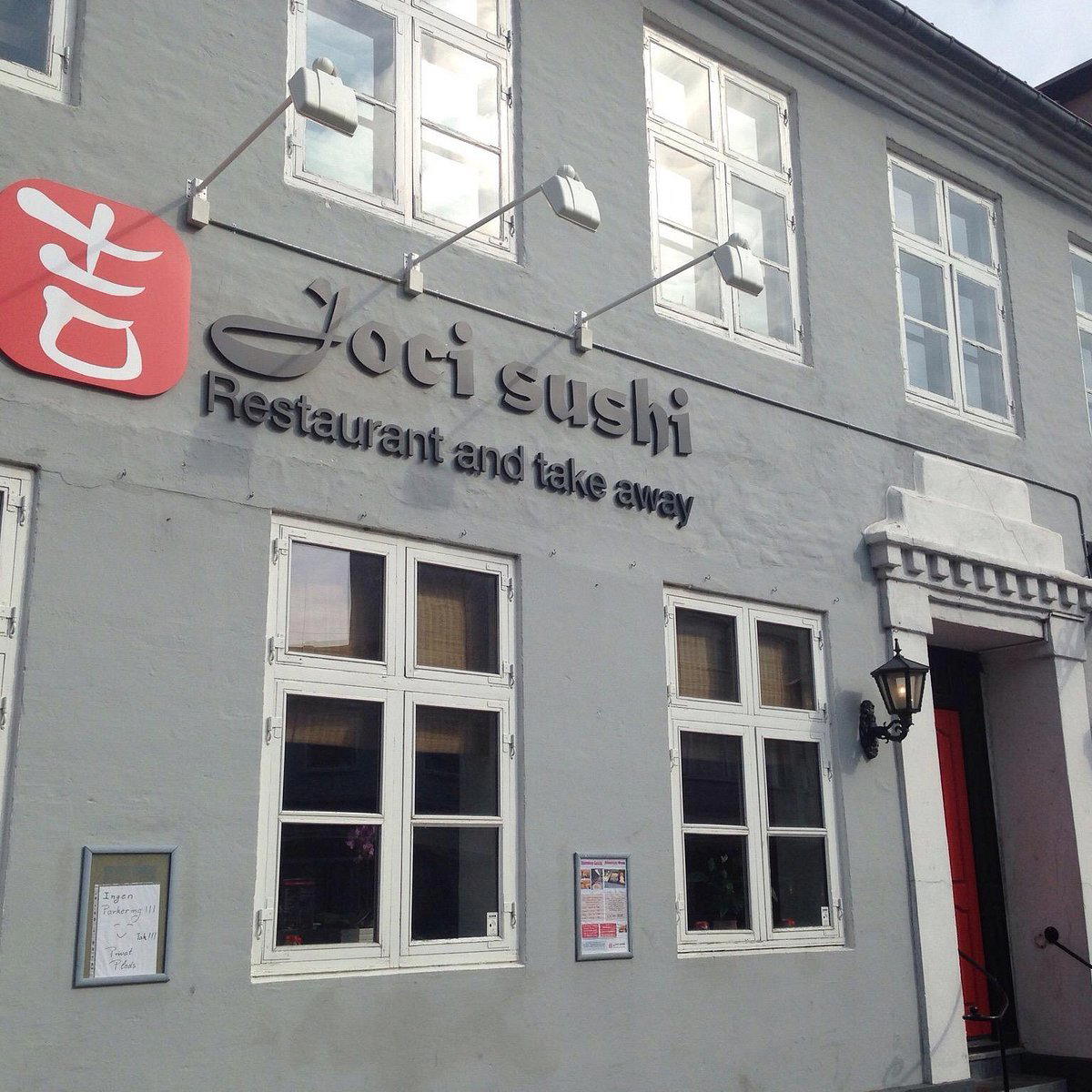
Japanese dining formats in a Danish provincial context
Storegade is Randers' commercial spine, a pedestrianised stretch where the city does most of its everyday retail business. Restaurants here tend toward the accessible and familiar: Danish bistro cooking, burger counters, a handful of international formats aimed at a broad local audience. It is in this context that Joci Sushi sits at Storegade 15, 8900 Randers, Denmark, a casual Japanese restaurant offering running sushi.
That placement tells you something about how Japanese dining has spread through provincial Denmark over the past two decades. The format, once confined to Copenhagen and Aarhus, has gradually moved outward into smaller cities as consumer familiarity with sushi grew and the supply chain for Japanese-adjacent ingredients became more manageable outside the capital. Randers, with a population hovering around 100,000, now carries enough dining diversity that a sushi restaurant on its main street registers as an ordinary part of the offer rather than an anomaly.
Where sushi sits in the Danish culinary conversation
Denmark's fine dining identity is almost entirely organised around the New Nordic framework. Restaurants like Geranium in Copenhagen and Jordnær in Gentofte define the country's international reputation, and Michelin attention consistently falls on kitchens working with foraged ingredients, fermented preparations, and hyper-seasonal Danish produce. Outside the capital, addresses such as Frederikshøj in Aarhus and Henne Kirkeby Kro in Henne extend that tradition into the provinces.
Japanese cuisine sits at an interesting angle to all of this. It does not compete with New Nordic on the awards circuit, but it shares certain values: restraint, ingredient focus, precise technique. The philosophical overlap between Japanese and Scandinavian approaches to food, both traditions placing enormous weight on seasonal product and minimal intervention, has made Japanese formats more culturally legible in Denmark than they might be elsewhere. Danish diners, already accustomed to thinking about fish quality, salt curing, and textural contrast, tend to understand what a good piece of nigiri is asking them to notice.
In practical terms, however, most sushi restaurants operating in Danish provincial towns are working within a casual, accessible format rather than the high-commitment omakase model found at serious counters in Tokyo or at technically demanding fish-focused restaurants like Le Bernardin in New York City. The relevant comparison is not Ginza counter dining; it is the neighbourhood of casual-format sushi that has grown up in mid-sized European cities as a workable, crowd-friendly cuisine type.
The Randers dining scene: what surrounds Joci Sushi
To understand what Joci Sushi is competing with locally, it helps to map the Randers dining tier it occupies. The city's restaurant offer spans a reasonably wide range for its size. Bistroteket anchors the more considered end of European bistro cooking in the city. Bone's operates as a steakhouse-format destination. Cafe Hugo and Banana Leaf fill out the casual and international ends respectively. Atami Sushi Restaurant represents the direct category competition within the city itself.
That last point is worth dwelling on. Randers now supports more than one sushi address, which reflects a real shift in provincial Danish dining expectations since roughly 2010. A city this size sustaining multiple Japanese-format restaurants signals that sushi has moved from novelty into routine in the local dining calendar. The competitive dynamic between sushi addresses in a city like Randers is therefore less about who has the better fish sourcing pedigree and more about who has built the stronger regular-customer base and the more consistent quality floor.
For the broader regional picture beyond Randers, Jutland's dining scene has continued to develop at addresses worth knowing about: Alimentum in Aalborg, Domæne in Herning, and LYST in Vejle all represent the more ambitious end of Jutland's provincial restaurant tier. Island Denmark contributes Dragsholm Slot Gourmet in Hørve, Frederiksminde in Præstø, and ARO in Odense.
Planning a visit: what to know before you go
The restaurant is located at Storegade 15 in central Randers, within easy walking distance of the city's main transport points. Storegade is pedestrianised for most of its length, so the approach on foot from the town centre is direct. The Randers city centre is served by regional bus connections and sits approximately 40 kilometres north of Aarhus by road, making it accessible as a day or evening destination from the wider region.
The restaurant is casual, walk-in friendly, and priced at about $25 per person. It is open Mon: 3-9 PM; Tue: 1-9 PM; Wed: 1-9 PM; Thu: 1-9 PM; Fri: 1-10 PM; Sat: 1-10 PM; Sun: 1-9 PM.
Pricing, Compared
Comparable venues nearby, for context on price, style, and recognition.
| Venue | Cuisine | Price | Notes |
|---|---|---|---|
| Joci SushiThis venue — the venue you are viewing | centrum, Running Sushi Japanese | $$ | Not listed |
| InSushi | Mariagervej, Japanese Sushi Buffet | $$ | Not listed |
| Suzumi | Not listed | $$ | central Randers, Modern Japanese Sushi & Grill |
| PastaDiem | Randers C, Italian Pasta Bar | $$ | Not listed |
| Golden House | Randers, Chinese Buffet & Sushi | $$ | Not listed |
| Restaurant Lyokoi | Randers center, Japanese Sushi | $$ | Not listed |


At a Glance
- Lively
- Casual Hangout
Current opening hours
- Monday
- 3–9 PM
- Tuesday
- 1–9 PM
- Wednesday
- 1–9 PM
- Thursday
- 1–9 PM
- Friday
- 1–10 PM
- Saturday
- 1–10 PM
- Sunday
- 1–9 PM
Hours can change for holidays and private events. Last verified .
Casual and welcoming atmosphere with friendly service.