Banana Leaf brings South and Southeast Asian cooking to Østervold 5a in Randers, occupying a dining niche that few restaurants in this mid-Jutland city attempt. In a region where New Nordic tasting menus dominate the conversation around serious eating, this kind of cuisine represents a distinct counterpoint — direct, aromatic, and rooted in culinary traditions that predate the Copenhagen playbook by centuries.
Pearl is the En Primeur Club membership app — saves, bookings, and concierge access live there. Same editors, same standards.
- Address
- Østervold 5a, 8900 Randers, Denmark
- Phone
- +4581948158
- Website
- bananaleaf.dk
- Directions
- Get directions
 Saves & bookings on Pearl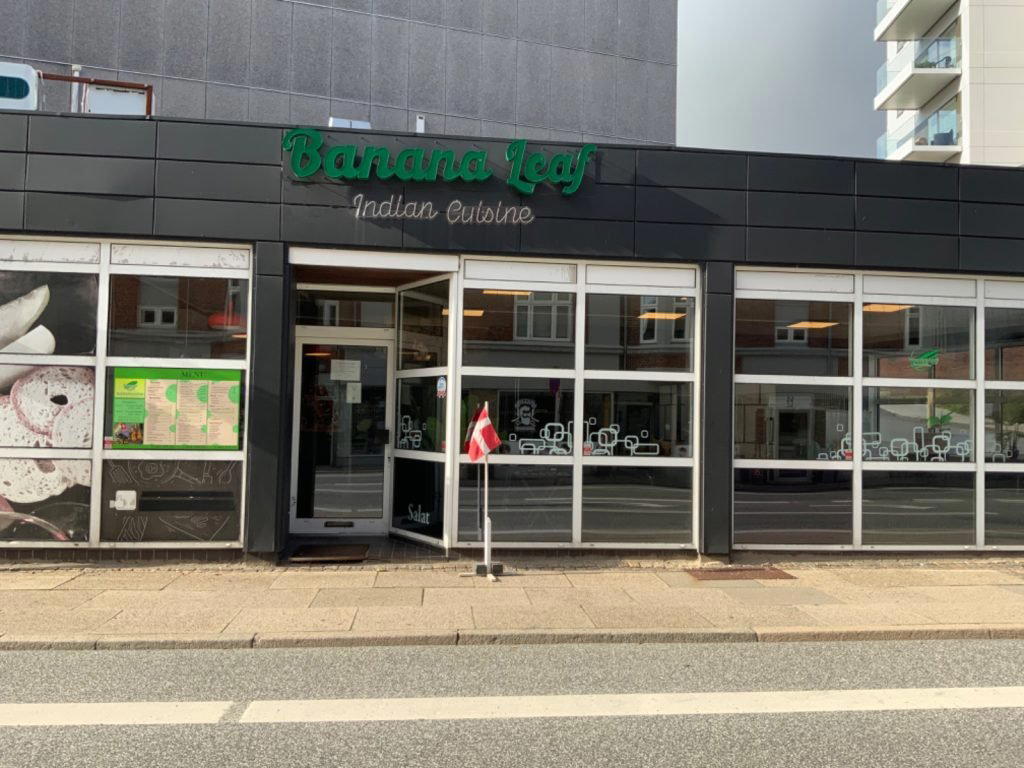
Asian Cooking in a New Nordic Region
Randers sits at the northern edge of Jutland's culinary conversation, a city where the dominant restaurant story — as in much of Denmark outside Copenhagen — has been shaped by the long shadow of New Nordic cooking. Venues like Jordnær in Gentofte and Geranium in Copenhagen set the terms of prestige dining in this country: foraged ingredients, fermenting crocks, coastal restraint. Against that context, a restaurant trading under the name Banana Leaf signals an entirely different set of references, one drawn from the communal food cultures of South and Southeast Asia, where meals are served on wide leaves, shared across tables, and built around spice rather than subtraction.
That contrast matters when reading any city's dining map. Randers, like many Danish provincial cities, has historically offered its residents a choice between traditional Danish fare and a narrow band of international cuisine. A restaurant committed to South or Southeast Asian cooking, the tradition the name invokes, represents a meaningful counterpoint to the tasting-menu format that has come to define what "serious" Danish dining looks like. Whether the format is Indian, Sri Lankan, Thai, or some combination, the banana leaf tradition encompasses cooking styles that are older, more complex in their spice architecture, and more socially embedded than most European restaurant formats allow.
What the Name Signals
The banana leaf itself is worth considering as a cultural marker. Across South India, Sri Lanka, and parts of Southeast Asia, eating from a banana leaf is not a rustic affectation, it is a practice with specific meaning. The leaf imparts a faint, vegetal note to rice and curries placed on it; it signals occasion, community, and generosity. A full banana leaf meal in Tamil Nadu or Kerala might include rice, sambar, rasam, three or four vegetable preparations, pickles, and papad, all brought to the table in sequence by servers who refill without being asked. The format is designed around abundance and rhythm rather than scarcity and ceremony. That philosophy is almost the inverse of the Scandinavian tasting menu, and restaurants that carry this tradition into northern Europe occupy a distinct cultural position.
In Denmark's provincial cities, that position has rarely been occupied with the same depth of commitment found in London, Amsterdam, or Copenhagen's more diverse dining quarters. When a restaurant in Randers takes on this tradition, it operates partly as a cultural ambassador and partly as a practical answer to a gap in the city's offer, one that residents and visitors from the region's South Asian communities understand immediately, and that curious Danish diners are increasingly willing to explore.
Randers' Dining Scene in Context
To understand where Banana Leaf sits, it helps to read the broader Randers dining map. The city's restaurant scene spans a reasonable range for its size: Bistroteket represents the city's bistro-format European cooking; Bone's anchors the casual end of American-influenced dining; Cafe Hugo and Cafe Jens Otto serve the café-culture segment; and Atami Sushi Restaurant covers Japanese-adjacent formats. Against this spread, South and Southeast Asian cooking occupies a corner of the market that is underrepresented relative to the diversity of the cuisine itself.
That underrepresentation is a common pattern in mid-sized Danish cities. Aarhus, the country's second city, has a richer range, with venues like Frederikshøj in Aarhus anchoring the high end, but even there, South Asian cooking at serious depth is harder to find than the number of residents who grew up eating it would suggest. Randers, smaller and with fewer dining options overall, makes the presence of a banana-leaf-tradition restaurant more conspicuous and, for those who seek it out, more welcome. For a fuller picture of what the city offers across all formats, the full Randers restaurants guide provides the broader context.
The Address and What It Suggests
Banana Leaf operates from Østervold 5a, a central Randers address that puts it within the city's compact walkable core. Østervold, the old eastern rampart street, is a mid-town artery rather than a destination dining strip, which means the restaurant draws from foot traffic and word-of-mouth rather than from the concentration of competing venues that clusters in other Danish city centres. Arriving on foot from the train station or the cathedral area takes a matter of minutes; the location is practical for both residents and visitors using the city as a base.
Denmark's serious restaurant geography skews heavily toward the coasts and Copenhagen, with Michelin energy concentrated in venues like Henne Kirkeby Kro in Henne, Frederiksminde in Præstø, and Ti Trin Ned in Fredericia. Further afield, destination formats at Dragsholm Slot Gourmet in Hørve, LYST in Vejle, Tri in Agger, and Pearl by Paul Proffitt in Kruså define the country's outer-ring fine dining geography. Banana Leaf belongs to none of those networks, it is a neighbourhood restaurant in a city that needs more of them, operating in a culinary tradition that demands its own standards of judgment rather than being measured against the Nordic canon.
Planning a Visit
The venue database for Banana Leaf does not include current hours, phone contact, or a website, which means the most reliable approach to planning is a direct visit to the Østervold 5a address or a search for current contact details through local Randers listings. For international comparisons at the top end of global cooking, restaurants like Le Bernardin in New York City or Lazy Bear in San Francisco, booking windows extend months in advance and require digital reservations systems. At a neighbourhood restaurant in a Danish provincial city, the process is almost certainly more direct: a phone call or an in-person inquiry will generally establish availability faster than any online system. Visitors to Randers combining Banana Leaf with the city's other dining options will find the central location convenient for an evening out that moves across formats.
Continue exploring
More in Randers
Restaurants in Randers
Browse all →
Bars in Randers
Browse all →
Hotels in Randers
Browse all →
Wineries in Randers
Browse all →

At a Glance
- Casual Hangout
- Family
Current opening hours
- Monday
- Closed
- Tuesday
- 11:30 AM–2:30 PM, 4:30–9 PM
- Wednesday
- 11:30 AM–2:30 PM, 4:30–9 PM
- Thursday
- 11:30 AM–2:30 PM, 4:30–9 PM
- Friday
- 11:30 AM–2:30 PM, 4:30–9 PM
- Saturday
- 11:30 AM–2:30 PM, 4:30–9 PM
- Sunday
- 4:30–9 PM
Hours can change for holidays and private events. Last verified .
Casual and welcoming with focus on excellent service and hygiene.
Know Before You Go
- Getting there
- Østervold 5a, 8900 Randers, Denmark