







LYST holds a Michelin star and ranks among Europe's top 150 restaurants on Opinionated About Dining, operating from a striking harbour building on Vejle's waterfront. Chef Daniel McBurnie builds menus around local and seasonal produce, with the sea and foraged vegetables as recurring structural elements. Open Thursday through Saturday evenings, plus Saturday lunch, at the €€€€ price tier.
Pearl is the En Primeur Club membership app — saves, bookings, and concierge access live there. Same editors, same standards.
- Address
- Havneøen 1, 7100 Vejle, Denmark
- Phone
- +45 75 73 85 00
- Website
- restaurantlyst.com
- Directions
- Get directions
 Saves & bookings on Pearl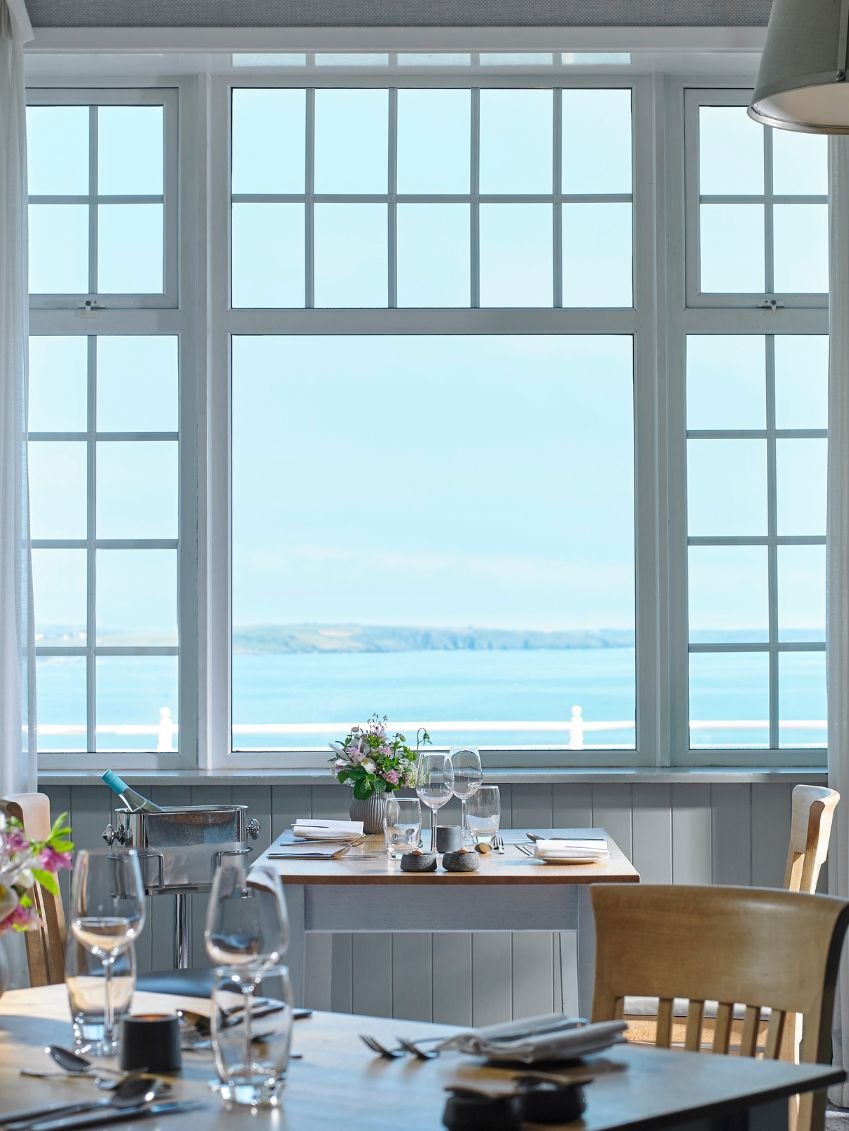
Harbour Architecture as First Argument
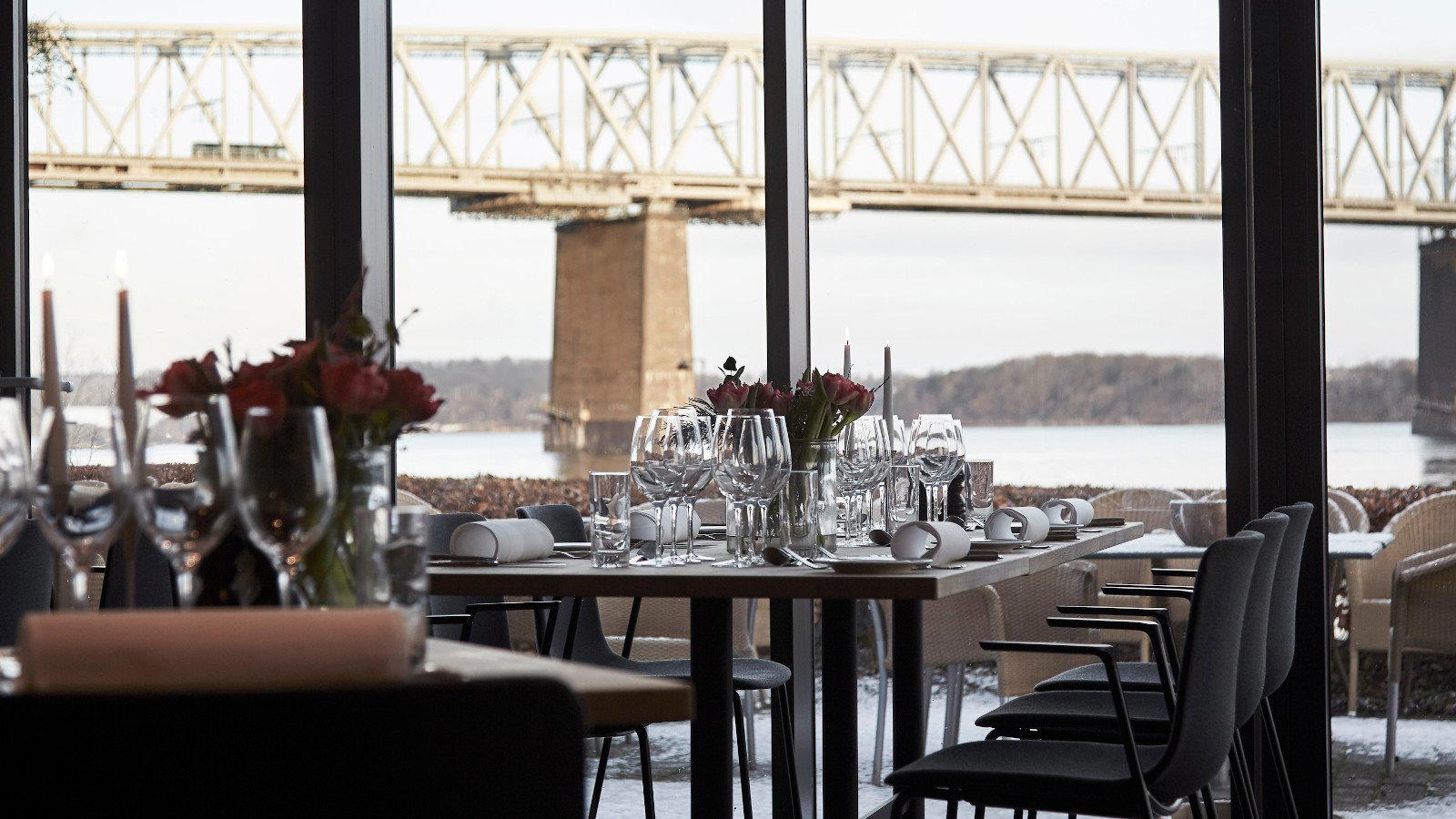
Before any food arrives, Vejle's fjord geography makes the case. Havneøen — the harbour island — positions LYST at the water's edge, where the building itself reads as a statement about where Danish fine dining can happen outside Copenhagen. The architecture is deliberate: an exterior that signals ambition before you've crossed the threshold, and an interior that frames the sea as both backdrop and menu logic. In Denmark's fine-dining tier, a handful of restaurants have made their physical location inseparable from what they serve. LYST operates in that mode, where the landscape outside the window isn't decoration but argument.
Vejle sits roughly midway between Copenhagen and Aarhus, which places it in an interesting competitive position: close enough to both cities that it draws from both dining cultures, but far enough to maintain its own identity. Our full Vejle restaurants guide maps the broader scene, but LYST occupies the top tier alone in this city.
The Nordic Foraging Framework
Across Scandinavia's premium restaurant tier, the sourcing philosophy that emerged from the New Nordic movement, foraged herbs, coastal vegetables, wild-gathered ingredients from the surrounding terrain, has matured from trend into structural expectation. The restaurants that remain most interesting within that framework are those that treat foraged and wild-gathered produce not as garnish or story, but as primary ingredient: things the menu is built around rather than decorated with.
At LYST, the sea operates as what critics have described as the blue thread running through the menu, but the more telling signal is how vegetables and foraged produce are treated alongside it. The potato, in one documented critical observation, receives significant respect here, a detail that reads as editorial shorthand for a kitchen that takes humble, local, seasonal produce as seriously as premium protein. In the Nordic canon, that's not a given. Many starred restaurants in this tier still organize their menus around luxury items, shellfish, premium cuts, imported product, with foraged elements adding interest at the margins. A kitchen where the potato earns structural billing is operating from a different set of priorities.
Chef Daniel McBurnie's approach aligns with a broader shift in how serious Nordic restaurants are thinking about wild and seasonal sourcing. Sustainability at LYST is described not as a marketing position but as a foundational reason for the restaurant's existence, which places it in the company of kitchens like Kadeau Bornholm in Åkirkeby, where island terroir and preserved, foraged produce form the menu's backbone, and Henne Kirkeby Kro in Henne, another destination-format Danish restaurant where location and landscape shape what arrives on the plate.
Where LYST Sits in the Danish Fine-Dining Tier
Denmark's leading restaurant tier is Copenhagen-heavy. Geranium in Copenhagen and Jordnær in Gentofte anchor the upper end of that capital cluster, while the New Nordic framework those restaurants helped codify has gradually spread outward to cities and towns where the sourcing conditions are, arguably, more direct.
LYST's credentials position it clearly within that group. A Michelin star held in both 2024 and 2025 provides the baseline. Opinionated About Dining, the crowdsourced ranking system with a strong European fine-dining following, placed LYST at number 150 among new European restaurants in 2023, 127 in 2024, and 131 in 2025, a trajectory that shows consistent peer recognition across successive years rather than a single-year spike. La Liste, which aggregates global review sources into a composite score, recorded 87 points in 2025 and 85 in 2026. Wine recognition precedes the food awards: Star Wine List ranked LYST in the leading three Danish wine programs repeatedly in 2020 and 2021, which suggests the beverage side of the operation was building its reputation while the kitchen's fine-dining identity was still being established.
For direct regional comparison, Domæne in Herning represents a similar model of serious fine dining in a non-capital Danish city, as does MOTA in Nykøbing Sjælland. Further afield, Dragsholm Slot Gourmet in Hørve operates on a similarly destination-driven logic, where arriving at the restaurant is itself part of the experience.
The Seasonal and Wild-Gathered Logic
What distinguishes the most committed Nordic kitchens in this tier from those that have adopted the aesthetic without the underlying discipline is the extent to which wild-gathered and seasonal produce determines menu shape, rather than the other way around. When seaweed, coastal herbs, foraged mushrooms, or preserved summer berries drive the sequence of courses, the menu changes substantially across the year, not just in swapping out one seasonal vegetable for another, but in how the entire plate composition shifts with what's available from the surrounding terrain.
LYST's coastal position on Vejle Fjord makes this approach structurally coherent rather than aspirational. The fjord provides direct access to marine produce; the surrounding landscape, Jutland's forests, heathland, and agricultural patchwork, provides the foraged and farmed elements that balance the sea-heavy sourcing. In this respect, LYST's geography is an operational asset, not just a scenic one. Compare this to PM & Vänner in Växjö, the Swedish counterpart operating in a similarly provincial-but-serious register, where the surrounding forest and lake terrain shapes the menu's wild-gathered vocabulary in an analogous way.
The broader question of how Nordic restaurants handle the tension between sea and land ingredients is one that separates the kitchens doing something genuinely considered from those performing the New Nordic idiom. At the highest level, fish-forward menus can risk becoming monotonous without the counterweight of serious vegetable and foraged work. LYST's documented approach, where the sea frames the menu but vegetables receive structural billing, addresses this directly.
Planning a Visit
LYST operates on a compressed weekly schedule: Thursday and Friday evenings, Saturday afternoon and evening, closed Sunday through Wednesday. The address is Havneøen 1, 7100 Vejle, placing the restaurant on the harbour island accessible from central Vejle. The €€€€ price tier positions it alongside Denmark's other destination-format starred restaurants, where the expectation is a multi-course evening at premium price points. Vejle is served by direct rail connections from both Copenhagen and Aarhus, making it reachable as a standalone destination without requiring an overnight stay, though the format and travel time make an overnight in Vejle a logical addition. Our full Vejle hotels guide covers accommodation options near the harbour. Those planning a broader Vejle visit can also consult our guides to Vejle bars, Vejle wineries, and Vejle experiences.
For those building a broader Danish fine-dining trip, LYST pairs logically with Treetop, Vejle's other notable modern cuisine address. The city's small but coherent fine-dining scene, anchored by LYST's harbour position, makes it a viable destination within a longer itinerary rather than a detour.
For an international point of comparison in the same marine-focused, technique-driven fine-dining category, Le Bernardin in New York City represents the benchmark against which serious seafood-forward restaurants are often measured globally, albeit from a French-American perspective rather than a Nordic one.
What People Recommend at LYST
Critical consensus points to the vegetable and foraged element of the menu as the detail that most distinguishes LYST from other Nordic seafood-forward restaurants at this level. The documented note that the potato receives a level of culinary attention rarely accorded to such an everyday ingredient has recurred in multiple sources, and it signals something substantive about kitchen priorities. The harbour building and waterfront setting draw consistent mention as part of the experience rather than incidental backdrop. McBurnie's seasonal and local sourcing framework, combined with sustained Michelin recognition and consecutive Opinionated About Dining rankings across 2023, 2024, and 2025, provides the credential structure that makes the restaurant's reputation legible to international fine-dining audiences. The wine program, which built its own recognition base through Star Wine List in the years before the food awards accumulated, adds a second axis of seriousness that rewards guests who approach the meal as a full culinary event rather than a food-only destination.
A Pricing-First Comparison
| Venue | Cuisine | Price | Awards | Notes |
|---|---|---|---|---|
| LYSTThis venue — the venue you are viewing | Nordic, Creative | €€€€ | Michelin 1 Star, Star Wine List #3 (2021), Star Wine List #2 (2021), Star Wine List #1 (2021), Star Wine List #2 (2020), Star Wine List #1 (2020) | Not listed |
| Geranium | New Nordic, Creative | €€€€ | Michelin 3 Star | Not listed |
| Noma | Creative | €€€€ | Michelin 3 Star | Not listed |
| Alchemist | Progressive, Creative | €€€€ | Michelin 2 Star | Not listed |
| Koan | New Nordic, Kaiseki, Creative | €€€€ | Michelin 2 Star | Not listed |
| a|o|c | Not listed | €€€€ | Michelin 2 Star | New Nordic, Mediterranean Small Plates, Creative |
Recognition history
Dated appearances from independent guides and award organizations, with the underlying list record or original source where available.
Falstaff Restaurant - 97 Falstaff Points
Falstaff
La Liste Top Restaurants
La Liste
Michelin 1 Star
Michelin
Opinionated About Dining Top Restaurants in Europe Ranked #130
Opinionated About Dining
Star Wine List
Star Wine List
White Guide Denmark Restaurants - Global Masters Level
White Guide
La Liste Top Restaurants
La Liste
Michelin 1 Star
Michelin
Opinionated About Dining Top Restaurants in Europe Ranked #131
Opinionated About Dining
The Best Chef Two Knives
The Best Chef
We're Smart World 3 Radishes
We're Smart World
Michelin 1 Star
Michelin
Opinionated About Dining Top Restaurants in Europe Ranked #127
Opinionated About Dining
Opinionated About Dining Top New Restaurants in Europe Ranked #150
Opinionated About Dining
Star Wine List
Star Wine List
Star Wine List
Star Wine List
Continue exploring
More in Vejle
Restaurants in Vejle
Browse all →
Bars in Vejle
Browse all →
Wineries in Vejle
Browse all →
At a Glance
- Elegant
- Modern
- Sophisticated
- Scenic
- Intimate
- Date Night
- Special Occasion
- Celebration
- Waterfront
- Open Kitchen
- Design Destination
- Extensive Wine List
- Local Sourcing
- Sustainable Seafood
- Waterfront
Current opening hours
- Monday
- Closed
- Tuesday
- Closed
- Wednesday
- Closed
- Thursday
- 6 PM–12 AM
- Friday
- 6 PM–12 AM
- Saturday
- 1 PM–12 AM
- Sunday
- Closed
Hours can change for holidays and private events. Last verified .
Striking architectural interiors with fjord views, cozy bar, Sail Room, and interactive multi-room dining creating a magical, sense-activating atmosphere.
Know Before You Go
- Getting there
- Havneøen 1, 7100 Vejle, Denmark