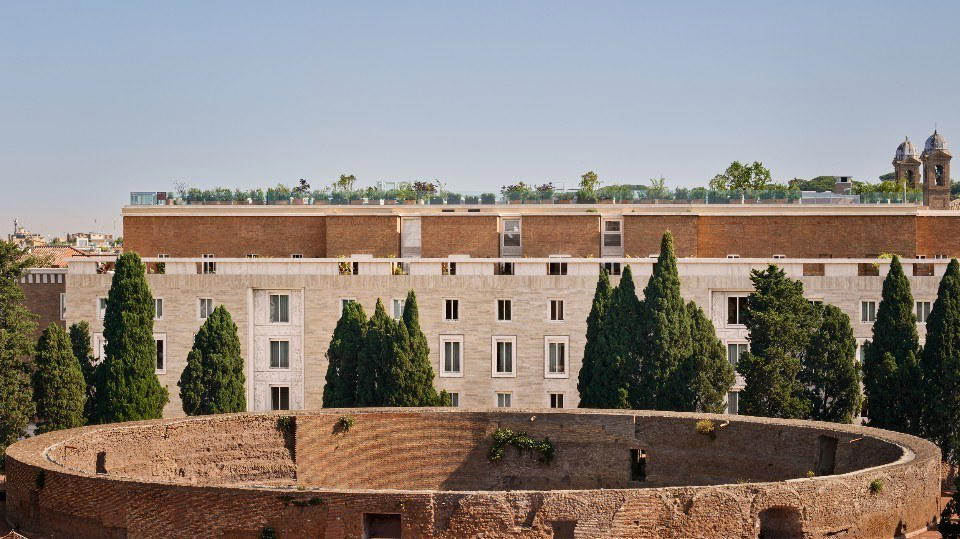
Among Rome's small-footprint luxury hotels, J.K. Place Roma occupies a converted palazzo on Via di Monte d'Oro, a short walk from the Tiber and the Campo Marzio neighbourhood's dense concentration of high-end restaurants. Where larger Roman hotels compete on scale and amenity count, J.K. Place operates in a comparable set defined by architectural restraint, limited keys, and proximity to the city's serious dining corridor.
Pearl is the En Primeur Club membership app — saves, bookings, and concierge access live there. Same editors, same standards.
- Address
- Via di Monte d'Oro, 30, 00186 Roma RM, Italy
- Phone
- +39396982634
- Website
- jkroma.com
- Directions
- Get directions
 Saves & bookings on Pearl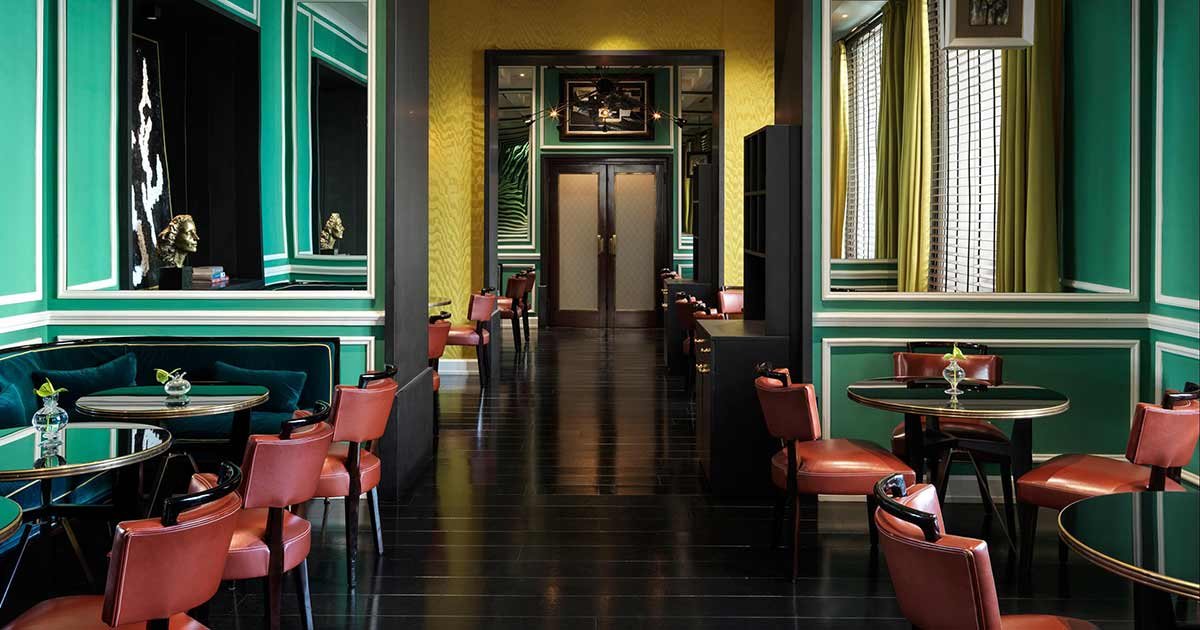
A Palazzo Format in a City That Rewards Small Scale
Rome's luxury hotel market has divided, over the past decade, into two recognisable camps. On one side sit the grand-footprint properties, expansive terraces, multiple restaurants, conference infrastructure, that compete on breadth of amenity. On the other, a smaller cohort of converted palazzi and townhouse hotels has staked its claim on intimacy, considered interior design, and positioning within walkable distance of the city's most serious cultural and culinary addresses. J.K. Place Roma, a Modern Italian restaurant on Via di Monte d'Oro in Rome, belongs firmly to the second camp.
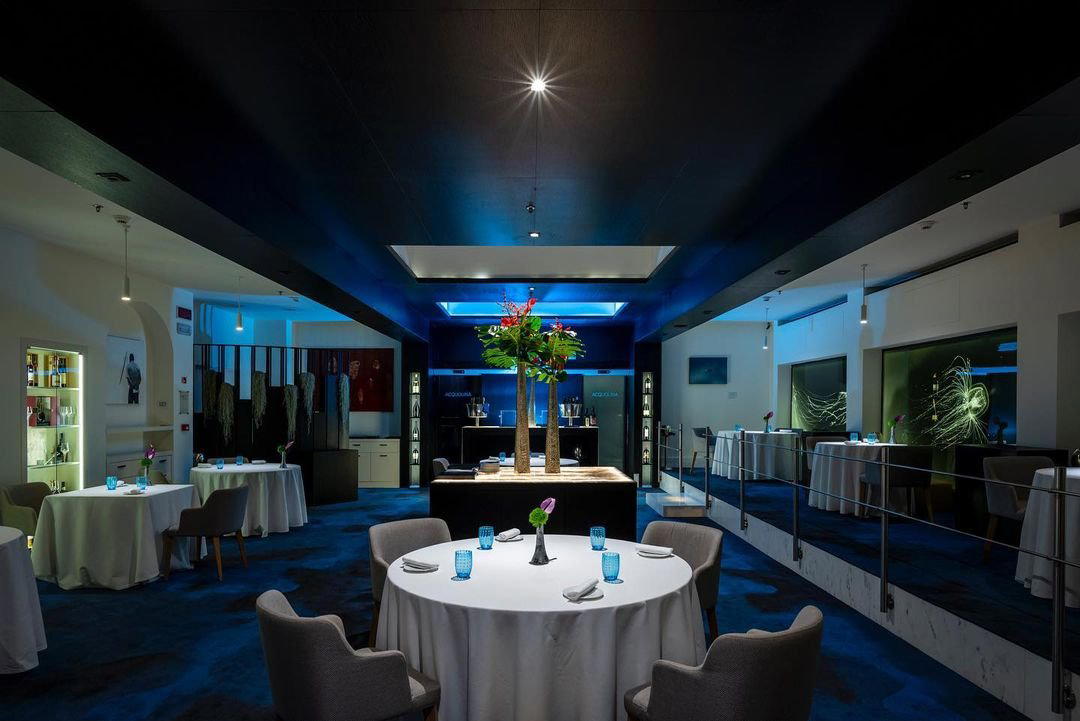
The address itself carries weight. Via di Monte d'Oro runs parallel to the Tiber and sits within a few minutes of the Piazza Navona axis, the Pantheon quarter, and the dense corridor of high-end Roman restaurants that stretches toward the Prati neighbourhood. For visitors whose primary interest is eating and moving through the city on foot, the location is efficient in a way that no amount of hotel amenity can replicate. The surrounding streets contain some of Rome's most considered dining, including Achilli al Parlamento and the creative-format room at Acquolina, both within reasonable walking distance.
The Interior Logic of the J.K. Place Format
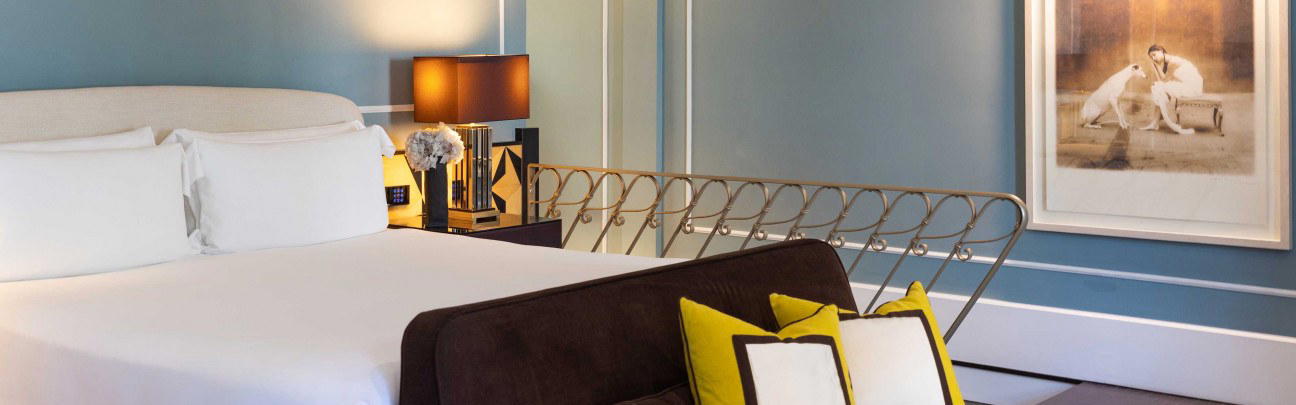
The J.K. Place brand, with earlier properties in Florence and Capri, has built its identity around a specific interior proposition: residential scale applied to hotel programming. The Roma property follows that model. Rooms are furnished to approximate the density and texture of a private apartment rather than the stripped-back functionality of a boutique hotel or the gilded excess of a grand palazzo conversion. The palette tends toward warm neutrals and dark wood, with antique pieces placed alongside contemporary upholstery in a way that reads as curated rather than themed.
In a city where architectural heritage is often treated as decoration, the fresco above the minibar, the vaulted ceiling used as a backdrop for otherwise unremarkable rooms, this approach represents a different kind of restraint. The building's historic bones are present but the interior treatment doesn't lean on them as a substitute for considered design. That balance between inherited structure and deliberate furnishing is, the defining characteristic of the J.K. Place aesthetic across all its properties.
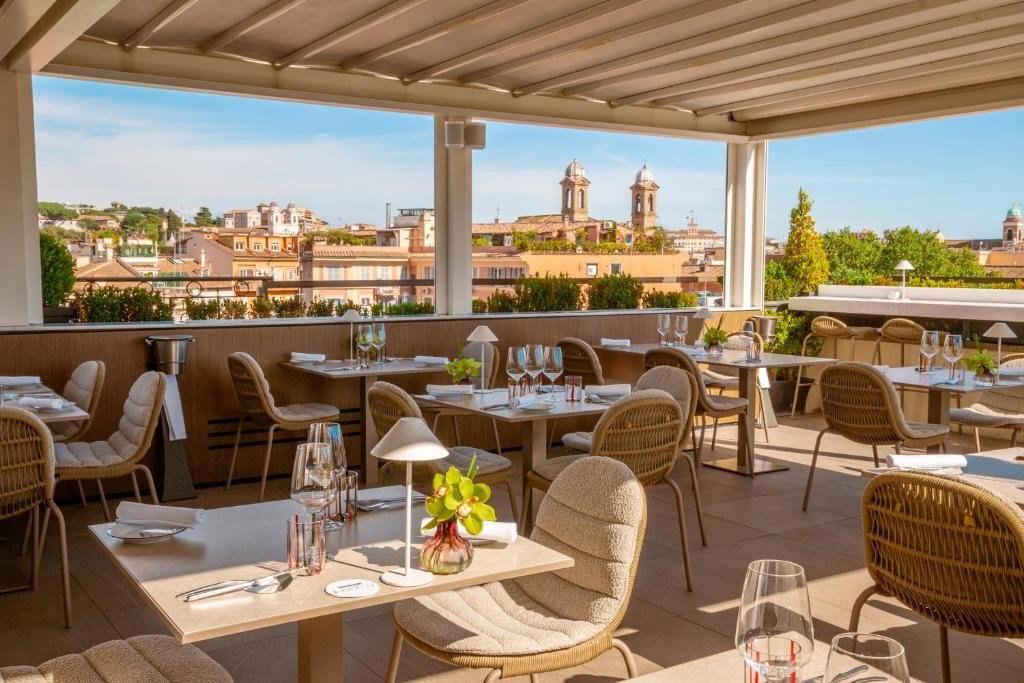
Public spaces at the Roma location are limited in number but deliberately composed. The sitting rooms function as genuine gathering spaces rather than transitional lobbies, and the breakfast and dining areas maintain the residential register that defines the property's posture. This format works because the guest count is low enough to sustain it; a larger property running the same approach would collapse into pastiche.
Where J.K. Place Sits in Rome's Dining and Hotel Context
For guests whose itinerary centres on Rome's serious restaurant tier, J.K. Place's location is a practical asset. The city's most decorated tables, La Pergola, which holds three Michelin stars and operates at the summit of the capital's fine dining hierarchy, and the creative-format rooms at Il Pagliaccio and Enoteca La Torre, require advance planning regardless of where you're staying. But the concentration of mid-to-high-end neighbourhood restaurants around Campo Marzio and the Pantheon quarter means that spontaneous, quality dinners are genuinely possible from this address in a way they are not from hotels in the EUR district or on the outer Prati edges.
The comparison set for J.K. Place Roma isn't the grand Roman hotels on Via Veneto or the large internationals near Termini. It's the small palazzo conversions, properties with under thirty keys, a strong design identity, and a location calculated for pedestrian access rather than car-based logistics. Within that peer group, the Campo Marzio address is among the more strategically placed in the city.
Italy's premium small-hotel tier has grown more confident in recent years, partly in response to a traveller cohort that arrives with serious restaurant itineraries already assembled. Properties like J.K. Place benefit from proximity to rooms like Acquolina and Achilli al Parlamento without needing to operate competitive F&B; in-house, a calculation that larger hotels, with their fixed restaurant infrastructure, cannot make as easily.
Planning a Stay: Practical Considerations
J.K. Place Roma's small key count means availability tightens during Rome's two peak windows: spring (April through early June, when conference and leisure travel overlap) and autumn (late September through November, the preferred period for serious food and wine travel in Italy). Booking several months ahead for either window is standard practice for properties in this tier. The surrounding neighbourhood is walkable to most of central Rome's major sites, and the hotel's position between the Tiber and the Pantheon places it within reach of the city's main transport arteries without being on them.
For guests building itineraries around Italy's wider fine dining circuit, Rome functions as a gateway to a national scene that extends well beyond the capital. Properties like Osteria Francescana in Modena, Le Calandre in Rubano, and Uliassi in Senigallia are all reachable by high-speed rail from Rome Termini, making a Roman base viable for a multi-city eating trip. Further afield, Enoteca Pinchiorri in Florence, Enrico Bartolini in Milan, and Piazza Duomo in Alba anchor the northern Italian tier. For those willing to go further south, Quattro Passi in Marina del Cantone and Reale in Castel di Sangro represent two of the more compelling regional arguments for leaving the capital.
Compact Comparison
Comparable venues nearby, for context on price, style, and recognition.
| Venue | Cuisine | Price | Notes |
|---|---|---|---|
| J.K. Place RomaThis venue — the venue you are viewing | Campo Marzio, Modern Italian | $$$$ | Not listed |
| Ops | Salario, Vegan Italian Buffet | $$$ | Not listed |
| 180g Pizzeria Romana | Centocelle, Roman-Style Pizza | $$$ | Not listed |
| Sora Lalla | Parione, Authentic Roman Trattoria | $$$ | Not listed |
| Enea Ristorante | Ludovisi, Traditional Roman-Italian | $$$ | Not listed |
| Enoteca L’antidoto | Not listed | $$$ | Trastevere, Modern Italian Small Plates with Natural Wines |
Continue exploring
More in Rome
Restaurants in Rome
Browse all →
Bars in Rome
Browse all →
Hotels in Rome
Browse all →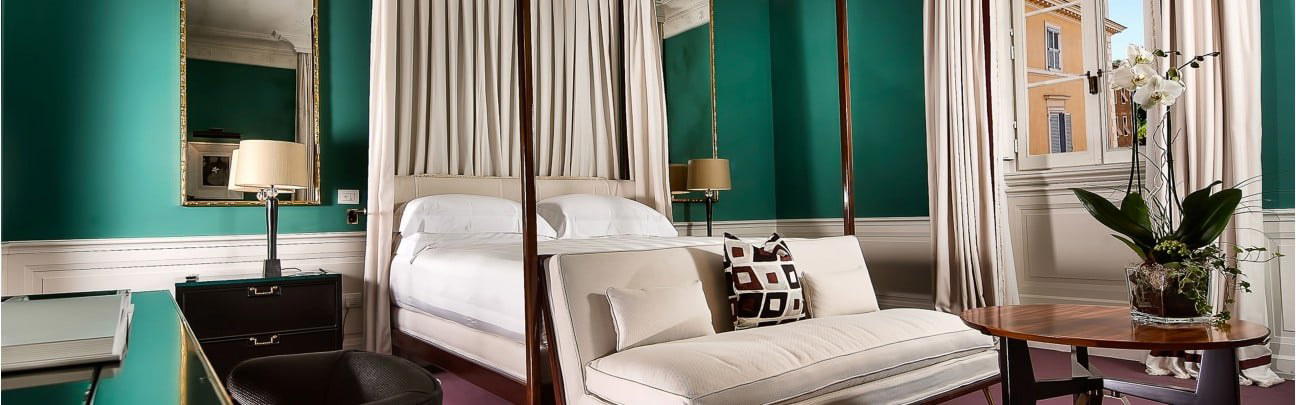

At a Glance
- Elegant
- Intimate
- Sophisticated
- Quiet
- Modern
- Date Night
- Business Dinner
- Special Occasion
- Celebration
- Hotel Restaurant
- Design Destination
- Historic Building
- Craft Cocktails
- Local Sourcing
- Street Scene
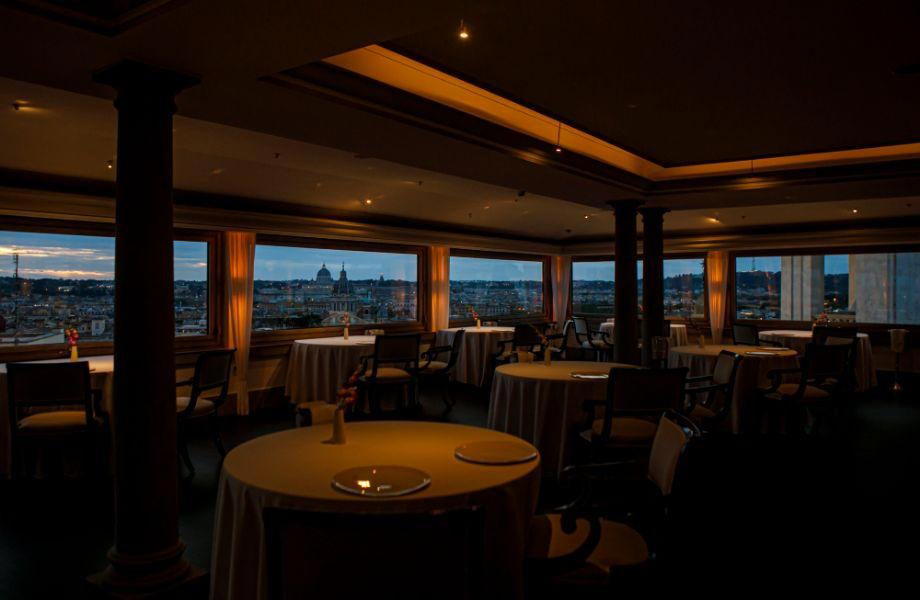
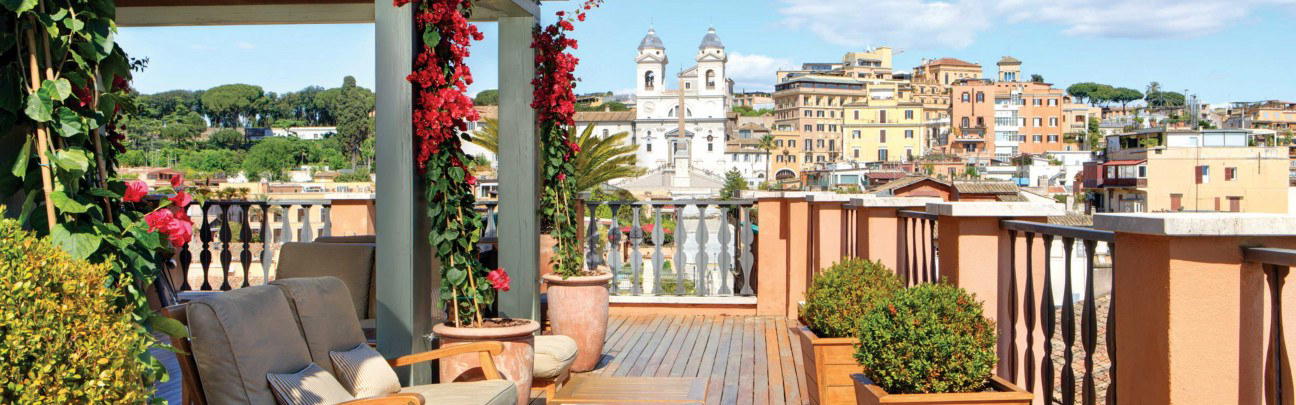
Serene, elegant, and intimate, with luxurious contemporary design and a polished yet home-like boutique-hotel atmosphere.