
Black Pearl 1 Diamond
Our verdict
Jing.YUZU sits within Beijing’s newer premium dining tier, where Japanese influence, Chinese luxury-guide culture, and citrus-led restraint meet a city better known for imperial banquets and roast duck. Its Black Pearl Restaurant Guide 2026 one-diamond recognition gives it a clear trust signal in a market where awards increasingly shape how serious diners sort the capital’s quieter rooms.

Pearl is the En Primeur Club membership app, where members save venues, book tables and use the concierge.
The menu
What to order
- Yuzu-infused sashimi
- Yuzu eel rice
Approaching a serious dining room in Beijing is rarely only about the room itself. The city’s appetite has long been split between banquet confidence, regional Chinese kitchens, hotel dining, and a growing class of smaller, quieter restaurants built around precision rather than spectacle. Jing.YUZU belongs in that conversation: a name that signals restraint and a focused point of view inside a capital still strongly defined by traditional dining, private-room hospitality, and polished service rituals.
The relevant context is Beijing’s changing luxury table culture. Black Pearl recognition now matters across mainland China because it speaks to a domestic rating system built for Chinese dining habits, not only imported Michelin grammar. A 2026 one-diamond listing places Jing.YUZU in a serious bracket without pushing it into the rarefied language reserved for the guide’s higher tiers. That distinction matters. In Beijing, a one-diamond restaurant is not simply a trophy room; it is often where polished service, coherent cooking, and a defined point of view meet without the formality of the city’s grander banquet addresses.
Citrus as a cultural signal, not a decorative flourish
Yuzu carries a particular charge as an ingredient and as an image. It can suggest brightness, lift, and aromatic precision rather than heaviness or display. In a Beijing setting, that kind of signal reads differently from the capital’s heavier historical codes, where richness, wheat, smoke, fermented depth, and ceremony have shaped many high-status meals.
That is what makes the idea of Jing.YUZU more interesting than a simple cuisine label. The name points toward a dining language built on brightness and control, a counterweight to the city’s banquet traditions. Without a public menu or chef profile to anchor a narrower reading, the safer editorial lens is cultural: this is part of a broader Beijing pattern in which premium restaurants balance focused concepts with a clientele fluent in Chinese luxury signals. The Black Pearl one-diamond award is the clearest public marker that the restaurant has crossed from niche interest into the city’s ranked dining conversation.
For travellers building a fuller Beijing eating itinerary, contrast is useful. The capital’s dining identity can be read through traditional dining rooms, courtyard-style hospitality, contemporary rooms, hotel restaurants, and polished regional Chinese addresses. Nearby editorial context sits in our full Beijing restaurants guide, while adjacent travel planning belongs in our full Beijing hotels guide, our full Beijing bars guide, our full Beijing wineries guide, and our full Beijing experiences guide. Within the city’s restaurant map, classic Beijing dining and other premium rooms remain useful generic reference points, but Jing.YUZU is best considered on its own terms: a Beijing restaurant whose public distinction is its Black Pearl 2026 one-diamond recognition.
Where it fits in Beijing's ranked dining culture
Beijing’s premium restaurant scene has become harder to read from cuisine labels alone. A room may draw on multiple service expectations, sit inside a domestic award ecosystem, and serve diners who understand both local hospitality codes and international luxury signals. Black Pearl’s one-diamond tier gives Jing.YUZU a useful position: credible enough for visitors who want a restaurant already filtered by a major Chinese guide, but not automatically part of the city’s ceremony-heavy dining tier.
That position suits diners who want Beijing beyond the obvious script. The capital still rewards first-time visitors who make time for its classic dishes and regional Chinese cooking, but repeat travellers often start looking for quieter signals: a sharper room, a narrower concept, a meal that shows how the city absorbs different dining languages without surrendering its own expectations around status and hospitality. Jing.YUZU fits that second-pass itinerary.
Across Beijing, the better comparison is not a list of named peers, but the wider spread of ranked, regional, and specialist dining. Different restaurants express prestige through different ingredients, formats, and local loyalties, from formal rooms to quieter specialist counters and polished contemporary addresses. Those generic references underline the point: influence is not a single category, and in Beijing it is filtered through the capital’s own premium dining codes.
Who should put it on the Beijing itinerary
Jing.YUZU makes the strongest case for diners already comfortable with Beijing’s classic table culture and looking for a more restrained, award-recognised counterpoint.
The editorial case is clear enough without overclaiming. This is a Beijing restaurant with Black Pearl 2026 one-diamond recognition and a name that places a focused, citrus-coded identity at the centre of its public profile. In a city where prestige dining can lean grand, formal, and banquet-shaped, that narrower register is the point.
Frequently asked questions
What distinctions does Jing.YUZU have?
Jing.YUZU has received Black Pearl 2026 one-diamond recognition.
How far ahead should I plan for Jing.YUZU?
Plan ahead for a Beijing restaurant carrying a Black Pearl 2026 one-diamond rating. Confirm current availability directly before setting an evening around it.
What is Jing.YUZU known for?
Jing.YUZU is defined in the public record by its Black Pearl 2026 one-diamond status in Beijing. That puts it in the city’s ranked dining conversation rather than the casual end of the market. Check the venue's official channels for the latest details.
Is Jing.YUZU good for vegetarians?
Those details are not published. In Beijing, a one-diamond restaurant is worth contacting in advance if vegetarian courses are needed. Check the venue's official channels for the latest details.
Would Jing.YUZU be comfortable with kids?
Jing.YUZU sits in Beijing’s ranked dining tier, marked by a Black Pearl 2026 one-diamond award.
How would you describe the vibe at Jing.YUZU?
Expect a Beijing dining room with an award-led profile rather than a casual neighbourhood framing. The Black Pearl one-diamond rating is the clearest public signal of its place in ranked dining.
How It Compares
Comparable venues nearby, for context on price, style, and recognition.
| Venue | Cuisine | Price | Awards | Notes |
|---|---|---|---|---|
| Jing.YUZUThis venue (the venue you are viewing) | Modern Japanese Izakaya with Yuzu Focus | $30–50 | Black Pearl 1 Diamond | Not listed |
| Hatsune | California-style Japanese Fusion Sushi | $20–30 | Not listed | Hujialou |
| Baowu | Fine Japanese Sushi | $50–100 | Not listed | Gongrentiyuchang |
| 功德林 | Modern Chinese | $50–100 | Michelin Bib Gourmand | Zhengyilu |
| Quanjude Roast Duck Restaurant | Traditional Peking Duck | $30–50 | Not listed | Wangfujing |
| LU STYLE | Modern Shandong Seafood | $50–100 | Black Pearl 1 Diamond | Chaoyang District |
Recognition history
Dated appearances from independent guides and award organizations, with the underlying list record or original source where available.
Black Pearl 1 Diamond
Black Pearl
Continue exploring
More in Beijing
Restaurants in Beijing
All restaurants in Beijing →
Bars in Beijing
All bars in Beijing →

Details
- Modern
- Trendy
- Date Night
- Casual Hangout
- After Work
- Group Dining
- Standalone
- Craft Cocktails
- Sake Program
- A La Carte
- Small Plates
- Sake
- Cocktails
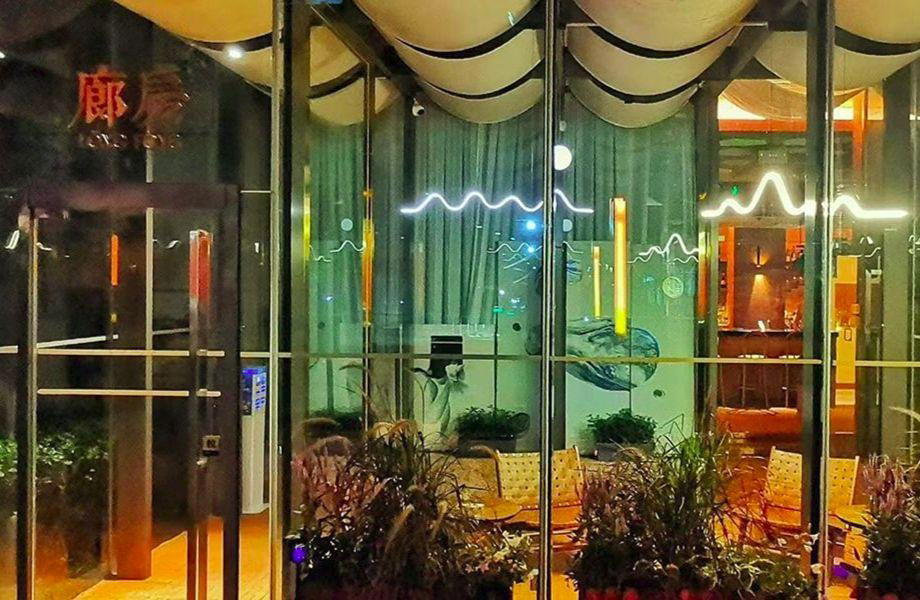
Casual, modern izakaya atmosphere with a focus on drinks and shared plates, likely lively but comfortable for conversation.