Jin Dweji Gomtang

Michelin Plate
Our verdict
Opened in 2024 in Busan's Suyeong-gu district, Jin Dweji Gomtang has drawn a following among the city's younger dining crowd for its U-shaped counter format and Berkshire K black pork sourced from the Jirisan region. The signature dweji gomtang produces a clean, delicate broth that positions this spot firmly within Busan's serious pork bone soup tradition, at a register quite different from the city's casual dwaeji-gukbap counters.

Pearl is the En Primeur Club membership app, where members save venues, book tables and use the concierge.
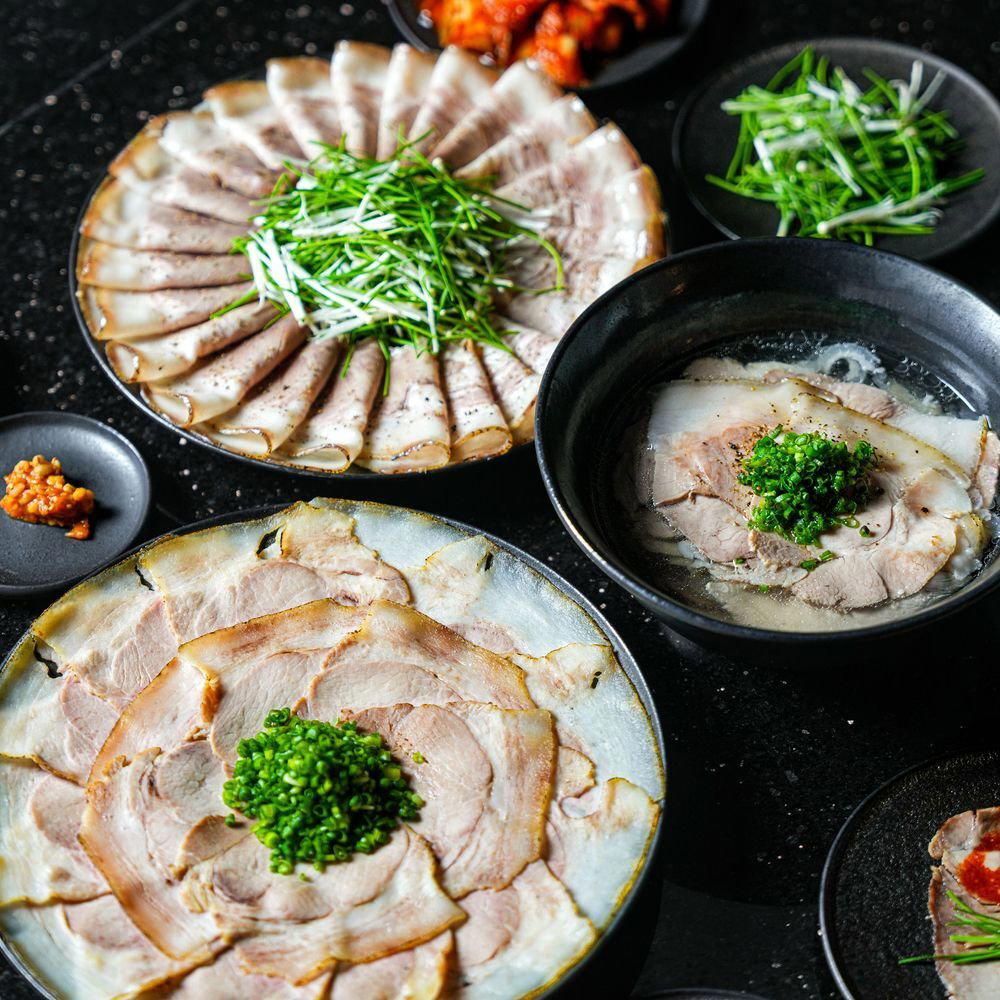
The menu
What to order
- Dweji gomtang
- Suyuk nengchae
A Counter Format Built Around the Broth
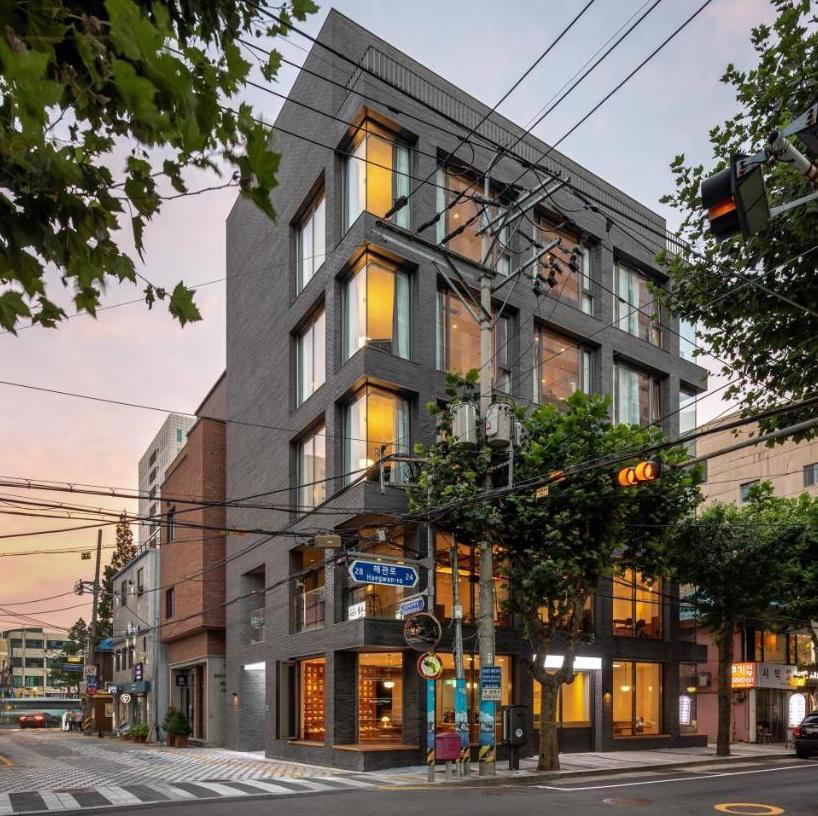
The U-shaped counter at Jin Dweji Gomtang, on the second floor of a building along Gwanganhaebyeon-ro in Suyeong-gu, does something that few pork bone soup venues in Busan attempt: it turns the act of eating gomtang into a social, almost theatrical experience. In Korean broth culture, the counter format carries weight. It signals that the kitchen intends for you to watch, ask questions, and engage with the food rather than simply consume it. The room is lively without being loud, and the arrangement keeps the pork-centred menu close to the people eating it.
Since opening in 2024, the venue has attracted Busan's younger dining crowd, a group that is increasingly applying the same level of scrutiny to traditional formats that previous generations reserved for Japanese or Western fine dining. That shift in expectation is visible across Busan's restaurant scene, from the contemporary program at Palate to the precision-led approach at Mori, and it is reshaping how traditional Korean dishes are presented and priced.
Dweji Gomtang in Its Cultural Context
Gomtang, a slow-simmered bone broth of considerable age in Korean culinary tradition, occupies a specific register in Korean food culture. Where dwaeji-gukbap, Busan's most closely associated pork soup form, blends rice directly into a cloudy, assertive stock, gomtang tends toward clarity and restraint. The broth is expected to be clean rather than heavy, its depth earned through hours of low-temperature simmering rather than aggressive extraction. Venues like 1969 Buwondong Kalguksu and 100.1. Pyeongnaeng demonstrate how Busan's traditional noodle and broth formats can sustain serious culinary investment. Jin Dweji Gomtang belongs to that same tradition of applied craft within an accessible price tier.
The distinction that sets this venue apart within its category is the sourcing decision at its centre. The kitchen uses Berkshire K black pork from the Jirisan region, a breed and provenance combination associated with cleaner fat and a more delicate flavour than commodity Korean pork. Berkshire K is a domestic hybrid developed from British Berkshire genetics, and Jirisan-raised animals are widely considered among the more carefully managed in Korean black pork production. The choice shapes everything that follows: a broth that reads as refined rather than rustic, and a suyuk presentation where the quality of the base ingredient is legible without further manipulation.
In Seoul, restaurants such as Mingles and Kwon Sook Soo in Gangnam-gu have established that Korean culinary tradition can sustain fine-dining prices when the sourcing and technique are verifiable. Jin Dweji Gomtang operates at a more accessible register, but the sourcing logic is directly comparable: name the origin, name the breed, let the product speak through a minimally intervening technique.
The Signature Dishes
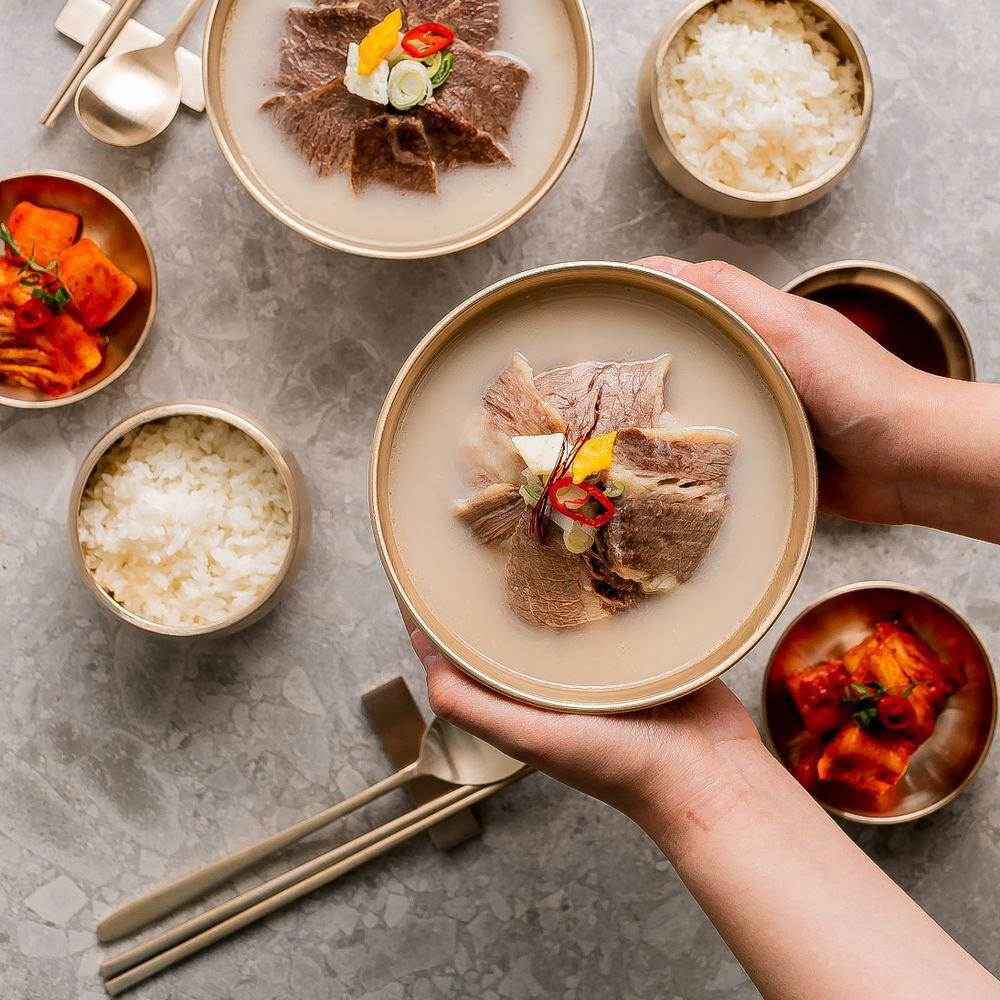
The dweji gomtang itself is the reference point here. The Berkshire K pork produces a broth described as clean and delicate, which in gomtang terms is the benchmark, the quality signal that separates considered production from volume cooking. A cloudy or heavy pork broth is not necessarily poor, but a clear one at this level requires careful temperature control, attentive skimming, and a raw material with low impurity in its fat structure. That the venue has achieved this within its first year of operation is the most credible indicator of culinary seriousness in the available record.
The suyuk nengchae is the second dish worth noting. Suyuk is boiled pork, typically sliced thin and served either warm or cold with a dipping sauce. Here the version is described as featuring precisely sliced pork belly with fat that melts on contact, and a lean-to-fat ratio that delivers a clean finish rather than the greasy residue that marks inferior suyuk. The nengchae component, a cold salad or dressing format, suggests a dish calibrated for contrast and freshness against the richness of the cut. It is a technically demanding preparation to execute at a consistent standard, and its presence on the menu alongside the gomtang signals a kitchen with range.
Where This Fits in Busan's Dining Picture
Busan's restaurant scene in 2024 and 2025 has diversified considerably. The city now supports everything from high-end steakhouse formats like Born and Bred at the premium tier to single-dish specialists at the other end of the price spectrum. Jin Dweji Gomtang sits in a middle position: more considered than the casual dwaeji-gukbap counters that define the city's street-level pork soup culture, but without the price structure of a fully formatted fine-dining experience.
The pork soup tradition in Korea extends well beyond Busan. Across the country, from the temple food approach at Baegyangsa Temple in Jangseong-gun to the pork-forward menus at The Flying Hog in Seogwipo, Korean chefs are working with pork in formats that reflect regional identity and sourcing specificity. Jin Dweji Gomtang is part of that same movement, applied to a Busan context where the pork soup legacy is particularly deep.
For visitors using Busan as a base, the venue is located in Suyeong-gu, a district that sits between the Gwangalli beach strip and the broader Millak waterfront area. The address on Gwanganhaebyeon-ro places it within a neighbourhood that has seen a notable concentration of younger dining and bar openings in recent years. The full context for eating and drinking in the area is covered in our full Busan restaurants guide, alongside recommendations in our full Busan bars guide, our full Busan hotels guide, our full Busan wineries guide, and our full Busan experiences guide.
For comparison, Korean broth venues in other cities with a similar focus on sourcing specificity and counter formats tend to attract reservation demand within three to six months of opening if word-of-mouth is strong. Walk-in availability may depend on time of day and week. Given the counter format and the venue's stated popularity, visiting earlier in a service or on a weekday is a reasonable general approach. Comparable planning logic applies at Double T Dining in Gangneung and Pool House in Incheon, both of which operate in formats where seat count shapes availability significantly. Further afield, the reservation discipline required at venues like Le Bernardin in New York City or Emeril's in New Orleans reflects the same principle: counter and small-format venues reward early planning.
Frequently asked questions
Is Jin Dweji Gomtang Michelin-listed?
Jin Dweji Gomtang has received recognition including: Since opening in 2024, this spot has quickly become a favourite among Busan’s younger crowd. Its charming space centres on a U-shaped counter, creating an atmosphere that feels both lively and intimate. The signature dweji gomtang is made w….
Where is Jin Dweji Gomtang located?
Jin Dweji Gomtang is located at 2F, 4 Gwanganhaebyeon-ro 284 beon-gil, Suyeong-gu, Busan.
What should I order at Jin Dweji Gomtang?
The dweji gomtang is the reference dish: a clear broth built from Berkshire K black pork sourced from the Jirisan region, prized for its clean and delicate character. The suyuk nengchae is the second anchor on the menu, featuring precisely sliced pork belly with a finish that carries both lean and fatty textures in each piece.
How far ahead should I plan for Jin Dweji Gomtang?
Since opening in 2024, the venue has built a consistent following among Busan's younger dining crowd, and the U-shaped counter format means seating per service is limited. Arriving without a reservation on weekends carries real risk; checking availability before you travel to Suyeong-gu is advisable.
What is Jin Dweji Gomtang known for?
Jin Dweji Gomtang is known for reframing a traditional Korean broth format around a single high-specification ingredient: Berkshire K black pork from the Jirisan region. The U-shaped counter on the second floor of its Gwanganhaebyeon-ro address reinforces a focused, ingredient-led approach that has made it a fixture in Busan's 2024 dining conversation.
Price and Positioning
Comparable venues nearby, for context on price, style, and recognition.
| Venue | Cuisine | Price | Awards | Notes |
|---|---|---|---|---|
| Jin Dweji GomtangThis venue (the venue you are viewing) | Modern Dwaeji Gomtang | $10–20 | Michelin Plate | Not listed |
| 1969 Buwondong Kalguksu | Traditional Busan Kalguksu | $1–10 | Michelin Plate | Nampo-dong, Traditional Busan Kalguksu |
| Moemiljip | Korean Buckwheat Noodles (Memil-guksu) | $20–30 | Michelin Bib Gourmand | U 3-dong, Korean Buckwheat Noodles (Memil-guksu) |
| IAán | Contemporary French-Korean Fusion | Not listed | Michelin Plate | Jung 2(i)-dong, Contemporary French-Korean Fusion |
| 훈이네김밥우동 | Korean Gimbap | $1–10 | Not listed | Haeundae-gu, Korean Kimbap & Udon |
| ì ë¡ë² ì´ì¤ | Millak-dong, Korean | Not listed | Not listed | Not listed |
Recognition history
Dated appearances from independent guides and award organizations, with the underlying list record or original source where available.
Michelin Plate
Michelin
Continue exploring
More in Busan
Restaurants in Busan
All restaurants in Busan →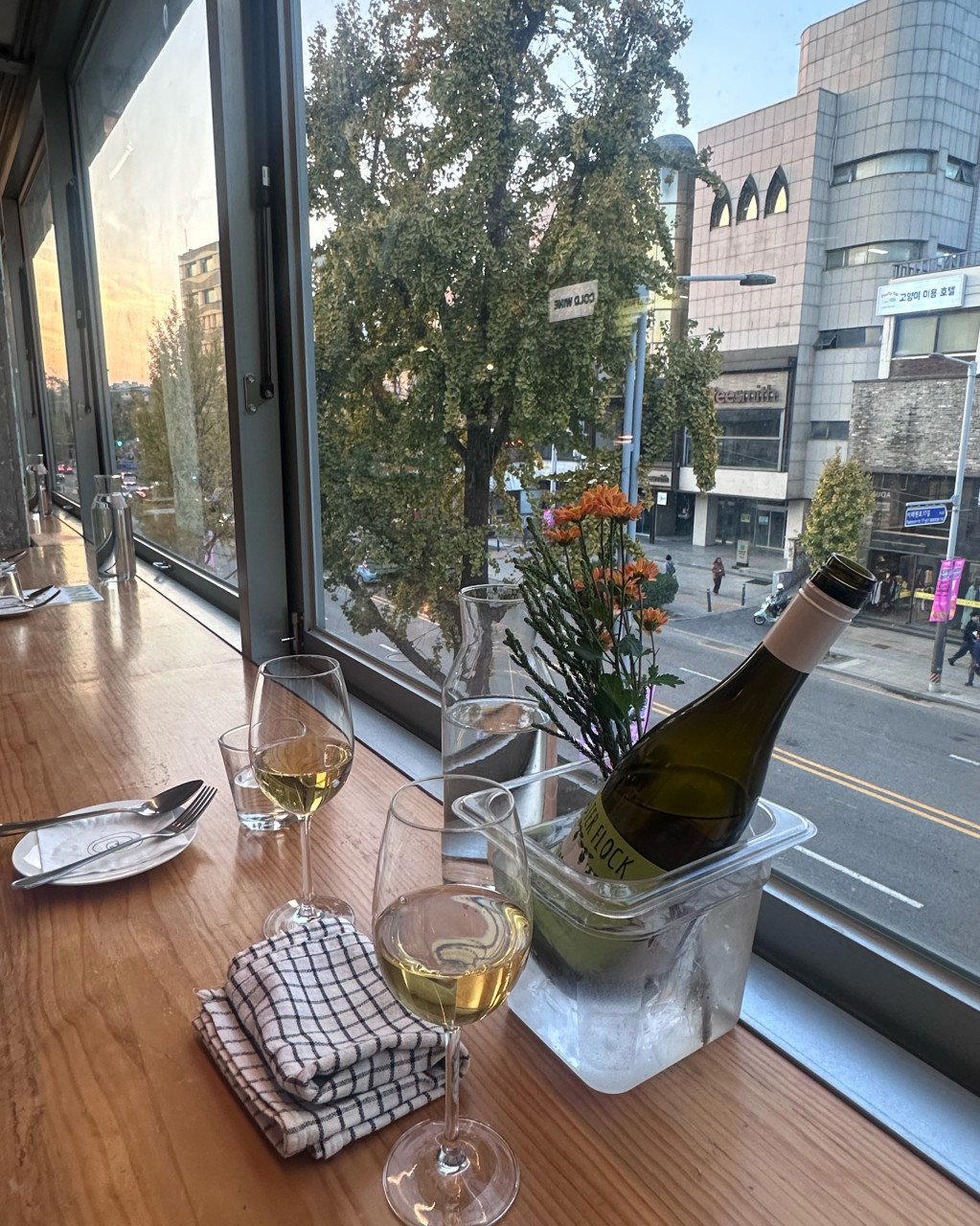
Bars in Busan
All bars in Busan →



Details
- Lively
- Intimate
- Modern
- Trendy
- Solo
- Casual Hangout
- Open Kitchen
- Sake Program
- Local Sourcing
- A La Carte
Current opening hours
- Monday
- 9 AM–9 PM
- Tuesday
- 9 AM–9 PM
- Wednesday
- 9 AM–9 PM
- Thursday
- 9 AM–9 PM
- Friday
- 9 AM–9 PM
- Saturday
- 9 AM–9 PM
- Sunday
- 9 AM–9 PM
Hours can change for holidays and private events. Hours as of .
Charming space centered on a U-shaped counter around an open kitchen, creating a lively yet intimate atmosphere favored by younger crowds.