Jack & Chan
Jack & Chan occupies a notable address on Inzhenernaya Street near the Mikhailovsky Garden, placing it squarely in St. Petersburg's competitive central dining corridor. The name alone signals a cross-cultural ambition that has become a recognizable format across Russia's larger cities, where East-meets-West menus have moved from novelty to established category. For visitors already tracking the city's more editorial dining options, it sits in a bracket worth understanding before booking.
Pearl is the En Primeur Club membership app — saves, bookings, and concierge access live there. Same editors, same standards.
- Address
- Inzhenernaya St, 7, St Petersburg, Russia, 191011
- Phone
- +7 812 982-05-35
- Website
- jack-and-chan.com
- Directions
- Get directions
 Saves & bookings on Pearl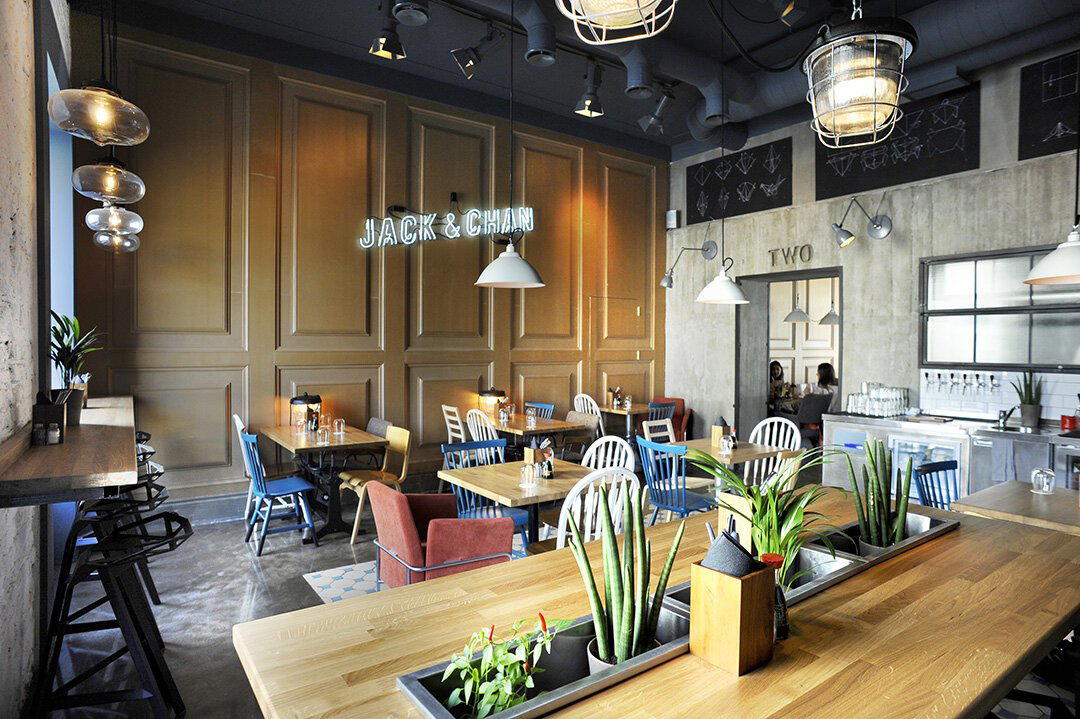
Inzhenernaya Street and the Logic of Location
St. Petersburg's most contested dining real estate runs through the arc between the Russian Museum and the Mikhailovsky Garden, where foot traffic from cultural institutions sustains restaurants that might otherwise depend on destination reputation alone. Jack & Chan is a restaurant on Inzhenernaya Street, 7, in St. Petersburg. It is a deliberate central address, the kind that attracts both tourists with a half-day and locals who want a reliable return. That positioning shapes everything about what a restaurant at this address needs to do: hold up under scrutiny from people who have eaten widely and expect a reason to come back.
The broader St. Petersburg dining scene has matured considerably over the past decade. Where the city once leaned heavily on European fine dining and Soviet-era standbys, a second generation of restaurants has emerged that treats genre-blending as a legitimate structural choice rather than a marketing shortcut. Venues like Cococo have built reputations on reinterpreted Russian ingredients, while Birch and Harvest represent a quieter, produce-led strand of the same shift. Jack & Chan enters from a different direction, one where the organizational logic of the menu itself is the primary statement.
Menu Architecture as the Central Argument
The name Jack & Chan is doing structural work. It announces a dual framework, one half pointing toward Western or European culinary logic, the other toward East Asian technique and flavor, and in doing so it commits the kitchen to managing two distinct ingredient traditions, two palate expectations, and two sets of preparation disciplines simultaneously. This is a harder editorial position than it sounds. Restaurants that attempt cross-cultural menus often resolve the tension by defaulting to fusion clichés: miso-glazed everything, soy-inflected sauces dropped into European frameworks. The menus that hold up over time do something more considered: they keep the two traditions in genuine conversation rather than collapsing them into a single hybrid register.
Jack-and-Chan format, as a category, has proliferated across Russia's major cities precisely because it responds to a real gap. Russian diners in urban centers have developed appetite for Asian technique, sharpened by the rise of Japanese, Korean, and pan-Asian concepts in Moscow and St. Petersburg over the past fifteen years, while still wanting the familiarity of Western European preparations alongside. The dual-name restaurant becomes a way of promising both without requiring the diner to choose a lane. Compare this to Made in China in the same city, which commits to a single Asian tradition, or to Korean BBQ гриль, where the format is defined by an interactive cooking ritual. Jack & Chan's structural bet is that menu breadth, handled with discipline, can be a strength rather than a hedge.
The question such a menu always has to answer is whether the kitchen can execute across the range, or whether one half of the menu covers for the other. In cities where this format has worked, and there are examples across Moscow's mid-tier dining scene, the answer usually lies in a tight core menu with genuine depth in a handful of dishes rather than a sprawling list that stretches the brigade thin. The format rewards restraint in range and confidence in execution.
Where Jack & Chan Sits in the St. Petersburg comparable set
St. Petersburg's central dining corridor operates across several price and ambition tiers. At the upper end, venues like 1913 carry the weight of historical address and formal service expectations. At the casual end, the city has a growing category of neighborhood-specific spots that trade on local regulars rather than destination traffic. Jack & Chan's Inzhenernaya address places it in the middle tier, accessible enough for a spontaneous booking, prominent enough to draw from the tourist circuit, but requiring enough of a commitment in time and spend that the menu needs to justify the visit on its own terms.
For comparison within Russia's broader dining conversation, the cross-cultural format has found its most sophisticated expression at places like Twins Garden in Moscow, where the organizational logic extends to sourcing and sustainability as well as technique. Jack & Chan operates at a different register, more accessible, less conceptually loaded, but the underlying question is the same: does the menu's structural ambition translate into a coherent dining experience, or does it remain a branding exercise?
Within St. Petersburg specifically, venues like Lev I Ptichka have shown that genre-blending can build genuine followings when the execution is consistent. The city's diners have become more sophisticated judges of whether a dual-concept menu is a genuine kitchen commitment or a way of hedging against narrow appeal.
Planning Your Visit
Jack & Chan is located at Inzhenernaya Street, 7, in central St. Petersburg, near the intersection with Sadovaya Street and within easy reach of the Russian Museum and Mikhailovsky Garden. The address is walkable from Nevsky Prospekt and sits on one of the city's more active dining and cultural corridors, which means it draws both pre-theater and post-museum traffic. Confirming availability in advance, particularly for groups, is advisable.
Those with an interest in how cross-cultural menus are playing out across Russia's regions might also find it useful to look at Dzhani Restorani in Nizhny Novgorod or Alanskaya Kukhnya in Krasnodar for regional points of comparison.
Standing Among Peers
Comparable venues nearby, for context on price, style, and recognition.
| Venue | Cuisine | Price | Notes |
|---|---|---|---|
| Jack & ChanThis venue — the venue you are viewing | Pan-Asian Fusion | $$ | Not listed |
| Wong Kar Wine | Contemporary Asian (Thai) with Natural Wines | $$ | Liteyny |
| Cococo | Modern Russian Fine Dining | $$$ | Admiralteysky |
| Birch | Modern European Fusion | $$$ | city center |
| Korean BBQ гриль | Korean Table-Top BBQ Grill | $$ | Northwestern District |
| Palkin | Classic Russian Fine Dining | $$$$ | Nevsky Prospekt |
Continue exploring
More in Saint Petersburg
Restaurants in Saint Petersburg
Browse all →
Bars in Saint Petersburg
Browse all →

Hotels in Saint Petersburg
Browse all →
At a Glance
- Trendy
- Modern
- Elegant
- Casual Hangout
- Late Night
- Open Kitchen
- Street Scene
Current opening hours
- Monday
- 12 PM–12 AM
- Tuesday
- 12 PM–12 AM
- Wednesday
- 12 PM–12 AM
- Thursday
- 12 PM–12 AM
- Friday
- 12 PM–2 AM
- Saturday
- 12 PM–2 AM
- Sunday
- 12 PM–12 AM
Hours can change for holidays and private events. Last verified .
Stylish café-cocktail bar atmosphere with understated chic design and street views for people-watching.