Catherine the Great
Catherine the Great occupies a address on Ulitsa Pravdy in Saint Petersburg's central belt, positioning itself within a city where classical Russian dining traditions and a newer wave of locally-focused cooking have been pulling in opposite directions for the better part of a decade. With sparse publicly available detail, it sits at the quieter end of the city's restaurant spectrum, a fact that, in Saint Petersburg's current dining scene, is sometimes a positioning choice rather than an oversight.
Pearl is the En Primeur Club membership app — saves, bookings, and concierge access live there. Same editors, same standards.
- Address
- Ulitsa Pravdy, 10, St Petersburg, Russia, 191119
- Phone
- +78127779810
- Website
- thehermitagehotel.ru
- Directions
- Get directions
 Saves & bookings on Pearl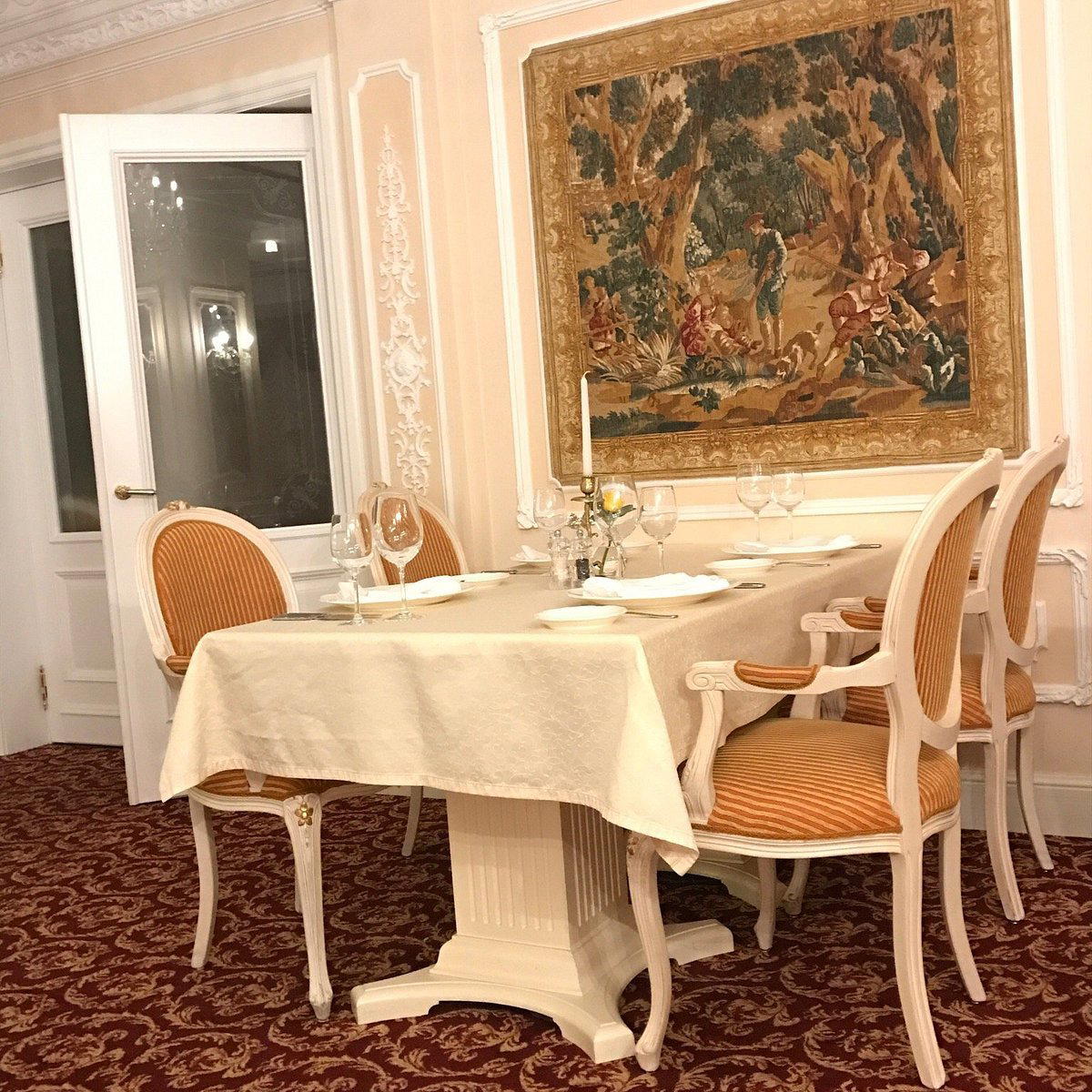
Where Saint Petersburg's Dining Poles Meet
Saint Petersburg's restaurant scene has spent recent years sorting itself into two distinct registers. On one side sit the grand imperial-reference houses, places that draw authority from history, from rooms with high ceilings and heavy silverware, from menus that treat pre-revolutionary Russian cuisine as a fixed canon. On the other, a younger generation of kitchens is more interested in what Russian produce can do when approached without nostalgia. Catherine the Great is a restaurant serving Modern Imperial Russian Fine Dining at Ulitsa Pravdy 10 in Saint Petersburg.
The name itself is a declaration of intent. In a city where the built environment is a constant argument about imperial ambition, the Winter Palace a ten-minute drive northwest, the grand axis of Nevsky Prospekt running just beyond the neighbourhood, choosing to invoke Catherine II is not a neutral act. It signals a particular relationship with formality, with the court tradition of elaborate service, and with the idea that dining out in Saint Petersburg carries a weight of ceremony that cities without this history cannot replicate. Whether a kitchen can sustain that argument through food and format is the more interesting question.
Menu Architecture as Cultural Position
In Russian fine dining, the structure of a menu often communicates more about a kitchen's ambitions than any single dish. The classical Russian table was built around progression: cold zakuski to begin, a soup course that was treated with near-ritual seriousness (shchi, ukha, solyanka each carrying regional and social codes), then a main course that could involve game, fish from the northern rivers and Baltic, or slow-braised meats. This architecture survives, in various degrees of fidelity, across Saint Petersburg's more formal establishments.
The zakuski tradition in particular is worth understanding as a structural device rather than just an appetiser course. It was designed to operate socially, to give a table time to settle, to allow conversation to establish itself over small plates and cold vodka, and kitchens that treat it as a genuine course rather than a perfunctory gesture tend to signal something about their overall seriousness. Peers in the city's classical tier, including 1913 and Astoria Cafe, approach this opening architecture with varying degrees of commitment to the original social function of the spread.
The soup course functions as a similar signal. In kitchens taking the classical model seriously, the solyanka or ukha is not a cursory gesture toward tradition, it is the course around which everything else is calibrated. At the counter-current end of the spectrum, places like Birch in St. Petersburg and COCOCO Bistro have largely rebuilt the soup course around contemporary Russian ingredients without the imperial framing, producing something that reads as culturally distinct from the court tradition Catherine the Great invokes.
The Neighbourhood and How to Read It
Ulitsa Pravdy sits in the area south of Ligovsky Prospekt, a part of central Saint Petersburg that has historically operated at a remove from the tourist circuits that dominate the Nevsky axis and the embankment hotels. This is not the city's flashpoint for new openings, that energy has, in recent cycles, concentrated further north and in the arts districts closer to the Fontanka river. What this address offers instead is a version of Saint Petersburg that reads as more residential and less performed, which can be a genuine asset for a restaurant trying to position itself as a serious dining destination rather than an attraction.
The broader Russian restaurant scene has seen its most discussed work concentrated in Moscow, Twins Garden being one cited example of the contemporary Russian produce-led movement, with Saint Petersburg operating as a quieter but often more considered parallel. The city's dining character tends toward longer-established relationships between kitchens and their regulars, a model that rewards consistency over novelty. Properties like Bellevue and Blok occupy different points on the formality spectrum, while BeefZavod represents the city's appetite for protein-led formats that sit outside the classical tradition entirely.
Further afield, the Russian dining conversation extends to Restaurant Baran-Rapan in Sochi, Leo Wine & Kitchen in Rostov, and SEASONS in Kaliningrad, each reflecting how regional Russian cooking is being reinterpreted at some remove from the imperial capital's shadow. The contrast is instructive: when you dine in Saint Petersburg, the weight of that shadow is present in a way it simply is not in Sochi or Kaliningrad.
Comparing Within the Classical Tier
Across Russia's premium dining circuit, the classical format competes with a newer set of references. Bourgeois Bohemians in Sankt-Peterburg brings a different cultural framing to similar geography, while outside Russia's borders, format discipline at places like Le Bernardin in New York City and Lazy Bear in San Francisco demonstrates what a fully committed tasting-format kitchen can achieve when menu architecture is treated as the primary editorial statement. The comparison is useful not because these are direct peers, but because they illustrate what the classical Russian tier is being measured against by a generation of diners who move between cities.
Closer to home, Primorskiy Prospekt, 72 in Staraya Derevnya and La Colline in Bolshoye Sareyevo represent the suburban and semi-rural directions Russian dining has taken when freed from the metropolitan pressure to perform history. Царская Охота - Tsarskaya Okhota in Zhukovka takes the tsarist hunting-table tradition in a different geographic direction entirely, which makes for an instructive contrast with a city-centre restaurant working under the same imperial cultural vocabulary.
Planning a Visit
Catherine the Great is addressed at Ulitsa Pravdy, 10, Saint Petersburg, 191119. For visitors working from the city centre or the main hotel corridor along the embankment, the address is reachable by metro (Ligovsky Prospekt station sits within the vicinity) or by car, and the surrounding streets are navigable without the pedestrian congestion that affects Nevsky Prospekt at peak hours. Reservations are recommended, and the restaurant is open daily from 5 to 11 PM. Saint Petersburg's restaurant scene, like most of the city's cultural life, operates with seasonal rhythms tied to the White Nights period in June and July, when visitor density rises sharply and securing tables at established addresses becomes materially harder.
Credentials Lens
Comparable venues nearby, for context on price, style, and recognition.
| Venue | Cuisine | Price | Notes |
|---|---|---|---|
| Catherine the GreatThis venue — the venue you are viewing | Modern Imperial Russian Fine Dining | $$$ | Not listed |
| Astoria Cafe | Modern Russian-European | $$$$ | Admiralteisky |
| Blok | Modern Russian Steakhouse | $$$ | Smolny |
| Il Milanese | Traditional Italian Trattoria | $$$ | Northwestern District (Liteyny) |
| GREBESHKI Bistro&Shop | Modern Northern Seafood Bistro | $$$ | Arsenalnaya Emb. |
| Little Sicily | Authentic Sicilian Italian Pizzeria | $$ | City Center |
Continue exploring
More in Saint Petersburg
Restaurants in Saint Petersburg
Browse all →
Bars in Saint Petersburg
Browse all →

Hotels in Saint Petersburg
Browse all →
At a Glance
- Elegant
- Classic
- Sophisticated
- Ornate
- Special Occasion
- Date Night
- Business Dinner
- Historic Building
- Hotel Restaurant
- Extensive Wine List
Current opening hours
- Monday
- 5–11 PM
- Tuesday
- 5–11 PM
- Wednesday
- 5–11 PM
- Thursday
- 5–11 PM
- Friday
- 5–11 PM
- Saturday
- 5–11 PM
- Sunday
- 5–11 PM
Hours can change for holidays and private events. Last verified .
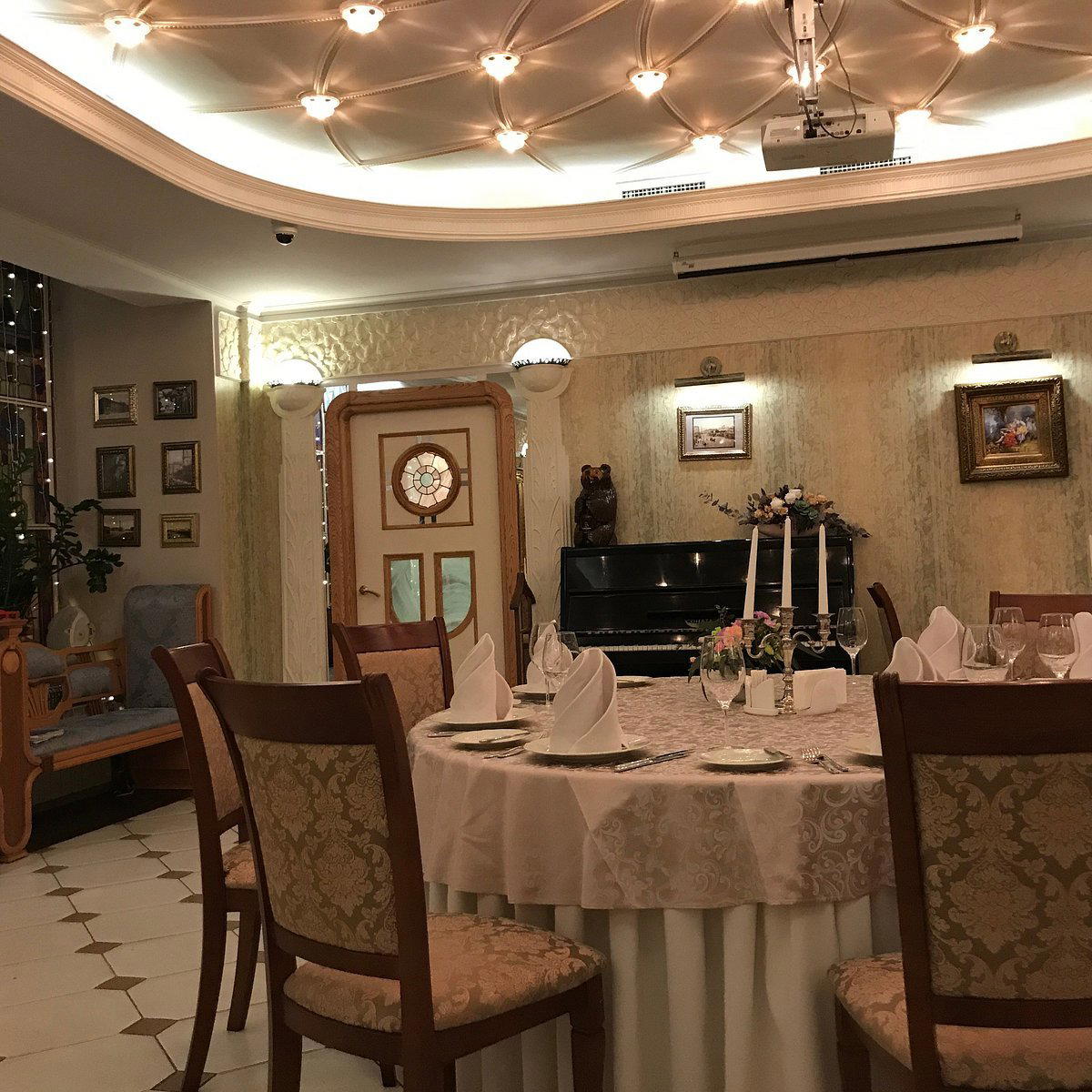
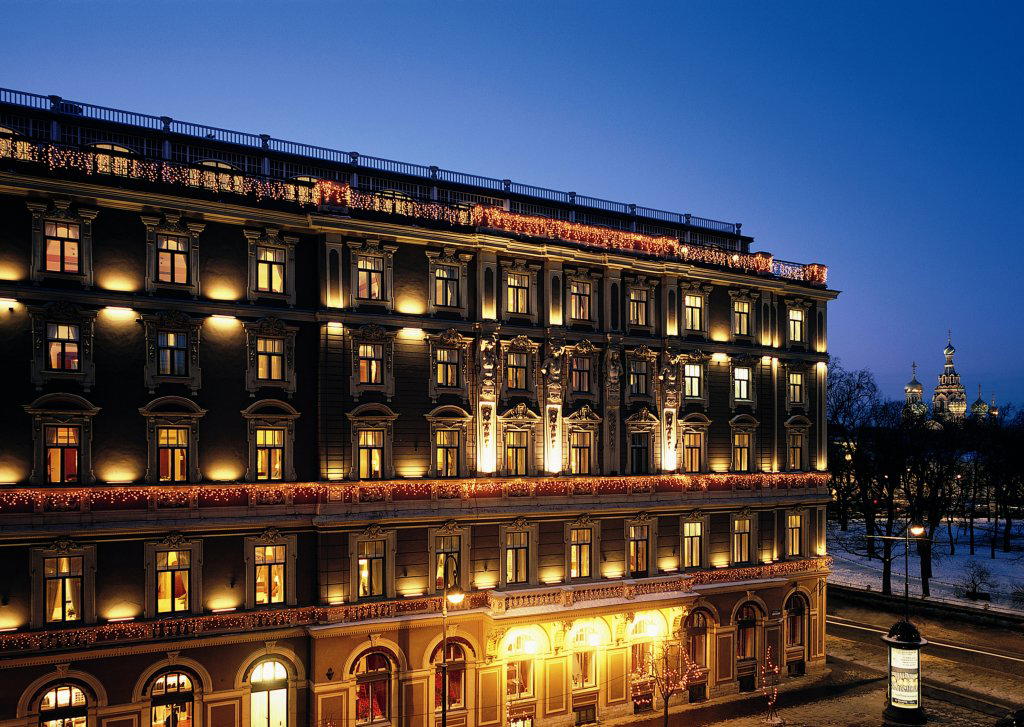
Elegant and royal atmosphere evoking the imperial era of St. Petersburg.