Tabelog 100 #78
Our verdict
Ippou Honten places Osaka tempura in a reputation-led dining bracket, with selection for Tabelog Tempura 100 in 2025 and 2023 anchoring its critical standing. The draw is not novelty but formality of craft: a reservation-only tempura house in Higobashi with private rooms, tatami space, and a price tier that signals occasion dining rather than casual Osaka grazing.

Pearl is the En Primeur Club membership app, where members save venues, book tables and use the concierge.
The menu
What to order
- Kansai-style tempura course menus
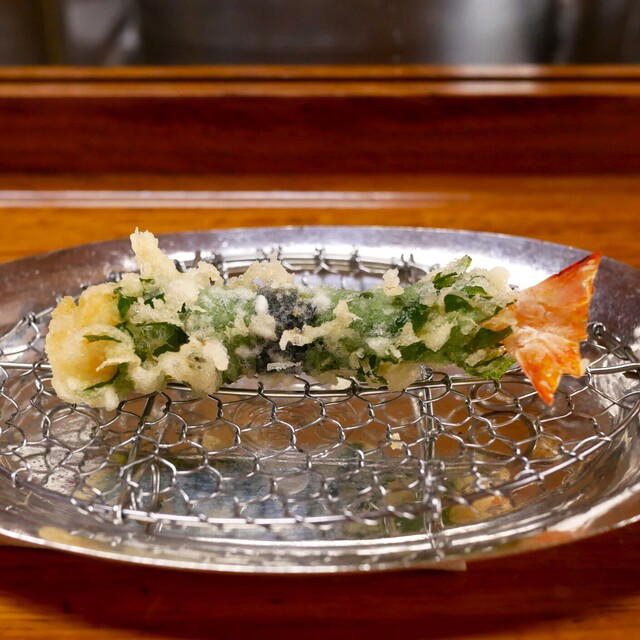
- Seasonal seafood and vegetable tempura
- Tempura kaiseki with sashimi
Osaka moves at a different tempo from the most neon-fed or department-store-polished parts of the city. Around Ippou Honten, the setting suits serious tempura: timing, restraint, and the short distance between frying pot and plate. Ippou Honten belongs to that quieter Osaka register, where the meal frames a disciplined Japanese form rather than performs as spectacle.
Osaka’s global food identity is often reduced to takoyaki, okonomiyaki, kushikatsu, ramen, curry, and counter snacks, yet its higher-priced Japanese dining has long relied on precision over abundance. In that context, a tempura specialist selected for Tabelog Tempura 100 in 2025 occupies a clear reputation tier. The recognition matters because tempura is hard to judge from a menu alone: technique, oil management, sequence, and pacing carry more weight than ingredient names.
Osaka tempura judged by timing rather than theatre
Tempura rewards subtraction. Batter should protect rather than bury, oil should transmit heat without weight, and the meal depends on a rhythm easily disrupted. Dedicated tempura houses therefore sit apart from general washoku rooms that include fried items on a broader menu. Ippou Honten is listed in the tempura category rather than as a catch-all Japanese restaurant, placing it inside a craft tradition defined by repetition and control.
Osaka’s everyday dining can be loud, fast, and democratic; tempura at this level moves the other way. It asks diners to slow down and read small differences in texture and heat. The price tier reinforces that point. This is not a casual detour between bars, nor competition for the city’s budget comfort-food circuit. Compared with lower-cost Osaka references such as KALUTARA, Tori Soba Zagin Honten, BOY, Saboten Shokudo, or ricuperare TAKEUCHI, it belongs to a more formal occasion category, where cost reflects specialization and the expectations attached to a recognized tempura house.
The Tabelog Tempura 100 selection gives a clearer signal than vague local praise. Tabelog’s genre lists are especially useful in Japan because they sort restaurants by specialty rather than broad luxury language. For tempura, that matters. A diner choosing between sushi, kappo, yakiniku, French, and tempura in Osaka needs to know whether the venue has traction within its own discipline. Selection in 2025 places Ippou Honten in a current specialist conversation rather than a generic city-wide mention.
Recognition changes the tempura calculation
Many high-end tempura decisions in Japan are shaped by scarcity, counter access, and the promise of watching each piece arrive at exactly the right moment. Ippou Honten is better read through its established specialist identity. The attraction is not a claim of hiddenness; it is choosing tempura in Osaka with a clear category signal and current recognition from a restaurant guide focused on the form.
That makes reputation a better lens than mythology. The venue is not asking to be judged as a secret room with access politics. It sits within a recognized tempura field, where pacing, consistency, and genre credibility carry weight. For travellers, that can be a strength. Osaka itineraries often swing between snack culture and rarefied reservation rooms; this sits between those poles, formal enough to justify planning, but defined most clearly by its specialist category.
There is also a practical cultural point. Tempura is one of the Japanese formats where etiquette and meal pacing can matter as much as ordering strategy. A diner does not need to chase novelty or decode a long menu. The value is in the sequence and in the confidence that the kitchen has been evaluated within a specialist field. That is why Tabelog Tempura 100 is more than a badge: it distinguishes a genre-focused restaurant from Osaka venues where fried food is part of a broader, more casual offering.
Where it fits in a serious Osaka itinerary
For a first-time visitor, Osaka is often planned around range: bakery breakfast, street-food lunch, specialist dinner, then bars or late-night snacks. Ippou Honten is strongest as the specialist dinner anchor, especially for travellers who want a Japanese meal with ceremony but not another sushi counter. Tempura also makes sense in Osaka because the city’s appetite for frying is not limited to casual kushikatsu; the refined version translates the same instinct for crispness and immediacy into a more controlled dining language.
Build the day around contrast rather than repetition. EP Club’s Osaka restaurant map covers casual and specialist addresses across the city, from bakeries and comfort-food counters to more focused dining rooms. For the wider city edit, use Our full Osaka restaurants guide, with parallel planning through Our full Osaka hotels guide, Our full Osaka bars guide, Our full Osaka wineries guide, and Our full Osaka experiences guide.
Readers building a broader Japan food route can place Osaka tempura against other regional formats rather than treat each meal as a disconnected booking. Compare the formality here with other Japanese dining traditions across the country, from beef-focused meals and charcoal cooking to curry, minimalist tasting menus, and casual rice or drinking culture abroad. The useful comparison is not a name-checking exercise; it is understanding where a recognized Osaka tempura specialist fits among different expressions of Japanese food.
The critical case for Ippou Honten is simple: choose it when tempura itself is the point. Osaka offers cheaper, faster, louder meals in every direction, but this is for a diner who wants the city’s appetite for fried food expressed through a recognized specialist tradition. Its 2025 Tabelog Tempura 100 selection supplies the reputation signal; the specialist identity makes it more focused than many broader Japanese dining formats.
Frequently asked questions
Is Ippou Honten child-friendly?
Those details are not published. That makes it more suited to adults or older children than to a casual family meal. Check the venue's official channels for the latest details.
Is Ippou Honten formal or casual?
It sits between the two: the tempura focus, Tabelog Tempura 100 recognition, and listed dinner and lunch budgets give it a more serious feel. In Osaka, that usually reads as polished but not necessarily ceremonial.
What does dinner at Ippou Honten typically cost?
Pricing at Ippou Honten is listed as Dinner: JPY 20,000 - JPY 29,999; Lunch: JPY 15,000 - JPY 19,999.
Where is Ippou Honten located?
Osaka.
Cuisine-First Comparison
Comparable venues at the same tier.
| Venue | Cuisine | Price | Awards | Notes |
|---|---|---|---|---|
| Ippou HontenThis venue (the venue you are viewing) | Traditional Kansai-Style Tempura Ryotei | $150–200 | Tabelog 100 #78 | Not listed |
| Yakitori Shinose | High-End Yakitori Omakase | $150–200 | Tabelog 100 #67 | Kita |
| Kamon | Luxury Teppanyaki at Imperial Hotel Osaka | $100–150 | Tabelog 100 #17 | Kita |
| Yakitori Ichimatsu | Michelin-starred Yakitori Chicken Kaiseki | $100–150 | 1 Michelin Star · Tabelog 100 #89 | Kita |
| Yakitori Shidare | Premium Yakitori Omakase | $150–200 | Tabelog 100 #97 | Kita |
| Tenpura Brand Matsuba Kani Matsuyamachi Seiten | Seasonal Japanese Tempura | $500+ | Tabelog 100 #64 | Chūō |
Recognition history
Dated appearances from independent guides and award organizations, with the underlying list record or original source where available.
Tabelog 100 #78 · No. 78
Tabelog · Tabelog 100 - Tempura - 2025