
Tabelog 100 #97
Our verdict
Osaka’s premium yakitori tier has become a serious occasion format: small counters, timed seatings, careful poultry sourcing, and drinks lists that read beyond beer. Yakitori Shidare sits in that bracket in Kitashinchi, with Tabelog 100 Yakitori WEST 2025 recognition, a compact counter-led room, private-room availability, and a meal structure better suited to planned celebrations than casual drop-ins.

Pearl is the En Primeur Club membership app, where members save venues, book tables and use the concierge.
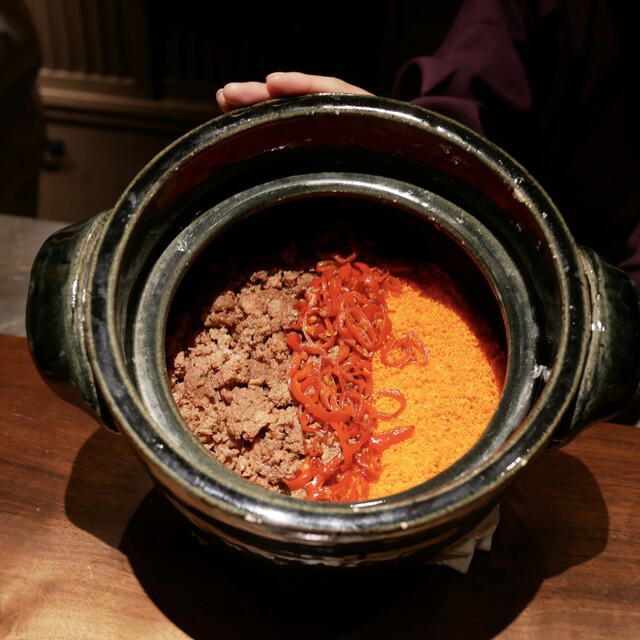
The menu
What to order
- Omakase yakitori course using Kyoto Tei Jidori
- Kishu duck skewers
- Duck roast cutlet sandwich
- Pureed seasonal soup
Osaka changes after office hours: streets tighten, signs stack vertically, and dinner becomes less about browsing than arriving with intent. Here, premium yakitori has moved far beyond the casual skewer shop. Serious rooms now behave more like focused counter dining: controlled pacing, sharper sourcing, and drinks chosen to support the grill. Yakitori Shidare belongs to that Osaka category, where grilled chicken is a milestone dinner, not a late-night fallback.
The occasion matters. A celebration meal in Osaka does not need sushi formality or French tablecloths; the city is fluent in counter formats where heat, timing, and repetition do the work. At this level, yakitori’s appeal is directness. Sequence, portion control, and attention to each cut give the meal ceremonial rhythm without the stiffness of more elaborate tasting menus. For diners choosing between a premium sushi counter such as Sushi Akazu and a yakitori room in the same spending tier, the decision is less about status than energy: sushi asks for quiet calibration; yakitori keeps the grill in the emotional foreground.
Premium yakitori in Osaka, built for the planned dinner
Osaka is one of Japan’s natural habitats for occasion dining, compressing restaurants, bars, and after-dinner movement into a compact urban rhythm. That density rewards restaurants with clear formats. Yakitori Shidare sits closer to controlled Osaka counter dining than to casual grill culture. Its Tabelog Hyakumeiten 2025 recognition is its clearest public signal: not a broad restaurant claim, but category-specific recognition within the yakitori field.
The format also shows how to think about the evening. It is credible for a birthday, anniversary, client dinner, or solo counter meal where dinner anchors the night. A focused yakitori room suits diners who care about pacing, aroma, and the incremental build of a meal cooked over heat. Compared with Yakitori Torisen, which sits in the city’s yakitori conversation at a different price shorthand, this is the more deliberate special-occasion play.
Osaka’s dining range is broader than many visitors allow. The same city that supports fast, democratic bites also supports small-format rooms where dinner is planned carefully around a seat. That spread is the point. For a wider read on the city’s restaurant spectrum, Our full Osaka restaurants guide gives useful context; for the rest of the trip, pair it with Our full Osaka hotels guide, Our full Osaka bars guide, Our full Osaka wineries guide, and Our full Osaka experiences guide.
Yakitori and the modern Osaka counter grammar
At this level, yakitori is defined not by novelty but by how narrow the kitchen makes the brief. Yakitori Shidare’s listed category is yakitori: grilled chicken skewers, a form that depends on repetition, heat management, seasoning, and timing rather than ornament. The drinks direction is best approached with the same seriousness: whether the pairing leans sake, wine, or something simpler, the point is to keep the grill in focus.
The comparison with Osaka’s other specialist formats helps. Soba at Sobadokoro Toki asks diners to appreciate restraint and texture; Kuukai, at a lower dinner spend, points to a different evening; Onomichi Murakami sits in a more accessible bracket. Premium yakitori occupies the middle ground between austerity and sociability. The room can feel celebratory without theatrical service, and the meal can stay focused without becoming severe. It suits diners who want a serious Japanese dinner without the hushed pressure of a high-end sushi counter.
For visitors building several Osaka meals, the contrast is worth engineering. A trip can move from casual daytime stops to other Osaka dining rooms, then reserve one night for a counter where the grammar is Japanese, linear, and tightly paced. A yakitori dinner’s value in that sequence is clarity: Osaka’s appetite for casual eating makes the precision of a focused grill room feel sharper, not formal for its own sake.
How to place it in a Japan dining itinerary
Yakitori Shidare is not the kind of choice to treat casually if the evening matters. Its appeal favors advance planning, and the room’s focused format means groups should consider fit before committing. For a milestone meal, that discipline is part of the appeal: the evening has a beginning, a set rhythm, and a sense that the table was chosen rather than stumbled upon. The best approach is to treat the meal as a dedicated counter experience rather than a flexible stop between other plans.
Travelers comparing cities should note how Osaka’s luxury often stays closer to appetite than ceremony. Tokyo may make status more visible, Kyoto may make seasonality more codified, but Osaka is especially good at turning narrow formats into generous nights out. That is why a yakitori counter can sit comfortably beside broader Japan plans, whether the rest of the itinerary is built around sushi, noodles, casual regional cooking, or other unnamed dining rooms across the country.
For North America-based travelers calibrating Japanese drinking and casual formats before or after a trip, comparable restaurants abroad sit in a different category, but they underline the same point: Japanese dining culture travels well when the format is understood, not flattened. In Osaka, this dinner’s appeal is the compact proposition. Choose it when the night calls for a controlled counter experience, category-specific recognition, and a celebration that keeps the grill, not the room, at the center.
Frequently asked questions
What price level is Yakitori Shidare?
Pricing at Yakitori Shidare is listed as JPY 20,000 - JPY 29,999.
Where exactly is Yakitori Shidare?
Osaka.
Do they take walk-ins at Yakitori Shidare?
Yakitori Shidare is best treated as a planned dinner rather than a casual backup. Its Tabelog Hyakumeiten 2025 recognition makes it a category-specific yakitori choice in Osaka.
What is Yakitori Shidare known for?
Yakitori Shidare is known for yakitori, or grilled chicken skewers, in Osaka.
The Quick Read
Comparable venues to place this listing in its category.
| Venue | Cuisine | Price | Awards | Notes |
|---|---|---|---|---|
| Yakitori ShidareThis venue (the venue you are viewing) | Premium Yakitori Omakase | $150–200 | Tabelog 100 #97 | Not listed |
| Onomichi Murakami | Japanese Teppan-Yaki / Okonomiyaki | $30–50 | Tabelog 100 #36 | JPY 3,000 - JPY 3,999 |
| Sushi Akazu | Traditional Edomae Omakase Sushi with Red Vinegar Rice | $150–200 | Tabelog 100 #45 | JPY 20,000 - JPY 29,999 JPY 20,000 - JPY 29,999 |
| Sobadokoro Toki | Traditional Handmade Soba | $20–30 | Michelin Bib Gourmand · Tabelog 100 #7 | Soba |
| Yakitori Torisen | Yakitori | $100–150 | 1 Michelin Star | Not listed |
| Kuukai | Casual Korean in Kitashinchi | $100–150 | Tabelog 100 #82 | JPY 8,000 - JPY 9,999 View spending breakdown |
Recognition history
Dated appearances from independent guides and award organizations, with the underlying list record or original source where available.
Tabelog 100 #97 · No. 97
Tabelog · Tabelog 100 - Yakitori - WEST - 2025
Continue exploring
More in Osaka
Restaurants in Osaka
All restaurants in Osaka →




Bars in Osaka
All bars in Osaka →



Hotels in Osaka
All hotels in Osaka →




Wineries in Osaka
Browse all →
Details
- Elegant
- Intimate
- Cozy
- Sophisticated
- Date Night
- Business Dinner
- Solo
- Special Occasion
- After Work
- Chefs Counter
- Private Dining
- Standalone
- Sake Program
- Extensive Wine List
- Farm To Table
- Local Sourcing
- Omakase
- Tasting Menu
- Counter Dining
- Set Menu
- Sake
- Wine
Refined and tranquil counter-focused space with only 14 seats, non-smoking, relaxed lighting and a calm, adult atmosphere suited to slow, course-style yakitori dining.