Google: 4.8 · 212 reviews
.png)
Set inside a former chapel on Place Voltaire, Inari brings a Michelin Plate-recognised French-Vietnamese fusion approach to the heart of Arles. Chef Céline Pham — shaped by kitchens including Septime and Ze Kitchen Galerie — centres vegetables and seasonal produce in a menu where garrigue, confit, and chrysanthemum appear alongside red mullet and spelt. A concise natural wine list completes the picture.
 Discover on Pearl
Pearl is the En Primeur Club membership app — saves, bookings, and concierge access live there. Same editors, same standards.
A Chapel, a Counter, and the Logic of Restraint
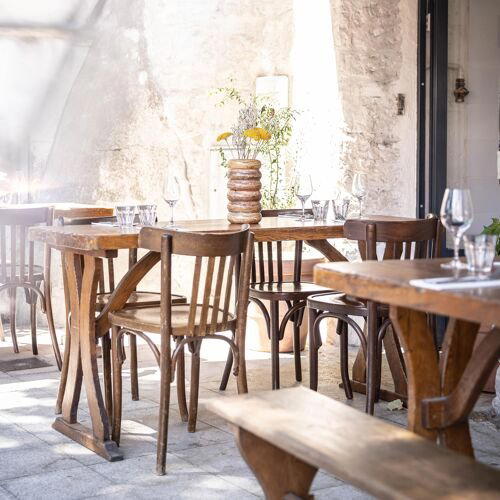
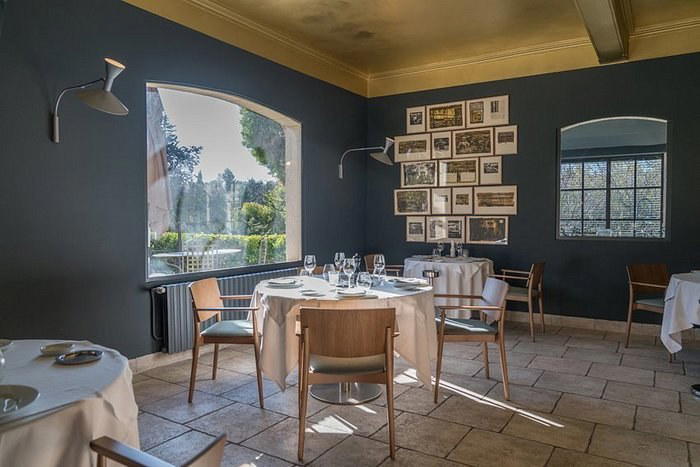
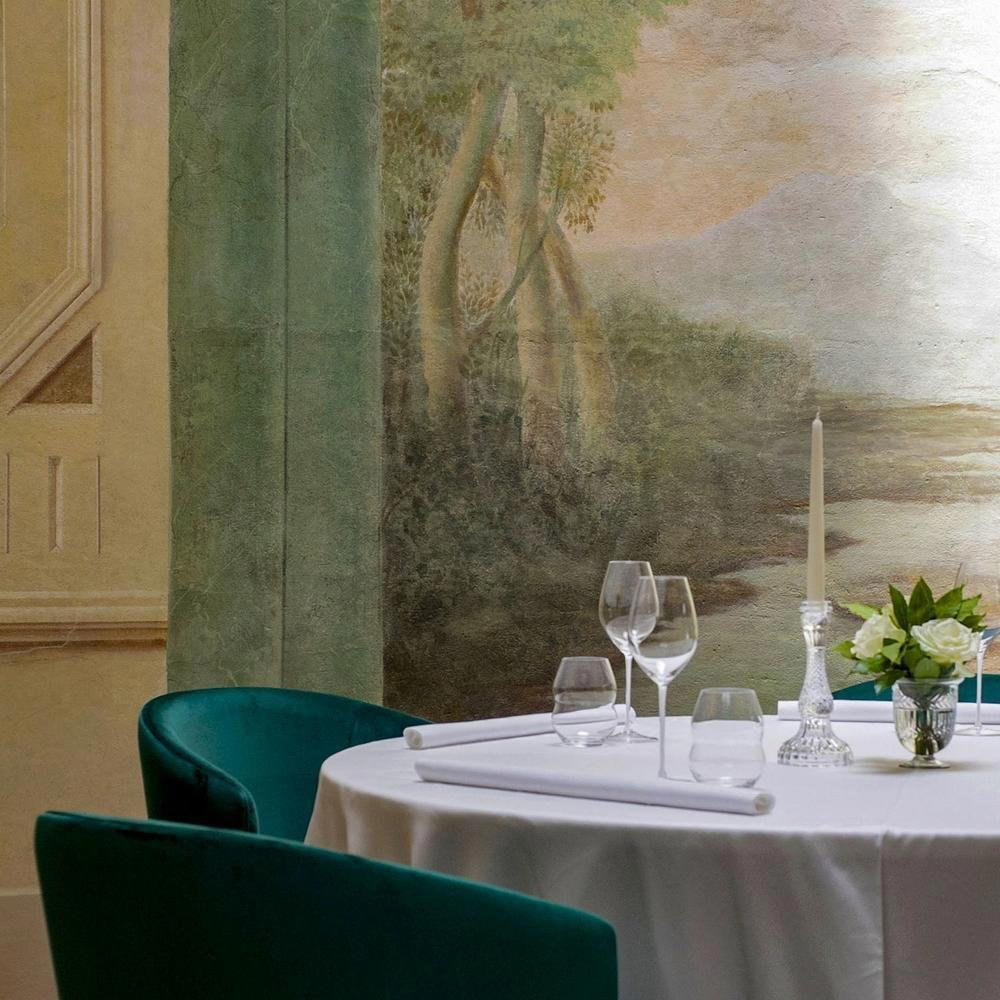
Arles has always attracted people who wanted to be somewhere slightly removed from the obvious. The Romans left an amphitheatre; Van Gogh left paintings; the annual photography festival draws a particular kind of traveller who prefers context over spectacle. The city's dining scene has followed that instinct. While the grand restaurants of Provence congregate along the coast or in the hill villages, Arles has developed a quieter, more considered table culture — one where the room is often as deliberate as the plate. Inari fits that disposition precisely. It occupies a former chapel on Place Voltaire, the space stripped back and furnished in a vintage register that feels chosen rather than decorated. Before you have ordered anything, the setting tells you something about the meal ahead: this is a kitchen that works by subtraction.
What French-Vietnamese Fusion Looks Like in Practice
French-Vietnamese cooking has a specific lineage in France. It is not fusion in the loosened, anything-goes sense that the word sometimes implies. At its most coherent, it holds two culinary grammars in tension — the French instinct for stock, sauce, and slow-built depth against the Vietnamese preference for herbaceous brightness, fermented acidity, and vegetable precision. The result, when it works, is a cuisine of layered restraint rather than loud contrast. In France, this register has found its most serious practitioners in Paris, where restaurants like Ze Kitchen Galerie and Septime have built reputations on exactly that kind of disciplined, produce-led cooking. Inari's chef Céline Pham trained inside those kitchens, along with Saturne, before bringing the approach south to Arles. That Parisian lineage matters as context: it explains why the food here reads less like a Provençal restaurant with Asian inflections and more like a genuinely bilingual kitchen that happens to be drawing on Camargue produce.
The Michelin Plate awarded in 2025 confirms a consistent standard , it signals that inspectors found cooking worth noting, even if the full star apparatus has not been applied. For a small restaurant in a city of Arles's size, that recognition places Inari in a different tier from its immediate neighbours. At €€€ pricing, it sits above the casual bistro bracket occupied by places like Chardon and L'Arlatan, and below the full creative-tasting format of Le Greenstronome. It occupies, in other words, the serious-but-not-ceremonial middle ground that most travellers actually want.
The Ritual of the Meal
The pacing here reflects the chapel's proportions and the kitchen's philosophy in equal measure. This is not a room designed for quick turns. The format encourages attention: dishes arrive in a sequence that rewards reading each plate before you eat it. Michelin's own description of the menu points to a fillet of red mullet served with spelt bread, a confit of tomatoes, a stock of red mullet with garrigue oil, yellow courgettes, and chrysanthemums. That single dish encapsulates the approach. The garrigue oil anchors the plate in Provençal terroir; the chrysanthemum is a Vietnamese gesture; the spelt bread and the tomato confit are French technique applied with patience. Nothing announces itself loudly. The dish asks you to eat slowly enough to notice the joins.
Vegetables, as the Michelin commentary notes, often take the structural role rather than the supporting one. This is not a trend posture , it is a consequence of the Vietnamese half of the equation, where vegetables carry flavour rather than merely accompany protein. At a meal here, the produce from the Camargue and the surrounding Alpilles region gives the vegetable-forward approach a particularly strong local argument. The garrigue oil in that mullet dish is not a decoration; it is a way of putting the wild herb scrubland of southern Provence directly on the plate.
The natural wine list is described as concise, which in a restaurant of this size and register is a deliberate editorial choice rather than a limitation. A shorter list, carefully chosen, typically means the selection has been considered in direct relation to the food. For a kitchen navigating Vietnamese acidity and Provençal depth, the wine pairing problem is genuinely interesting, and a focused list of natural wines , often lower in intervention, higher in textural complexity , is a coherent answer. It is worth comparing this to the approach at Le Gibolin, the farm-to-table address at the €€ tier, where the wine list similarly reflects a produce-first ethos, or to Drum Café, which operates at a more casual register with its own seasonal approach.
Arles in the Broader French Dining Context
To understand what Inari represents within France's restaurant hierarchy, it helps to map where serious, ingredient-led cooking currently concentrates. The highest-profile addresses , Alléno Paris au Pavillon Ledoyen, Mirazur in Menton, Troisgros in Ouches, Bras in Laguiole, Auberge de l'Ill in Illhaeusern, and Flocons de Sel in Megève , operate at a scale and investment level that places them in an entirely different tier. Inari is not competing with those rooms. What it shares with the serious end of that spectrum is the conviction that place matters: that the produce, the terroir reference, and the setting should produce a meal that could not be replicated identically anywhere else. The French-Vietnamese fusion register, meanwhile, is finding practitioners outside Paris in a way that would have been unusual a decade ago. Peer restaurants working in comparable fusion registers include Ajonegro in Logroño and Arkestra in Istanbul , both operating in cities where a single ambitious address can define the upper end of a scene.
Planning Your Visit
Inari is located at 16 Place Voltaire in the centre of Arles, within walking distance of the Roman amphitheatre and the main hotel quarter. At €€€ pricing, expect a spend in the range typical of a serious French regional restaurant with a full menu and wine. The Google rating of 4.8 from 194 reviews is a consistent signal of satisfaction across a meaningful sample; at a room of this scale, that number reflects repeat visits and genuine word-of-mouth rather than volume traffic. Booking ahead is advisable, particularly during the Rencontres d'Arles photography festival each summer, when the city's better tables fill weeks in advance. Given the chapel format and the kitchen's precise, unhurried style, this is a dinner suited to an evening with no fixed end point. Arles has several hotels within close range , see our full Arles hotels guide for options across price tiers. For a fuller picture of the city's dining, drinking, and cultural programming, the Arles restaurants guide, bars guide, wineries guide, and experiences guide map the city's offer at each category.
Style and Standing
These are the closest comparables we have in our database for quick context.
| Venue | Cuisine | Awards | Notes |
|---|---|---|---|
| Inari | Fusion | Michelin Plate (2025); Having worked in some emblematic Parisian restaurants (Ze… | This venue |
| Le Greenstronome | Cuisine d'auteur | French | Cuisine d'auteur | French, $$$$ | |
| Le Gibolin | Farm to table | Farm to table, €€ | |
| Chardon | Modern Cuisine | Modern Cuisine, €€ | |
| L'Arlatan | Mediterranean Cuisine | Mediterranean Cuisine, €€ | |
| Les Maisons Rabanel | Creative | Creative, €€€€ |
At a Glance
- Intimate
- Elegant
- Rustic
- Sophisticated
- Date Night
- Special Occasion
- Historic Building
- Natural Wine
Intimate upstairs setting with beautiful presentation and attentive service in a vintage chapel atmosphere.