
Tabelog 100 #65
Our verdict
In Osaka's Nishinarima district, Human beings everybody noodles (人類みな麺類) has built a following around a menu architecture that treats ramen as a serious culinary form rather than a convenience food. The name alone signals an ambition: noodles as a unifying human experience. Positioned at a different register from the city's kaiseki and French tasting-menu circuit, it draws the kind of attention usually reserved for Michelin-tracked tables.

Pearl is the En Primeur Club membership app, where members save venues, book tables and use the concierge.
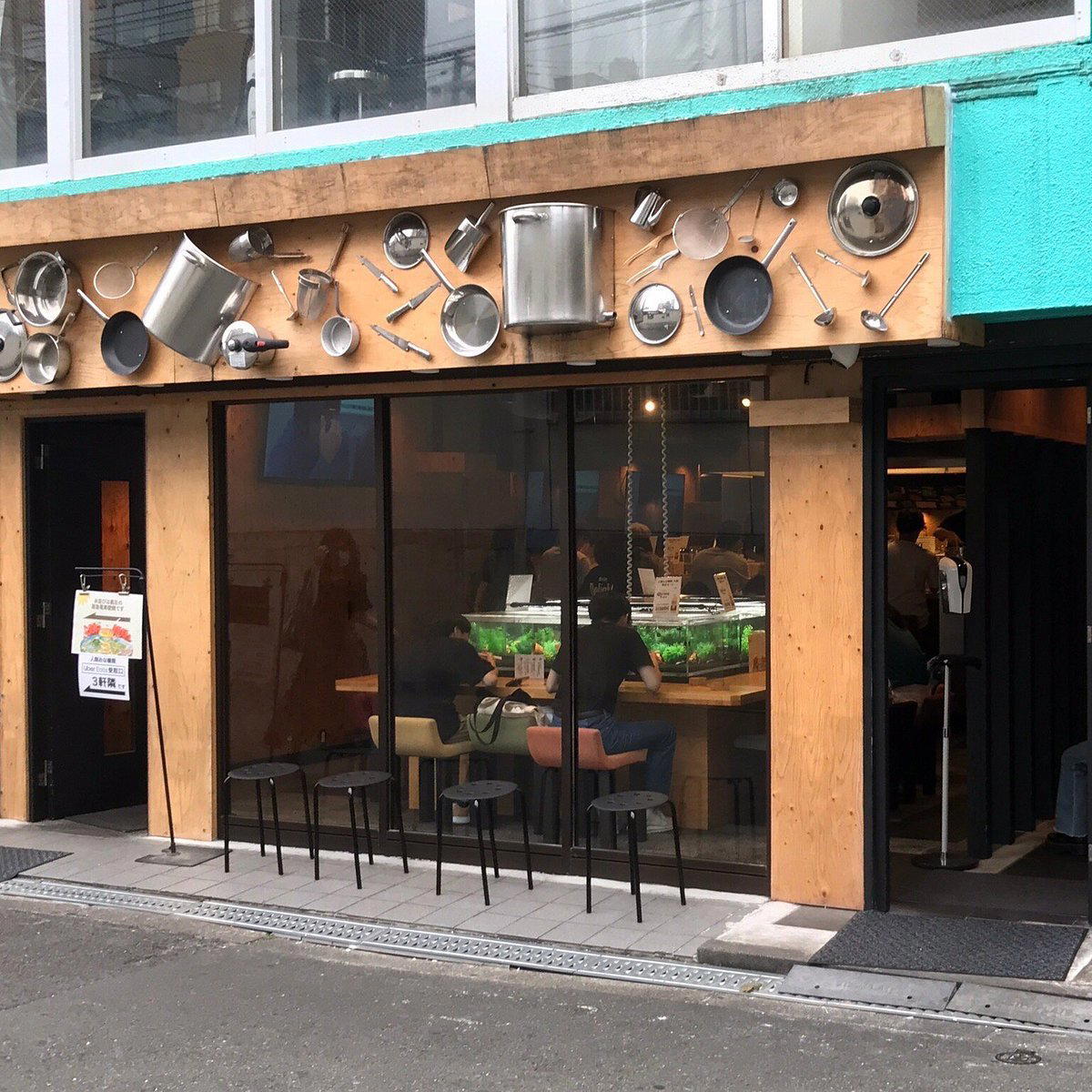
The menu
What to order
- Genten Ramen
- Macro Ramen
- Micro Ramen
Where Noodles Become a Statement
Osaka's ramen culture operates at a different register from Tokyo's. The city's eaters tend toward bolder, more assertive broths, and the competitive field of shops that line its residential wards reflects that preference. In the Nishinarima area of Yodogawa Ward, a short walk from Nishi-Nakajima-Minamigata station, Human beings everybody noodles (人類みな麺類) occupies a position in this scene that a direct noodle-shop framing does not fully explain. The name, 人類みな麺類, which translates roughly as 'all humanity is noodles', signals something beyond portion sizes and topping counts. It is a proposition: that ramen, given the right framework, belongs alongside the serious cooking that defines a city's dining identity.
Osaka already carries formidable weight in that identity. The multi-starred French and innovative tasting menus at places like HAJIME and Fujiya 1935, or the kaiseki precision of Taian and Kashiwaya Osaka Senriyama, occupy the city's leading formal-dining tier. Human beings everybody noodles operates at a different price point and without the ceremony, but the attention it has accumulated suggests the kitchen is thinking about its craft with similar seriousness. For the broader Osaka restaurant scene, that kind of crossover attention is not accidental.
Menu Architecture as Intent
The most revealing thing about any ramen shop is the structure of its menu. A kitchen that offers twenty variations is making a different argument than one that edits down to three or four. Restraint in a ramen menu communicates confidence: it says the kitchen believes its core product is strong enough to carry the room without the cover of variety. Human beings everybody noodles has attracted significant public discussion precisely because its menu reads as a deliberate editorial act rather than a catalogue of options.
Japanese ramen culture has developed a sophisticated vocabulary around broth construction, the ratio of tare to stock, the question of how far to push umami concentration, the degree to which noodle texture should be calibrated to broth weight. At this address in Yodogawa Ward, those decisions are taken seriously. Observers who follow the shop closely note that it operates in a register where each bowl functions as an argument for a specific balance of flavour, rather than a delivery mechanism for familiarity. That is the kind of positioning that earns repeat visitors and long queues, and it is the reason a ramen shop in a residential ward of a large Japanese city accumulates the kind of profile typically associated with formal restaurants.
Across Japan, the ramen shops that have attracted the most durable attention, from Tokyo's precision-driven omakase counters to regionally distinct expressions in cities like Fukuoka, share a common characteristic: the kitchen has made hard choices about what it will and will not do. Human beings everybody noodles fits that pattern. The menu is not a compromise between styles; it is a point of view expressed in broth, noodle, and topping.
The Ramen Shop as Neighbourhood Anchor
Yodogawa Ward is not a tourist district. It is a working residential area of Osaka, the kind of neighbourhood where a serious shop survives on repeat local custom and word of mouth rather than foot traffic from visitors looking for a quick lunch near a landmark. That geography matters. A kitchen that builds a following in this kind of location is doing so on the strength of the product, not the setting.
Japan's most closely watched ramen shops often share this characteristic: they sit in unremarkable commercial streets, in modest spaces, and they earn attention by making the bowl the entire argument. The physical environment is not irrelevant, the experience of eating ramen is partly about the counter, the steam, the sound of a busy kitchen, but it is subordinate to what arrives in the bowl. This is a different negotiation between setting and food than the one happening at, say, La Cime or Gion Sasaki in Kyoto, where room design and service choreography carry significant weight. At Human beings everybody noodles, the bowl carries everything.
Ramen at this level of seriousness connects to a national conversation that runs through shops in Sapporo, smaller regional cities, and outposts of Japanese food culture in places like New York, where Japanese culinary rigour has reshaped how Western diners think about noodle-based cooking.
Planning a Visit
The shop is located at 淀川区西中島1-12-15 in Osaka's Yodogawa Ward, accessible from Nishi-Nakajima-Minamigata station on the Osaka Metro Midosuji Line and the Hankyu Kyoto Line. Ramen shops at this level of local reputation in Japan typically operate without advance reservations, which means the planning question shifts from booking to timing. Arriving early, particularly at opening or shortly before, is the standard approach for shops that draw queues. Mid-week visits during off-peak hours generally offer shorter waits than weekend lunchtimes. Comparable serious ramen shops in this tier are priced well below the kaiseki and French tasting-menu circuit, making the cost calculus direct even without a confirmed price range on file.
For readers building a wider Osaka itinerary around serious eating, the gap between a bowl at a shop like this and a formal dinner at Taian or HAJIME is not just price, it is a different theory of what a meal is for. Both are worth including. Osaka is one of the few cities where that range exists at genuine depth, from the neighbourhood ramen counter to the multi-starred tasting room, and the full Osaka restaurant guide maps that spectrum in detail.
Frequently asked questions
What's the address for Human beings everybody noodles (人類みな麺類)?
Human beings everybody noodles (人類みな麺類) is located at 淀川区西中島1-12-15, 大阪市, 大阪府, 532-0011, Osaka.
How do you get to Human beings everybody noodles (人類みな麺類) from central Osaka by public transit?
The shop is at 西中島1-12-15 in Yodogawa Ward, accessible from Nishi-Nakajima-Minamigata station on the Osaka Metro Midosuji Line, one of the city's main north-south arteries. The station puts the shop within walking distance, making it a practical detour from the Umeda or Shinsaibashi corridor without requiring a taxi or transfer.
What's the best thing to order at Human beings everybody noodles (人類みな麺類)?
What the shop's address in Yodogawa Ward signals, a working residential neighbourhood with no tourist buffer, is that the kitchen answers to regulars who return weekly. In that context, the core bowl, whatever the house leads with, is typically where a shop of this type concentrates its identity.
How far ahead should I plan for Human beings everybody noodles (人類みな麺類)?
Neighbourhood ramen shops in Osaka's Yodogawa Ward, particularly those with a following among local workers and residents, frequently operate on a queue basis rather than bookings, with peak waits at lunch and early dinner. Arriving before service opens is the standard approach for shops of this format.
What has Human beings everybody noodles (人類みな麺類) built its reputation on?
The shop is located at 西中島1-12-15 in Yodogawa Ward, a residential and light-commercial district of Osaka with no significant tourist draw. Shops that hold in neighbourhoods like this do so on consistency and neighbourhood loyalty rather than media cycles. The name itself, roughly translating to 'all of humanity, noodles', signals a deliberate positioning: ramen as a democratic staple, not a destination object.
How does Human beings everybody noodles (人類みな麺類) handle allergies?
Ramen broths in Osaka typically involve pork, soy, and wheat bases, and cross-contamination at small counter shops is common.
Is a meal at Human beings everybody noodles (人類みな麺類) worth the investment?
The shop's location in Yodogawa Ward, off the tourist circuit, accessible from Nishi-Nakajima-Minamigata station on the Midosuji Line, points to a venue priced for daily use rather than occasion dining. At that price point, the question is usually consistency, not value.
Recognition Snapshot
| Venue | Cuisine | Price | Awards | Notes |
|---|---|---|---|---|
| Human beings everybody noodles (人類みな麺類)This venue (the venue you are viewing) | Traditional Shoyu Ramen | $1–10 | Tabelog 100 #65 | Not listed |
| HAJIME | Avant-Garde Japanese Fine Dining | $300–500 | 3 Michelin Stars · World's 50 Best #83 | French, Innovative |
| La Cime | Modern French with Japanese Ingredients | $150–200 | 2 Michelin Stars · World's 50 Best #13 | French |
| Kashiwaya Osaka Senriyama | Seasonal Kaiseki Omakase | $200–300 | 3 Michelin Stars · La Liste Top Restaurants | Japanese |
| Taian | Traditional Japanese Kaiseki Omakase | $150–200 | 3 Michelin Stars · La Liste Top Restaurants | Kaiseki, Japanese |
| Fujiya 1935 | Modern Japanese with European influences | $100–150 | 2 Michelin Stars · La Liste Top Restaurants | Innovative |
Recognition history
Dated appearances from independent guides and award organizations, with the underlying list record or original source where available.
Tabelog 100 #65 · No. 65
Tabelog · Tabelog 100 - Ramen - OSAKA - 2025
Continue exploring
More in Osaka
Restaurants in Osaka
All restaurants in Osaka →


Bars in Osaka
All bars in Osaka →

Hotels in Osaka
All hotels in Osaka →

Wineries in Osaka
Browse all →
Details
- Well Known
- Lively
- Energetic
- Casual Hangout
- Solo
- Group Dining
- Family
- Open Kitchen
- Counter Dining
- A La Carte
Modern, lively interior with an open kitchen, joyful aquarium in the center of the main table, nice background music, and welcoming atmosphere despite consistent long queues outside.