
Tabelog 100 #51
Our verdict
A Kanazawa Bunko ramen counter with Tabelog 100 Ramen Kanagawa selections in 2024 and 2025, hoshinochuukasoba belongs to Yokohama’s serious everyday-noodle tier rather than its formal dining circuit. The appeal is cultural as much as practical: ramen and tsukemen treated as repeatable craft, priced for regular use, and positioned within a city where Chinese, port-town, and commuter food traditions keep casual dining unusually deep.

Pearl is the En Primeur Club membership app, where members save venues, book tables and use the concierge.
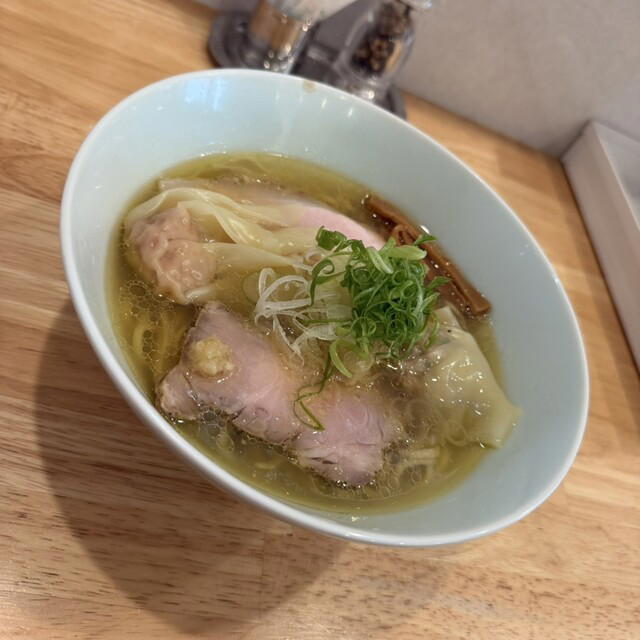
The menu
What to order
- Sio ramen
- Tsukemen (dipping noodles)
- Mix wonton salt ramen
Yokohama is not only a city for special-occasion dining. Its everyday restaurant culture also depends on simple routines: quick meals, small specialist shops, and places where a bowl can carry as much local value as a longer meal does elsewhere. In that setting, ramen is not a novelty format. It is a daily decision, judged on consistency, rhythm, value, and whether the kitchen can keep a narrow idea sharp service after service.
hoshinochuukasoba sits inside that Yokohama grammar. The listed category is ramen and tsukemen, and the price band is JPY 1,000 to JPY 1,999 for both lunch and dinner. Those details matter because stronger everyday noodle shops rarely trade on ceremony. They compete through speed, broth discipline, noodle handling, and repeat traffic, with everyday diners forming much of the audience.
Yokohama ramen, read through the city's everyday food culture
Yokohama’s noodle culture has a wider frame than a single trend cycle. Chuka soba, ramen, and dipping noodles sit naturally inside the city’s casual dining mix: informal, technically demanding, and judged by customers who know the difference between a bowl built only for impact and one built for return visits.
The 2025 Tabelog Hyakumeiten recognition places hoshinochuukasoba in a recognized ramen context, not merely in a casual local category. Its Tabelog score of 3.74 gives another useful signal in a market where ramen ratings tend to be fought over in small increments. The comparison is not with hotel dining rooms or reservation-only counters; it is with shops that can make a low-ticket meal feel worth crossing part of the city for.
That distinction is visible across Yokohama’s broader casual-dining map. Other Yokohama dining rooms across different specialist formats all point to the same pattern: Yokohama rewards focused, mid-priced restaurants that do one lane with confidence. For a wider read on the city’s dining range, use Our full Yokohama restaurants guide.
Why the format matters more than a chef narrative
Ramen shops are often weakened in writing by overexplaining personality. The more useful lens is operational. A focused ramen format creates pressure: turnover has to be clean, queues have to move, and the menu cannot sprawl without damaging the point of the place. The decision is closer to a local dining calculation than a destination-booking exercise. Timing, patience, and appetite matter more than ceremony.
The listed category also says something about audience. Ramen and tsukemen suit quick meals, solo stops, and repeat visits, but they can also serve diners looking for a low-friction meal with technical depth. That mix is part of the cultural significance: ramen can be obsessive without becoming exclusionary, and a modest price band does not mean the food is treated casually by regulars.
Price is another marker. At JPY 1,000 to JPY 1,999 for lunch and dinner, the shop operates in a range where repeatability still matters. Nearby comparison points show how narrow but meaningful these bands can be: Ramen Sugita Ya Honten sits in a ramen register, while Au petit matin, Mon Peche Mignon, and Ganesh show how Yokohama’s casual and mid-priced expectations vary by genre. In Yokohama, those increments shape expectations as much as cuisine type does.
The broader appeal of the format also keeps the experience aligned with ramen’s public character. This is not a room for negotiating status through space. It is a shared, close-proximity style of eating where the seriousness is in the bowl and in the house rhythm. Practical clarity matters, but the point is not to turn the place into a polished lifestyle proposition.
How to place it within a Yokohama itinerary
For travelers, the point is not to bend a whole Yokohama day around one bowl. The smarter move is to use hoshinochuukasoba as evidence of the city beyond its most familiar dining images. Yokohama’s food identity gets thinner when reduced only to formal meals and scenic plans; everyday ramen restores the scale at which many casual meals actually happen.
That makes hoshinochuukasoba a useful counterweight to the city’s more formal or occasion-led addresses. A day might pair a casual noodle stop with time elsewhere in Yokohama, then shift later toward another genre entirely. Readers mapping that spread can cross-reference Our full Yokohama hotels guide, Our full Yokohama bars guide, Our full Yokohama wineries guide, and Our full Yokohama experiences guide rather than treating the restaurant as an isolated stop.
Japan’s casual-food strength is clearer when viewed across regions. Compare Yokohama’s ramen and related everyday food culture with other workaday noodle rooms, focused counters, and specialist formats elsewhere in Japan. Other cities add still more variation, but the useful comparison is generic rather than name-driven: local formats become persuasive when they keep a clear purpose.
Seen from abroad, the same lesson holds. Japanese casual formats travel well when they keep their limits: focused bars, rice-ball specialists, and ramen shops all depend on constraint. hoshinochuukasoba belongs in that conversation because its recognition, price band, and category align with a serious but everyday model of Japanese eating.
Frequently asked questions
Is hoshinochuukasoba expensive?
Pricing at hoshinochuukasoba is listed as JPY 1,000 - JPY 1,999 for both lunch and dinner.
What's the address for hoshinochuukasoba?
hoshinochuukasoba is located in Yokohama.
What's the best way to book hoshinochuukasoba?
Plan it as a casual Yokohama ramen stop rather than a formal destination meal, and check current details before going in person.
What is hoshinochuukasoba known for?
hoshinochuukasoba is known as a Yokohama ramen and tsukemen shop with 2025 Tabelog Hyakumeiten recognition.
Booking and Cost Snapshot
Comparable venues in the metro at similar price points.
| Venue | Cuisine | Price | Awards | Notes |
|---|---|---|---|---|
| hoshinochuukasobaThis venue (the venue you are viewing) | Ramen and Tsukemen | $10–20 | Tabelog 100 #51 | Not listed |
| RAMAI Yokohama isezaki mo-ru ten | Hokkaido-style soup curry & Indonesian-inspired curry | $10–20 | Tabelog 100 #87 | Naka, Hokkaido-style soup curry & Indonesian-inspired curry |
| Shinki | Traditional Yakitori & Izakaya Counter | $20–30 | Tabelog 100 #12 | Naka, Traditional Yakitori & Izakaya Counter |
| Rock'n Three | Jidori Shoyu Ramen | $10–20 | Tabelog 100 #2 | Kōhoku, Jidori Shoyu Ramen |
| Sweets Garden Yuji Ajiki | Japanese Sweets Patisserie | $10–20 | Tabelog 100 #14 | Tsuzuki, Japanese Sweets Patisserie |
| Ramen Sugita Ya Honten | Traditional Yokohama Iekei ramen | $10–20 | Tabelog 100 #17 | Isogo, Traditional Yokohama Iekei ramen |
Recognition history
Dated appearances from independent guides and award organizations, with the underlying list record or original source where available.
Tabelog 100 #51 · No. 51
Tabelog · Tabelog 100 - Ramen - KANAGAWA - 2025
Continue exploring
More in Yokohama
Restaurants in Yokohama
All restaurants in Yokohama →



Bars in Yokohama
Browse all →



Details
- Cozy
- Lively
- Solo
- Family
- Casual Hangout
- After Work
- Group Dining
- Standalone
- A La Carte
- Counter Dining
- Beer
- Sake
A compact, non‑smoking neighborhood ramen shop with counter and small tables, relaxed and casual in feel, often busy with a lively but comfortable atmosphere suited to both solo diners and families.