
Horumon Masaru places Tokyo yakiniku in its more democratic register: offal, grills, izakaya energy, and a Tabelog 100 Yakiniku Tokyo 2025 selection rather than luxury wagyu ceremony. In Mita, it reads as a local counterweight to higher-priced beef rooms, with horumon as the point of focus and value as part of the appeal.
Pearl is the En Primeur Club membership app — saves, bookings, and concierge access live there. Same editors, same standards.
- Address
- 5 Chome-21-14 Shiba, Minato City, Tokyo 108-0014, Japan
- Phone
- +81 3-6435-1990
- Website
- tabelog.com
 Saves & bookings on Pearl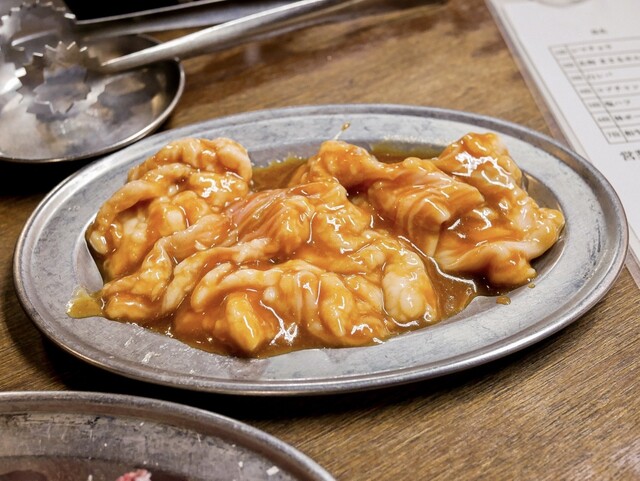
Approach a Tokyo horumon grill and the signals arrive before the plate: smoke, heat, chatter, the quick rhythm of tables turning over charcoal and beer. This is yakiniku stripped back to its social core, closer to tavern culture than choreographed tasting-menu dining. Horumon Masaru belongs to that register, where beef offal, table grilling, and izakaya informality carry more weight than marble-clad ceremony.
Tokyo’s beef culture has split into distinct lanes. One lane chases branded wagyu, private rooms, and high-ticket omakase-style pacing. Another stays closer to the postwar yakiniku tradition: quick heat, shared grills, cuts that reward attention, and a dining room built for friends rather than hushed reverence. Horumon Masaru sits firmly in the second lane, with categories listed as tripe, yakiniku, and izakaya, and with recognition from Tabelog 100 Yakiniku Tokyo 2025 placing it inside the city’s serious grill conversation.
Horumon, not steakhouse theatre, defines the Mita grill lane
Horumon is often misunderstood by visitors who read yakiniku only through wagyu sirloin and ribeye. In Japan, offal grilling is its own discipline: texture matters as much as fat, timing matters more than ornament, and the table becomes part of the kitchen. The pleasure is not in a chef presenting a finished composition; it is in managing heat, smoke, and sequence with whoever is sitting across the grill.
That makes this style a useful corrective to Tokyo’s luxury beef narrative. Imported grilling logic, especially the tabletop barbecue format associated with yakiniku’s Korean-Japanese history, meets Japanese sourcing habits and cut-by-cut specialization. The result is a cuisine where indigenous preferences for texture, portion control, and drinking compatibility reshape an outwardly simple technique. Horumon Masaru’s focus on tripe and yakiniku puts it in that practical, product-driven tradition rather than the trophy-beef economy.
The value signal is part of the story. In the same Mita orbit, Chinese Hanten Mita ten sits in a far higher dinner bracket, while Taishu Sakaba Souya occupies a similarly casual drinking-and-eating lane. Mon-Rico prices above the everyday range, Daphne stays at the low-cost café end, and Chuogo Hanten Mita points toward ramen. Against that local spread, the restaurant is not trying to be a grand occasion room; it answers a narrower question: where does grilled offal fit when Tokyo diners want density, smoke, and a bill that does not behave like Ginza beef?
Tabelog recognition gives a workaday format critical weight
A Tabelog 100 Yakiniku Tokyo 2025 selection matters here because the format is crowded and highly local. Tokyo has endless grill rooms, from station-adjacent chains to polished wagyu counters, so a Hyakumeiten listing for yakiniku is a useful signal of sustained diner confidence rather than a decorative badge. The listed score of 3.69 is another context point: on Tabelog, especially in competitive Tokyo categories, that number sits in a range where serious locals pay attention.
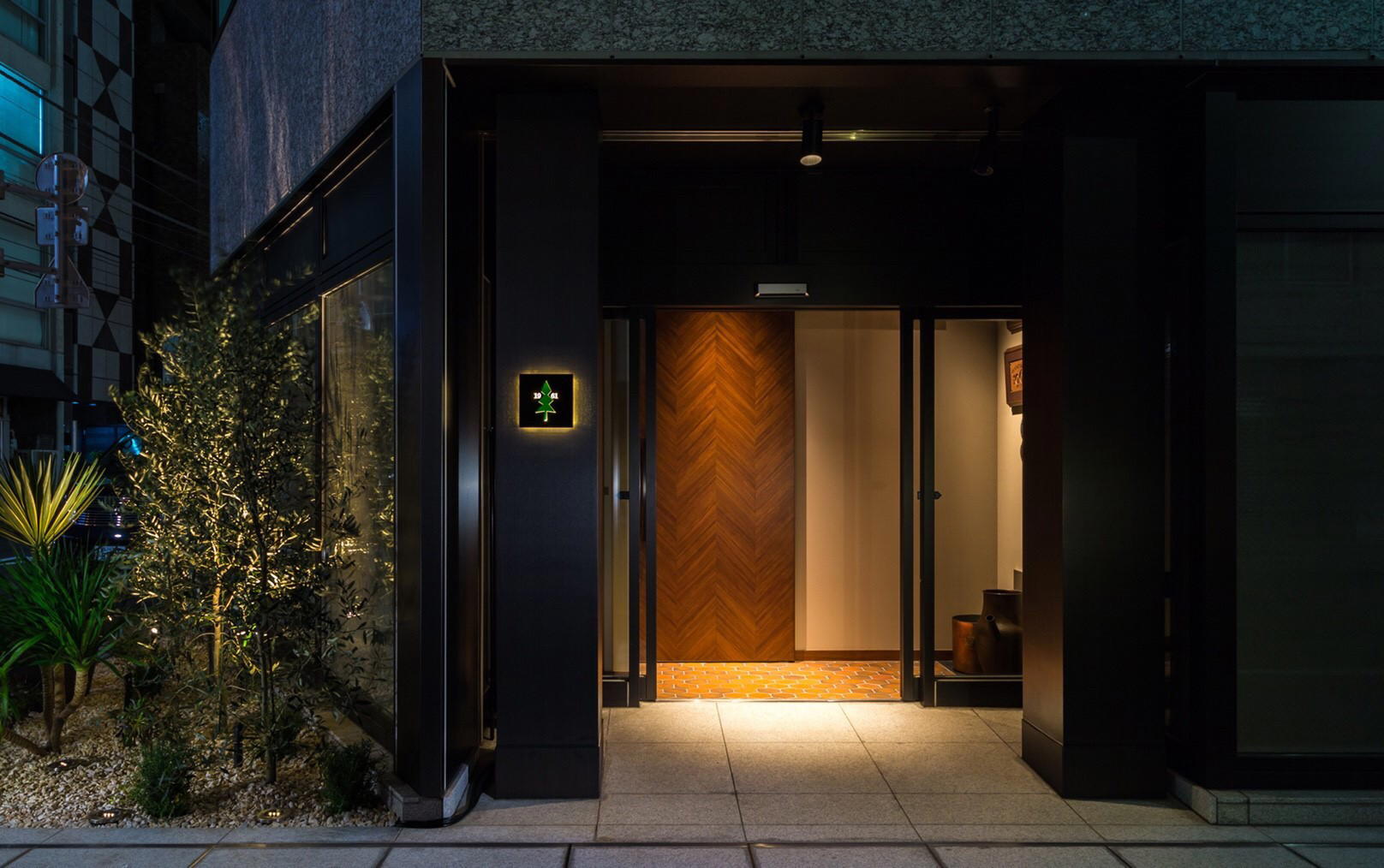
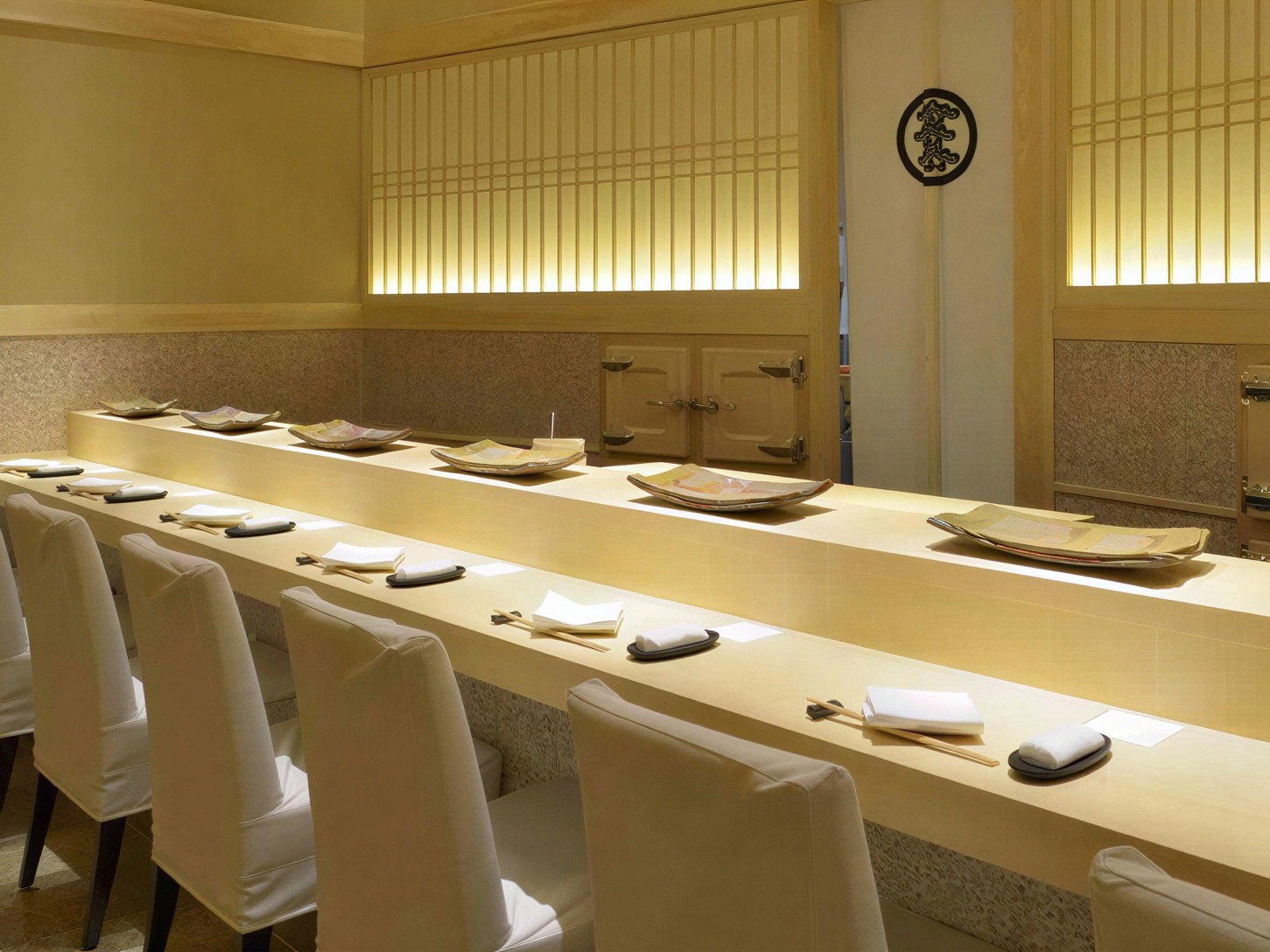
The room’s scale also shapes the experience. Sixty-two seats across 15 tables means this is not an eight-seat cult counter, nor is it a faceless banquet hall. It occupies the middle ground that suits horumon well: enough volume for energy, enough table structure for groups, and enough repetition for grill handling to feel like routine rather than performance. Private rooms are not part of the format, which reinforces the social, exposed quality of the meal.
Smoking is allowed, a detail that will divide readers. For some diners, it reinforces the izakaya register and the older-school feeling of a grill room. For others, it will be a reason to choose a different Tokyo yakiniku address. EP Club’s read is simple: this is better judged as a casual, high-signal horumon room than as a polished international dining room. Expect the grammar of a local grill, not the manners of a luxury hotel restaurant.
How to place it in a Tokyo eating day
Mita and Tamachi are practical rather than theatrical dining districts, with office workers, students, and residents shaping demand more than destination tourism. That matters. A yakiniku meal here reads differently from a night built around Roppongi gloss or Ginza ceremony. It is better used as a grounded Tokyo dinner, especially when the rest of the itinerary has leaned toward sushi counters, cocktail bars, or hotel dining rooms.
The format suits diners who understand that offal is not a consolation prize. Tripe and related cuts ask for curiosity about chew, char, and fat rather than a search for tenderness alone. For visitors, the smarter comparison is not with luxury wagyu tasting menus but with Tokyo’s broader casual excellence: curry shops, yakitori counters, ramen rooms, cafés, and drinking places where specialization beats spectacle. For that wider map, start with Our full Tokyo restaurants guide, then branch into Our full Tokyo bars guide, Our full Tokyo hotels guide, Our full Tokyo wineries guide, and Our full Tokyo experiences guide.
For adjacent restaurant planning, contrast the grill-and-drink mood with 124. KAGURAZAKA (Yakitori) for skewers, 12/10 Shinjuku ten for another Tokyo address. 鮪と炭火焼き うお炭 秋葉原店 for tuna and charcoal, 3 Chome no Curry Ya San for curry, and 2D Cafe for a lighter visual detour. Beyond Tokyo, the same Japan file can stretch to -Grilled beef Sukiyaki- KAMAKURA TANUKIAN 鎌倉 たぬき庵 in Kamakura.cafe in Osaka.know in Kumamoto, (Shoku) Vietnam in Kawasaki, [Curry Senmon Ten] Maruyama Kyoju. in Sapporo, and [ki:] in Kyoto. For Japanese food culture abroad, compare the sake-bar register at Jōdo Saké Bar in Los Angeles with the compact everyday format of Onigiri Time in Pasadena.
The critical case for the restaurant is not romance. It is that Tokyo’s dining intelligence often lives in category specialists: places that commit to a narrow format, serve a clear local audience, and earn recognition inside a crowded field. For travelers willing to meet yakiniku through horumon rather than prestige beef, this is a sharper education than another expensive steak dinner.
The Minimal Set
Comparable venues to place this listing in its category.
| Venue | Cuisine | Price | Notes |
|---|---|---|---|
| Horumon MasaruThis venue — the venue you are viewing | Minato, Horumon & Yakiniku Izakaya | $$ | Not listed |
| fragment 麻布十番 | Minato, japanese | Not listed | Not listed |
| Warayakiya Roppongi | Minato, Tosa Straw-Grilled Izakaya | $$ | Not listed |
| Tempura Kurokawa | Chūō, Traditional Tempura & Tendon | $$ | Not listed |
| Ponchi Ken | Not listed | $$ | Chiyoda, Tonkatsu & Pork Shabu by Western-Cuisine Chef |
| Hamburg Will | Not listed | $$ | Shinjuku, Japanese Hamburg steak & yoshoku |
Recognition history
Dated appearances from independent guides and award organizations, with the underlying list record or original source where available.
Tabelog 100 #74 · No. 74
Tabelog · Tabelog 100 - Yakiniku - TOKYO - 2025







At a Glance
- Lively
- Cozy
- Energetic
- Classic
- Group Dining
- Casual Hangout
- After Work
- Solo
- Celebration
- Standalone
- Beer Program
- Sake Program
Current opening hours
- Monday
- 1:30–10:30 PM
- Tuesday
- 1:30–10:30 PM
- Wednesday
- 1:30–10:30 PM
- Thursday
- 1:30–10:30 PM
- Friday
- 1:30–10:30 PM
- Saturday
- 12–10:30 PM
- Sunday
- 12–9:30 PM
Hours can change for holidays and private events. Last verified .