Our verdict
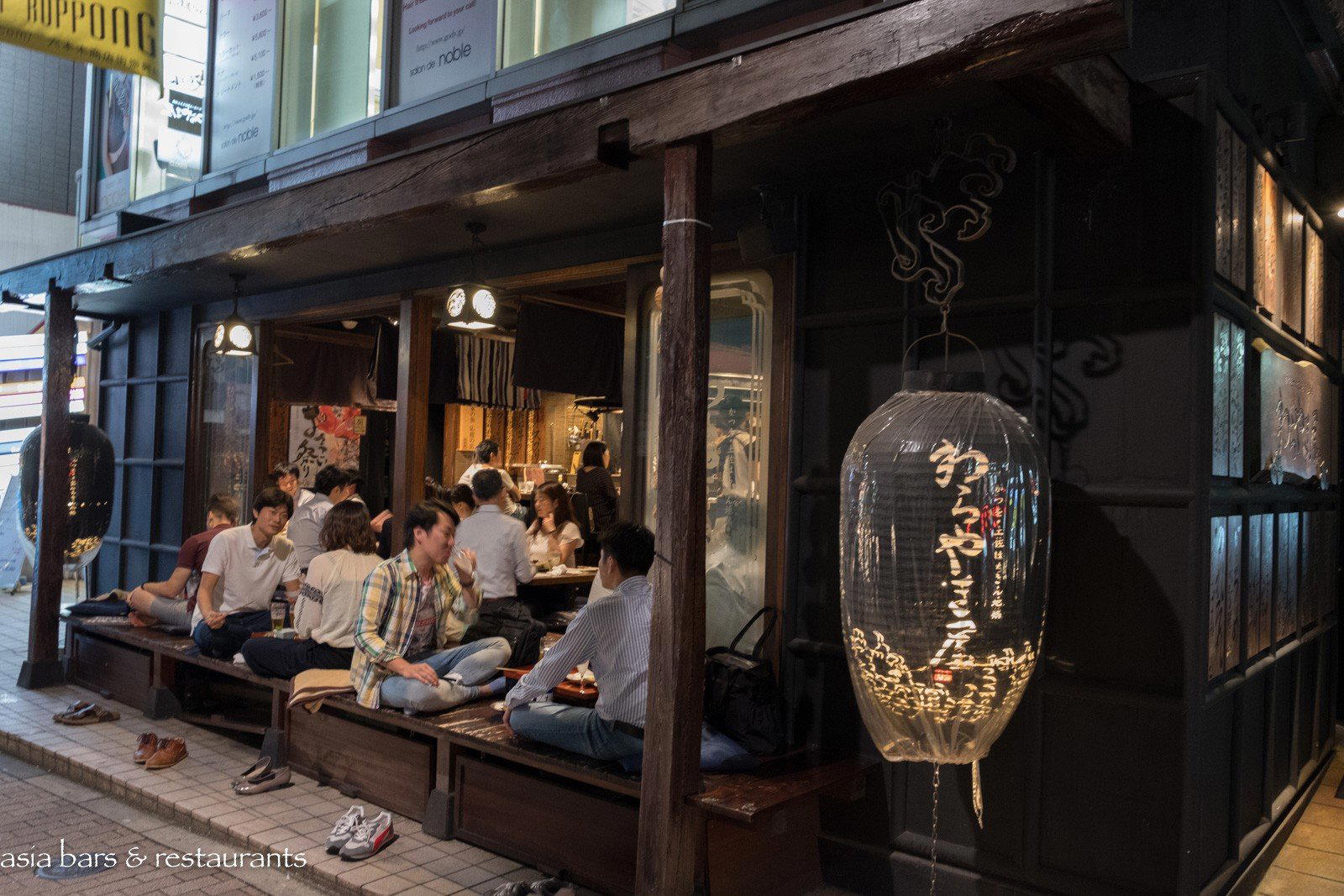
Warayakiya Roppongi sits on the ground floor of the Gordy Building in Minato City, bringing the ancient Japanese tradition of straw-fire cooking into one of Tokyo's most internationally trafficked neighbourhoods. The format centres on ingredients treated over wara, rice straw, a technique that generates intense, brief heat and a distinctly smoky character that sets it apart from conventional robatayaki or yakitori counters. It occupies a middle tier in Roppongi's dining scene, positioned between casual izakaya and the formal kaiseki houses that populate the area's upper price brackets.

Pearl is the En Primeur Club membership app, where members save venues, book tables and use the concierge.
The menu
What to order
- Katsuo no Tataki (Seared Bonito)
- Katsu no Shio Tataki (Salted Bonito Tataki)
- Tosa Hachikin Jidori (Local Grilled Chicken)
Smoke, Straw, and the Old Logic of Japanese Fire Cooking
Roppongi after dark runs on contrast. Within a few blocks of each other, you find white-tablecloth kaiseki rooms, raucous standing bars, and the kind of international hotel dining that could exist in any city on earth. It is precisely this density that makes places anchored to a specific Japanese craft tradition worth paying attention to. Warayakiya Roppongi, on the ground floor of the Gordy Building at 6 Chome-8-8 in Minato City, belongs to that tradition: it works with wara, the rice straw used as fuel in a cooking method with roots in rural Kochi Prefecture on Shikoku Island.
Wara-yaki, literally straw-grilling, is not a recent invention dressed up for urban dining. The technique predates the modern restaurant industry by centuries, originally a way of preparing katsuo (skipjack tuna) and other proteins using the only fuel available to farming communities after the rice harvest. The straw burns at high temperature for a short duration, producing a rapid sear and a flavour profile that differs from charcoal in meaningful ways: lighter smoke, faster Maillard reaction on the surface, less residual heat penetrating the interior. In Kochi, katsuo no tataki, seared bonito with citrus and ginger, prepared this way is considered a regional identity marker, not merely a cooking style.
Where Warayakiya Sits in Tokyo's Fire-Cooking Tier
Tokyo's grilled-food category is wide. At one end, neighbourhood yakitori counters charge a few hundred yen per skewer and operate without reservations. At the other, multi-seat robatayaki rooms at major hotels run omakase courses alongside sake pairings in the ¥¥¥¥ bracket occupied by peers like RyuGin or Harutaka. Warayakiya positions itself in neither extreme. The wara-yaki format is specific enough to attract visitors who understand the technique, without pricing or structure that competes directly with the kaiseki or omakase tier. That positioning is deliberate: the format rewards curiosity over ceremony.
For comparison, the French-leaning kitchens of L'Effervescence and Sézanne represent Tokyo's appetite for ingredient-led tasting menus with considerable ceremony. Crony, with its innovative Franco-Japanese hybrid, operates in a different register again. Warayakiya's straw-fire format is a counterpoint to all of them: tactile, direct, and built around a single technique rather than a broad seasonal menu philosophy.
The Sustainability Argument Built Into the Technique
Wara-yaki's environmental logic is worth examining seriously, not as a marketing claim but as a structural fact about the method. Rice straw is agricultural waste. After the harvest, it has historically been burned in fields or discarded, contributing to open-air combustion that generates particulate matter. Using it as a cooking fuel redirects that material into a controlled environment and a productive purpose. There is no purpose-grown fuel crop involved, no imported wood charcoal supply chain, and no pressurised gas infrastructure. The carbon released during straw combustion was sequestered by that season's rice crop, making the net atmospheric impact considerably lower than fossil fuel alternatives.
This is not a claim unique to Warayakiya. Wara-yaki restaurants across Japan, particularly in Kochi where the technique originated, operate on the same principle. But in a city like Tokyo, where the supply chain for specialty charcoal (binchotan, for instance) is both expensive and logistically complex, a kitchen built around regional agricultural byproduct represents a different model. The sourcing question is embedded in the format itself rather than handled separately as a sustainability initiative layered onto an otherwise conventional kitchen. This structural approach to waste reduction parallels what chefs in other contexts have pursued: at Lazy Bear in San Francisco, whole-animal butchery and fermentation programs serve a similar function of building the waste hierarchy into the kitchen's core identity rather than appending it.
Across Japan, the conversation about ingredient ethics and reduced-waste sourcing has reached kitchens at every price point. HAJIME in Osaka approaches it through hyper-local botanical sourcing. Gion Sasaki in Kyoto reflects it through seasonal kaiseki discipline. More rurally positioned venues like akordu in Nara, Goh in Fukuoka, Abon in Ashiya, affetto akita in Akita, Aji Arai in Oita, Ajidocoro in Yubari District, and Akakichi in Imabari engage with local producer networks in ways that reduce transport-linked emissions. aki nagao in Sapporo draws from Hokkaido's short-chain agricultural ecosystem. Wara-yaki sits within this broader pattern, sustainability achieved through technique, not through separate programme.
What the Roppongi Setting Adds
Minato City's Roppongi district carries a complicated dining identity. It has long been associated with international visitors, late-night energy, and a restaurant scene that skews toward accessibility. Yet it also contains some of Tokyo's most technically serious cooking: the neighbourhood's footfall funds a range of dining tiers that few Tokyo districts can match. For a wara-yaki specialist, this is not an obvious location, the technique is more commonly associated with southern Japan and regional izakaya culture. Placing it in Roppongi signals an intention to reach an audience that might not seek it out in a traditional context, and to hold its own in a neighbourhood where novelty is abundant but specificity is scarcer.
The address, ground floor of the Gordy Building, means street-level access without the elevator-to-a-hidden-room dynamic that characterises some of Roppongi's more theatrical venues. That accessibility is consistent with how wara-yaki operates as a format: the drama is on the pass, not in the architecture.
Planning Your Visit
Warayakiya Roppongi is reachable from Roppongi Station on the Hibiya or Toei Oedo lines, both of which place the venue within comfortable walking distance. The immediate area has dense dining competition, so early evening arrival or a reservation made in advance through the venue directly is the practical approach for anyone planning around the Roppongi corridor specifically. For visitors building a broader Tokyo dining itinerary, our full Tokyo restaurants guide maps the city's dining tiers across neighbourhoods. Those extending into the Kansai region will find Le Bernardin in New York City a useful reference point for how a single technique can anchor a restaurant's entire identity across decades, a model that translates directly to what wara-yaki kitchens attempt in Japan.
Frequently asked questions
Where do I go for Warayakiya Roppongi?
Warayakiya Roppongi is located at Japan, 〒106-0032 Tokyo, Minato City, Roppongi, 6 Chome−8−8 ゴーディービル 1F, Tokyo.
What makes wara-yaki different from standard yakitori or charcoal grilling in Tokyo?
Wara-yaki uses rice straw as its fuel source rather than binchotan charcoal or gas, generating an intense, short-burst heat that sears the exterior of ingredients rapidly while leaving the interior relatively rare. The technique originates in Kochi Prefecture on Shikoku island, where it became the traditional method for preparing katsuo no tataki, seared bonito. In Tokyo's grilled-food category, venues using authentic wara-yaki are considerably fewer than charcoal-based yakitori counters, which makes Warayakiya Roppongi a relatively specific address for the method in Minato City.
What should I order at Warayakiya Roppongi?
The kitchen's identity is built around wara-yaki, the technique of searing ingredients over burning rice straw, which produces a distinct smokiness and short char that differs from charcoal grilling. Fish and proteins cooked this way are the logical centrepiece of any visit. Side dishes built around seasonal Japanese produce tend to support the fire-cooked mains rather than compete with them. Ordering around the straw-grilled items gives the clearest picture of what the kitchen does well.
Can I walk in to Warayakiya Roppongi?
Warayakiya sits at 6 Chome-8-8 Gordee Building 1F in Roppongi, a district where evening foot traffic is high and popular counters fill early. Walk-in availability depends heavily on the night and time of arrival. Arriving before the main dinner rush, typically before 7pm on weeknights, improves your chances, though a reservation made in advance through the venue directly or a third-party booking platform removes the uncertainty.
Cuisine-First Comparison
Comparable venues nearby, for context on price, style, and recognition.
| Venue | Cuisine | Price | Awards | Notes |
|---|---|---|---|---|
| Warayakiya RoppongiThis venue (the venue you are viewing) | Tosa Straw-Grilled Izakaya | $30–50 | Not listed | Not listed |
| 赤坂 炭火焼肉 金星 | Japanese Robatayaki | Not listed | Not listed | Minato |
| HIGASHIYA man | Traditional Japanese wagashi & manju shop | $10–20 | Tabelog 100 #83 | Minato |
| Teuchi Shimada | Udon & soba izakaya with handmade noodles | $20–30 | Tabelog 100 #16 | Minato |
| Yakiniku Dori gg | Chicken-focused Yakiniku Izakaya | $30–50 | Tabelog 100 #52 | Shibuya |
| Teuchi Soba Yakko | Handmade soba & izakaya | $30–50 | Tabelog 100 #8 | Meguro |