Hop Alley


Michelin Bib Gourmand · James Beard Award Semi Finalist
Our verdict
Hop Alley holds a Michelin Bib Gourmand, placing it among Denver's most decorated mid-price restaurants. Chef Geoff Cox runs a Sichuan-leaning Chinese menu on Larimer Street where the cooking is technically sharp and the price point stays accessible. At the $$ tier, few kitchens in the city deliver this level of flavour precision.

Pearl is the En Primeur Club membership app, where members save venues, book tables and use the concierge.
Larimer Street's Approach to Modern Chinese Cooking
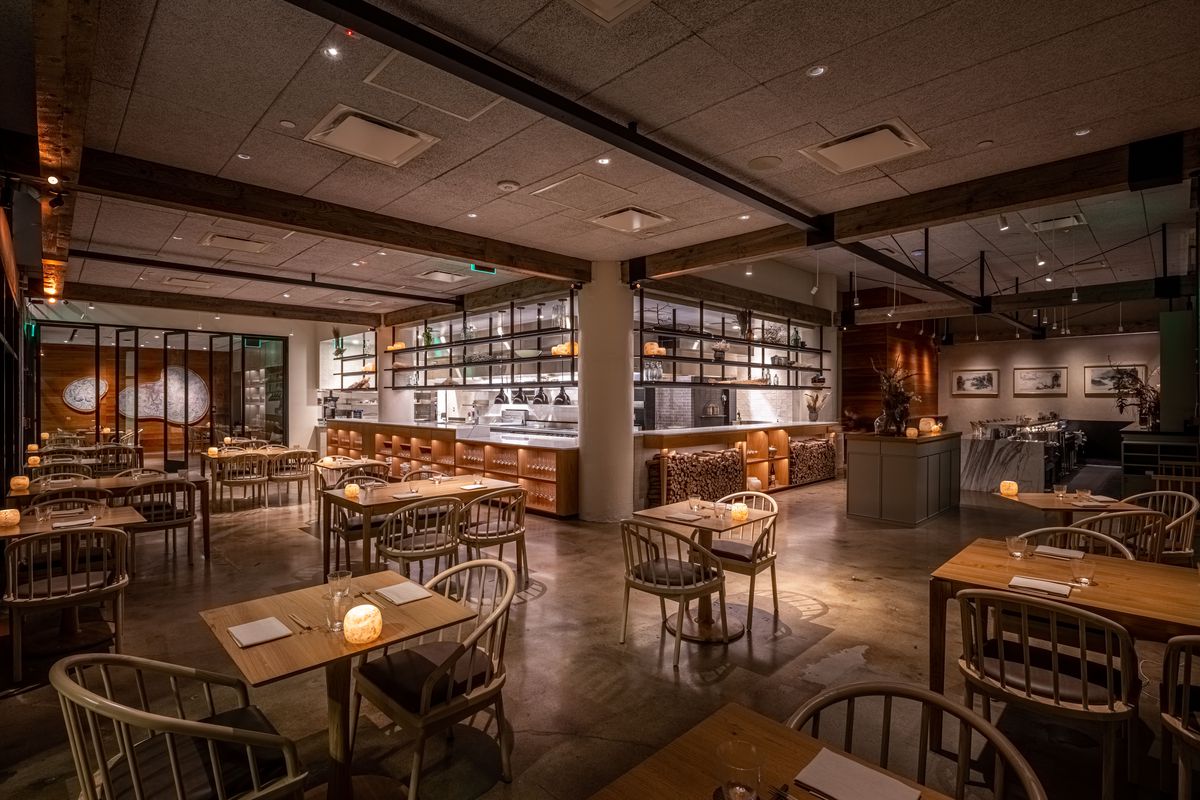
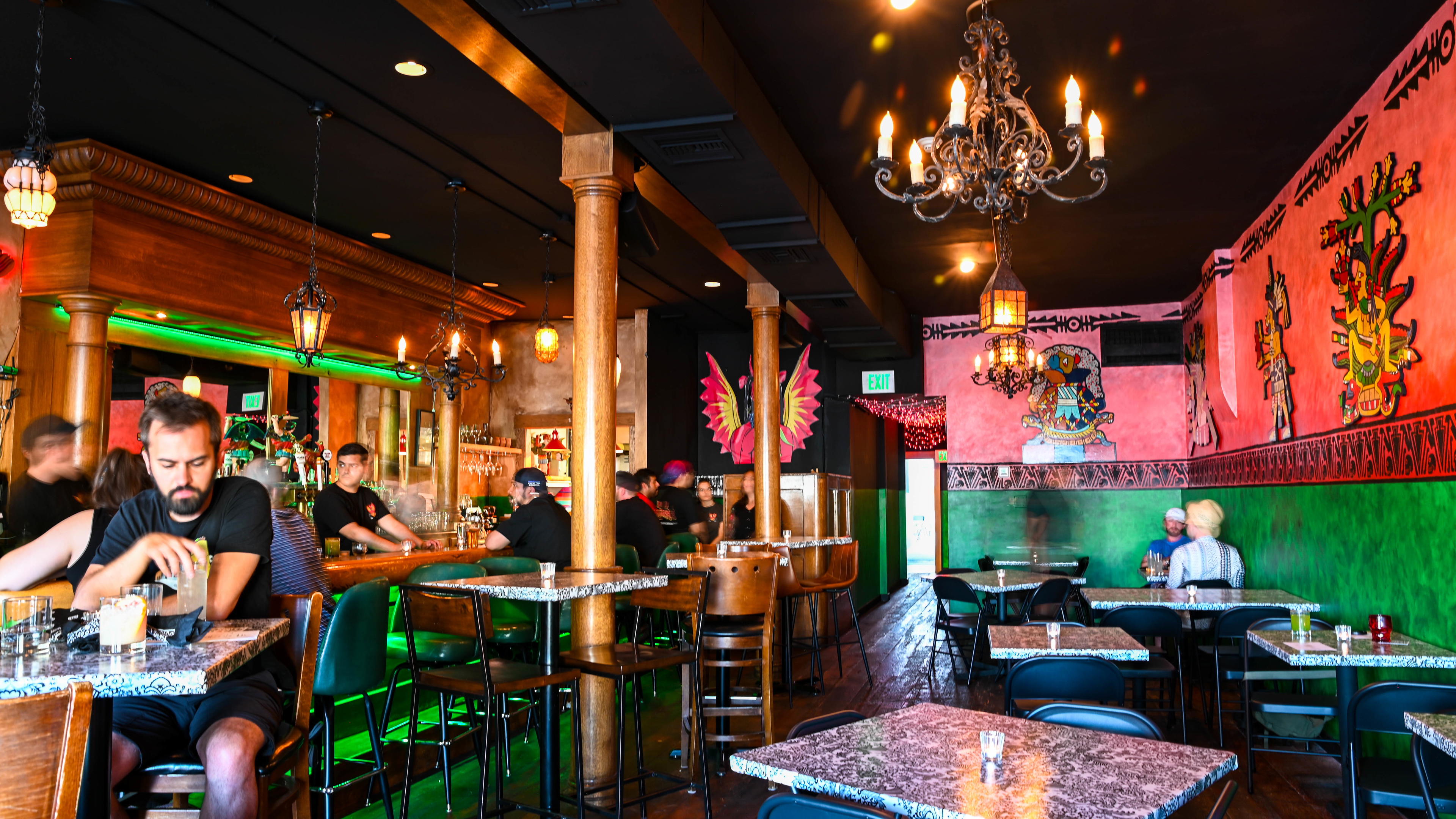
Denver's RiNo district has spent the past decade accumulating serious restaurants at serious prices, which makes Hop Alley's position on Larimer Street worth pausing on. The room reads contemporary rather than traditional: clean lines, a sleek interior that does nothing to signal the neighbourhood's Chinatown history despite the name referencing exactly that. The original Hop Alley was the informal name for Denver's late-19th-century Chinese quarter, a block largely erased by urban redevelopment. What operates at 3500 Larimer St today shares nothing with that era except the reference point, and the kitchen makes no attempt to pretend otherwise.
That transparency about what the restaurant is, modern, technically considered, Sichuan-inflected, matters because it sets the right expectations. Diners arriving for a heritage experience will find something different: a menu where classical Chinese frameworks are used as a starting position rather than a finishing line. The broader movement here, visible in kitchens like Mister Jiu's in San Francisco and Restaurant Tim Raue in Berlin, applies serious culinary technique to Chinese source material without reducing it to fusion novelty. Hop Alley sits in that cohort at a price point that neither of those peers can match.
What the Bib Gourmand Actually Means Here
Michelin's Bib Gourmand designation, which Hop Alley received in 2024, is awarded to restaurants offering quality cooking at moderate prices. It is not a consolation prize below a star, it is a specific category recognising value as a deliberate achievement. In Denver's current Michelin landscape, the distinction matters: starred restaurants like Brutø and The Wolf's Tailor operate at the $$$$ tier, and the jump from mid-price dining to those rooms is substantial. Hop Alley earns its Bib precisely because it closes some of that gap in cooking ambition without closing it in price.
That kind of volume at that score is not the result of a single strong opening run, it reflects sustained execution over a meaningful sample. For context, comparable mid-price Michelin-recognised restaurants in other cities, including Alma Fonda Fina nearby, which holds a full Michelin star at the same $$ price tier, tend to cluster in that same 4.5 to 4.7 range when they are genuinely delivering against expectations rather than trading on reputation.
The Menu's Logic: Sichuan as a Foundation, Not a Constraint
The Sichuan peppercorn is doing real work at Hop Alley, but the kitchen avoids reducing the menu to a parade of numbing heat. The approach is more considered: Sichuan flavour profiles appear as one structural tool among several, used to animate dishes that might otherwise read as direct adaptations.
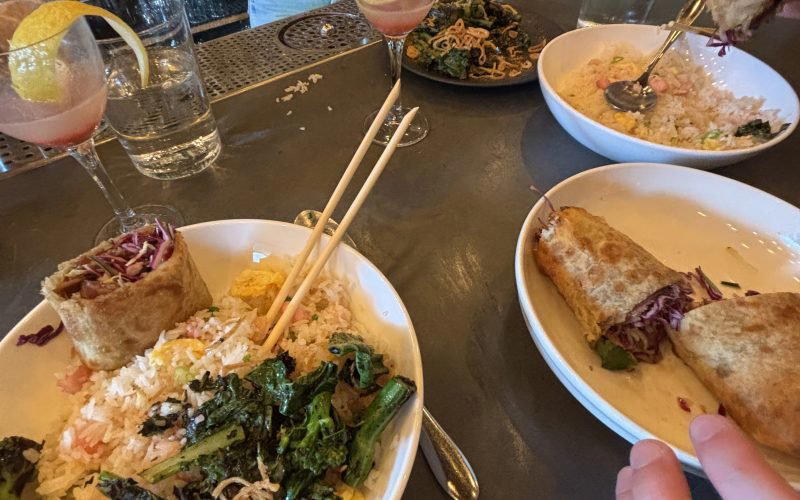
The gai lan, grilled Chinese broccoli finished with schmaltz, oyster sauce, duck salt, and crispy shallots, illustrates this well. The base ingredient is entirely conventional in Chinese cooking; the execution is not. Schmaltz (rendered chicken or goose fat) is an Ashkenazi Jewish kitchen staple that brings a specific richness distinct from sesame oil or lard. Pairing it with house-made duck salt and the umami depth of oyster sauce produces a plate that reads as Chinese in its reference points but operates with a broader pantry. That kind of cross-referencing is common in the American modernist Chinese wave but less common at the $$ price point, where kitchens typically lack the margin to work at this level of ingredient specificity.
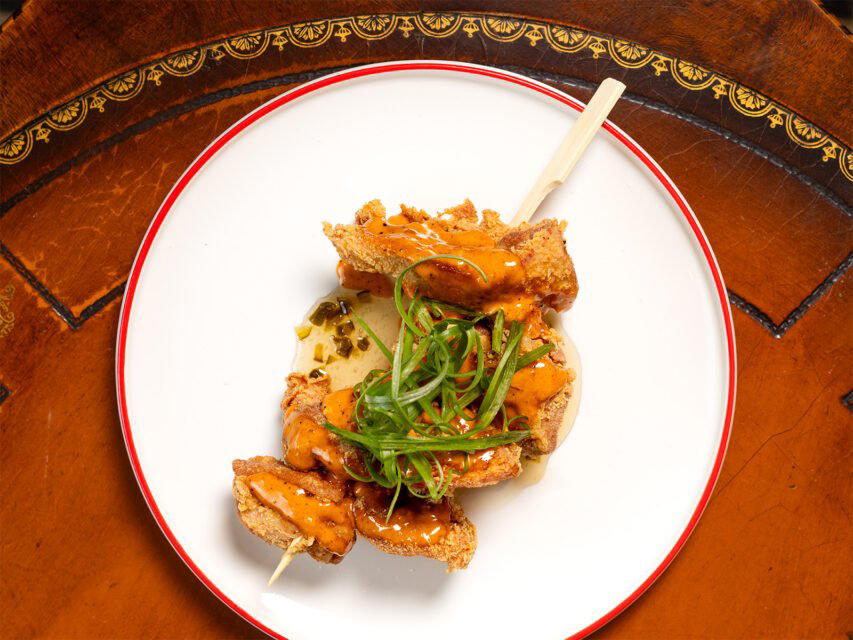
Shrimp toast offers a similar case. The dish has a long history in Cantonese cooking and its British-Chinese derivatives, often appearing in its most familiar form as a deep-fried triangle with sesame coating. Here, the version arrives with whipped shrimp and chicken thigh, finished with mustard gastrique and tiger vinaigrette. The gastrique, a sweet-acid reduction common in classical French technique, repositions the dish without abandoning its identity. Dan dan mian, one of the canonical preparations of Sichuan noodle cooking, appears in its more traditional register: ground pork in a Sichuan peppercorn broth built for heat.
Cocktail program extends the kitchen's logic. Rather than defaulting to standard bar builds, the drinks incorporate ingredients like orgeat and green Sichuan peppercorns, the latter an unusual bar application that mirrors the kitchen's willingness to use Chinese pantry staples in non-traditional contexts. At the $$ price range, a cocktail program this considered is relatively uncommon; most restaurants at this tier treat the bar as a revenue mechanism rather than an editorial statement.
Where Hop Alley Sits in Denver's Dining Range
Denver's restaurant market has developed a recognisable structure over the past several years. At the high end, restaurants like The Wolf's Tailor and Brutø carry Michelin stars and price accordingly. The middle tier, $$ to $$$, is where the city's value proposition becomes interesting, and where Hop Alley operates alongside restaurants like The Ginger Pig and MAKfam. Within Chinese cuisine specifically, Denver does not have the density of, say, San Francisco's Richmond District or New York's Flushing, which means Hop Alley occupies a position without much direct local competition at its technical level.
The comparison to destination-tier restaurants is instructive in a different way. Kitchens like Le Bernardin in New York, Alinea in Chicago, or The French Laundry in Napa define what maximum ambition looks like in American fine dining. Hop Alley is not competing in that category, nor is it trying to. The Bib Gourmand is awarded specifically to restaurants that make smart decisions within defined constraints. The value case here is not that Hop Alley is cheap, it is that the cooking is operating above what the price suggests.
Planning Your Visit
Hop Alley sits at 3500 Larimer St in Denver's RiNo corridor, walkable from several of the neighbourhood's other notable restaurants and well-served by rideshare from downtown. The $$ price range puts it in accessible territory for most diners, and a Michelin Bib Gourmand designation means the kitchen is being held to a standard the guide inspectors have returned to verify. Chef Geoff Cox leads the kitchen. For the rest of Denver's dining, drinking, and hospitality options, see our full Denver restaurants guide, our full Denver bars guide, our full Denver hotels guide, our full Denver wineries guide, and our full Denver experiences guide.
What Regulars Order at Hop Alley
The dishes that anchor the menu's reputation are the gai lan, the shrimp toast, and the dan dan mian, a range that covers the kitchen's three main registers: the technically reworked vegetable plate, the classical form given a new framework, and the Sichuan broth-based preparation built on heat. Chef Geoff Cox's kitchen signals its Sichuan leanings most directly through the dan dan mian, where the Sichuan peppercorn broth produces the numbing-heat quality the cuisine is associated with. The cocktail program, built around ingredients like orgeat and green Sichuan peppercorns, is worth treating as part of the meal rather than an afterthought. Closer to home, Lazy Bear in San Francisco and Single Thread Farm in Healdsburg represent what the step above looks like in terms of format and price. Hop Alley is the argument that you do not always need to make that step to eat well.
Frequently asked questions
How much does it cost to eat at Hop Alley?
Pricing at Hop Alley is listed as $$.
What's Hop Alley's location?
Hop Alley is located at 3500 Larimer St, Denver, CO 80205, Denver.
Is Hop Alley Michelin-listed?
Hop Alley has received recognition including: Hop Alley refers to the original name for Denver's Chinatown, but there's nothing historic about this sleek restaurant. In keeping with the contemporary look, the Chinese menu with Sichuan leanings features modern adaptations of classics. T….
What do regulars order at Hop Alley?
Three dishes anchor the menu's reputation: the gai lan (grilled Chinese broccoli finished with schmaltz, oyster sauce, duck salt, and crispy shallots), the shrimp toast with whipped shrimp, chicken thigh, mustard gastrique, and tiger vinaigrette, and the dan dan mian with ground pork in a Sichuan peppercorn broth. The cocktail list, built around ingredients like orgeat and green Sichuan peppercorns, draws enough repeat attention to be considered part of the core order rather than an afterthought.
A quick peer list to put this venue’s basics in context.
| Venue | Cuisine | Price | Awards | Notes |
|---|---|---|---|---|
| Hop AlleyThis venue (the venue you are viewing) | Modern Chinese | Not listed | Michelin Bib Gourmand · James Beard Award Semi Finalist | Not listed |
| The Wolf's Tailor | Modern Fusion Tasting Menu | $150–200 | 2 Michelin Stars · La Liste Top Restaurants | New American, Contemporary |
| Tavernetta | Contemporary Italian | $50–100 | Michelin Bib Gourmand · Star Wine List | Italian |
| Brutø | Contemporary American Tasting Menu | $150–200 | 1 Michelin Star · Star Wine List | Contemporary |
| Alma Fonda Fina | Modern Mexican Fine Dining | $50–100 | 1 Michelin Star · World's 50 Best #45 | Mexican |
| Safta | Modern Israeli & Mediterranean Small Plates | $50–100 | Michelin Plate · Star Wine List | Israeli Cuisine |
Recognition history
Dated appearances from independent guides and award organizations, with the underlying list record or original source where available.
Michelin Bib Gourmand
Michelin
James Beard Award Semi Finalist
James Beard Award
Full recognition history (5 entries)
James Beard Award Semi Finalist
James Beard Award
Michelin Bib Gourmand
Michelin
Michelin Bib Gourmand
Michelin
Continue exploring
More in Denver
Restaurants in Denver
All restaurants in Denver →
Bars in Denver
All bars in Denver →






Details
- Lively
- Trendy
- Modern
- Energetic
- Date Night
- Group Dining
- Casual Hangout
- Celebration
- Chefs Counter
- Private Dining
- Standalone
- Craft Cocktails
- Extensive Wine List
- A La Carte
- Small Plates
- Tasting Menu
- Counter Dining
- Cocktails
- Wine
- Vegetarian Friendly
- Vegan Options
- Gluten Free Options
- Pescatarian Friendly
- Allergy Accommodating
Current opening hours
- Monday
- 5–10 PM
- Tuesday
- 5–10 PM
- Wednesday
- 5–10 PM
- Thursday
- 5–10 PM
- Friday
- 5–10 PM
- Saturday
- 5–10 PM
- Sunday
- Closed
Hours can change for holidays and private events. Hours as of .
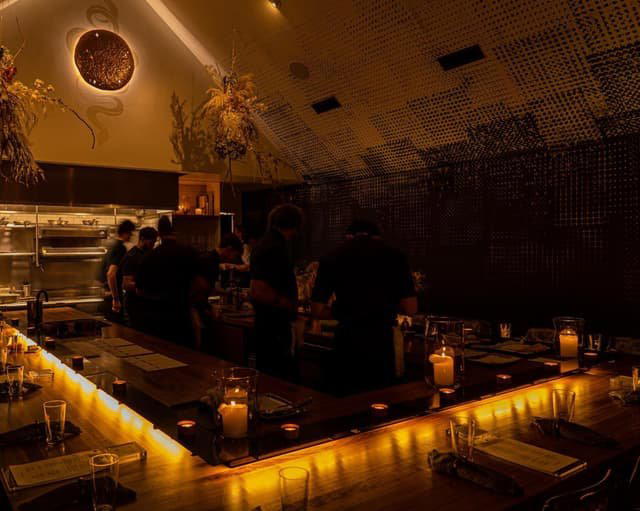
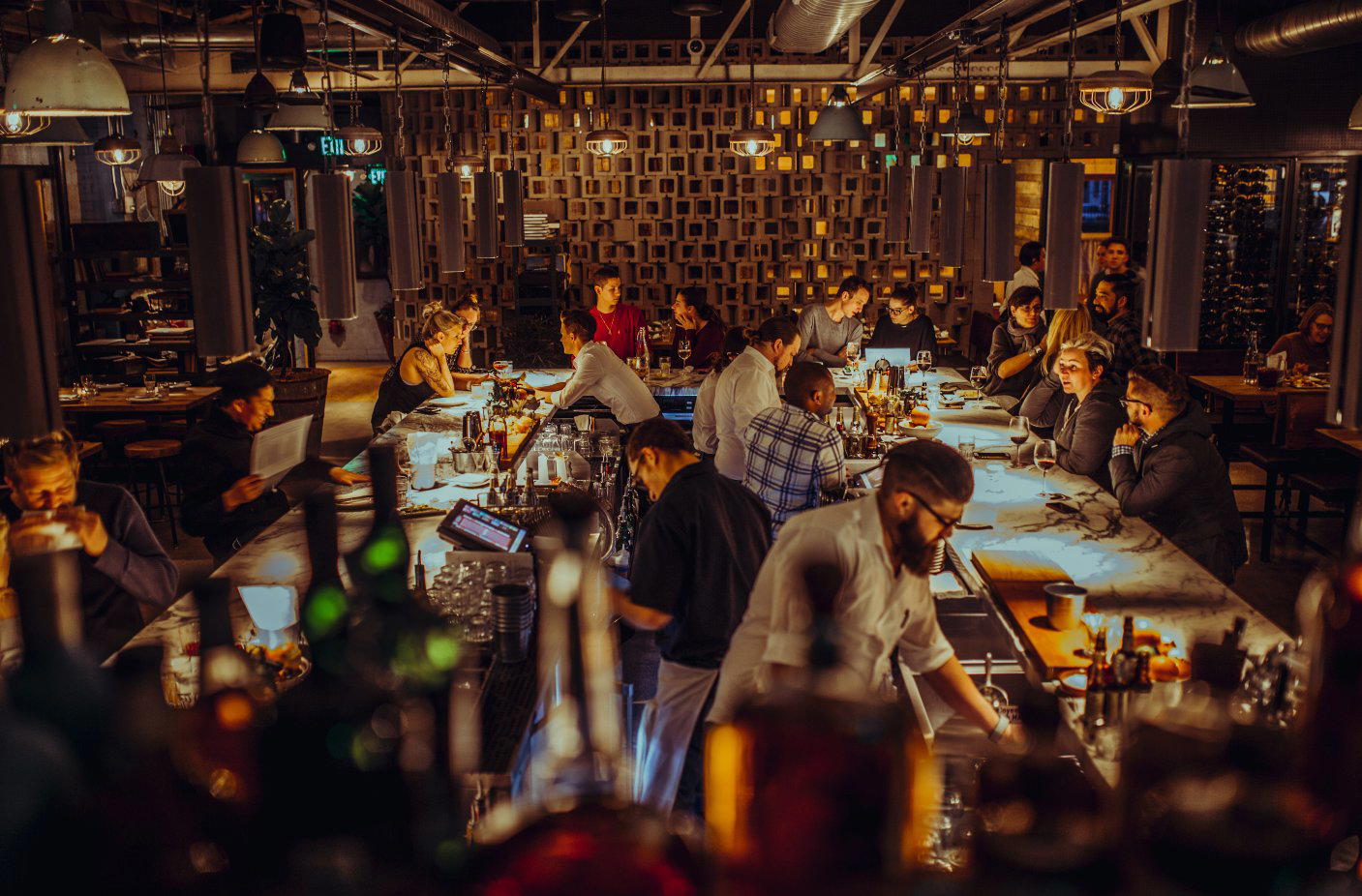
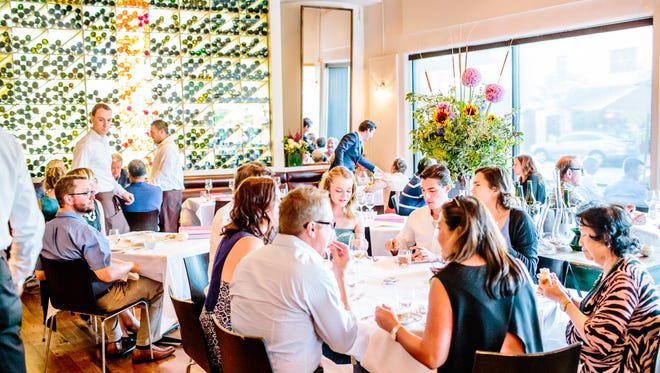
Lively and communal, with a contemporary, stylish atmosphere suited to energetic dinner service.