
Tabelog 100 #24
Our verdict
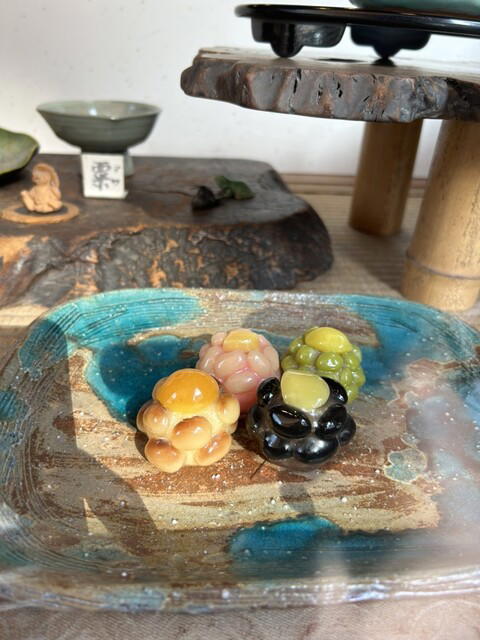
Kyoto’s wagashi culture is often encountered as ceremony, but Honke Gepaikeya Naomasa keeps the format compact: Japanese traditional sweets, takeaway service, and a reputation strong enough for Tabelog 100 recognition in the WEST Japanese sweets category. Its appeal sits in the city’s everyday confectionery rhythm rather than a long dining room performance.

Pearl is the En Primeur Club membership app, where members save venues, book tables and use the concierge.
The menu
What to order
- Warabi mochi
- Japanese traditional sweets (wagashi)
In Kyoto, the city changes register quickly: river traffic, narrow shopfronts, temple-bound walkers, and the ritual of buying something sweet to carry away. Japanese traditional sweets shops belong to that rhythm. They do not need to behave like formal dining rooms; the counter, wrapped parcel, and timing are often the point. Honke Gepaikeya Naomasa sits in that compact Kyoto tradition, where a sweet shop can carry as much local meaning as a restaurant reservation.
Kyoto’s confectionery scene rewards attention to format. A formal meal explains itself over courses; Japanese traditional sweets ask for shorter focus on seasonality, shape, texture, and how a sweet fits around tea, walking, or a household gift. Travellers building itineraries only around dinner can underestimate the category. Read Japanese sweets as a separate dining language, with its own hierarchy and regulars. This shop’s recognition from Tabelog Hyakumeiten in 2023 places it inside that serious conversation.
Kyoto wagashi, without the long-form restaurant frame
The city’s high-end dining often asks for advance planning, fixed courses, and a full evening. Japanese traditional sweets can be ceremonial, but also direct: choose carefully, carry the parcel, and let the sweet carry the craft. Honke Gepaikeya Naomasa belongs to that concise Kyoto mode. Do not measure it by room design, wine pairing, or chef theatre; it belongs to the category where precision can be packed into a small purchase.
That compactness puts the shop in a different dining rhythm from Kyoto meals such as Morita Ya Kiya machi ten or Kyoto Neze. Japanese sweets specialists like Honke Funahashiya occupy a closer category conversation, while places such as Oryori Menami show another Kyoto habit: focused cooking refined by repetition. Kyoto has no single dining ladder. It has parallel traditions, and sweets are not a footnote to the restaurant scene.
For travellers mapping Kyoto by category rather than neighbourhood alone, this is where the city gets interesting. A lunch counter, dinner reservation, everyday room, and Japanese sweets purchase can all fit the same day without competing for the same appetite. EP Club’s broader Kyoto restaurant coverage helps with that pacing: start with Our full Kyoto restaurants guide, then build around smaller stops rather than treating them as afterthoughts.
The sensory point is restraint, not spectacle
Japanese sweets in Kyoto are judged by nuance as much as novelty. The visual register is controlled: seasonal references, tidy shapes, careful wrapping, and quiet counter exchange. The soundscape is small too, closer to paper, coins, and foot traffic than open-kitchen clatter. That restraint is central to the appeal, giving the purchase occasion without performance.
Honke Gepaikeya Naomasa’s Tabelog score of 3.73 points to solid local traction rather than one burst of attention. The clearest recent recognition provided is its 2023 Tabelog Hyakumeiten recognition in the Japanese traditional sweets category. In a city dense with confectionery heritage, that listing places the shop in conversation with specialists, not casual dessert counters.
The format suits Kyoto’s walking geography. Visitors often move between city strolls, shopping streets, and reservations elsewhere, and a Japanese sweets stop belongs naturally between those moments. It is not a replacement for a full lunch, a casual bite, or a more contemporary table elsewhere in the city. It fills a different slot: a small, culturally specific purchase before tea, after a walk, or to bring back.
That distinction matters because Kyoto can flatten under generic recommendations. Japanese traditional sweets are not simply dessert, and a sweets shop is not a cafe by default. A precise itinerary pairs categories by mood and timing: grilled or simmered food when the day needs a proper meal, sweets when the city’s texture is better read through a smaller exchange. Other Kyoto sweets specialists show the same principle: a narrow focus can carry deep local identity without needing breadth.
How to place it in a Kyoto day
The practical value is concentration. A sweets stop does not demand the commitment of a coursed meal, useful in a city where over-scheduling can dull the senses. Leave space around it. Kyoto rewards intervals: the walk between stations, the pause before a temple visit, the hour when dinner is still far enough away that something small makes sense.
EP Club readers often plan Kyoto across more than restaurants, and rightly so. The city’s food culture works in conversation with stays, cocktail bars, gardens, markets, and craft visits. For that wider frame, use Our full Kyoto hotels guide, Our full Kyoto bars guide, Our full Kyoto wineries guide, and Our full Kyoto experiences guide alongside the restaurant map. The point is not to collect venues; it is to understand how Kyoto moves from formal to casual without losing seriousness.
For readers comparing Japanese dining beyond Kyoto, the lesson holds: format tells you how to behave. A beef-focused meal, a charcoal-grill address, or a casual city stop will ask for a different appetite than a Kyoto sweets counter. The same is true farther afield, where bars, casual counters, and specialist shops each set their own rhythm. The useful traveller reads the category first, then the name.
Honke Gepaikeya Naomasa is strongest as a concise Kyoto sweets stop: recognised by Tabelog Hyakumeiten in 2023, inexpensive by destination-dining standards, and tied to a tradition where atmosphere is made from restraint rather than excess. Treat it as part of the city’s edible punctuation, not as a substitute for a full meal.
Frequently asked questions
Is Honke Gepaikeya Naomasa expensive?
Honke Gepaikeya Naomasa is listed with a dinner budget of JPY 1,000 - JPY 1,999 and a lunch budget of up to JPY 999.
How do I find Honke Gepaikeya Naomasa?
Honke Gepaikeya Naomasa is located in Kyoto.
Is Honke Gepaikeya Naomasa open every day?
Specific opening hours are not provided here. Check directly with Honke Gepaikeya Naomasa before visiting.
What is Honke Gepaikeya Naomasa known for?
Honke Gepaikeya Naomasa is known for Japanese traditional sweets and for 2023 Tabelog Hyakumeiten recognition in the Japanese traditional sweets category. It is a Kyoto sweets stop with a listed Tabelog score of 3.73.
Can Honke Gepaikeya Naomasa accommodate dietary restrictions?
Any dietary restriction needs to be checked against the specific sweets on sale that day. The most direct route is to call +81-75-231-0175 before ordering.
How It Stacks Up
Comparable venues for orientation by cuisine and category.
| Venue | Cuisine | Price | Awards | Notes |
|---|---|---|---|---|
| Honke Gepaikeya NaomasaThis venue (the venue you are viewing) | Traditional Kyoto Wagashi & Mochi Shop | $10–20 | Tabelog 100 #24 | Not listed |
| GOKKEI Ichijouji honten | Ultra-rich chicken paitan ramen | $10–20 | Tabelog 100 #79 | Sakyō |
| Kissho Karyo Gion honten | Kinako Japanese sweets cafe | $10–20 | Tabelog 100 #80 | Higashiyama |
| Ginjo Ramen Kubota | Miso Tsukemen & Ramen Shop | $10–20 | Tabelog 100 #10 | Shimogyō |
| Yamazaki Menjiro | Classic Kyoto Ramen & Tsukemen Counter | $10–20 | Tabelog 100 #73 | Nakagyō |
| Miyoshiya | Japanese Traditional Sweets | Not listed | Tabelog 100 #52 | Higashiyama |
Recognition history
Dated appearances from independent guides and award organizations, with the underlying list record or original source where available.
Tabelog 100 #24 · No. 24
Tabelog · Tabelog 100 - Japanese traditional sweets / Japanese sweets cafe - WEST - 2023
Continue exploring
More in Kyoto
Restaurants in Kyoto
All restaurants in Kyoto →


Bars in Kyoto
All bars in Kyoto →


Hotels in Kyoto
All hotels in Kyoto →



Wineries in Kyoto
Browse all →
Details
- Classic
- Well Known
- Quiet
- Cozy
- Solo
- Family
- Casual Hangout
- After Work
- Historic Building
- Standalone
- Street Scene
- A La Carte
- Counter Dining
Current opening hours
- Monday
- 10:30 AM–6 PM
- Tuesday
- 10:30 AM–6 PM
- Wednesday
- Closed
- Thursday
- Closed
- Friday
- 10:30 AM–6 PM
- Saturday
- 10:30 AM–6 PM
- Sunday
- 10:30 AM–6 PM
Hours can change for holidays and private events. Last verified .