
Mendokoro Wataya Takamatsu ten belongs to Kagawa’s serious udon culture: quick, practical, and judged by noodle texture rather than ceremony. Its Tabelog 100 Udon Kagawa 2024 selection gives it a clear quality signal in a city where everyday noodle shops compete at unusually high intensity.
Pearl is the En Primeur Club membership app — saves, bookings, and concierge access live there. Same editors, same standards.
- Address
- 8-11 Minamishinmachi, Takamatsu, Kagawa 760-0051, Japan
- Phone
- +81 87-813-1993
- Website
- maruwa-wataya.com
 Saves & bookings on Pearl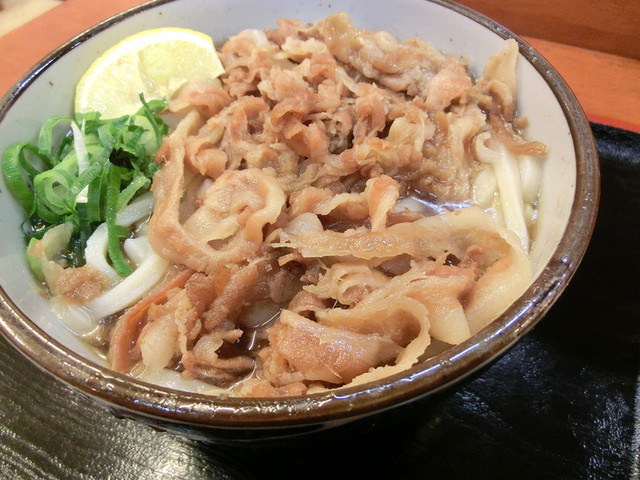
Minamishinmachi’s shopping arcade puts udon in its natural Takamatsu setting: not hushed, not theatrical, and not built around a long tasting-menu clock. The appeal is movement. People come through with the rhythm of a working city, read the room quickly, and measure the meal by heat, chew, broth clarity, and how efficiently the shop handles demand. In Kagawa, that tempo is part of the cuisine. Sanuki udon is not a luxury import to be dressed up for visitors; it is an everyday food culture with unusually high standards.
Mendokoro Wataya Takamatsu ten sits inside that tradition rather than above it. The format is casual, the category is udon with winter soba noted separately, and the recognition that matters here is local-category credibility: selection for Tabelog 100 Udon Kagawa 2024. That award has weight because Kagawa is not a soft field for wheat noodles. In many Japanese cities, a good udon shop can feel like a neighbourhood convenience. In Takamatsu, the baseline is higher, and the difference between a merely serviceable bowl and a destination-level stop often comes down to texture, turnover, and consistency.
Sanuki udon judged by pace, chew, and local expectation
Kagawa’s udon culture rewards directness. The cooking has little need for elaborate plating because the noodle itself carries the argument. Sanuki udon is prized for firmness and elasticity, and the city’s better shops tend to make quick service feel like discipline rather than haste. The room matters, too: counter seating, families, solo diners, and small groups all fit the local udon pattern, where the meal can be breakfast, lunch, or a planned stop between trains and shopping streets.
That is why the Tabelog 100 selection is a useful signal. It does not turn the place into a ceremony; it places it among Kagawa udon addresses that have cleared a local benchmark. Compared with Shinpei Udon, which sits in a higher listed budget band, and Udon Shokunin Sanuki Men no Suke, which occupies a similarly low-cost bracket, the decision is less about luxury and more about which version of Takamatsu udon culture a traveller wants to understand. Wataya’s value is that it keeps the experience close to the city’s everyday grammar while carrying an outside marker of approval.
The broader Takamatsu table is more varied than udon alone. Fumiya Okonomiyaki Honten shows the city’s comfort-food side in the same low-price field, while Renge Ryori Ten moves into a more expensive dining register. Sushi, grilled dishes, and izakaya formats add range, but udon remains the local reference point. For a wider scan of that field, Our full Takamatsu restaurants guide is the better starting map.
The room belongs to ordinary diners, not tasting-menu theatre
The practical character is part of the sensory experience. Large-capacity udon rooms in Japan have their own soundscape: trays shifting, orders moving, steam rising, and diners eating with purpose. This is not the slow hush of counter sushi or the controlled pacing of kaiseki. The pleasure comes from immediacy, and the standard is whether the system delivers a bowl that feels alive rather than tired by the time it reaches the table.
Mendokoro Wataya Takamatsu ten has the attributes that suit that model: a substantial seating count, counter seating, wheelchair accessibility, non-smoking interior policy, and a family-friendly setup that includes children and strollers. Those details are not decorative. They explain why the shop functions as a civic dining room rather than a narrow specialist counter. Reservations are not part of the format, so the meal belongs to the flow of the day rather than a locked-in evening plan.
There is also a seasonal footnote worth treating seriously: soba appears only in winter. That matters because it reinforces how Japanese noodle shops can be both repetitive and seasonal at once. The core identity may be udon, but winter adds another texture and grain tradition to the room without turning the place into a different restaurant.
For travellers building a Takamatsu day around food rather than a single reservation, nearby udon comparisons sharpen the picture. Chikusei Honten, Furukawa Udon, Furusato Udon, and Azuma help define the range of udon experiences across the city. The useful move is not to rank them abstractly, but to read them as variations on service speed, noodle feel, neighbourhood context, and price discipline.
How to place it in a Takamatsu itinerary
The editorial case here is simple: this is a low-cost, high-credibility udon stop in the city where the genre is under constant local scrutiny. It makes sense for travellers who want Takamatsu’s food culture in daylight, with the practical energy of an arcade district rather than the choreographed atmosphere of a destination dinner. It is less suited to anyone seeking a lingering, wine-led meal or a chef-driven narrative. The intelligence is in choosing the right expectation.
That expectation also helps separate noodle culture from the rest of a trip. A Takamatsu itinerary can carry udon in the morning or midday, then move elsewhere for hotels, bars, or cultural time without asking one meal to do everything. Use Our full Takamatsu hotels guide, Our full Takamatsu bars guide, Our full Takamatsu wineries guide, and Our full Takamatsu experiences guide to keep the day balanced.
For readers comparing casual Japanese formats beyond Kagawa, the lesson travels well..cafe in Osaka,.know in Kumamoto, (Shoku) Vietnam in Kawasaki, [Curry Senmon Ten] Maruyama Kyoju. in Sapporo, -Grilled beef Sukiyaki- KAMAKURA TANUKIAN 鎌倉 たぬき庵 in Kamakura, and. 鮪と炭火焼き うお炭 秋葉原店 in Tokyo show how price, format, and local habit shape meals as much as cuisine name. Across the Pacific, Jōdo Saké Bar in Los Angeles and Onigiri Time in Pasadena underline the same point in diaspora settings: everyday Japanese foods become interesting when the format respects their original speed and purpose.
At-a-Glance Comparison
Nearby venues at a similar price tier for orientation.
| Venue | Cuisine | Price | Awards | Notes |
|---|---|---|---|---|
| Mendokoro Wataya Takamatsu tenThis venue — the venue you are viewing | Sanuki udon noodle shop | $ | , | |
| Chikusei Honten | Traditional Sanuki Udon | $ | , | Takamatsu |
| Nakanishi Udon | Sanuki udon noodle shop | $ | , | Takamatsu |
| Teuchi Udon Shimizuya | Sanuki udon & tempura | $ | , | Takamatsu |
| Udon Honjin Yamada Ya Sanuki honten | Sanuki Udon | $ | , | Takamatsu |
| Sanuki Tsukemen Sangawa | Sanuki udon & tsukemen izakaya | $ | , | Takamatsu |
Continue exploring
More in Takamatsu
Restaurants in Takamatsu
Browse all →
At a Glance
- Lively
- Casual
- Classic
- Solo
- Family
- Group Dining
- Casual Hangout
- Standalone
- Local Sourcing
Bright, bustling self-service udon shop with cafeteria-style flow, simple classic decor and a constant queue of office workers creating an energetic but casual atmosphere.