
A large-format Sanuki udon address in Murecho Mure, set in a former village headman’s estate with garden views and a 300-seat dining room. Recognition in Tabelog 100 Udon Kagawa 2024 places it among Kagawa’s serious udon names, while the format keeps the experience accessible rather than ceremonial.
Pearl is the En Primeur Club membership app — saves, bookings, and concierge access live there. Same editors, same standards.
- Address
- 3186 Murecho Mure, Takamatsu, Kagawa 761-0121, Japan
- Phone
- +81 87-845-6522
- Website
- yamada-ya.com
 Saves & bookings on Pearl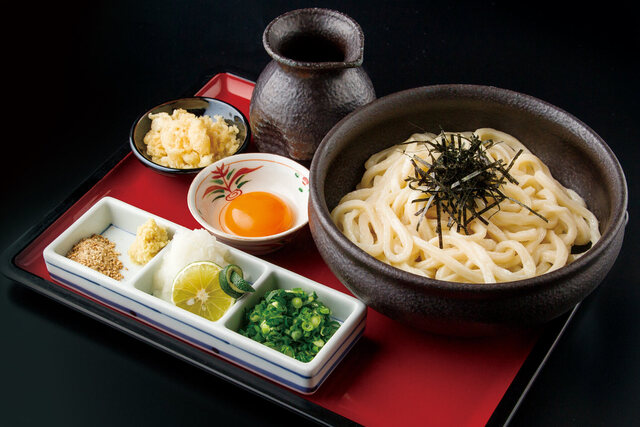
The approach to Sanuki udon in Kagawa is usually brisk: counter, tray, noodles, broth, exit. Here the grammar changes. The setting is a former village headman’s estate, framed by a Japanese garden and the scale of a house restaurant rather than a narrow noodle shop. That matters because Sanuki udon is often treated as fuel for a prefectural crawl, yet this version slows the meal down without pushing it into luxury theatre.
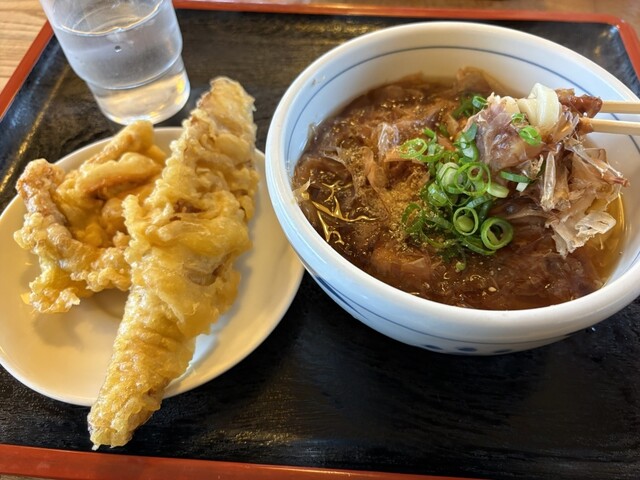
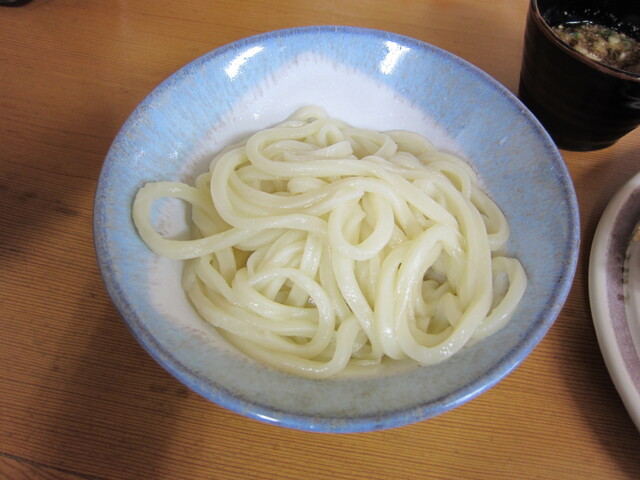
Kagawa’s udon culture rewards texture, speed, and repeatability. The serious shops are judged less by ornament than by how confidently they handle wheat noodles across hot, cold, dipping, and broth-led formats. Udon Honjin Yamada Ya Sanuki honten sits in the more expansive end of that culture: udon, udon-suki, and deep-fried dishes, with sake and shochu available, in a dining room large enough for groups and families. The value proposition is not rarity. It is range, capacity, and a setting that gives a low-cost staple a sense of occasion.
Sanuki udon with room to linger
Sanuki udon has become one of Japan’s clearest regional food identities, and Takamatsu is its practical base. Many itineraries treat the city as a sequence of bowls, with compact shops such as Chikusei Honten, Furukawa Udon, Furusato Udon, and Azuma representing the city’s more direct noodle-shop rhythm. This address belongs to a different subcategory: still casual in cost and cuisine, but spatially closer to a regional dining hall than a standing stop.
The distinction is useful for travellers. A 300-seat operation with tatami and sunken seating can absorb mixed parties in a way that smaller udon counters cannot. Children are explicitly welcomed, stroller and wheelchair guidance is part of the house information, and diaper-changing and wheelchair-accessible restrooms are listed. That does not make the noodles secondary; it makes the venue easier to fit into a day that includes temples, gardens, or multi-generational travel.
Recognition gives the format weight. Selection for Tabelog 100 Udon Kagawa 2024, alongside earlier Tabelog 100 udon selections in 2017, 2018, 2019, 2020, and 2022, signals sustained local relevance rather than a single-year spike. The Tabelog score of 3.74 also places it in a competitive udon prefecture where small differences in noodle texture, turnover, and broth style carry real consequences. For context, Takamatsu’s udon field also includes lower-priced, faster formats such as Teuchi Udon Masuya and Kashimura Udon, while Zaigoudon Honke Waraya occupies a similarly heritage-minded lane. The appeal here is the combination of scale, garden setting, and broad usability.
The estate setting changes the economics of the bowl
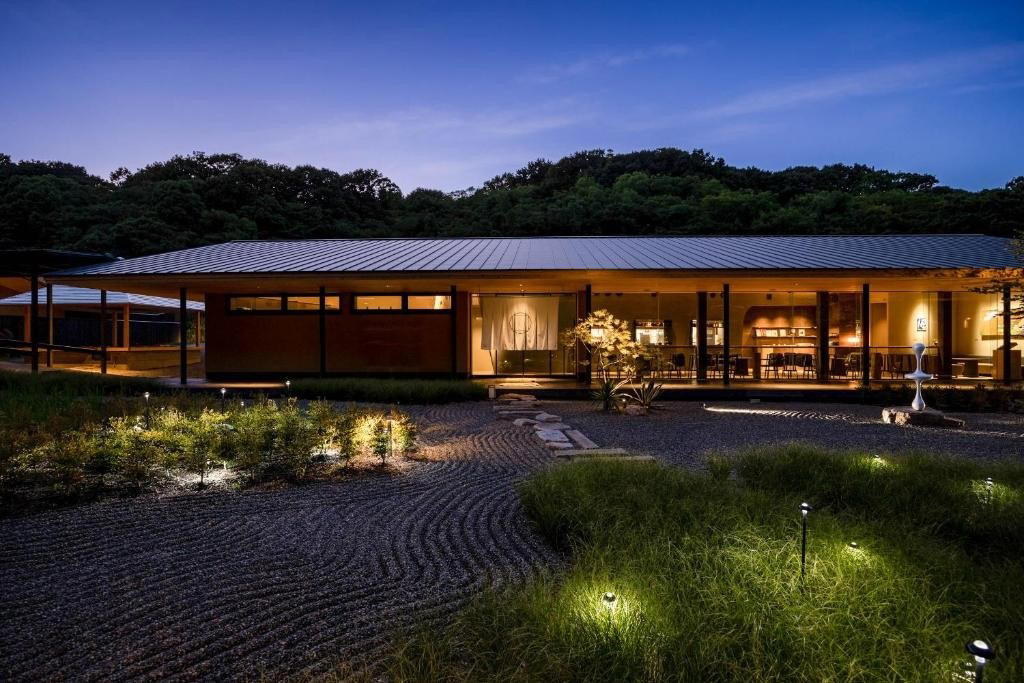
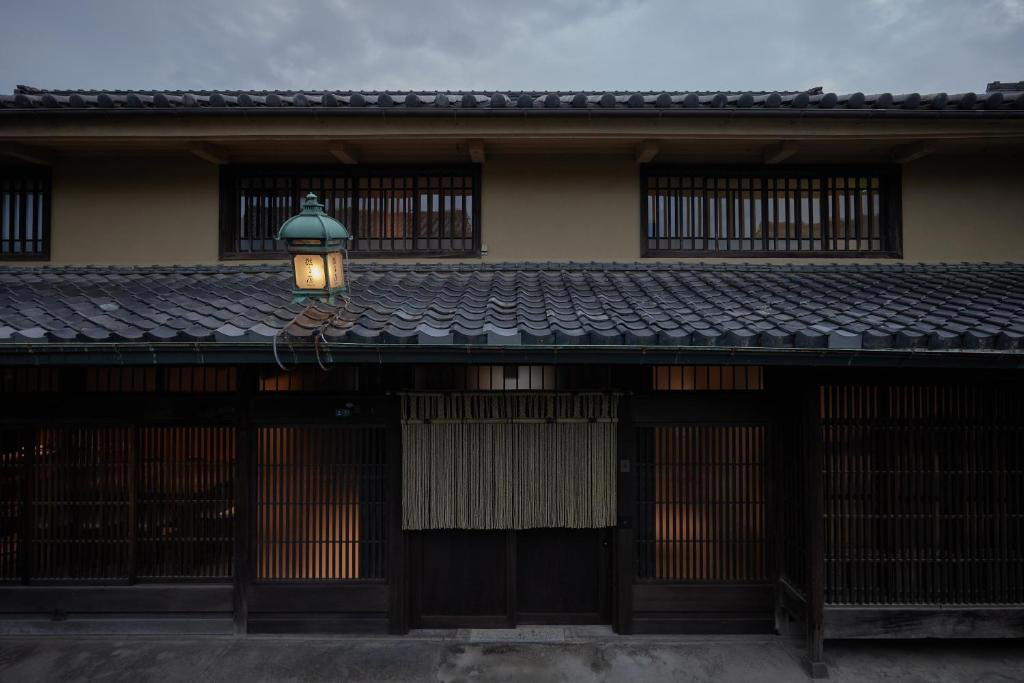
The building is part of the point. The restaurant occupies a former estate associated with a village headman, with public materials describing a 130-year-old residence and a site of about 800 tsubo. It is also tied to the approach to Yakuriji Temple, one of the 88 sacred sites of Shikoku. In a prefecture where udon can be eaten quickly and repeatedly, that setting reframes the meal as a pause rather than a stopgap.
For what diners spend, the return is unusually broad: handmade Sanuki udon categories, udon-suki, fried dishes, drinks, take-out service, substantial seating, and a garden-backed house environment. In many cities, that kind of setting would be used to justify a much higher tariff. Kagawa’s udon economy keeps the relationship more democratic. The result is a meal that works for travellers who want regional specificity without committing to a tasting-menu structure or a reservation-led evening.
This is also why the comparison with non-udon comfort food in Takamatsu is useful. Fumiya Okonomiyaki Honten belongs to another register of local casual dining: iron-plate, city-centre, and more compact in spirit. Udon Honjin Yamada Ya Sanuki honten answers a different need. It is better read as a regional institution built for volume, history, and ease, not as a chef-driven room or a rare-seat counter.
How to place it in a Takamatsu food itinerary
The smartest use is not to make this the only udon meal in Kagawa. Pair it against a smaller self-service or counter-led shop to understand how elastic the category is. One meal shows the quick-turn noodle culture that locals use constantly; this one shows how Sanuki udon can carry architectural and family-dining weight without losing its casual spine.
Planning should account for its Wednesday closure and for peak seating rules: same-day individual, group, and seat-only reservations are restricted during midday rush periods, with customers guided in arrival order at those times. The nearest station is Yakuri, and the walk is listed at 25 minutes; drivers have a practical advantage here, reinforced by 160 parking spaces. Payment is also more flexible than at many small noodle shops, with major credit cards and several electronic money systems accepted, though QR code payments are not.
For broader planning, use Our full Takamatsu restaurants guide to map udon stops against other meals, and pair it with Our full Takamatsu hotels guide, Our full Takamatsu bars guide, Our full Takamatsu wineries guide, and Our full Takamatsu experiences guide if the city is part of a wider Shikoku route. Readers comparing everyday Japanese regional dining beyond Kagawa can also look at -Grilled beef Sukiyaki- KAMAKURA TANUKIAN 鎌倉 たぬき庵 in Kamakura. 鮪と炭火焼き うお炭 秋葉原店 in Tokyo.cafe in Osaka.know in Kumamoto, (Shoku) Vietnam in Kawasaki, [Curry Senmon Ten] Maruyama Kyoju. in Sapporo, Jōdo Saké Bar in Los Angeles, and Onigiri Time in Pasadena.
Recognition Snapshot
Comparable venues at a glance for context.
| Venue | Cuisine | Price | Notes |
|---|---|---|---|
| Udon Honjin Yamada Ya Sanuki hontenThis venue — the venue you are viewing | Sanuki Udon | $ | Not listed |
| Sanuki Udon Kobo Ai Style | Sanuki udon noodle shop | $ | Takamatsu |
| Furukawa Udon | Sanuki Udon | $ | Takamatsu |
| Chikusei Honten | Traditional Sanuki Udon | $ | Takamatsu |
| Makoto Udon | Traditional Sanuki udon noodle shop | $ | Takamatsu |
| Teuchi Udon Shimizuya | Sanuki udon & tempura | $ | Takamatsu |
Recognition history
Dated appearances from independent guides and award organizations, with the underlying list record or original source where available.
Tabelog 100 #50 · No. 50
Tabelog · Tabelog 100 - Udon - KAGAWA - 2024
Continue exploring
More in Takamatsu
Restaurants in Takamatsu
Browse all →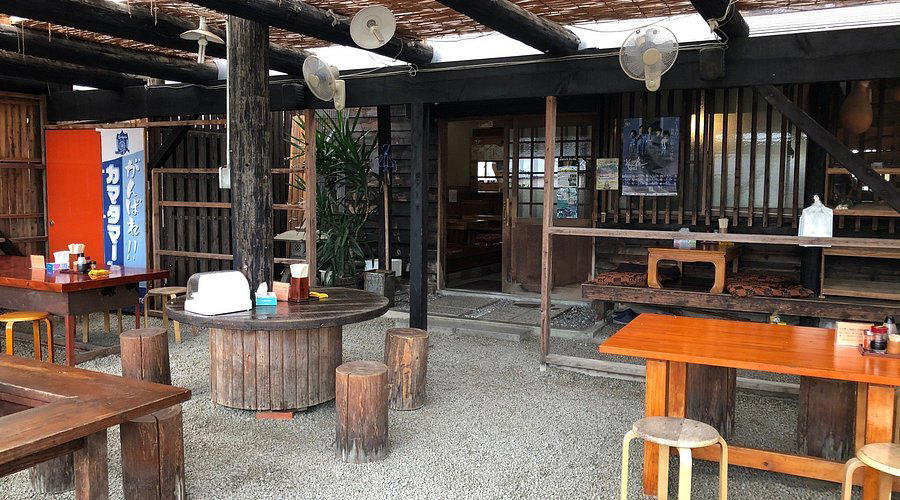
At a Glance
- Classic
- Quiet
- Cozy
- Rustic
- Family
- Group Dining
- Casual Hangout
- Garden
- Historic Building
- Standalone
- Garden
Current opening hours
- Monday
- 11 AM–3 PM, 5–8 PM
- Tuesday
- 11 AM–3 PM, 5–8 PM
- Wednesday
- Closed
- Thursday
- 11 AM–3 PM, 5–8 PM
- Friday
- 11 AM–3 PM, 5–8 PM
- Saturday
- 10 AM–8 PM
- Sunday
- 10 AM–8 PM
Hours can change for holidays and private events. Last verified .
Traditional and spacious, with a mansion-like setting and Japanese garden that creates a calm, distinctly local atmosphere.