Hofbräu Hamburg at Esplanade 6 brings the Bavarian beer hall tradition into one of Hamburg's most formal commercial districts, offering a reference point for traditional German hospitality in a city better known for its contemporary fine dining scene. For visitors tracking Hamburg's full range of eating and drinking options, it occupies a distinct position in the city's broader restaurant map.
Pearl is the En Primeur Club membership app — saves, bookings, and concierge access live there. Same editors, same standards.
- Address
- Esplanade 6, 20354 Hamburg, Germany
- Phone
- +494034993838
- Website
- hofbraeu-wirtshaus.de
- Directions
- Get directions
 Saves & bookings on Pearl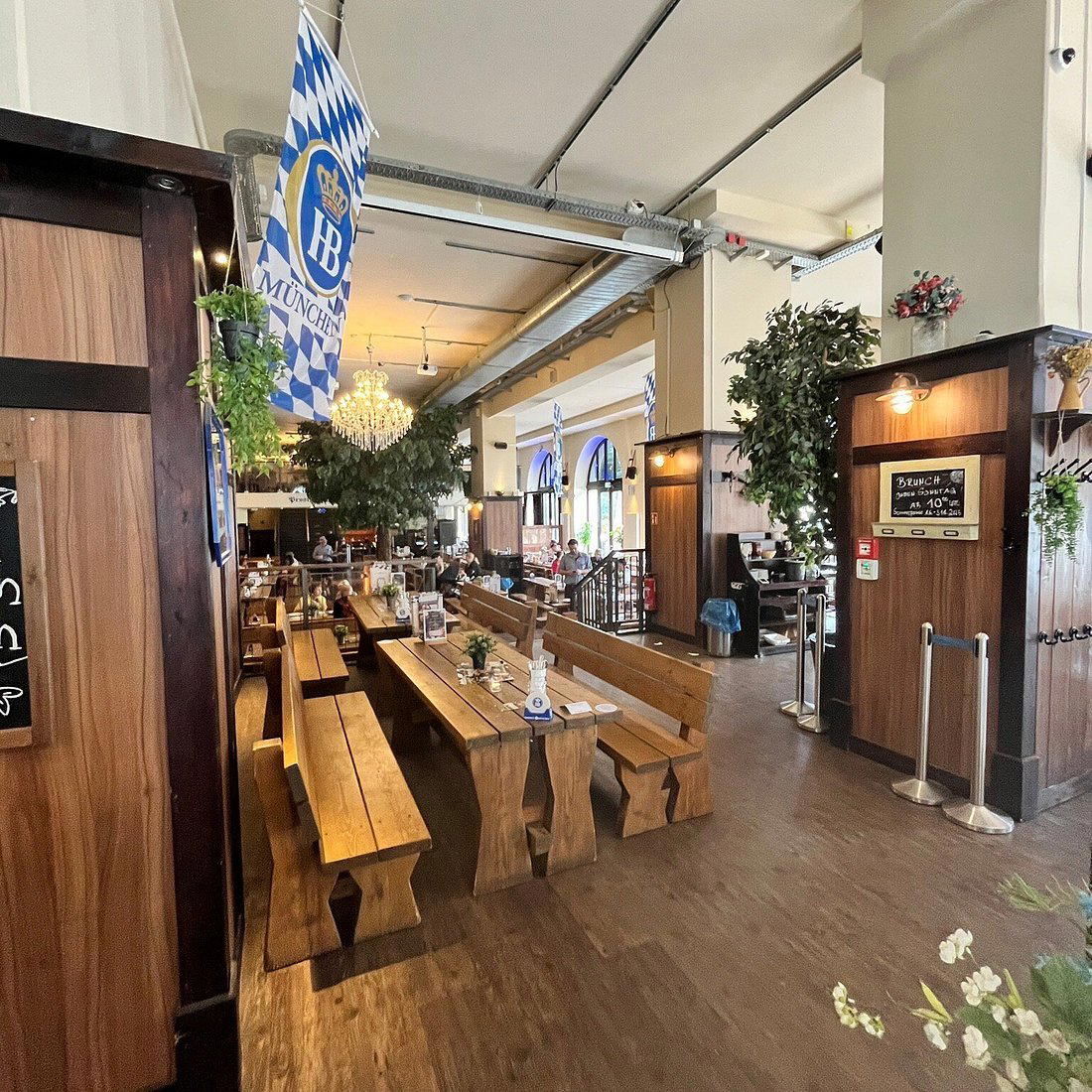
Where Bavaria Meets the Alster: Hamburg's Traditional Beer Hall at Esplanade 6
The Esplanade is one of Hamburg's quieter prestige addresses, sitting between the Alster lakefront and the city's financial core. The street carries a particular kind of civic weight: wide pavements, early-twentieth-century facades, and a sense of deliberate remove from the pedestrian commerce of the Mönckebergstrasse corridor a few blocks east. Arriving at Hofbräu Hamburg on this street, the reference point is immediate. Hofbräu is a Bavarian institution transplanted into northern Germany's most cosmopolitan port city, and that geographic tension defines the experience before you even step inside.
Beer hall culture in Germany occupies a different register from the country's fine dining scene. Where Hamburg's top-end restaurant tier, places like Restaurant Haerlin or The Table Kevin Fehling, works within the conventions of European tasting menu culture, the beer hall format draws on a tradition of communal eating, long wooden tables, and drinks programs built around a single brewery's output. The two categories rarely compete directly. They serve different occasions, different groups, and different moods within the same city.
The Beer Hall Format in a Northern Context
Munich's Hofbräuhaus is one of the few hospitality venues in the world where the building itself functions as a cultural institution, documented in city records since the sixteenth century. Hofbräu Hamburg operates as an extension of that brand into a city where the beer hall format has no deep indigenous roots. Hamburg's drinking culture runs toward wine bars, craft beer taprooms along the Schanzenviertel, and the kind of long-lunch restaurant that suits the city's trading-class professional culture. A Bavarian beer hall in this environment is both a deliberate contrast and a calculated appeal to familiarity for the large numbers of visitors and business travellers who pass through the Esplanade area.
That contrast is worth holding in mind when placing Hofbräu Hamburg against its neighbourhood peers. The Esplanade corridor sits close to several of the city's established dining addresses. bianc and Lakeside both operate at the premium end of the Hamburg market, with the kind of wine lists and tasting formats that position them within Germany's broader fine dining conversation. Hofbräu Hamburg sits at a different point on that spectrum: it is a format restaurant, where the category logic, Bavarian brewery output, hearty regional food, long communal tables, draws a particular audience rather than competing for the same covers as the city's contemporary kitchens.
The Wine and Drinks Question
Beer hall programs, by definition, centre on beer rather than wine. The Hofbräu brand's identity is built around its Munich brewery, and visitors to any Hofbräu-affiliated venue should expect the drinks list to reflect that orientation. For travellers whose interests run toward cellar depth and sommelier-led wine service, Hamburg offers several more pointed addresses. The wine programs at 100/200 Kitchen and the formal European cellars maintained at Restaurant Haerlin represent the city's more ambitious end of wine curation, where Burgundy, German Riesling, and Austrian white programs are managed with the kind of allocation depth that defines serious wine restaurants in Germany.
Germany's wine restaurant culture has developed considerably over the past two decades. The country's leading tables, from Aqua in Wolfsburg to Schwarzwaldstube in Baiersbronn and Vendôme in Bergisch Gladbach, carry wine lists that would hold their own against Parisian comparisons. At the opposite end, format venues like beer halls operate with a different kind of drinks logic: breadth within a single producer's range, volume service, and pairing to hearty, salt-forward food rather than to delicate tasting menus. Neither is a lesser choice; they are simply answers to different questions.
For visitors curious about Germany's wine depth more broadly, the country's Riesling regions, Mosel, Rheingau, and Nahe, produce some of the world's most age-worthy white wines. Operations like Schanz in Piesport, set in the Mosel valley itself, pair regional kitchen cooking directly to local vineyard output in a way that connects place, producer, and plate with unusual specificity. That kind of regional coherence is a different editorial category from the beer hall format, but it illustrates how wide the range of German food and drink culture actually runs.
Placing Hamburg in the German Dining Map
Hamburg sits in a position within German gastronomy that is sometimes underestimated. The city lacks the density of Michelin stars found in Munich or the experimental restaurant culture that has given Berlin venues like CODA Dessert Dining an international following, but it maintains a serious mid-to-upper tier of restaurants that reflects the city's wealth and its international trading history. The presence of both formal tasting menu restaurants and format venues like Hofbräu Hamburg within a compact dining district gives visitors a full cross-section of what the city currently offers.
For travellers building a longer itinerary through northern Germany and beyond, Hamburg connects reasonably to the wider circuit of German fine dining. JAN in Munich, Waldhotel Sonnora in Dreis, ES:SENZ in Grassau, and Victor's Fine Dining by Christian Bau in Perl represent the country's upper bracket, while city-based addresses like Bagatelle in Trier fill regional gaps with their own distinct identities. Hamburg's own full restaurant map covers both formal and casual ends of that spectrum. For international comparisons at the premium end, Le Bernardin in New York and Atomix in New York illustrate how format discipline and cellar curation operate at the top of the global market.
Planning a Visit
Hofbräu Hamburg's address at Esplanade 6 places it within comfortable walking distance of the central Alster basin and the main S-Bahn hub at Dammtor. The Esplanade area is quiet enough in the evenings that finding the address is direct. As with most format restaurants in the Hofbräu network, the booking and hours information is best confirmed directly with the venue before arrival, as operational details can shift by season or event calendar. Given the limited publicly available data on current pricing and booking policy, travellers are advised to contact the venue ahead of any planned visit.
How Hofbräu Hamburg compares with similar nearby venues.
| Venue | Cuisine | Price |
|---|---|---|
| Restaurant Haerlin | Creative French | €€€€ |
Continue exploring
More in Hamburg
Restaurants in Hamburg
Browse all →
Bars in Hamburg
Browse all →

Hotels in Hamburg
Browse all →
Wineries in Hamburg
Browse all →
At a Glance
- Lively
- Rustic
- Well Known
- Energetic
- Cozy
- Group Dining
- Celebration
- Casual Hangout
- After Work
- Late Night
- Brunch
- Live Music
- Beer Garden
- Historic Building
- Private Dining
- Beer Program
Current opening hours
- Monday
- 10 AM–12 AM
- Tuesday
- 10 AM–12 AM
- Wednesday
- 10 AM–12 AM
- Thursday
- 10 AM–12 AM
- Friday
- 10 AM–1 AM
- Saturday
- 10 AM–1 AM
- Sunday
- 10 AM–12 AM
Hours can change for holidays and private events. Last verified .
Lively pub atmosphere with rustic Bavarian décor, energetic beer garden flair, and traditional German hospitality; large halls decorated in Bavarian style with live music and festive energy.
Know Before You Go
- Getting there
- Esplanade 6, 20354 Hamburg, Germany