
Rising 34 floors above the Mediterranean on Hayarkon Street, The David Kempinski Tel Aviv occupies one of the city's most recognized beachfront addresses. With 194 guestrooms and 56 suites — all with floor-to-ceiling sea views — the hotel combines contemporary design with Kempinski's European hospitality tradition. Katzir, the in-house restaurant, anchors a dining program built around seasonal Israeli produce and land-and-sea pairings.
Pearl is the En Primeur Club membership app — saves, bookings, and concierge access live there. Same editors, same standards.
- Address
- 51 Hayarkon Street
- Directions
- Get directions
 Saves & bookings on Pearl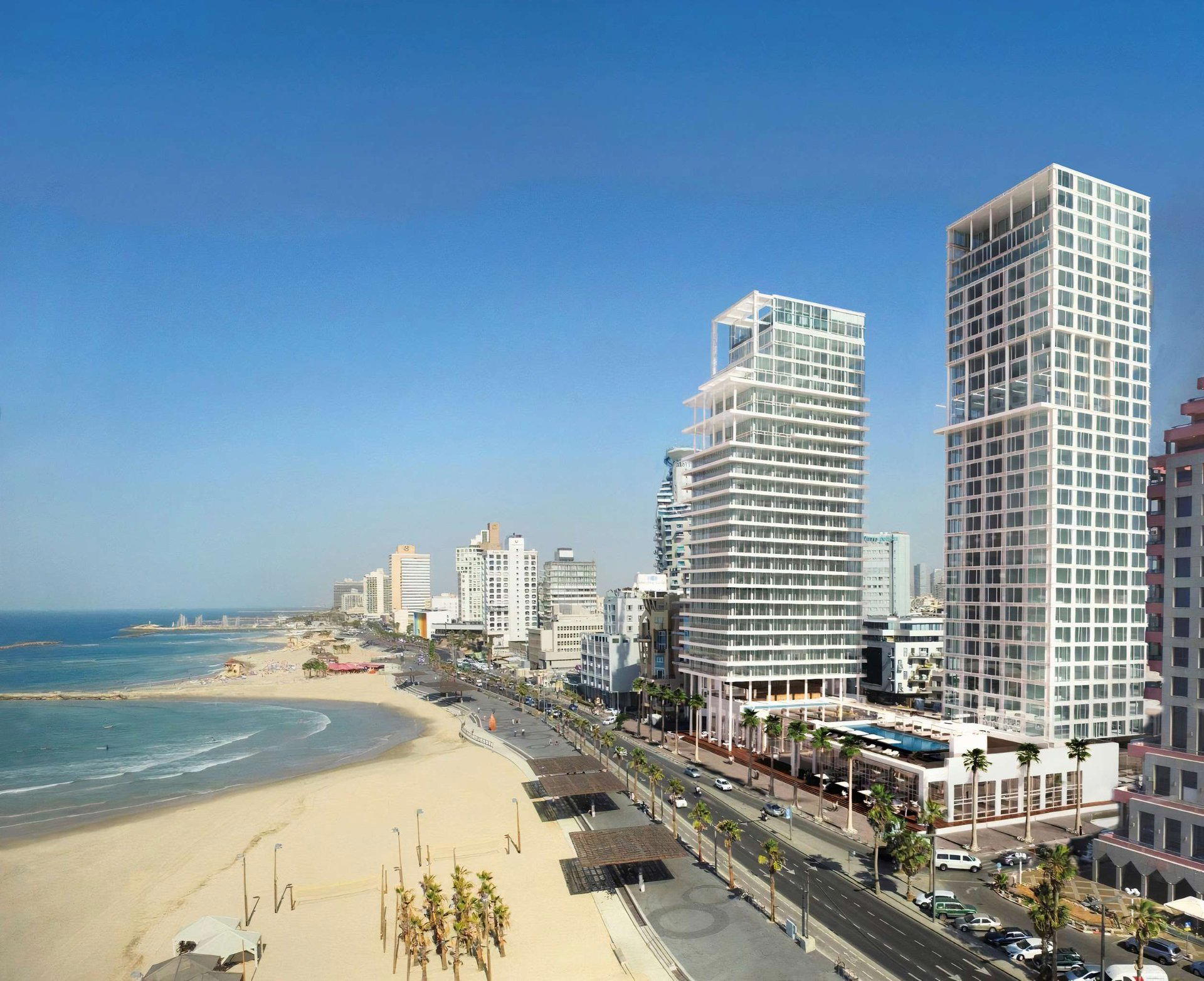
A Beachfront Address with Accumulated Weight
Hayarkon Street has long functioned as Tel Aviv's hospitality spine, the stretch of coastline where the city's relationship with international travel has played out across successive decades. The towers that line it carry the accumulated memory of state visits, press junkets, and the particular category of traveler who chooses proximity to the Mediterranean over the boutique quietude of the White City interior. The David Kempinski Tel Aviv, at number 51, sits within that tradition — 34 floors of contemporary construction on a promenade that has seen the full arc of Israeli tourism, from post-independence optimism through the opening of the country to global leisure travel in the 1990s and the subsequent emergence of Tel Aviv as a Mediterranean city of genuine international standing.
The Kempinski brand brings its own European lineage to the address. Founded in 1897, it is one of the continent's oldest luxury hotel groups, and its presence on Hayarkon Street places The David within a different competitive register from the locally grown boutique properties that have defined much of Tel Aviv's recent hospitality conversation. Where The Norman Tel Aviv draws on Bauhaus-era architecture and neighbourhood rootedness, and Hotel Montefiore operates at intimate scale in the city's older residential core, The David Kempinski occupies the vertical, view-led, internationally legible tier of the market — a category that also includes David InterContinental Tel Aviv and, in its own way, the long-established Dan Tel Aviv a short distance along the promenade.
What the Building Offers at Height
The physical proposition here is organized around altitude and orientation. All 194 guestrooms and 56 suites are positioned to face the sea, with floor-to-ceiling glazing that brings the Mediterranean into the room at every hour of the day. The interiors work in clean modern lines and soft neutral tones, a register that reads as contemporary European luxury without specific regional attribution. The effect is calm rather than anonymous, which is a meaningful distinction in a city that can deliver considerable sensory intensity the moment you step outside.
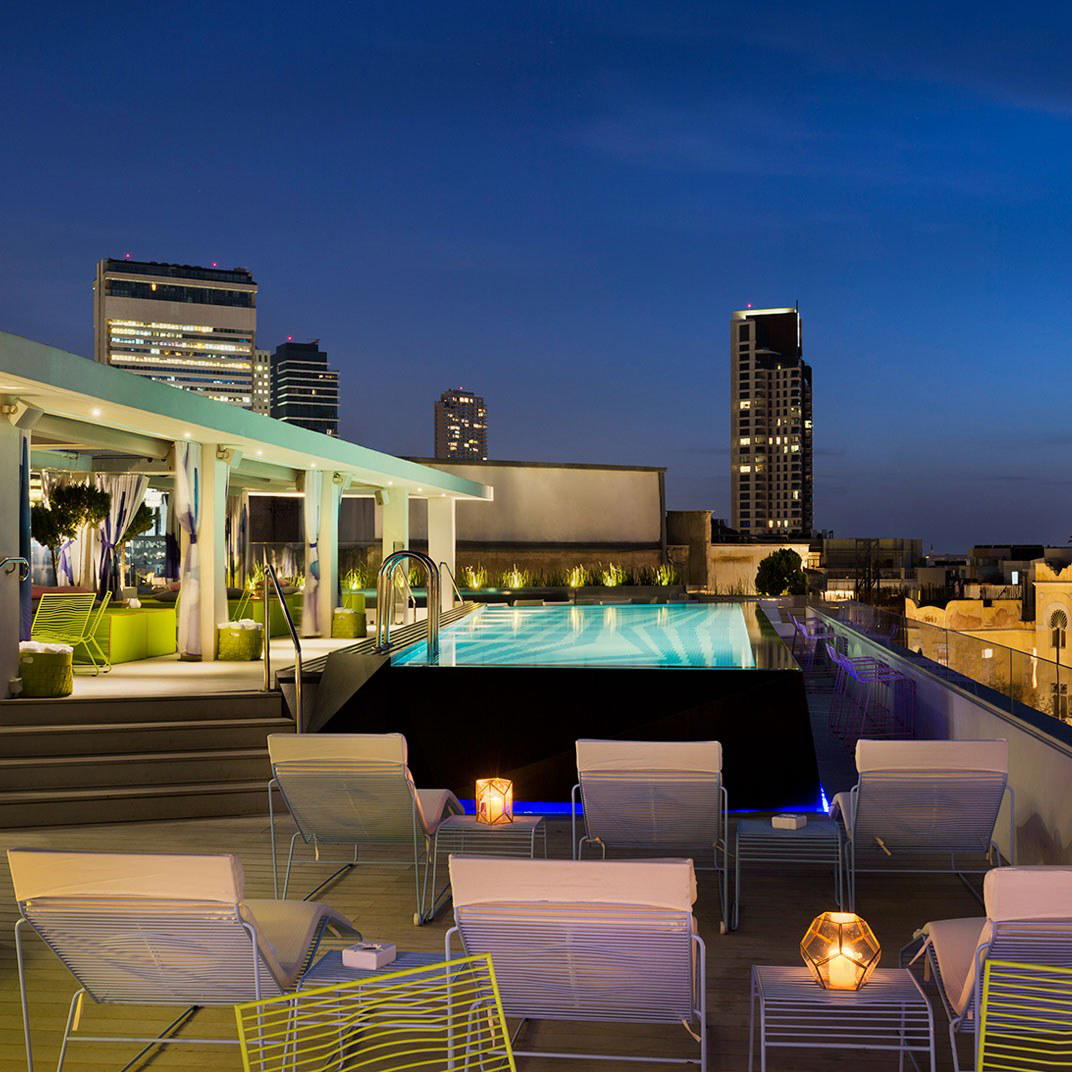
Pool arrangement reflects the hotel's internal hierarchy clearly. The fifth-floor main pool is family-accessible and functions as the social hub of the building's leisure offer. The rooftop, Cloud, on the 34th floor, operates as a separate tier, with its seasonal infinity pool reserved for Signature Suite guests. At that height, with the Mediterranean extending to the horizon and Tel Aviv's low-rise roofscape visible below, the vantage point becomes the amenity. It is a format that several large beachfront hotels in the Eastern Mediterranean have adopted as a way of creating internal differentiation within a single building, and The David Kempinski executes it with the operational consistency you would expect from a group with more than a century of practice.
OKOA Spa runs across eleven treatment rooms with separate male and female sauna facilities and a fully equipped gym, a scope that places it within the upper tier of hotel wellness in Tel Aviv, comparable in scale to what the larger international properties along the coast can offer. For travelers whose itineraries are built partly around recovery and movement, this is a meaningful practical consideration, and one that separates the hotel from the smaller design-led properties such as Alma Hotel or Brown TLV Urban Hotel, where wellness infrastructure is either limited or absent.
Katzir and the Dining Argument
Israeli cuisine has undergone a genuine critical reappraisal over the past fifteen years, moving from regional curiosity to a subject of serious international attention. The country's food culture draws on Levantine, North African, Persian, and Eastern European threads simultaneously, and the most considered hotel restaurants in Tel Aviv have used that multiplicity as a starting point rather than a constraint. Katzir, the hotel's signature restaurant, positions itself within this current: a focus on seasonal produce, land-and-sea pairings, and refined presentation that reflects how a number of the city's better kitchens are now thinking about Israeli cooking, not as a fixed tradition to be reproduced, but as an ongoing reinterpretation of available ingredients and accumulated influences.
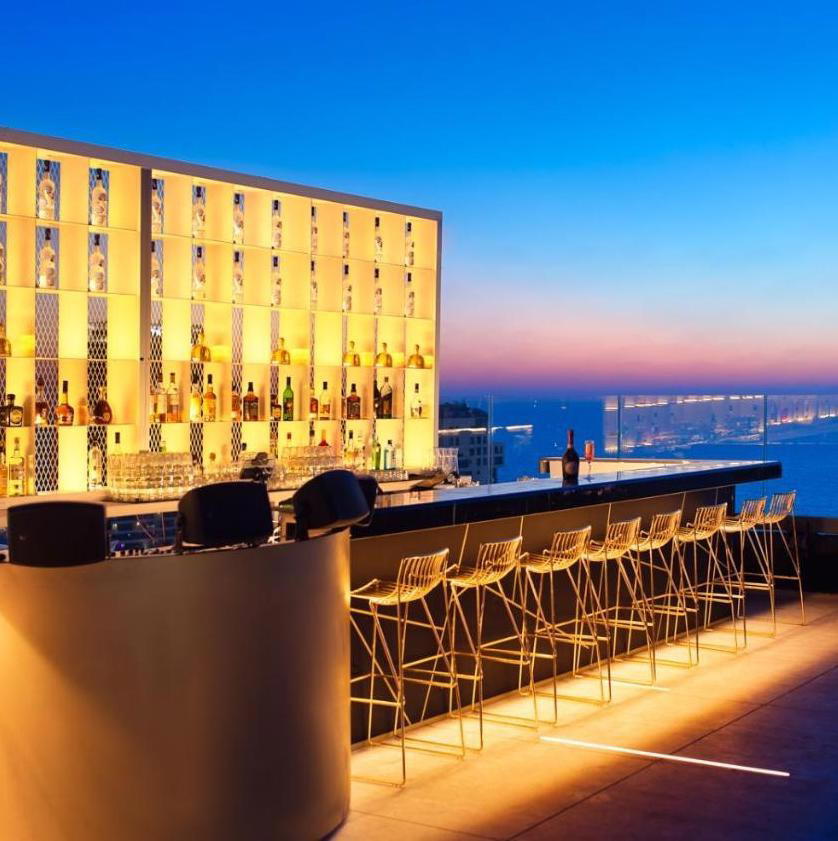
Beyond Katzir, the Sereia Lounge handles cocktails and all-day dining, the Pool Bar covers casual poolside service, and in-room dining runs throughout the day. For guests whose schedules don't align with formal restaurant sittings, an increasingly common reality for business travelers and those managing long-haul jet lag, the continuity of the food offer across different formats and hours is a practical advantage that larger hotels tend to manage better than smaller boutique properties. See our full Tel Aviv restaurants guide for the broader dining picture beyond the hotel.
The Experience Program as a Signal
The Curated Experience Menu, private market tours, chef-led tastings, gallery visits, music performances, artisan workshops, reflects a shift in how large international hotels are now competing with the boutique sector. The criticism historically leveled at properties of this scale is that they insulate guests from the city rather than connect them to it. The experience programming is a deliberate response to that criticism, designed to offer what the hotel's architecture and size cannot by themselves deliver: specificity, local texture, and the sense that the stay is doing something more than providing a comfortable base.
Whether that programming succeeds depends on execution at the level of individual bookings, which is difficult to assess in the abstract. What it signals clearly is that The David Kempinski is positioning itself against the expectation that a 34-floor beachfront tower is necessarily a self-contained world. That positioning is increasingly common across international luxury hotel groups, compare the concierge-as-cultural-broker model at Cheval Blanc Paris or the site-specific experience architecture at Amangiri, but it represents a genuine evolution from the earlier era of beachfront luxury, when the hotel itself was understood to be the destination.
Planning Your Stay
The hotel sits at 51 Hayarkon Street, directly on the beachfront promenade, with Ben Gurion International Airport approximately 20 kilometers to the south, a transfer that typically runs 30 to 40 minutes depending on traffic. Tel Aviv's taxi and ride-share infrastructure handles the route reliably. The beachfront location places guests within walking distance of the city's main beach stretches and a short ride from both the Florentin dining district and the Carmel Market area. For travelers extending their time in Israel, the country's other notable hotel addresses span considerable geographic range: David Citadel Hotel in Jerusalem is roughly an hour's drive, The Efendi Hotel in Acre offers Ottoman-era architecture in the north, Beresheet in Mizpe Ramon sits above the Ramon Crater in the Negev, and Six Senses Shaharut pushes further south into the desert. Within the Tel Aviv beachfront tier, The Drisco Tel Aviv offers a historically grounded alternative in the American Colony building near Jaffa, while The Jaffa Hotel occupies a nineteenth-century French missionary compound that gives it a structural heritage argument unavailable to any new-build on Hayarkon. Each represents a different answer to the question of what a premium Tel Aviv stay should feel like.
How The David Kempinski Tel Aviv: Verified Hotel Guide compares with similar nearby venues.
| Venue | Awards |
|---|---|
| The David Kempinski Tel Aviv | Virtuoso Luxury Hotel Partner (2026) |
Recognition history
Dated appearances from independent guides and award organizations, with the underlying list record or original source where available.
Virtuoso Luxury Hotel Partner
Virtuoso
Continue exploring
More in Tel Aviv
Hotels in Tel Aviv
Browse all →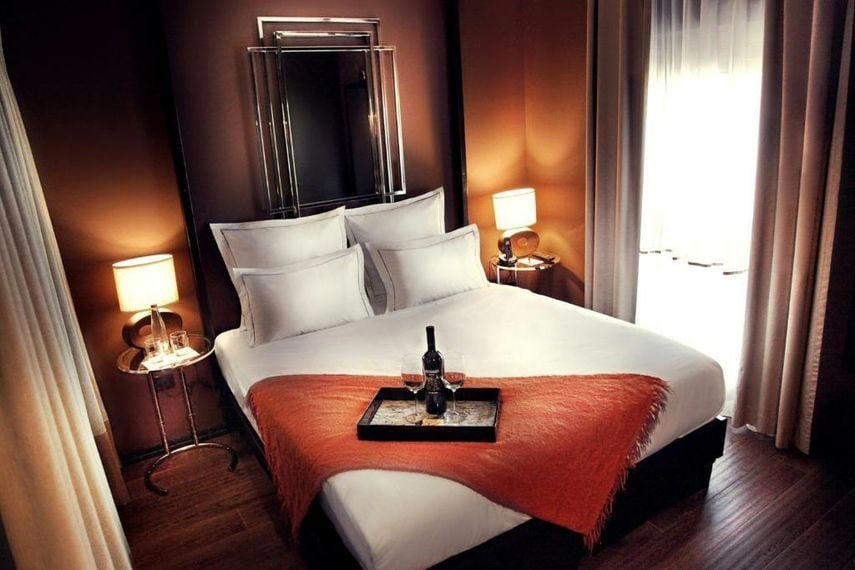
Bars in Tel Aviv
Browse all →

Restaurants in Tel Aviv
Browse all →
At a Glance
- Elegant
- Sophisticated
- Modern
- Ornate
- Romantic Getaway
- Family Vacation
- Business Trip
- Weekend Escape
- Beachfront
- Rooftop Pool
- Infinity Pool
- Panoramic View
- Wi Fi
- Pool
- Spa
- Fitness Center
- Room Service
- Concierge
- Business Center
- Valet Parking
- Waterfront
- Skyline
- Wi Fi
- Pool
- Spa
- Fitness Center
- Room Service
- Concierge
- Business Center
- Valet Parking
Calming white interiors with luxurious marble bathrooms, soundproofed rooms, and serene spa-like atmosphere enhanced by sea views and elegant lighting.
Know Before You Go
- Getting there
- 51 Hayarkon Street