Our verdict
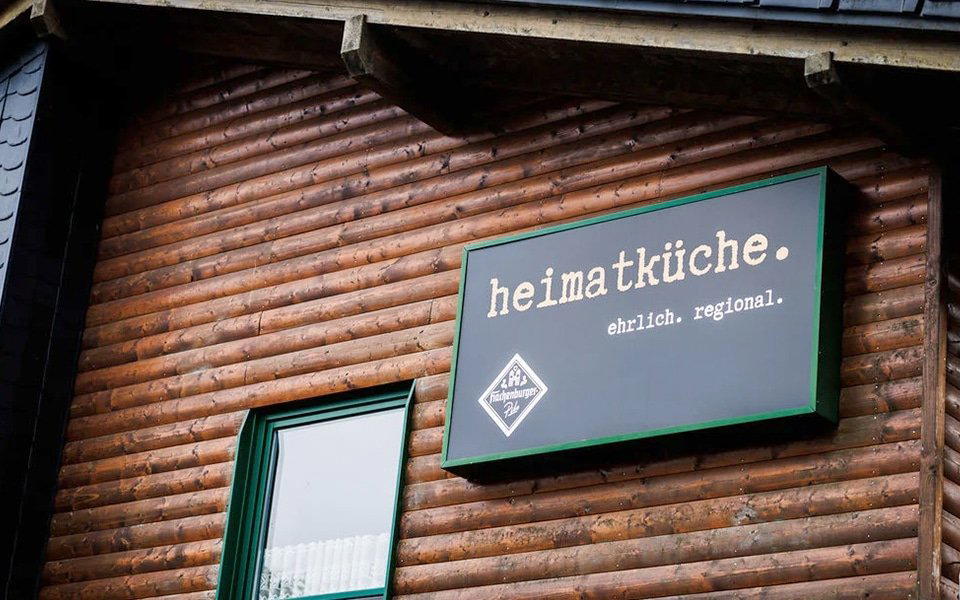
Set within a historic fortification in the rural Westerwald, Heimatküche operates from an address that signals something specific about how German regional dining has evolved: away from city centres and toward the landscapes that supply the kitchen. The name translates directly as 'home kitchen,' and the setting at Alte Burg in Rotenhain frames a cooking approach rooted in local provenance rather than metropolitan ambition.

Pearl is the En Primeur Club membership app, where members save venues, book tables and use the concierge.
Where the Westerwald Meets the Plate
Rural Rhineland-Palatinate has never been an obvious draw for the kind of restaurant tourism that fills tables at Aqua in Wolfsburg or JAN in Munich. The Westerwald sits in a stretch of central Germany characterised by beech forests, cattle pastures, and a decidedly unshowy agricultural rhythm, the kind of terrain that tends to produce cooking defined by what grows and grazes nearby rather than what arrives from distant suppliers. Heimatküche, addressed at Alte Burg in the village of Rotenhain, operates within that tradition. The name translates plainly as 'home kitchen,' and the address, a historic fortification on a hillside in a commune of fewer than 400 residents, establishes the register before you have read a menu. Arriving along country roads with the stone structure coming into view, you are already being told something about what the kitchen prioritises.
The Sourcing Logic Behind German Regional Cooking
The broader shift in serious German restaurant culture over the past decade has moved in two directions simultaneously. At one end, tasting-menu houses in major cities have pushed toward technical ambition, with kitchens at places like CODA Dessert Dining in Berlin or Vendôme in Bergisch Gladbach operating at a level of creative elaboration that draws on global reference points. At the other end, a quieter but persistent movement has reasserted the value of regional specificity, cooking that reads as a direct expression of a particular place. Heimatküche sits firmly in that second current. The German word Heimat carries considerable cultural weight: it denotes not just home but a deep, rooted connection to a specific locality, its landscape, its produce, and its customs. A kitchen that takes that word as its name is making a programmatic statement about provenance.
In the Westerwald, that provenance is specific. The region's volcanic basalt soils, moderate rainfall, and forested uplands support game, wild herbs, root vegetables, and dairy from small-scale farms that rarely supply urban restaurants. Cooking that draws on this geography is, almost by definition, hyperlocal in a way that even consciously regional restaurants in larger German cities cannot replicate, the supply chain is simply shorter, the relationships more direct. The contrast with the carefully sourced but broadly networked supply lines behind a restaurant like Schwarzwaldstube in Baiersbronn or ES:SENZ in Grassau is instructive: those kitchens interpret a region; Heimatküche, at its most literal, is embedded within one.
The Setting as Culinary Context
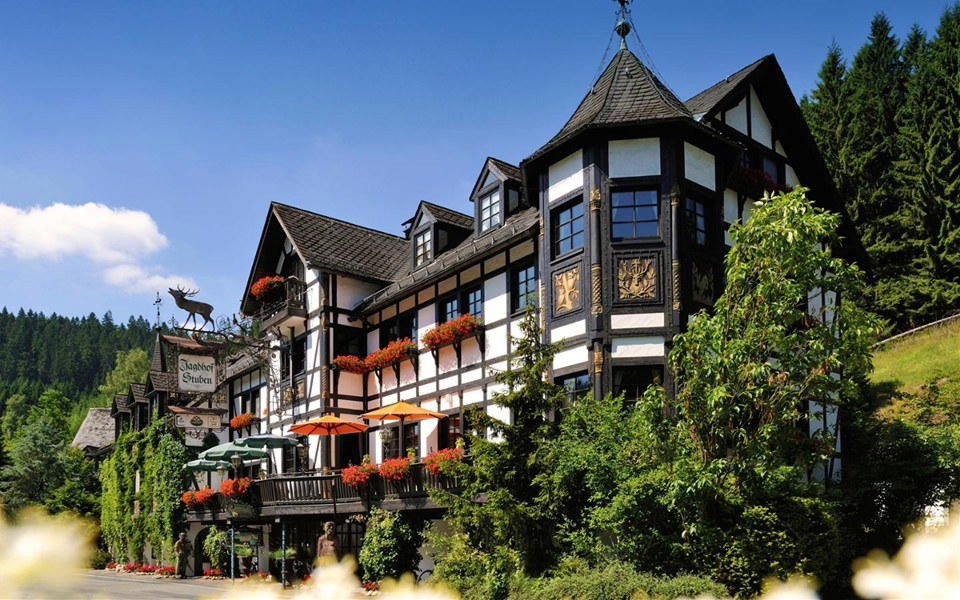
Dining within a historic stone fortification changes how food reads. There is a material continuity between the architecture and the cooking when both belong to the same geography. The Alte Burg in Rotenhain provides exactly that kind of continuity: thick walls, a compact rural setting, and the physical weight of a structure that has been part of this landscape for centuries. German dining rooms of this type, whether village inns or repurposed historic buildings, have historically served as the infrastructure of regional food culture, the places where local produce found its most direct expression, before the terminology of provenance-driven cooking existed to describe it.
That context matters when placing Heimatküche against its peers. The more formally recognised kitchens in Rhineland-Palatinate and neighbouring wine country, places like Waldhotel Sonnora in Dreis or Schanz in Piesport, operate in similarly rural contexts but with Michelin recognition and the attendant booking infrastructure. Heimatküche, without a published awards record in available data, sits in a different register: the kind of address that rewards visitors who seek it out on local recommendation rather than arriving via an awards shortlist. In Germany's broader dining geography, that category of restaurant often preserves cooking traditions that formal award circuits are too slow to acknowledge or too urban in orientation to notice.
Regional Cooking in the Wider German Picture
Germany's most-discussed fine dining addresses are distributed unevenly: Hamburg's Restaurant Haerlin, the Saarland's Victor's Fine Dining by Christian Bau in Perl, and Rhineland-Palatinate's own Bagatelle in Trier all hold recognised standing. The Westerwald does not appear prominently in those circuits, which is precisely what makes a kitchen like Heimatküche worth tracking. When cooking anchored to a specific locality develops outside the metropolitan or tourist-destination nodes that tend to generate critical attention, it often preserves a more unmediated relationship between landscape and plate. The same argument applies, in different geographic registers, to restaurants like ammolite in Rust, ATAMA in Sankt Ingbert, or AUGUST in Augsburg, kitchens developing serious cooking outside the most scrutinised nodes. Even internationally, the logic holds: the regional-sourcing commitment that distinguishes a kitchen in a small European locality echoes debates happening at far larger scale at places like Le Bernardin in New York City or Atomix, where provenance and supply-chain philosophy have become central to how serious restaurants define their identity.
Planning a Visit
Rotenhain is a village in the Westerwaldkreis district, reachable by car from Montabaur (the nearest ICE rail stop, about 20 kilometres west) or from Westerburg, which sits roughly 10 kilometres to the north. The Alte Burg address is specific to a small hillside location within the village; arriving with navigation active is advisable on first visit. For broader context on where Heimatküche fits within the area's dining options, see our full Rotenhain restaurants guide. Visitors spending more time in the region might also consider the cooking at AURA in Wirsberg, which represents a different, more formally recognised expression of German regional ambition.
Frequently asked questions
Does Heimatküche work for a family meal?
Heimatküche is set within Alte Burg, a historic stone fortification in Rotenhain, a village-scale setting that tends to suit adults and older children rather than young families looking for informal surroundings. The regional cooking focus and the architectural character of the space make it a stronger fit for a considered meal than a casual family outing. It is worth contacting the venue directly to ask about group or family arrangements before booking.
What should I expect atmosphere-wise at Heimatküche?
The address is Alte Burg in Rotenhain, a working historic fortification in a quiet Westerwald village, which sets the tone immediately: stone walls, rural quiet, and an absence of urban restaurant noise. The cooking is rooted in regional Rhineland-Palatinate tradition, so the atmosphere follows that logic, grounded, place-specific, and removed from the tasting-menu theatre of Germany's city dining rooms.
Is Heimatküche accessible without a car, and how far is it from the nearest rail connection?
Rotenhain sits in the Westerwaldkreis district of Rhineland-Palatinate, and the nearest ICE rail stop is Montabaur, approximately 20 kilometres to the west. A car is the most practical way to reach Alte Burg in Rotenhain, as the village has no direct rail or regular public transport link. Visitors travelling from Frankfurt or Cologne will find Montabaur on the high-speed line between both cities.
What do regulars order at Heimatküche?
Given the venue's regional identity in Rhineland-Palatinate and its Westerwald location, the cooking is oriented around local sourcing and seasonal produce from the surrounding landscape. Contacting the restaurant directly will give the clearest picture of current dishes and seasonal availability.
A Quick Peer Check
Comparable venues nearby, for context on price, style, and recognition.
| Venue | Cuisine | Price | Notes |
|---|---|---|---|
| HeimatkücheThis venue (the venue you are viewing) | Regional German Heimat Küche | Not listed | Not listed |
| Klosterschänke | Modern German with International Influences | $20–30 | Lennep Altstadt |
| Malz-Bierbrauerei Gerhard Fischenich | Traditional Cologne Brewpub | $20–30 | Altstadt/Süd |
| Restaurant Zum Buchheimer Kreuz | Croatian Balkan Grill | Not listed | Buchheim |
| Kamin | Flammkuchen Restaurant | $20–30 | Altstadt |
| Wissegiggl | German Wirtshaus | Not listed | Villmar |
Continue exploring
More in Rotenhain
Restaurants in Rotenhain
All restaurants in Rotenhain →
Hotels in Rotenhain
Browse all →

Details
- Cozy
- Rustic
- Intimate
- Family
- Casual Hangout
- Open Kitchen
- Beer Program
- Local Sourcing
- Organic
- A La Carte
- Vegetarian Friendly
- Organic Focus
Current opening hours
- Monday
- Closed
- Tuesday
- Closed
- Wednesday
- Closed
- Thursday
- 5–10 PM
- Friday
- 5–10 PM
- Saturday
- 5–10 PM
- Sunday
- 5–9 PM
Hours can change for holidays and private events. Hours as of .
Authentic and hearty atmosphere that invites lingering, with a beautifully designed dining room.