
Hassho sits in Tokyo’s okonomiyaki conversation as a compact Kyodo counter-and-table address rather than a destination built on ceremony. The draw is the dining ritual itself: griddle cooking, casual pacing, solo-friendly seating, and a price band that keeps the meal closer to neighbourhood habit than luxury theatre.
Pearl is the En Primeur Club membership app — saves, bookings, and concierge access live there. Same editors, same standards.
- Address
- Japan, 〒156-0052 Tokyo, Setagaya City, Kyodo, 1 Chome−21−18 原田ビル 2階
- Phone
- +81 3-3428-8437
- Website
- ge2y400.gorp.jp
 Saves & bookings on Pearl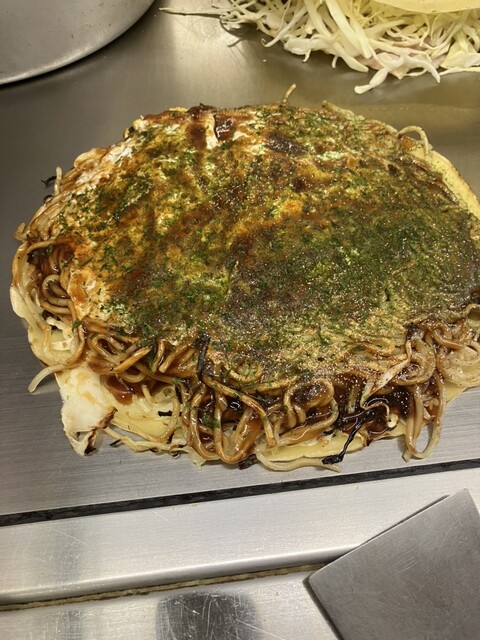
Kyodo is not the Tokyo of hotel-lobby sushi counters or Ginza dégustation rooms. The station-side rhythm is smaller and more local: evening commuters, narrow upper-floor addresses, and restaurants where the meal is shaped by heat, timing, and proximity to the griddle. In that setting, Hassho belongs to a different kind of Tokyo dining ritual, one in which okonomiyaki is less a novelty than a social format with rules of its own.
Okonomiyaki rewards patience in a way that high-speed casual dining often does not. The batter, cabbage, noodles, and toppings need time on the iron; the table slows down because the food cannot be rushed. That pace is part of the appeal. Compared with sushi, where the counter can feel choreographed down to the second, okonomiyaki keeps a looser rhythm: drinks arrive, plates are shared, the griddle anchors the room, and the meal becomes communal even when the diner is alone.
Hassho’s recognition on the Tabelog 100 Okonomiyaki list in 2025 places it inside a specialist category that Tokyo visitors often under-read. The city’s global restaurant reputation is shaped by sushi, tempura, ramen, and kaiseki, but okonomiyaki has its own hierarchy, with Kansai and Hiroshima traditions influencing how diners judge texture, layering, sauce, and noodle work. This is not fine dining by the usual foreign shorthand. It is a craft category where repetition matters, and where a modest bill can still sit inside a serious ranking system.
Okonomiyaki as Tokyo ritual, not tourist shorthand
The useful way to read this meal is through format. Okonomiyaki is built for incremental appetite: something from the griddle, a drink, a second order if the table wants to extend the evening. At Hassho, the listed categories cover okonomiyaki, stir-fried noodles, and Japanese cooking, which puts the meal in the teppan-adjacent zone rather than a narrow single-dish stop. Sake, shochu, and cocktails are listed, so the pacing leans toward an evening session rather than a quick snack.
That matters in Tokyo because many visitors over-index on reservation-led dining. The city’s serious food culture also lives in small, genre-specific rooms that do not behave like international luxury restaurants. A 20-seat layout, split between counter and tables, changes the etiquette. Counter seats suit solo diners and pairs who want the griddle in view; tables work better for friends ordering across several plates. The meal is informal, but not careless. Heat, timing, and portioning set the tempo.
The comparison with other Tokyo categories is instructive. Sushidokoro Kiraku sits in the sushi lane, where price and omakase structure create a different kind of attention. Sumibi Yakiniku Fuchioka belongs to a higher-spend grilled-meat bracket. Garam Masala and Yoshoku Bar Ultra point to Tokyo’s habit of treating everyday genres with specialist seriousness. Hassho fits that pattern: a narrow category, clear local context, and recognition that means more when read against other genre specialists than against luxury tasting-menu rooms.
Kyodo gives the meal its scale
Setagaya changes the psychology of dinner. Kyodo, on the Odakyu line, does not carry the same international shorthand as Shinjuku, Ginza, or Roppongi, and that is useful. The neighbourhood keeps expectations grounded. The point is not spectacle; it is the way a compact room, a griddle-led menu, and a modest dinner budget make okonomiyaki feel like part of everyday Tokyo rather than a staged cultural performance.
For travellers building a Tokyo itinerary, this is where curation matters. A night like this pairs better with neighbourhood exploration than with a formal restaurant crawl. It also offers a corrective to the idea that Tokyo’s serious meals always require luxury pricing. The listed dinner range of JPY 2,000 to JPY 2,999 puts the experience closer to a local evening out, while the Tabelog 100 selection signals that the category has been assessed within its own competitive frame.
The practical details reinforce the room’s character without needing to overcomplicate the decision. Reservations are listed as unavailable, so timing carries more weight than concierge strategy. The restaurant operates in the evening from Wednesday through Sunday, with Monday and Tuesday closed. Payment is listed as cash-only, with credit cards, electronic money, and QR code payments not accepted. Private rooms and parking are unavailable, and smoking is allowed. Those details are not footnotes; they define the experience. This is a small, old-school Tokyo format, not a frictionless international restaurant product.
How to place it within a Tokyo food itinerary
Hassho is strongest as a counterpoint. Put it next to a high-control sushi meal, a ramen queue, or a hotel dining room, and it shows another side of the city’s food culture: genre depth without ceremony. The better comparison is not a Michelin-style tasting menu but other focused Tokyo addresses where the category is the argument. Kalpasi, for instance, represents a different kind of specialization, while 3 Chome no Curry Ya San shows how tightly defined comfort-food genres can earn serious attention in Japan’s capital.
Readers mapping a wider Tokyo stay can use Our full Tokyo restaurants guide for the broader dining frame, then branch by mood: Our full Tokyo bars guide for drinks-led evenings, Our full Tokyo hotels guide for where to base the trip, Our full Tokyo wineries guide for wine-focused planning, and Our full Tokyo experiences guide for cultural time outside restaurants.
For nearby or contrasting Tokyo dining ideas, the city file also includes. 鮪と炭火焼き うお炭 秋葉原店, 12/10 Shinjuku ten, 124. KAGURAZAKA (Yakitori), 2D Cafe, and 3 Chome no Curry Ya San. Broader Japan and overseas references sit in the archive as well: -Grilled beef Sukiyaki- KAMAKURA TANUKIAN 鎌倉 たぬき庵 in Kamakura.cafe in Osaka.know in Kumamoto, (Shoku) Vietnam in Kawasaki, [Curry Senmon Ten] Maruyama Kyoju. in Sapporo, [ki:] in Kyoto, Jōdo Saké Bar in Los Angeles, and Onigiri Time in Pasadena.
The verdict is practical rather than grand. Hassho makes sense for diners who want Tokyo’s genre culture at neighbourhood scale: compact seating, griddle-led pacing, recognized okonomiyaki credentials, and a meal that asks for cash, patience, and an appetite for the customs of the room.
Cuisine and Credentials
Comparable venues at the same tier for side-by-side context.
| Venue | Cuisine | Price | Notes |
|---|---|---|---|
| HasshoThis venue — the venue you are viewing | Hiroshima-style okonomiyaki | $$ | Not listed |
| Tonkatsu Maruichi (とんかつ丸一) | Tonkatsu Specialist | $$ | Fukagawa |
| Nonokura | Chuutakansuimen Ramen | $$ | Kameari |
| kitchen and CURRY | Seasonal Japanese Curry | $$ | Setagaya |
| Hikiniku to Kome Kichijouji | Charcoal-Grilled Japanese Hamburger Steak Set | $$ | Kichijoji |
| Uoshin Nogizaka | Seafood Izakaya | $$ | Minato |
Recognition history
Dated appearances from independent guides and award organizations, with the underlying list record or original source where available.
Tabelog 100 #42 · No. 42
Tabelog · Tabelog 100 - Okonomiyaki - 2025













At a Glance
- Lively
- Cozy
- Intimate
- Casual Hangout
- After Work
- Solo
- Family
- Late Night
- Chefs Counter
- Open Kitchen
- Standalone
- Beer Program
- Sake Program
Current opening hours
- Monday
- Closed
- Tuesday
- Closed
- Wednesday
- 5–10 PM
- Thursday
- 5–10 PM
- Friday
- 5–10 PM
- Saturday
- 5–10 PM
- Sunday
- 5–9 PM
Hours can change for holidays and private events. Last verified .
A compact, lively neighborhood okonomiyaki spot with a front-row teppan counter, the sizzle and aroma of Hiroshima-style pancakes being cooked to order, casual lighting, and an unfussy, cozy atmosphere focused on watching the chef work the spatula.