Hanehan Restaurant serves Turkish local cuisine in a historic building courtyard in Eyyubiye, with local sourcing and a quiet, casual setup that suits breakfast.
Pearl is the En Primeur Club membership app — saves, bookings, and concierge access live there. Same editors, same standards.
- Address
- Kurtuluş, Kazancı Bedih Sk. No
- Phone
- +905054144414
- Website
- hanehanrestaurant.com
- Directions
- Get directions
 Saves & bookings on Pearl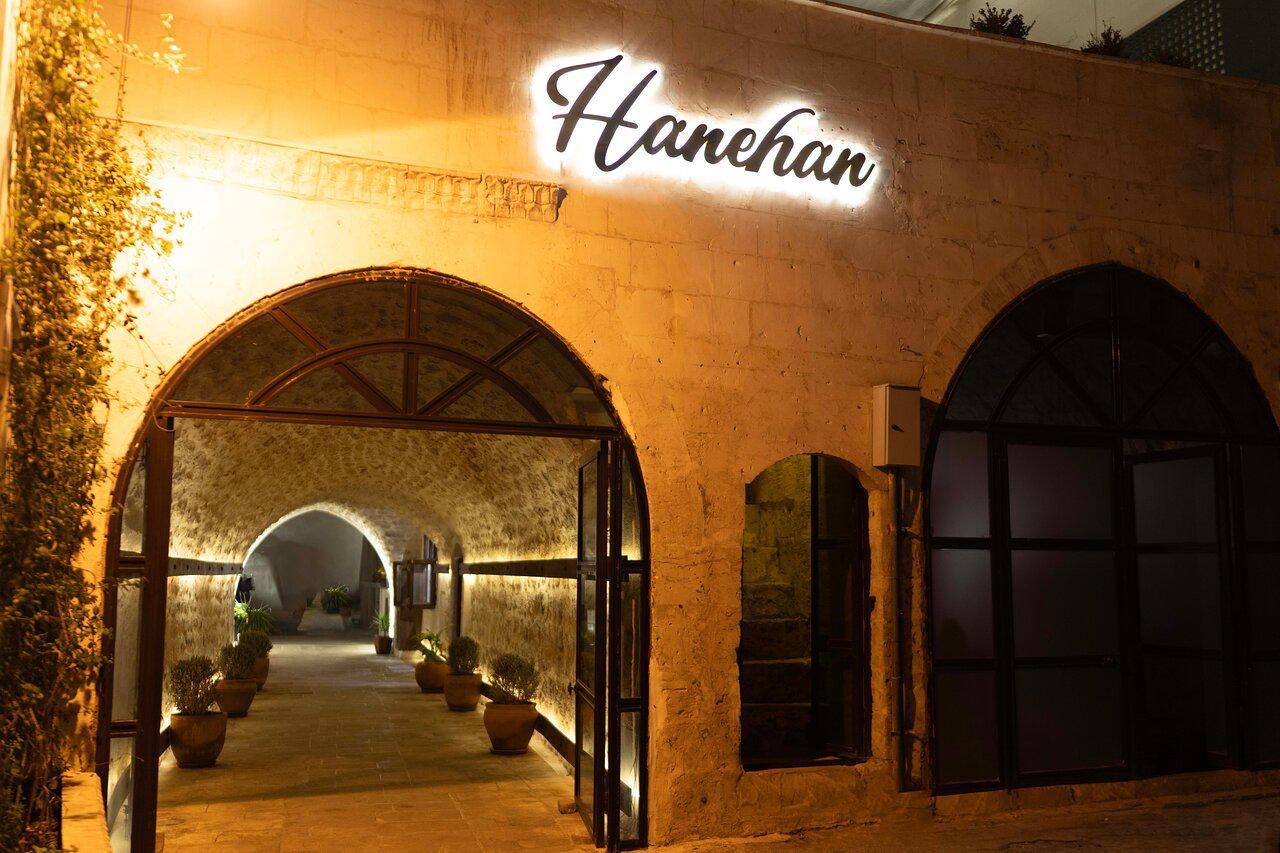
Eyyubiye and the Southeastern Table
Eyyubiye sits within the broader municipality of Şanlıurfa, a city that occupies a position in southeastern Turkey unlike almost anywhere else in the country. This is the region where the Fertile Crescent begins to assert itself in serious culinary terms: lamb grazed on mineral-rich steppe, wheat ground into bulgur and unleavened flatbreads, pomegranate molasses pressed from varieties that don't travel far beyond the Euphrates basin. Restaurants here draw from a supply chain that is, by European or coastal Turkish standards, remarkably short. The distance between field and kitchen in this part of Anatolia is often measured in kilometers rather than supply chain tiers. Hanehan Restaurant, located on Kazancı Bedih Sokak in the Kurtuluş quarter of Eyyubiye, operates inside that tradition.
What the Address Tells You
The Kurtuluş quarter is not a tourist district. It is a neighbourhood of working commerce, older residential blocks, and the kind of street-level food culture that persists because locals demand it rather than because guidebooks have discovered it. Arriving on Kazancı Bedih Sokak, the visual register is one of worn stone, afternoon shadows, and the smell of charcoal or spice smoke drifting from nearby kitchens. This is southeastern Anatolian dining in a format that predates the contemporary restaurant category entirely: communal, practical, rooted in the cooking of the region's Ottoman and pre-Ottoman inheritance. Hanehan fits that built environment rather than standing apart from it.
A comparable property in this geographic and cultural tier is BUZHANE RESTAURANT VE KONUK EVİ, also in Eyyubiye, which operates in a similar neighbourhood-anchor format. The two represent the kind of address-specific restaurant identity that larger Turkish cities have largely replaced with concept-driven formats.
Ingredient Geography: Why Sourcing Matters Here
The editorial argument for paying attention to restaurants in Şanlıurfa's sub-districts is primarily agricultural. Southeastern Turkey produces some of the country's most distinct raw materials: Urfa biber (the slow-dried, oily chili pepper that carries a depth quite different from its hotter Gaziantep cousin), locally produced sıvık yağı (the rendered tail-fat used in traditional kebab preparation), and stone-milled wheat that gives flatbreads a density and flavor profile that industrial flour cannot replicate. These are not ingredients that benefit from long-distance sourcing; their value is precisely in their local specificity.
Restaurants in this tier of the Şanlıurfa dining economy source because proximity is the norm, not because farm-to-table is a marketing strategy. That is a meaningful structural difference from how ingredient provenance functions in, say, Istanbul's premium segment, where places like Turk Fatih Tutak in Istanbul construct provenance narratives around ingredients that have been deliberately sourced from distant Anatolian producers. Here, the supply chain is short by default. What Hanehan and its peers in Eyyubiye serve is shaped almost entirely by what the regional agricultural system produces within a radius that most Istanbul restaurants would consider a sourcing journey rather than a daily delivery.
Comparable sourcing logic operates at Narımor in Izmir and Hiç Lokanta in Urla, both of which make Aegean proximity to producers central to their identity. In the southeast, the same principle applies but without the same degree of deliberate curation. The sourcing is structural, not styled.
The Broader Southeastern Turkish Table
Understanding what Hanehan likely offers requires understanding the culinary grammar of Şanlıurfa cuisine, which differs from Gaziantep's more internationally recognized kitchen in several important ways. Where Gaziantep cooking (well represented by operations like Kocak Baklava in Gaziantep) emphasizes layered pastry work, complex spice blending, and a broader sweet-savory tradition, Şanlıurfa's table is more austere and protein-forward. Çiğ köfte in its original meat-based form, liver kebab, and the raw-meat preparations that exist in tension with modernizing food regulations are the signature gestures of this kitchen. The flatbread tradition here is ancient and largely unchanged: lahmacun and pide preparations from this region carry a different weight and flavor than their western Turkish equivalents, a point reinforced by comparison with places like Kısmet Etliekmek ve Lahmacun Salonu in Karaman and Dürümzade in Beyoglu, which serve comparable categories but from different regional traditions.
The historical depth of this cuisine has been explored with scholarly rigor at Asitane in Fatih, which reconstructs Ottoman palace recipes. Hanehan's register is the opposite: it is the vernacular rather than the court tradition, the daily table of a city that has been continuously inhabited for millennia.
Placing Hanehan in the Regional Tier
The Turkish restaurant market, viewed from the outside, is often discussed in terms of its premium end: the tasting-menu operations in Istanbul, Bodrum addresses like Maçakızı in Bodrum, or the coastal dining of the Aegean. That conversation excludes a large and genuinely serious category of regional cooking that operates at lower price points with no less integrity. Hanehan sits in that regional category, alongside places like Bayramoğlu Döner in Beykoz and Ciğerci Mahmut in Adana, all of which represent single-focus or regionally specific cooking at a community-serving scale.
This tier of Turkish dining rarely earns the kind of institutional recognition that places like Kritikos Meyhane in Mudanya or Casa Lavanda in Sile attract, partly because award structures favor restaurants that are easier to visit and partly because the cooking is less visually translatable to food media. But the culinary seriousness is not in question. The comparison with western fine dining, at any level from Le Bernardin in New York City to Atomix in New York City, is a category error: the value proposition here is not refinement but authenticity of tradition and proximity to source.
Organic produce culture in Turkey is growing, with operations like Kartepe Organic Foods in Kartepe and Konya Kebap Evi in Selcuklu representing different regional expressions of the same underlying interest in traceable sourcing. In Eyyubiye, that traceability is embedded in geography rather than certification.
Planning a Visit
Eyyubiye is accessible via Şanlıurfa GAP Airport, which receives domestic connections from Istanbul and Ankara. The Kurtuluş neighbourhood is walkable from the city's central accommodation options. The restaurant is open Mon to Fri from 12 to 10 PM and Sat to Sun from 9 AM to 10 PM. Reservations are recommended.
A Quick Peer Check
Comparable venues nearby, for context on price, style, and recognition.
| Venue | Cuisine | Price | Notes |
|---|---|---|---|
| Hanehan RestaurantThis venue — the venue you are viewing | Turkish Local Cuisine | $$ | Not listed |
| BUZHANE RESTAURANT VE KONUK EVİ | Traditional Turkish | $ | Eyyubiye |
| Metanet Lokantasi | Traditional Gaziantep Turkish | $$ | Kozluca |
| Tarihi Karadeniz Döner | Traditional Turkish Döner Kebab | $ | Beşiktaş |
| Kuyum Pide Salonu | Traditional Turkish Pide | $$ | Konak |
| Durumcu Recep Usta | Turkish Dürüm Wraps | $ | Şahinbey |
Continue exploring
More in Eyyubiye
Restaurants in Eyyubiye
Browse all →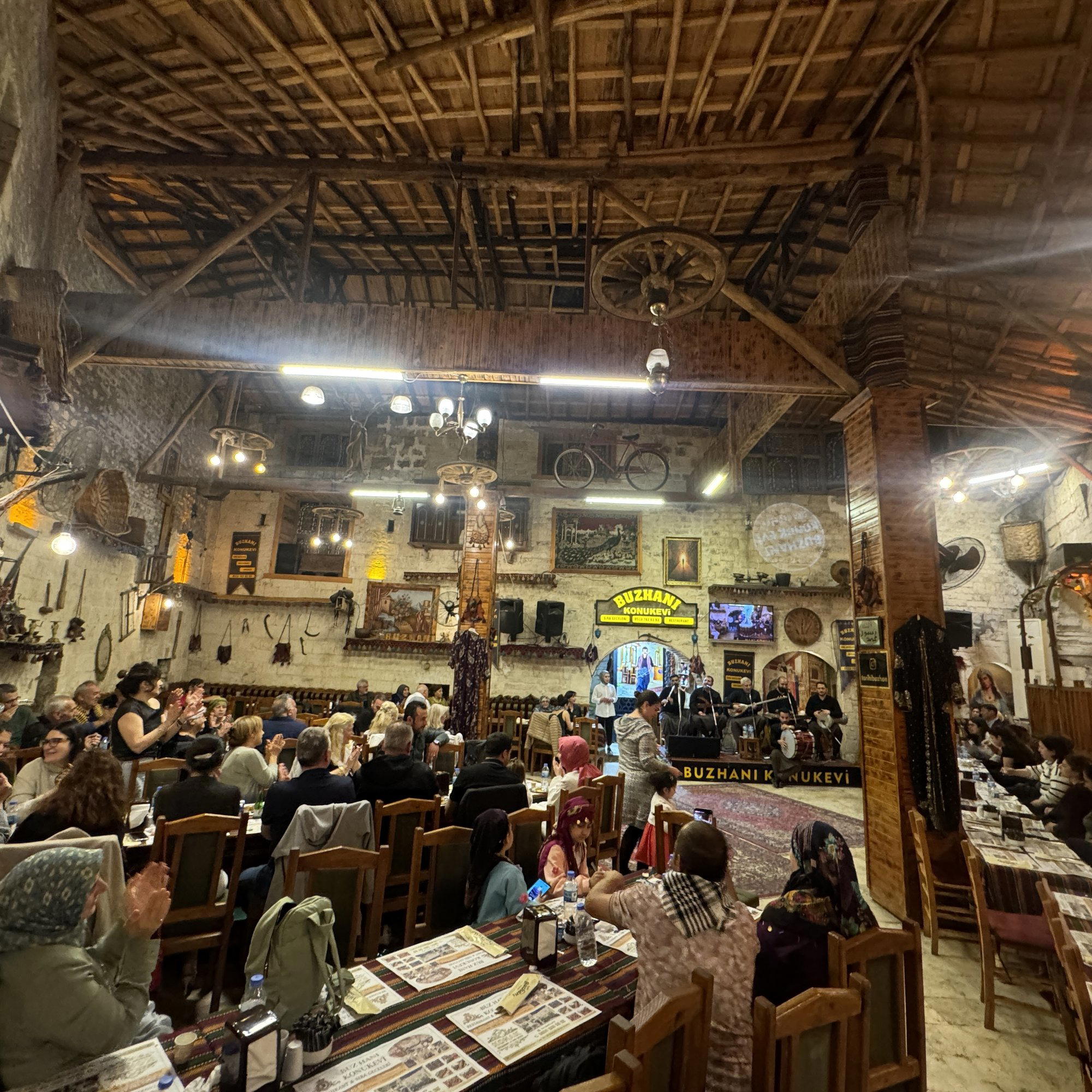
At a Glance
- Cozy
- Rustic
- Intimate
- Casual Hangout
- Courtyard
- Historic Building
- Local Sourcing
Current opening hours
- Monday
- 12–10 PM
- Tuesday
- 12–10 PM
- Wednesday
- 12–10 PM
- Thursday
- 12–10 PM
- Friday
- 12–10 PM
- Saturday
- 9 AM–10 PM
- Sunday
- 9 AM–10 PM
Hours can change for holidays and private events. Last verified .
Serene and cozy atmosphere in a restored old stone house centered around a lovely courtyard with garden areas and rooftop terrace.