HandoSake Sushi
HandoSake Sushi occupies a ground-floor suite on Main Street in downtown Salt Lake City, positioning itself within a dining corridor that has grown considerably more ambitious over the past decade. The format draws on Japanese sushi tradition adapted for a landlocked mountain city, where sourcing discipline and spatial design carry as much weight as the fish itself.
Pearl is the En Primeur Club membership app — saves, bookings, and concierge access live there. Same editors, same standards.
- Address
- 222 S Main St Suite 140, Salt Lake City, UT 84101
- Phone
- +13852954377
- Website
- handosake.com
- Directions
- Get directions
 Saves & bookings on Pearl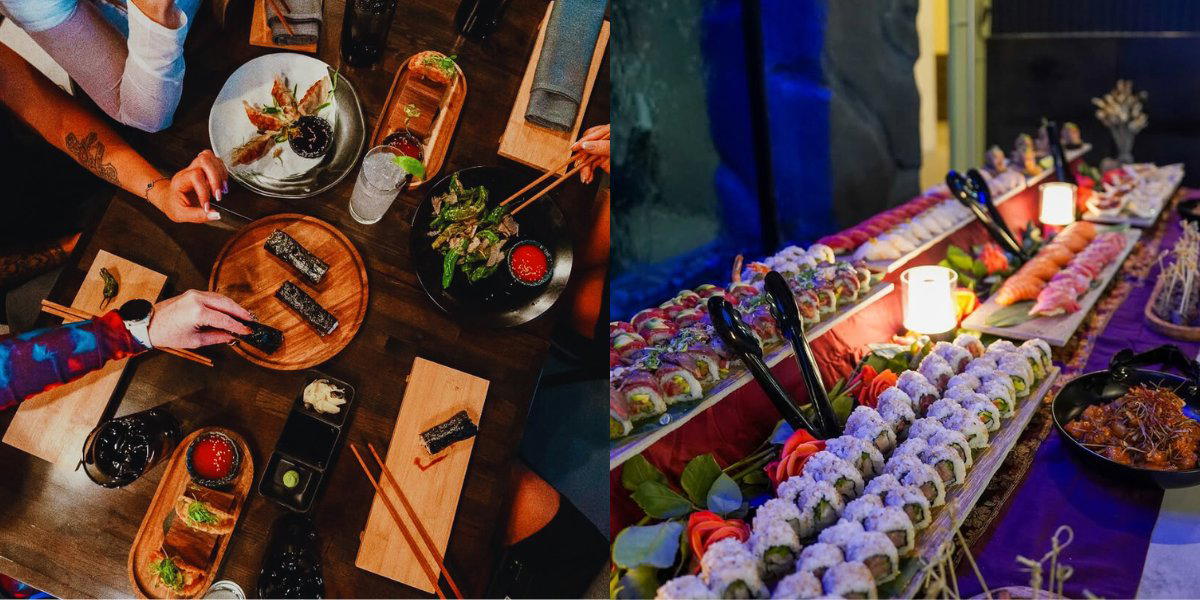
A Downtown Counter in a City Finding Its Footing With Raw Fish
HandoSake Sushi is a Japanese Hand Roll Bar in Salt Lake City at 222 South Main Street, Suite 140. The street-level entry, set into a mixed-use building, signals the kind of embedded urban format that has become a recognizable template for serious sushi in American cities where the standalone Japanese restaurant no longer feels sufficient as a category description.
Salt Lake City's sushi scene occupies an interesting position nationally. The city sits far from both coasts, which historically meant that premium raw-fish dining lagged behind markets with direct port access or large Japanese-American communities. That gap has narrowed substantially. Cold-chain logistics now allow landlocked restaurants to source with a precision that would have been logistically difficult twenty years ago, and the city's dining demographic, shaped partly by a well-travelled professional class and a growing tech sector, has created genuine demand for counter-format Japanese dining. HandoSake operates in that context, as part of a cohort of Salt Lake City restaurants pushing into categories that the city's dining culture once deferred to elsewhere.
What the Space Communicates
In sushi, the room is not incidental to the meal. Counter design, material choices, and the geometry between guest and chef are structural arguments about what kind of restaurant this is. The shift from table-service Japanese restaurants toward counter-dominant formats reflects a broader reorientation in American sushi dining: the counter is both a practical tool for timed omakase service and a statement about transparency, with preparation visible and the pacing controlled by the kitchen rather than the table.
The suite format at HandoSake, occupying a designated retail-style space within a larger building, is a configuration that tends to reward interior investment. In comparable downtown sushi operations across the Mountain West, the absence of a freestanding facade pushes the design burden entirely inward. What the room does with light, material texture, and seating arrangement becomes the first editorial the kitchen makes before a single piece of fish is sliced.
Where HandoSake Sits in Salt Lake City's Wider Dining Map
Downtown Salt Lake City has developed a cluster of restaurants operating at a demonstrably higher level of ambition than the city's earlier dining generation. Adelaide, Arlo Restaurant, and Bambara Salt Lake City represent different points along that ambition curve, each staking out a distinct cuisine position. Avenues Proper and Blind Rabbit Kitchen extend the map further into neighbourhood dining. What distinguishes HandoSake within this comparable set is category specificity: where many Salt Lake City restaurants pursue American or European frameworks, a focused sushi operation occupies a different competitive register entirely, one defined less by local comparison and more by the national standards the format implies.
That national frame matters. The sushi counter as a format has been shaped by reference points like Atomix in New York City, where Korean fine dining demonstrated what a tightly controlled counter experience could mean for American dining culture, and by the technical ambition visible at institutions like Le Bernardin in New York City, which set a standard for seafood precision that rippled through how Americans think about fish on a plate. Salt Lake City's sushi tier is still establishing its reference points, and venues like HandoSake are part of that calibration.
Further afield, the farm-to-table precision of Single Thread Farm in Healdsburg and the controlled-environment sourcing at Blue Hill at Stone Barns in Tarrytown represent the broader American fine-dining trajectory toward verifiable ingredient provenance. In sushi specifically, provenance has always been the argument. The fish, its origin, its handling from boat to counter, these are the credentials that separate serious operations from decorative ones. Restaurants like Providence in Los Angeles and Addison in San Diego have anchored West Coast expectations for what seafood-forward fine dining can look like at its most disciplined.
The Sourcing Question for a Landlocked Sushi Bar
The central operational challenge for any high-ambition sushi restaurant in Utah is the same one facing comparable operations in Denver, Dallas, or Nashville: fish quality in a landlocked state depends entirely on supply-chain discipline. The gap between a sushi restaurant that sources adequately and one that sources seriously is significant and detectable at the counter. Tuna aged correctly, uni held at the right temperature through transit, scallop arriving with its moisture intact: these are not minor distinctions. They are the difference between a competent Japanese restaurant and a sushi counter worth the category's freight.
Salt Lake City's position as a regional hub, with an international airport that handles direct West Coast connections, means that the logistical infrastructure for premium sourcing exists. Whether individual operations take advantage of it depends on relationships with distributors, buying frequency, and the kitchen's willingness to refuse substandard product. These are operational commitments that define sushi quality far more than décor or menu length.
For a broader sense of what the city's restaurant scene looks like across categories, the full Salt Lake City restaurants guide maps the range from casual neighbourhood dining through to the more ambitious downtown operations. Other regional and national reference points worth understanding in relation to where American fine dining currently sits include Lazy Bear in San Francisco, Alinea in Chicago, Emeril's in New Orleans, The French Laundry in Napa, The Inn at Little Washington, and 8½ Otto e Mezzo Bombana in Hong Kong, all of which set reference benchmarks for what precision-driven hospitality looks like at different price tiers and in different culinary traditions.
Planning Your Visit
HandoSake Sushi is located at 222 South Main Street, Suite 140, in downtown Salt Lake City, placing it within walking distance of the city's central hotel corridor and easily accessible from the TRAX light rail network. Reservations are recommended, and the restaurant is open Monday through Thursday from 11 AM to 9 PM, Friday and Saturday from 11 AM to 10 PM, and closed on Sunday. Pricing runs about $25 per person.
Category Peers
Comparable venues nearby, for context on price, style, and recognition.
| Venue | Cuisine | Price | Notes |
|---|---|---|---|
| HandoSake SushiThis venue — the venue you are viewing | Japanese Hand Roll Bar | $$ | Not listed |
| Rio Grande Cafe | Classic Mexican Comfort Food | $$ | East Central |
| Market Street Grill - Terminal Plaza at SLC International Airport | American Seafood Grill | $$ | Salt Lake City International Airport |
| Kyoto Japanese Restaurant | Authentic Japanese Sushi | $$ | 9th and 9th |
| Ruth's Diner | Classic American Diner | $$ | Emigration Canyon |
| Market Street Grill | Classic Seafood Grill | $$ | Clark Learning Office Center |
Continue exploring
More in Salt Lake City
Restaurants in Salt Lake City
Browse all →
Bars in Salt Lake City
Browse all →
Hotels in Salt Lake City
Browse all →
Wineries in Salt Lake City
Browse all →
At a Glance
- Lively
- Trendy
- Modern
- Casual Hangout
- Date Night
- Sake Program
Current opening hours
- Monday
- 11 AM–9 PM
- Tuesday
- 11 AM–9 PM
- Wednesday
- 11 AM–9 PM
- Thursday
- 11 AM–9 PM
- Friday
- 11 AM–10 PM
- Saturday
- 11 AM–10 PM
- Sunday
- Closed
Hours can change for holidays and private events. Last verified .
Lively atmosphere with DJs and moderate noise levels.