Market Street Grill - Terminal Plaza at SLC International Airport
Market Street Grill's Terminal Plaza location at Salt Lake City International Airport brings the brand's long-running seafood identity into a concourse setting, serving the same kitchen lineage that established Market Street as Utah's most recognizable name in fresh fish. For travelers moving through SLC, it represents a regional dining anchor at the gate rather than a destination in the city proper.
Pearl is the En Primeur Club membership app — saves, bookings, and concierge access live there. Same editors, same standards.
- Address
- 474 N 3700 W, Salt Lake City, UT 84122
- Phone
- +18012310741
- Website
- slcairport.com
- Directions
- Get directions
 Saves & bookings on Pearl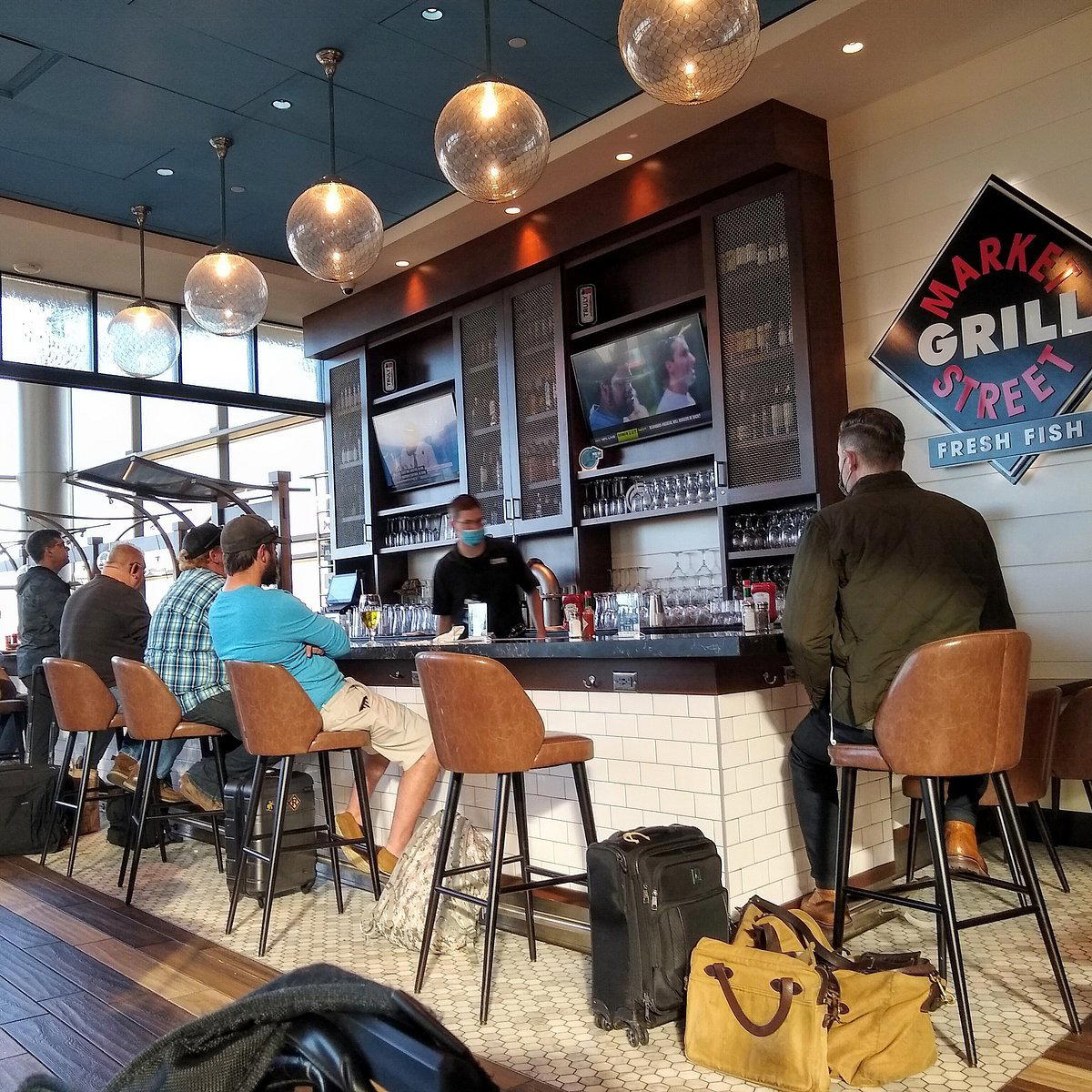
Airport Dining in Salt Lake City: What the Terminal Plaza Location Tells You About a Changing Scene
Salt Lake City International Airport's Terminal Plaza opened as part of the airport's sweeping reconstruction, one of the largest infrastructure projects in Utah's history, and the dining program that came with it reflects a broader shift in how American airports think about food. For decades, concourse dining meant chain sandwiches and reheated pasta. The new SLC terminal aimed for something more regionally coherent, and the presence of Market Street Grill at Terminal Plaza is part of that idea. The brand has operated in the Salt Lake dining scene long enough to carry genuine local recognition, and bringing it into the airport represents a calculation: that travelers passing through Utah should encounter something with actual roots in the city they're leaving or arriving in.
That shift in airport hospitality philosophy is happening across the country, though few cities have rebuilt their terminals comprehensively enough to fully execute it. SLC's reconstruction gave planners the opportunity to design food and beverage from scratch rather than retrofit it into an older concourse. The result is a terminal where regional anchors sit alongside national operators, a format closer to what you'd find in major international hubs than in the average regional American airport.
The Market Street Name and What It Carries Into This Space
The Market Street Grill name in Salt Lake City carries decades of association with fresh seafood in a landlocked state, a positioning that required consistent supply relationships and deliberate menu management to maintain. The downtown and other Market Street locations built their reputation on fish flown in regularly, a logistical commitment that distinguishes the brand from generic American grill concepts that happen to include salmon on the menu. The brand's presence in the terminal signals an attempt to extend the same identity beyond the city-center footprint.
For context, Salt Lake's dining scene has grown considerably more sophisticated in recent years. Restaurants like Adelaide, Arlo Restaurant, and Avenues Proper have helped push the city's dining conversation toward more ambitious territory. Bambara Salt Lake City and Blind Rabbit Kitchen represent different registers of that same evolution. Against that backdrop, Market Street is less a cutting-edge proposition and more an established regional institution, the kind of name that airport planners choose precisely because it carries enough recognition to function as a quality signal without requiring explanation to arriving visitors.
Airport Format and the Limits of Ambition
Any honest account of airport dining has to acknowledge what the format constrains. Terminal restaurants operate under conditions that no city-center kitchen would accept: captive audiences, variable staffing, supply chains filtered through airport logistics, and a customer base that is, at any given moment, either rushing or waiting with no middle ground. The question for a brand like Market Street is not whether the airport location matches the original but whether it maintains enough of the kitchen's standards to justify carrying the name.
At the highest end of American dining, concepts like Le Bernardin in New York City, Alinea in Chicago, or The French Laundry in Napa operate in environments where every variable is controlled in service of the plate. Restaurants like Lazy Bear in San Francisco, Single Thread Farm in Healdsburg, or Blue Hill at Stone Barns in Tarrytown extend that logic into destination formats where the setting is as deliberate as the menu. The Terminal Plaza location operates in a fundamentally different register, and that's not a criticism so much as a category distinction. The fair comparison is not Providence in Los Angeles or Addison in San Diego, but rather what else is available in the SLC concourse at 6 a.m. or during a two-hour delay.
Evolution: From Restaurant Brand to Airport Anchor
A restaurant group that has operated in a single city for decades faces a strategic choice when a new terminal arrives: stay out of the airport entirely, or extend the brand into a format that will inevitably compress some of what made the original work. Market Street chose extension, which aligns with a pattern visible in other American cities where established regional names have moved into airport formats as terminals modernize. The upside is reach and relevance, a brand that appears in the terminal stays in the minds of visitors who might then seek out the full-service location downtown. The risk is dilution, if the airport execution falls far enough below the original to create dissonance.
Globally, that tension is well-documented. Airport hospitality at the format level referenced by venues like Atomix in New York City, 8½ Otto e Mezzo Bombana in Hong Kong, or The Inn at Little Washington is a fundamentally different business than airport concourse dining. Bringing a respected regional name into a terminal is a middle path, more ambitious than fast casual, less controlled than a flagship.
The new SLC terminal at 474 N 3700 W represents a substantially different experience from the old airport, and the dining infrastructure around it was conceived as part of a comprehensive overhaul rather than as an afterthought. Market Street's presence in that build-out suggests the planners saw value in regional brand equity over generic national operators. That's the cleaner story: a city's airport finally catching up to the dining standards the city itself has been developing. References like Emeril's in New Orleans show that established local restaurant names in airport settings can sustain meaningful identity when the original brand is strong enough to anchor the extension.
Planning Your Visit
The Terminal Plaza location sits within Salt Lake City International Airport's new terminal at 474 N 3700 W. Access requires either a departing or arriving passenger credential, meaning it functions exclusively as an airport restaurant rather than a destination in its own right. Market Street Grill is open daily from 6 AM to 11 PM. Walk-in service is the standard model here.
Awards and Standing
Comparable venues nearby, for context on price, style, and recognition.
| Venue | Cuisine | Price | Notes |
|---|---|---|---|
| Market Street Grill - Terminal Plaza at SLC International AirportThis venue — the venue you are viewing | American Seafood Grill | $$ | Not listed |
| Copper Canyon Grill House & Tavern | American Grill House | $$ | Downtown |
| White Horse Spirits & Kitchen | Modern American Brasserie | $$ | Clark Learning Office Center |
| The Park Café | Classic American Breakfast Cafe | $$ | Liberty Wells |
| The Blue Plate Diner | Americana Diner Comfort Food | $$ | Sugarhouse |
| Emigration Brewing Co. | Modern American Gastropub with Italian and Steakhouse Influences | $$ | Emigration Canyon |
Continue exploring
More in Salt Lake City
Restaurants in Salt Lake City
Browse all →
Bars in Salt Lake City
Browse all →

At a Glance
- Casual
- Casual Hangout
- Brunch
- Standalone
- Hotel Restaurant
Current opening hours
- Monday
- 6 AM–11 PM
- Tuesday
- 6 AM–11 PM
- Wednesday
- 6 AM–11 PM
- Thursday
- 6 AM–11 PM
- Friday
- 6 AM–11 PM
- Saturday
- 6 AM–11 PM
- Sunday
- 6 AM–11 PM
Hours can change for holidays and private events. Last verified .
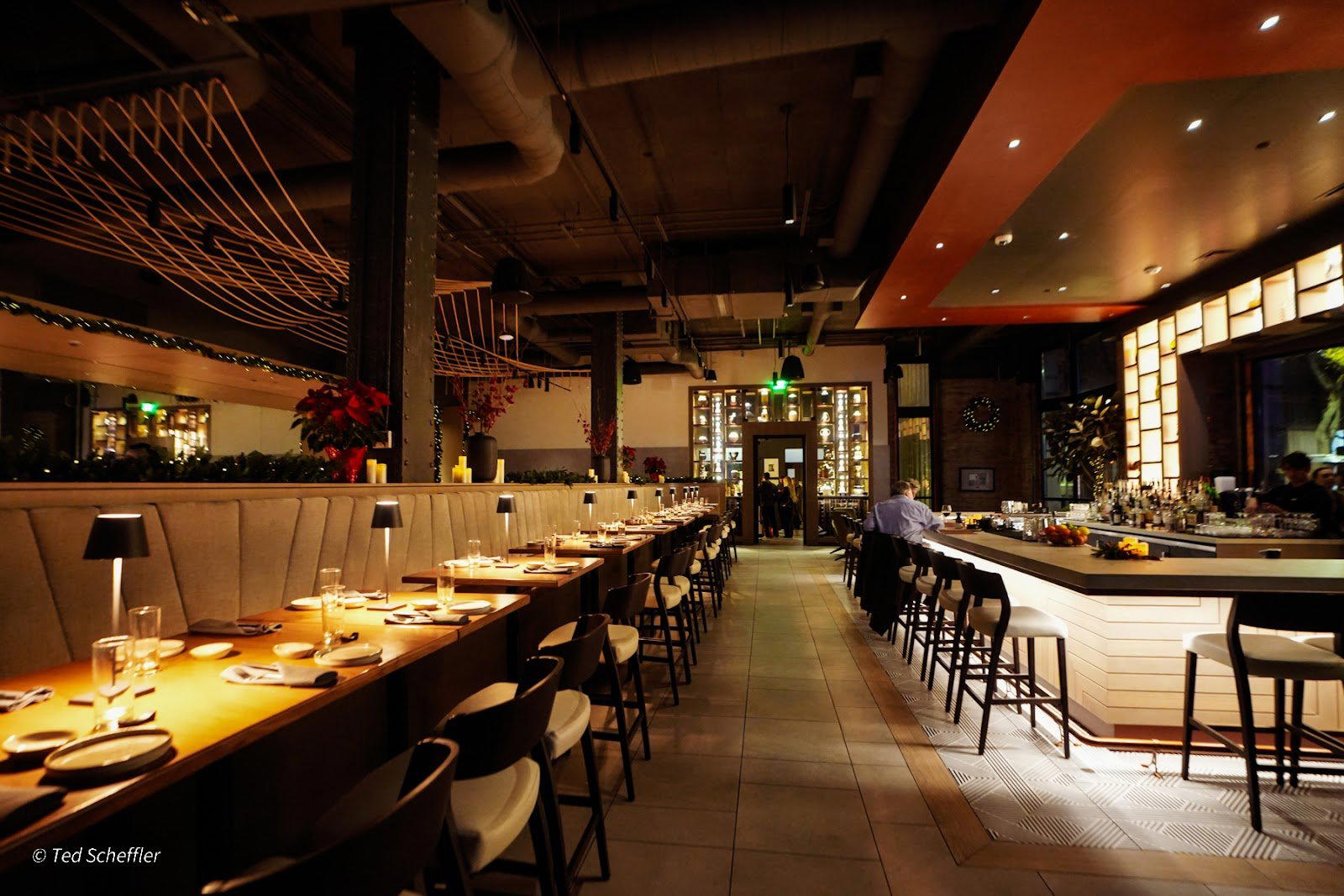
Casual airport dining with moderate noise levels and a comfortable atmosphere suitable for quick meals.