Cosmica


New York Times America's Best Restaurants · Wine Enthusiast Best Wine Restaurants
Our verdict
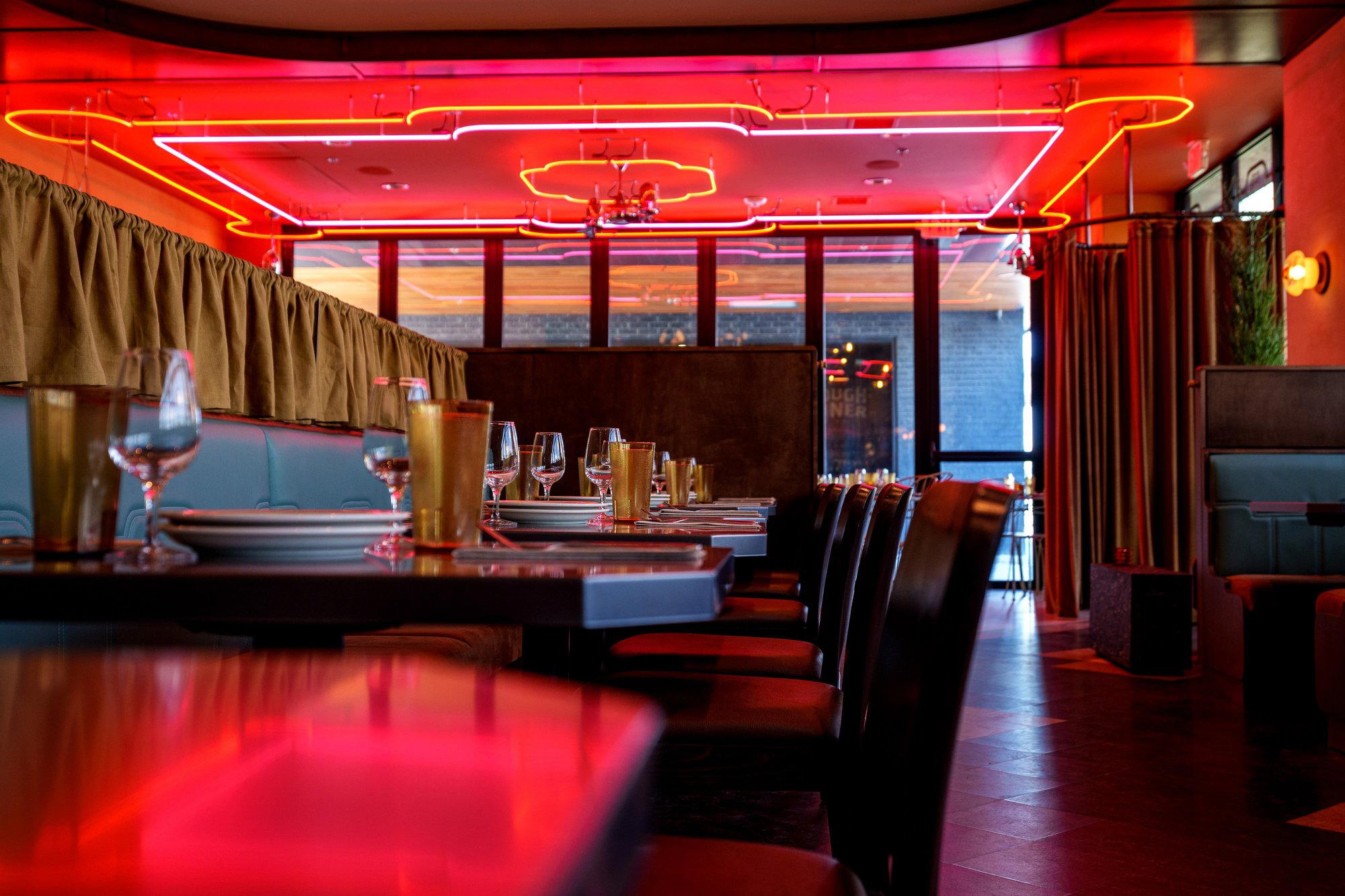
Opened in May 2025 in Salt Lake City's Central Ninth neighborhood, Cosmica plants a flag where Italian-American diner energy meets Mountain West ingredients. Chef-owner Zach Wade describes it as 'Italian diner meets spaghetti Western,' and the room delivers on that with kitschy confidence. The kitchen is serious: housemade pastas, a clam pie that competes with the East Coast's best, and elk carpaccio that makes a local ingredient case no other Italian restaurant in the region is making.

Pearl is the En Primeur Club membership app, where members save venues, book tables and use the concierge.
The menu
What to order
- Pork & Fennel Sausage Pizza
- Lasagna Rotolo
- House Puffy Bread
Where the Mountain West Walks Into a Sicilian Roadhouse
Central Ninth has quietly become the most interesting block of restaurants in Salt Lake City, the kind of neighborhood where a serious kitchen can open without the overhead pressure of a downtown flagship. Cosmica, which opened in May 2025 at 945 S 300 W, arrived into that context with a clear identity: big, kitschy, and deliberately difficult to categorize. Co-owner and chef Zach Wade has described it as "Italian diner meets spaghetti Western," and you could add Sicilian discoteca to that description without stretching the truth. The room signals its intentions immediately. This is not a place for hushed reverence.
That tone matters because it sets up what the kitchen is actually doing, which is more considered than the atmosphere might suggest. Salt Lake City's Italian dining has historically clustered around safe red-sauce familiarity, with some exceptions in the fine-dining tier. Cosmica lands in a different zone: casual enough to feel like a neighborhood anchor, precise enough to earn attention from anyone paying close attention to where American Italian cooking is moving right now.
The Italian Traditions at Work Here, and Where They Diverge
Italian regional cooking has a long and contentious taxonomy. Roman cucina, with its guanciale-driven pastas and commitment to simplicity, sits in a different tradition from the seafood-forward cuisines of Sicily and Campania, which are themselves distinct from the egg-rich, butter-touched pastas of Emilia-Romagna. American Italian restaurants tend to flatten these distinctions, pulling from whichever tradition produces the most marketable dish. Cosmica does something more selective.
The rigatoni all'amatriciana is a Roman call sign: the dish traces its lineage to Amatrice, and the version here falls within that housemade-pasta framework. Linguine scampi gestures toward the Adriatic coastal tradition, where langoustines and olive oil carry the plate. What makes Cosmica editorially interesting is that these aren't presented as museum pieces. They sit on a menu alongside elk carpaccio, which is emphatically not an Italian regional tradition but is a confident statement about where Cosmica actually is: in the Mountain West, using what the landscape produces.
The elk carpaccio functions as a hinge between Italian technique and local material. Carpaccio as a format is a Venetian invention, canonically associated with Harry's Bar and the thin-sliced raw beef that Giuseppe Cipriani reportedly created in the 1950s. Applying that format to elk is not novel in concept, but executing it with what the awards record describes as "deliciously simple" restraint suggests a kitchen that understands when to step back. Internationally, Italian restaurants in markets far from Italy have long navigated this question of how much local inflection to introduce. Venues like 8 1/2 Otto e Mezzo Bombana in Hong Kong and cenci in Kyoto make that negotiation in radically different food cultures. Cosmica's version of the same question is quieter, but it's the same question.
The Pizza Case, and Why the Clam Pie Matters
Neapolitan pizza has reached something close to market saturation in American cities. Wood-fired, 90-second, leopard-spotted, the technique has been replicated widely enough that a well-executed Neapolitan pie is no longer sufficient to distinguish a restaurant. Cosmica's pizza is described as performing at the level of anywhere in the country, which is a meaningful data point for Salt Lake City but not the main argument.
The clam pie is the main argument. White clam pizza is a New Haven tradition, most associated with Frank Pepe Pizzeria Napoletana, which has been serving its version since the 1920s and remains the reference point against which every subsequent clam pie gets measured. The awards record for Cosmica is explicit about this: the clam pie, finished with a herbaceous salsa verde, is described as so strong that "Frank Pepe's should be looking over its shoulder from 2,200 miles away." That is a specific competitive claim, and it positions Cosmica not just within Salt Lake City's Italian scene but within a national conversation about regional pizza traditions. For context on what serious pizza and seafood cooking looks like at the highest tier, Le Bernardin in New York and Providence in Los Angeles represent the fine-dining ceiling for seafood-forward American cooking.
The salsa verde addition is worth noting separately. Verde sauces appear across Italian regional traditions, from the Ligurian pesto family to the Sicilian herb-and-caper versions more typical in southern cooking. Pairing it with a clam pie introduces a Sicilian logic to a New Haven format. That kind of cross-regional synthesis, done with enough restraint that it reads as natural rather than clever, is where Italian cooking in America is most interesting right now.
The Bread, the Pastas, and the Register of the Room
"House Puffy Bread" is described as a char-spotted, piping-hot disc straight from the oven: a pita-adjacent format with a Parma frame of reference. Bread programs at Italian restaurants often function as low-effort placeholders. When a kitchen treats bread as a signature, it signals a certain confidence in the basics. This one reads as a deliberate statement.
Housemade pasta program covers the rigatoni all'amatriciana and linguine scampi noted above. Housemade pasta is the norm at serious Italian restaurants operating above the casual tier; what matters here is consistency and technique, which the available record describes as "reliably delicious." That's a specific and honest register: not transcendent, but dependable at a level that makes the restaurant a repeat destination rather than a one-visit curiosity.
For those calibrating Salt Lake City against other American cities' premium dining tiers, the landscape is instructive. Progressive American restaurants like Lazy Bear in San Francisco and Alinea in Chicago represent one end of the ambition spectrum. At the farm-to-table anchor end, Blue Hill at Stone Barns has spent years defining what local-ingredient fine dining looks like at serious scale. Single Thread Farm in Healdsburg, The French Laundry in Napa, and Addison in San Diego fill out the West Coast fine-dining reference set. Cosmica is not operating in that register, nor is it trying to.
Planning Your Visit
Cosmica is located at 945 S 300 W, Suite 102, in Central Ninth, one of Salt Lake City's more restaurant-dense corridors. It opened in May 2025, which means booking intelligence is still forming. Given the early attention the restaurant has received and the energy of the Central Ninth neighborhood, arriving without a reservation on a weekend evening is a risk worth planning around.
Central Ninth sits within reach of Salt Lake City's broader dining and nightlife circuit. For full context on where Cosmica fits within the city's restaurant scene, see our full Salt Lake City restaurants guide. If you're building a longer itinerary, our Salt Lake City hotels guide, bars guide, wineries guide, and experiences guide cover the surrounding options. For reference points on American regional cooking at other serious addresses, Emeril's in New Orleans, Albi in Washington D.C., and The Inn at Little Washington each represent distinct American regional cooking traditions worth understanding as comparison points.
Frequently asked questions
Where is Cosmica in Salt Lake City?
Cosmica is located at 945 S 300 W #102, Salt Lake City, UT 84101, Salt Lake City.
Do I need a reservation for Cosmica?
Cosmica opened in May 2025 and attracted immediate attention in Central Ninth, a neighborhood already known for drawing serious diners to Salt Lake City. For weekend evenings, booking ahead is advisable given the early volume of interest the restaurant has generated. Contact or reservation details are not currently listed publicly.
Comparison Snapshot
| Venue | Cuisine | Price | Awards | Notes |
|---|---|---|---|---|
| CosmicaThis venue (the venue you are viewing) | Modern Roman & Southern Italian | $30–50 | New York Times America's Best Restaurants · Wine Enthusiast Best Wine Restaurants | Not listed |
| Le Bernardin | French Seafood Fine Dining | $300–500 | 3 Michelin Stars · World's 50 Best #13 | French, Seafood |
| Atomix | Modern Korean Tasting Menu | $300–500 | 2 Michelin Stars · World's 50 Best #7 | Modern Korean, Korean |
| Lazy Bear | Modern American Tasting Menu | Not listed | 2 Michelin Stars · World's 50 Best #25 | Progressive American, Contemporary |
| Alinea | Avant-Garde Molecular Gastronomy | $300–500 | 2 Michelin Stars · World's 50 Best #37 | Progressive American, Creative |
| Masa | Seasonal Hokkaido Tempura Omakase | $150–200 | Tabelog 100 #34 | Sushi, Japanese |
Recognition history
Dated appearances from independent guides and award organizations, with the underlying list record or original source where available.
New York Times America's Best Restaurants
New York Times
Wine Enthusiast Best Wine Restaurants
Wine Enthusiast
Continue exploring
More in Salt Lake City
Restaurants in Salt Lake City
All restaurants in Salt Lake City →
Bars in Salt Lake City
All bars in Salt Lake City →

Hotels in Salt Lake City
All hotels in Salt Lake City →
Wineries in Salt Lake City
Browse all →
Details
- Modern
- Trendy
- Date Night
- Special Occasion
- Open Kitchen
- Natural Wine
- Local Sourcing
- A La Carte
- Natural Wine
Current opening hours
- Monday
- 5–10 PM
- Tuesday
- 5–10 PM
- Wednesday
- 5–10 PM
- Thursday
- 5–10 PM
- Friday
- 5–10 PM
- Saturday
- 5–10 PM
- Sunday
- 5–9 PM
Hours can change for holidays and private events. Hours as of .
Buzzy and modern atmosphere highlighting simple Italian satisfaction through quality ingredients.