
Hagakure belongs to Tokyo’s serious everyday-dining tier: small, inexpensive, and recognized by Tabelog 100 for udon in East Japan. In Akasaka-Mitsuke, the appeal is less ceremony than discipline, with udon, curry udon, izakaya drinking, and a compact room that rewards diners who understand Tokyo’s lunch-and-after-work rhythm.
Pearl is the En Primeur Club membership app — saves, bookings, and concierge access live there. Same editors, same standards.
- Address
- 東京都港区赤坂3-10-20 第三対翠館ビル B1F
- Phone
- +81335055323
- Website
- tabelog.com
 Saves & bookings on Pearl
Akasaka-Mitsuke has a particular kind of Tokyo energy: office workers moving fast between subway exits, side streets dropping suddenly into basement dining rooms, and restaurants that do not need theatrical signage to fill seats. Hagakure sits in that register, below street level in a compact room where the counter and small tables put the kitchen, floor, and diners in close range. This is not the luxury-counter Tokyo that sells silence and scarcity. It is the city’s sharper everyday grammar: wheat noodles, quick decisions, modest spend, and a room small enough that pacing matters.
Tokyo’s udon culture is often less internationally decoded than sushi or ramen, but the city treats it with the same taxonomy. There are regional styles, curry-led shops, standing counters, drinking-room hybrids, and specialist addresses that draw attention because the fundamentals are difficult to fake. Hagakure’s selection for Tabelog 100 Udon EAST 2024 places it inside that specialist conversation, not because it is expensive, but because Tokyo’s noodle hierarchy has room for low-ticket restaurants that execute with consistency. Its Tabelog score of 3.65 and repeat Tabelog 100 selections in 2020, 2022, and 2024 give the place a clear signal in a category where regulars, office crowds, and noodle obsessives all vote with frequency.
Akasaka udon with izakaya instincts
The useful way to read the format is as udon first, izakaya-adjacent second. The category listing covers udon, curry udon, and izakaya, and that combination says plenty about how Tokyo eats around business districts. Lunch is functional and compressed; evening stretches into drinking, snacks, and noodles as the anchor rather than a formal tasting sequence. Sake, shochu, wine, and cocktails are listed, which pushes the room beyond a pure noodle counter without turning it into a bar with incidental food.
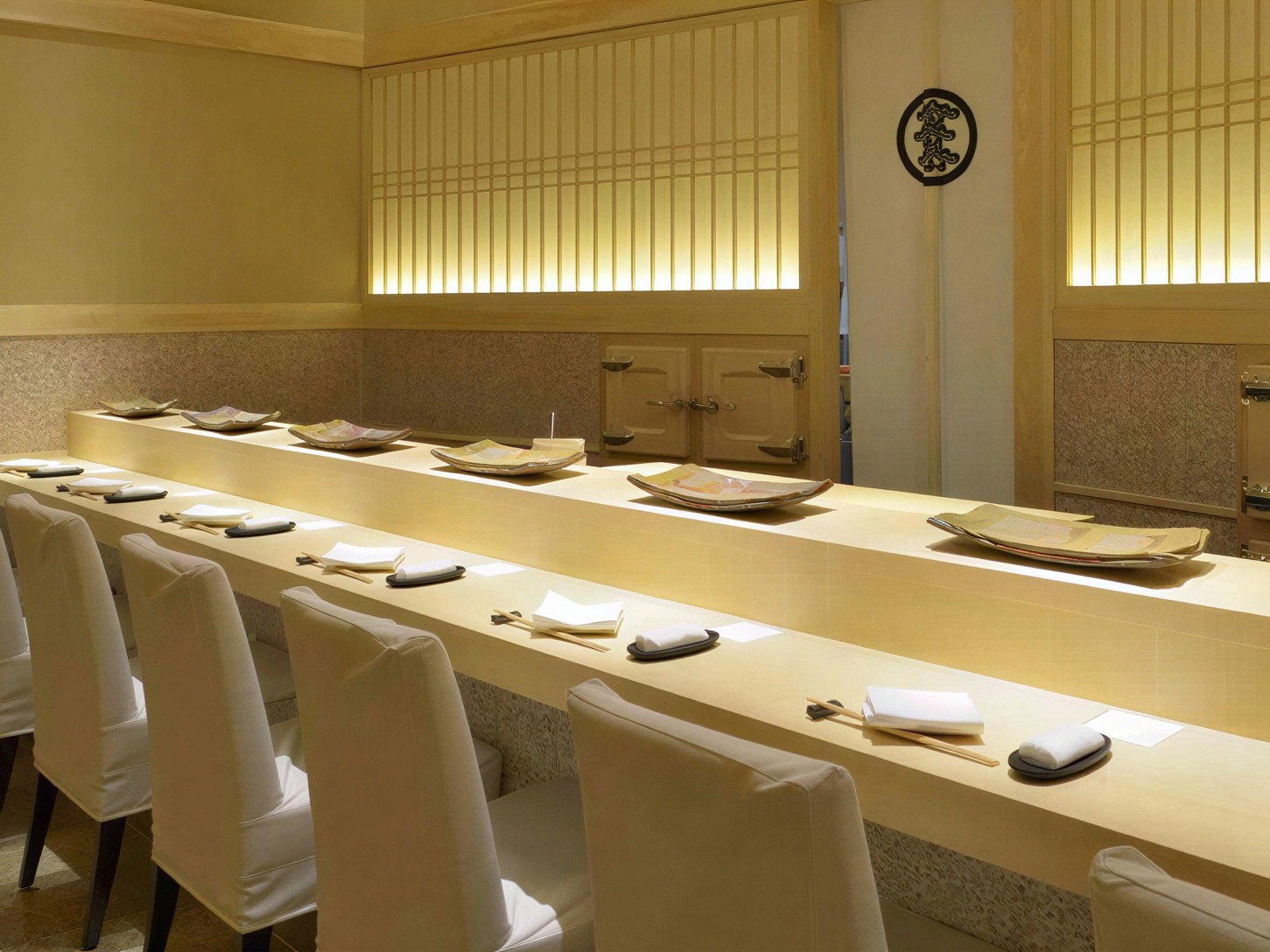
That hybrid matters in Akasaka. The neighbourhood sits between political Tokyo, corporate Tokyo, and after-work Tokyo, so restaurants often need to handle solo diners, pairs, and small groups without changing identity. Hagakure’s 16 seats, including counter seating and two-seat tables, make the team dynamic visible: kitchen output, table turnover, drink handling, and floor timing all have to land in a room with little buffer. In larger restaurants, weak coordination can hide behind space. Here, it cannot.
Tokyo’s lower-priced specialist restaurants are often misunderstood by visitors who equate cost with ambition. A sub-¥1,000 average spend does not mean casual in the careless sense. It means the restaurant competes in a demanding local category where repetition is the test. Udon shops have to manage texture, broth or sauce balance, serving temperature, and speed across service, while also staying accessible enough for weekday use. The recognition attached to this address is useful precisely because it points to craft in a price band that travelers often under-research.
The room works because the format is tight
Small Tokyo restaurants create a different kind of hospitality from hotel dining rooms or international fine dining. Service is not built around long explanations; it is built around reading the flow. Counter seats pull solo diners into the rhythm, while the two-seat tables suit friends or colleagues who want a contained meal rather than a long evening. The listed note that many diners recommend it for solo dining and friends aligns with the physical setup. It is not a family-style banquet room, and it is not designed around lingering with a large party.
The kitchen-and-floor relationship is the quiet story here. A compact udon room with drinks has to run on handoffs: bowls, orders, refills, payment, and table reset. The presence of curry udon also widens the audience, because curry udon in Tokyo functions as comfort food, lunch food, and drinking-session closer depending on hour and company. That versatility is the restaurant’s editorial point. Hagakure is not trying to sit in the same decision set as Kizaki for sushi, Raimon for yakiniku, or Bar Tiare for higher-spend cocktails. It belongs to a different Tokyo economy: the small specialist address with a narrow core product and enough range to make sense at both lunch and dinner.
For travelers building a Tokyo eating map, that distinction is useful. A city itinerary that only chases reservations at sushi counters and kaiseki rooms misses the places where Tokyo residents compress quality into routine. Udon is especially good for this because it reveals how much technique can sit inside a brief meal. The award signal helps separate a serious noodle address from a random convenient stop, while the price band keeps the decision low-risk. The trade-off is that the room is small and the experience is local in tempo; diners who need extended English-language guidance or leisurely pacing may prefer a different format.
Where it fits in a Tokyo itinerary
Akasaka-Mitsuke is an efficient dining base because it connects easily across central Tokyo and has enough late-day restaurant density to support flexible plans. Hagakure works as a focused noodle stop rather than the centrepiece of a full evening. Pair it with a bar elsewhere, or use it as a counterpoint to more expensive meals on the same trip. A traveler comparing Tokyo’s casual depth could look at curry through 3 Chome no Curry Ya San, skewers through 124. KAGURAZAKA (Yakitori), playful café culture through 2D Cafe, and meat-led nights through . 鮪と炭火焼き うお炭 秋葉原店 or 12/10 Shinjuku ten.
The broader lesson is that Tokyo dining should be planned across categories, not just prestige levels. Use Our full Tokyo restaurants guide for restaurants, then widen the trip with Our full Tokyo hotels guide, Our full Tokyo bars guide, Our full Tokyo wineries guide, and Our full Tokyo experiences guide. For a wider Japan-and-beyond comparison of compact specialist formats, consider -Grilled beef Sukiyaki- KAMAKURA TANUKIAN 鎌倉 たぬき庵 in Kamakura.cafe in Osaka.know in Kumamoto, (Shoku) Vietnam in Kawasaki, [Curry Senmon Ten] Maruyama Kyoju. in Sapporo, [ki:] in Kyoto, Jōdo Saké Bar in Los Angeles, and Onigiri Time in Pasadena.
How It Stacks Up
Comparable venues at a glance for context.
| Venue | Cuisine | Price | Notes |
|---|---|---|---|
| Hagakure | Udon and curry udon izakaya | $ | Minato |
| Oniyanma Shimbashi ten | Stand-up Sanuki Udon | $ | Minato |
| Kitchen Nankai Chiyoda kanda jinbou ten | Japanese Yoshoku | $ | Chiyoda |
| Fukuo Shoten | Traditional Japanese sweets and agar jelly shop | $ | Chiyoda |
| Takemura | Traditional Japanese sweets café (kanmi-dokoro) | $ | Chiyoda |
| Uoriki | Traditional Japanese fish set-meal diner (teishoku) | $ | Shibuya |
Recognition history
Dated appearances from independent guides and award organizations, with the underlying list record or original source where available.
Tabelog 100 #26 · No. 26
Tabelog · Tabelog 100 - Udon - EAST - 2024










At a Glance
- Cozy
- Solo
- After Work
- Casual Hangout
- Group Dining
- Standalone
- Sake Program
A small basement hideout near Akasaka-mitsuke Station with a relaxed, low-key izakaya feel, counter and table seating, and a casual atmosphere suited to solo diners and after-work visits rather than families with small children.