
Tabelog 100 #11
Our verdict
Gyoza Daigaku is a Motomachi dumpling counter with an 18-seat scale, no-reservation rhythm, and repeat recognition in Tabelog’s Dumplings 100 selection. The appeal is not ceremony but fluency: regulars know the ordering discipline, the compact room, and the value of deciding quickly before the first plate is set down.

Pearl is the En Primeur Club membership app, where members save venues, book tables and use the concierge.
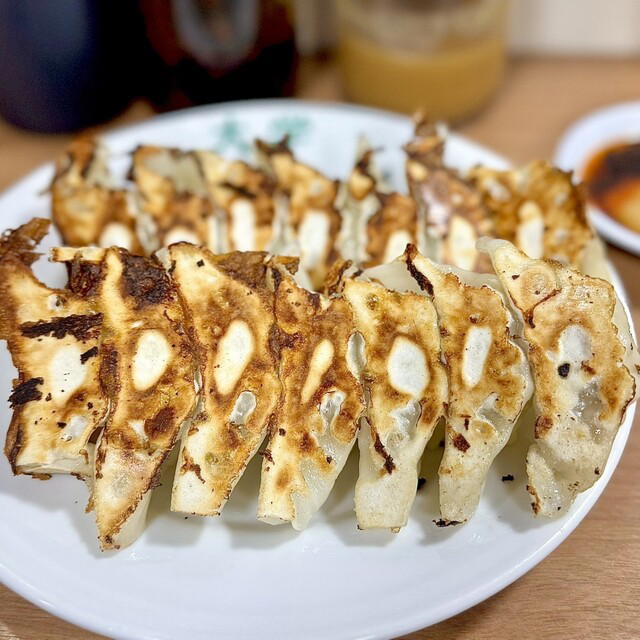
Kobe’s restaurant streets work at close range: noren curtains, counter seats, steam on glass, and the choreography of small shops built for regulars, not leisurely browsing. Here, gyoza is not a side order. It is the reason to sit, order with intent, and read the room’s pace before conversation expands.
Gyoza Daigaku belongs to Kobe’s compact, single-purpose school of eating, where a focused menu can carry more authority than a long one. Think less formal ceremony than everyday specialist culture: counters, coffee rooms, standing bars, bakeries, and dumpling shops where regulars explain the format faster than printed guidance.
Kobe gyoza, judged by regulars rather than ceremony
Kobe’s food culture has long been shaped by everyday city appetite, but its gyoza shops are less about spectacle than repetition. A small dumpling room earns loyalty by being precise enough for repeat visits and informal enough for weekdays. Gyoza Daigaku’s register is modest, focused, and more serious than its price tier suggests.
Selection in Tabelog’s 2024 Hyakumeiten recognition gives the restaurant a public marker beyond local habit. That matters in Japan’s dumpling category, where national attention can tilt toward cities with famous gyoza identities. Kobe’s version has a different cadence: city informality, quick meals, and small-room discipline.
The regulars’ view is key. This is not a room to approach as a broad, leisurely sequence of plates. The appeal is narrower: arrive ready for dumplings, follow the shop’s pace, and keep the meal aligned with a compact specialist format. That protects speed, consistency, and turnover in a restaurant whose reputation rests on doing one category well.
Within Kobe’s casual dining map, the shop sits closer to a specialist institution than a general izakaya. Nearby comparisons show the range: other Kobe dining rooms sit in the city’s broader conversation, while older coffee culture reflects another side of local appetite. Gyoza Daigaku occupies a leaner lane: dumplings, quick decisions, and no embellishment.
The discipline of a small room
A compact restaurant changes the kitchen-diner contract. There is little room for indecision, and the mood depends on diners understanding the rhythm rather than stretching the meal into something it is not. The counter, when present in shops of this kind, is not a luxury signal; it is part of the operating system. Diners used to small Japanese specialist restaurants will know the pattern: know the order, do not overcomplicate the table, and let the shop run at its tempo.
The in-room experience is where that discipline makes most sense. A gyoza shop depends on batch logic, hot pans, and the narrow window between cooking and eating. Ordering with focus signals a kitchen built around flow, not incremental grazing. Regulars return because that predictability is the point.
Access and payment expectations should be treated in the spirit of an old-school casual stop rather than a polished destination restaurant. Small Japanese city restaurants often ask guests to adjust to the room, the pace, and the practicalities on the day. The Kobe setting is part of the appeal because its streets make dumplings easy to fold into a broader eating route.
For travelers building a Kobe itinerary, this stop pairs naturally with other compact food formats, not a long tasting-menu evening. A day might move from bakery to coffee to dumplings, or from gyoza into a standing drink. For wider planning, Our full Kobe restaurants guide, Our full Kobe bars guide, and Our full Kobe experiences guide give broader city context, while Our full Kobe hotels guide and Our full Kobe wineries guide cover the rest of the trip architecture.
How to place it in Kobe's casual canon
Gyoza Daigaku clarifies a distinction in Kobe dining. The city is often sold through beef, harbor views, and Western-style dining rooms, but its everyday appeal is sharper in small specialists. Grill Ippei Motomachi ten and Ito Grill point to yoshoku and beef traditions at different price levels; Motomachi Santos and Pan Yakidokoro RIKI show coffee and bread culture; Tachinomi ZUTTO represents the standing-drink end. The dumpling counter sits among these not as a cheaper substitute, but as another form of precision.
The absence of a named chef narrative is almost useful. It avoids treating every small Japanese restaurant as a personal manifesto. Here, the evidence is structural: 2024 Tabelog Hyakumeiten recognition, a narrow category focus, and a format that privileges quick commitment over roaming choice. Those details say more than a biography would.
Readers mapping Japan beyond Kobe can understand the format alongside other tightly defined casual places in the local mix and in other cities. Even outside Japan, the lesson applies at focused drinking and eating rooms: a narrow format can reveal more than a long menu. Gyoza Daigaku works because the proposition is limited, legible, and easy to understand before the first plate arrives.
The recommendation is simple: treat Gyoza Daigaku as a short, disciplined Kobe stop, not a flexible dinner plan. Its reputation rests on dumplings, small-room efficiency, and repeat local use, not theatrical service. Diners who accept that contract will understand why a gyoza counter can carry enough weight to appear in a national dumpling selection.
Frequently asked questions
What price level is Gyoza Daigaku?
Pricing at Gyoza Daigaku is listed as JPY 1,000 - JPY 1,999 - JPY 999.
What part of town is Gyoza Daigaku in?
Kobe.
Is Gyoza Daigaku open every day?
Specific opening hours are not provided here. Check the venue's official channels for the latest details.
What has Gyoza Daigaku built its reputation on?
Its reputation is anchored by dumplings and 2024 Tabelog Hyakumeiten recognition, with a listed score of 3.67 and a casual budget range.
Can Gyoza Daigaku accommodate dietary restrictions?
Those details are not published here. What is clear is the focused dumpling format, so diners with specific needs should plan around a simple setup in Kobe. Check the venue's official channels for the latest details.
Is Gyoza Daigaku okay with children?
No children policy is stated in the information provided here. The format appears best suited to a short, orderly visit rather than a drawn-out meal. Check the venue's official channels for the latest details.
Where the Accolades Land
Comparable venues to calibrate price, style, and recognition.
| Venue | Cuisine | Price | Awards | Notes |
|---|---|---|---|---|
| Gyoza DaigakuThis venue (the venue you are viewing) | Japanese Dumplings (Gyoza) | $1–10 | Tabelog 100 #11 | Not listed |
| ENISHI | Tantanmen ramen specialist | $10–20 | Tabelog 100 #49 | Nada |
| Tsukemen Shigeta | Tsukemen & Ramen Shop | $10–20 | Tabelog 100 #97 | Nada |
| Ipposhi | Tori paitan ramen shop | $10–20 | Tabelog 100 #64 | Nada |
| Pan Yakidokoro RIKI | Japanese artisan bakery | $10–20 | Tabelog 100 #38 | Chūō |
| Tommy's Sannomiya higashi ten | Japanese Bakery & Café | $1–10 | Tabelog 100 #32 | Chūō |
Recognition history
Dated appearances from independent guides and award organizations, with the underlying list record or original source where available.
Tabelog 100 #11 · No. 11
Tabelog · Tabelog 100 - Dumplings - 2024
Continue exploring
More in Kobe
Restaurants in Kobe
All restaurants in Kobe →

Bars in Kobe
Browse all →




Details
- Classic
- Cozy
- Well Known
- Solo
- Casual Hangout
- Late Night
- Standalone
- Sake Program
- Street Scene
- A La Carte
- Counter Dining
- Sake
Current opening hours
- Monday
- Closed
- Tuesday
- Closed
- Wednesday
- 11:30 AM–1:50 PM, 5–7:50 PM
- Thursday
- 11:30 AM–1:50 PM, 5–7:50 PM
- Friday
- 11:30 AM–1:50 PM, 5–7:50 PM
- Saturday
- 11:30 AM–1:50 PM, 5–7:50 PM
- Sunday
- 11:30 AM–1:50 PM, 5–7:20 PM
Hours can change for holidays and private events. Hours as of .
Compact, no-frills, and likely bustling at peak times, with a simple counter-and-table setup that feels like a classic neighborhood dumpling shop.