
Falstaff Wine Bar - 93 Falstaff Points
Our verdict
Located within Munich's Viktualienmarkt, Gürmet occupies one of the city's most storied market settings, a place where the daily rhythms of Bavarian food culture and a more considered approach to eating intersect. The address alone, inside a working market that has supplied Munich's kitchens for two centuries, frames the experience before a single dish arrives.

Pearl is the En Primeur Club membership app, where members save venues, book tables and use the concierge.

The menu
What to order
- Çilbir (Turkish Eggs)
- Shakshuka with Feta
- Mushroom Gözleme
- Pumpkin Hummus
A Market Address That Sets the Terms
The Viktualienmarkt has functioned as Munich's primary open-air food market since 1807, and the stalls, stands, and small shopfronts that occupy its six sections represent something the city's fine-dining rooms cannot replicate: a direct, unmediated relationship with produce, season, and daily trade. Gürmet sits within this context at Laden Abt. VI, Nr. 9, a specific address inside a market infrastructure that the city treats as both practical utility and civic landmark. Arriving at a venue embedded in a working market means engaging with the neighbourhood before you engage with the menu. Crates move. Regulars negotiate. The air carries the particular combination of roasting coffee, aged cheese, and cut flowers that defines the market's sensory register at any hour. That environment is not incidental to what Gürmet does; it is the frame through which the venue's choices read.
Munich's broader restaurant scene sits in an interesting tension. On one side, you have the Michelin-starred tier Tantris, Atelier, Alois - Dallmayr Fine Dining, JAN, and Tohru in der Schreiberei, all of which operate in dedicated dining rooms insulated from the street. On the other, you have the market stall, the beer garden counter, and the standing-room lunch format that Bavarian food culture has always accommodated. Gürmet's location in Viktualienmarkt places it somewhere between those poles, which is itself an editorial statement about how it wants to be read.
How the Market Setting Structures the Menu
Reading a restaurant through its menu architecture reveals more than any individual dish can. A menu is a set of decisions about what the kitchen prioritises, how it sequences flavour and intention, and what kind of diner it expects to be sitting across from. For a venue positioned inside a working food market, the architecture question becomes particularly pointed: does proximity to produce translate into genuine seasonality and sourcing discipline, or does the market address function as atmosphere while the kitchen operates independently of it?
In Munich's market-adjacent food culture, the most credible operations are the ones where the menu changes in close response to what the surrounding stalls are actually carrying week to week. The Viktualienmarkt's vendor network includes specialist cheese mongers, in-season vegetable growers from the surrounding Bavarian countryside, and butchers operating at a level of specificity that supermarket supply chains cannot match. A kitchen that draws on that network will produce a menu that looks structurally different from one built on consolidated wholesale supply, shorter, more conditional, less predictable across visits.
Germany's broader fine-dining movement has spent the past decade interrogating exactly this question. At restaurants like ES:SENZ in Grassau and Schanz in Piesport, the answer has been tight seasonal menus with high sourcing transparency. At destinations like Aqua in Wolfsburg and Vendôme in Bergisch Gladbach, the menu architecture tends toward classical precision and longer-term consistency. Both models have currency. The question for a market-embedded address like Gürmet's is which model the physical context supports, and which it demands.
Munich's Market Food Tradition in Context
The Viktualienmarkt's history gives any vendor or restaurant within it a specific kind of cultural gravity. This is not a rebranded food hall or a developer's interpretation of market dining. It is a municipal institution that survived both World Wars, adapted across decades of shifting German food culture, and maintained its function as the actual provisioning engine for a significant portion of Munich's professional kitchens. Chefs from the city's Michelin-starred rooms are not uncommon early morning figures at the stalls.
That lineage places market-embedded venues in a position where the surrounding context does part of the credibility work automatically. It also raises the bar: a venue at Viktualienmarkt operates alongside vendors whose product depth and sourcing specificity are auditable in real time by anyone walking past. The standard for quality reference is set by the market itself, not by the restaurant's own claims.
Across Germany, the relationship between formal dining and market culture has produced some of the country's most interesting restaurant formats. Schwarzwaldstube in Baiersbronn and Waldhotel Sonnora in Dreis draw on regional agricultural traditions in ways that embed them in specific landscape contexts. Restaurant Haerlin in Hamburg and Victor's Fine Dining by Christian Bau in Perl operate within hotel frameworks that separate them from direct market adjacency. Gürmet's Viktualienmarkt address is a different structural proposition from either of those models.
For international comparison, the gap between market-embedded dining and formal restaurant culture appears in cities like New York, where Le Bernardin and Atomix operate in dedicated rooms entirely separated from their sourcing infrastructure. The market-embedded model collapses that separation by design. Whether that produces a better or merely a more transparent dining experience depends on how the kitchen uses the proximity.
The Case for Visiting Viktualienmarkt's Dining Offers
Munich's dining scene is increasingly bifurcated between tasting-menu formalism and casual Bavarian tradition. The middle ground, counter service, market-adjacent eating, formats that allow a visitor to eat well without three-month booking windows, remains underserved relative to the city's ambitions. Bagatelle in Trier and CODA Dessert Dining in Berlin illustrate how German cities have begun to produce ambitious formats that operate outside the conventional fine-dining framework. Munich's market food tradition offers a credible local version of that ambition.
For visitors building a Munich itinerary, the Viktualienmarkt is a logical anchor point regardless of which venues one selects. The market's geographic position, central, walkable from the U-Bahn at Marienplatz, and embedded in the old town's pedestrian zone, means it functions as both a destination and a transit point. Morning visits align with peak vendor activity and the widest product selection. Midday, the market shifts toward lunch trade. Either window offers a different reading of the same address.
Our full Munich restaurants guide maps the city's current dining offers across price tiers and neighbourhood contexts, which is a useful planning layer for any visit that aims to move between the market's register and the city's more formal rooms.
Planning a Visit
Gürmet's address at Viktualienmarkt Laden, Abt. VI, Nr. 9 in the 80331 postal district places it within one of Munich's most accessible central locations. Market venues of this type typically operate on condensed daily schedules aligned with market trading hours rather than conventional restaurant service windows, arriving with flexibility built into the timing is prudent practice.
Frequently asked questions
What's the address for Gürmet?
Gürmet is located at Viktualienmarkt Laden, Abt. VI, Nr. 9, 80331 München, Germany, Munich.
Is Gürmet inside the Viktualienmarkt itself, or nearby?
Gürmet's registered address, Viktualienmarkt Laden, Abt. VI, Nr. 9, 80331 München, places it within the market's own shopfront structure, not on an adjacent street. The 'Laden' designation refers to the permanent retail units that line the market proper, distinct from the temporary stall pitches. That address classification matters for planning, as access follows the market's operational hours rather than a standalone restaurant schedule.
What dish is Gürmet famous for?
EP Club's verified data does not currently include a confirmed dish list for Gürmet. Its position at Viktualienmarkt Laden, Abt. VI, Nr. 9 places it inside a market whose vendors have historically centred on Bavarian regional produce, cured meats, cheeses, and prepared foods. Any visit is best approached with flexibility rather than a single target dish in mind.
Should I book Gürmet in advance?
Market-embedded venues at the Viktualienmarkt in Munich typically operate on a walk-in basis during daytime hours, which has been the format of the market since its founding in 1807. Arriving outside the midday peak window on weekdays generally improves access.
What has Gürmet built its reputation on?
Gürmet's address at the Viktualienmarkt, Munich's primary municipal food market since 1807, gives it a foundation that newer food halls cannot replicate. The market itself carries Tier E contextual authority: it functions as a professional sourcing destination for Munich residents, not a tourist construct. Operating within that structure positions Gürmet inside a supply chain and cultural standard set by two centuries of trading tradition.
Can Gürmet accommodate dietary restrictions?
Visitors with specific requirements should plan to assess the menu directly on arrival, as is common across counter-service and market-stall formats at the Viktualienmarkt in Munich.
Where the Accolades Land
Comparable venues nearby, for context on price, style, and recognition.
| Venue | Cuisine | Price | Awards | Notes |
|---|---|---|---|---|
| GürmetThis venue (the venue you are viewing) | Turkish Meze & Natural Wine | $20–30 | Falstaff Wine Bar - 93 Falstaff Points | Not listed |
| Lezizel Manti | Traditional Turkish Manti Dumplings | $10–20 | Not listed | Isarvorstadt |
| Restaurant Merhaba | Traditional Turkish | $20–30 | Not listed | Haidhausen |
| HAN | Modern Turkish Grill | Not listed | Not listed | Schwabing |
| Abant Restaurant | Turkish Grill & Pizza | $20–30 | Not listed | Theresienwiese |
| Rumeli Meze & Grill | Turkish Meze & Grill | Not listed | Not listed | Neuhausen |
Recognition history
Dated appearances from independent guides and award organizations, with the underlying list record or original source where available.
Falstaff Wine Bar - 93 Falstaff Points
Falstaff
Continue exploring
More in Munich
Restaurants in Munich
All restaurants in Munich →
Bars in Munich
All bars in Munich →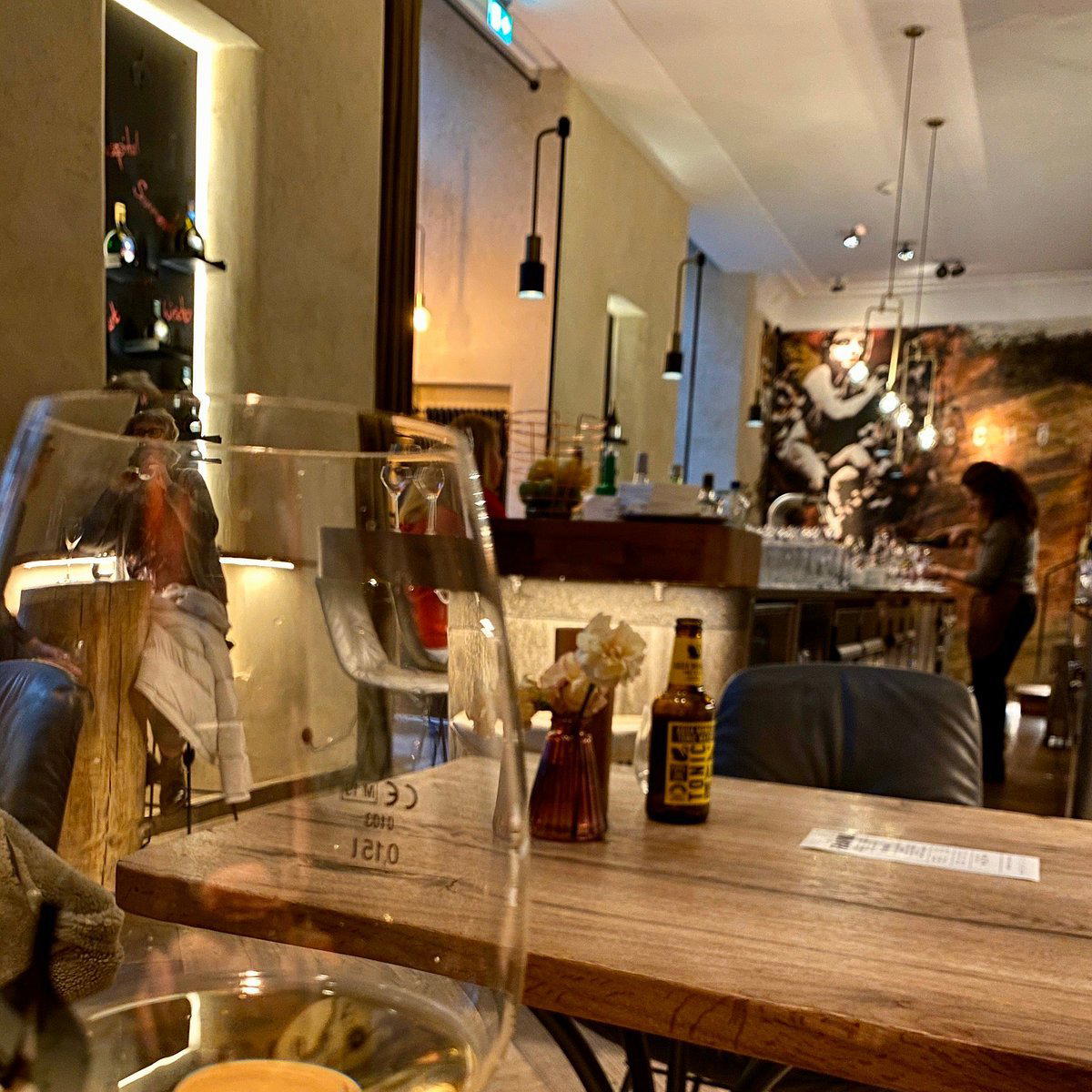
Details
- Trendy
- Scenic
- Cozy
- Bohemian
- Casual Hangout
- After Work
- Group Dining
- Terrace
- Open Kitchen
- Natural Wine
- Local Sourcing
- Organic
- Natural Wine
- Farm To Table
- Street Scene
- Small Plates
- A La Carte
- Natural Wine
- Turkish Wine
- Vegetarian Friendly
- Vegan Options
- Organic Focus
Current opening hours
- Monday
- Closed
- Tuesday
- 10 AM–5 PM
- Wednesday
- 10 AM–5 PM
- Thursday
- 10 AM–5 PM
- Friday
- 10 AM–7 PM
- Saturday
- 10 AM–7 PM
- Sunday
- Closed
Hours can change for holidays and private events. Hours as of .
Market-setting with evening sun exposure, casual and social atmosphere blending Turkish culture with modern Munich city life.