One of Vienna's oldest continuously operating restaurants, Griechenbeisl at Fleischmarkt 11 has anchored the city's first district for centuries. Its vaulted rooms and layered history place it firmly in the category of living institution rather than themed revival, and the kitchen draws on the Viennese bürgerlich tradition that defines the city's relationship with Austrian cooking.
Pearl is the En Primeur Club membership app — saves, bookings, and concierge access live there. Same editors, same standards.
- Address
- Fleischmarkt 11, 1010 Wien, Austria
- Phone
- +43 1 5331977
- Website
- griechenbeisl.at
- Directions
- Get directions
 Saves & bookings on Pearl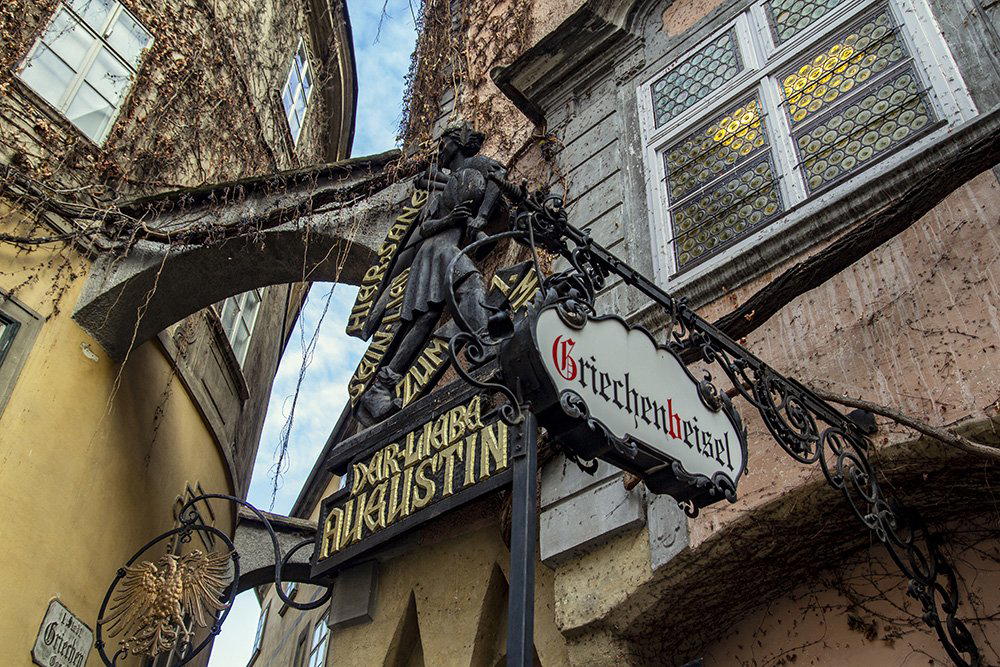
Where Vienna's Dining History Becomes Physical
Vienna's first district does not lack for old rooms. But the difference between a room that is merely old and one that has absorbed the city's social fabric over generations is legible the moment you arrive at Fleischmarkt 11. The building that houses Griechenbeisl dates to the fifteenth century, and the layers of wear on its stone and timber are not a design decision.
The address sits in the inner city's Greek quarter, a neighbourhood that once housed Vienna's Greek merchant community and still carries that name in the street itself. The location is not incidental to the restaurant's identity. The historical connection between commerce, community, and eating in this corner of the Innere Stadt is what gives Griechenbeisl its place in the city's social geography, something that distinguishes it from the wave of modern Austrian restaurants that have defined Vienna's international dining reputation in recent decades.
The Bürgerlich Tradition in Context
Vienna's contemporary fine dining scene is dominated by restaurants operating in the €€€€ tier: Steirereck im Stadtpark, Konstantin Filippou, Mraz & Sohn, and Amador all sit in that bracket, each making an argument for modern Austrian or European cooking at the highest technical register. Griechenbeisl operates in a different register entirely. The bürgerlich tradition it represents is Vienna's bourgeois civic cuisine: Wiener Schnitzel, Tafelspitz, Beuschel, goulash, and the cold-weather dishes that sustained a city before tasting menus became the dominant idiom of serious eating.
That tradition is not a lesser category. It is the foundation on which the €€€€ creative tier was built, and understanding what a Tafelspitz should taste like at a place that has been serving it for generations is a prerequisite for appreciating what a kitchen like Doubek does when it reworks the same tradition. Griechenbeisl's value to a visitor is partly historical, but it is also calibrational: this is the benchmark against which creative Austrian cooking measures its departures.
Austria's restaurant culture extends well beyond Vienna, and the bürgerlich sensibility that Griechenbeisl represents recurs in different forms across the country. Döllerer in Golling an der Salzach, Landhaus Bacher in Mautern an der Donau, and Obauer in Werfen each work from a similar relationship between regional tradition and serious cooking, though each has its own tilt toward the modern. In Alpine settings, that tradition takes on a different register again: Gourmetrestaurant Tannenhof in Sankt Anton am Arlberg, Stüva in Ischgl, and Kräuterreich by Vitus Winkler in Sankt Veit im Pongau each represent the Austrian table at altitude. Griechenbeisl's version is the urban original.
The Room as the Experience
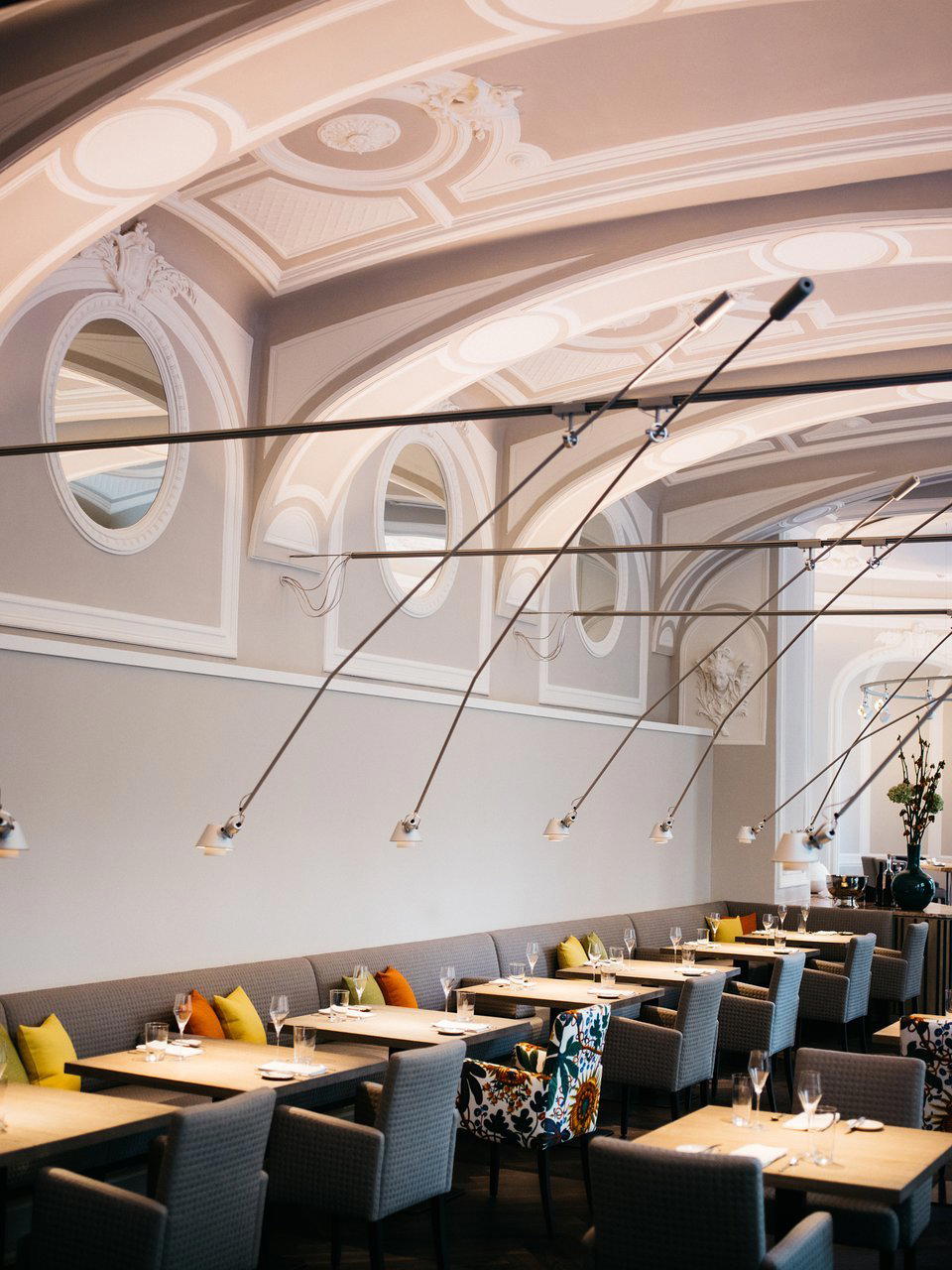
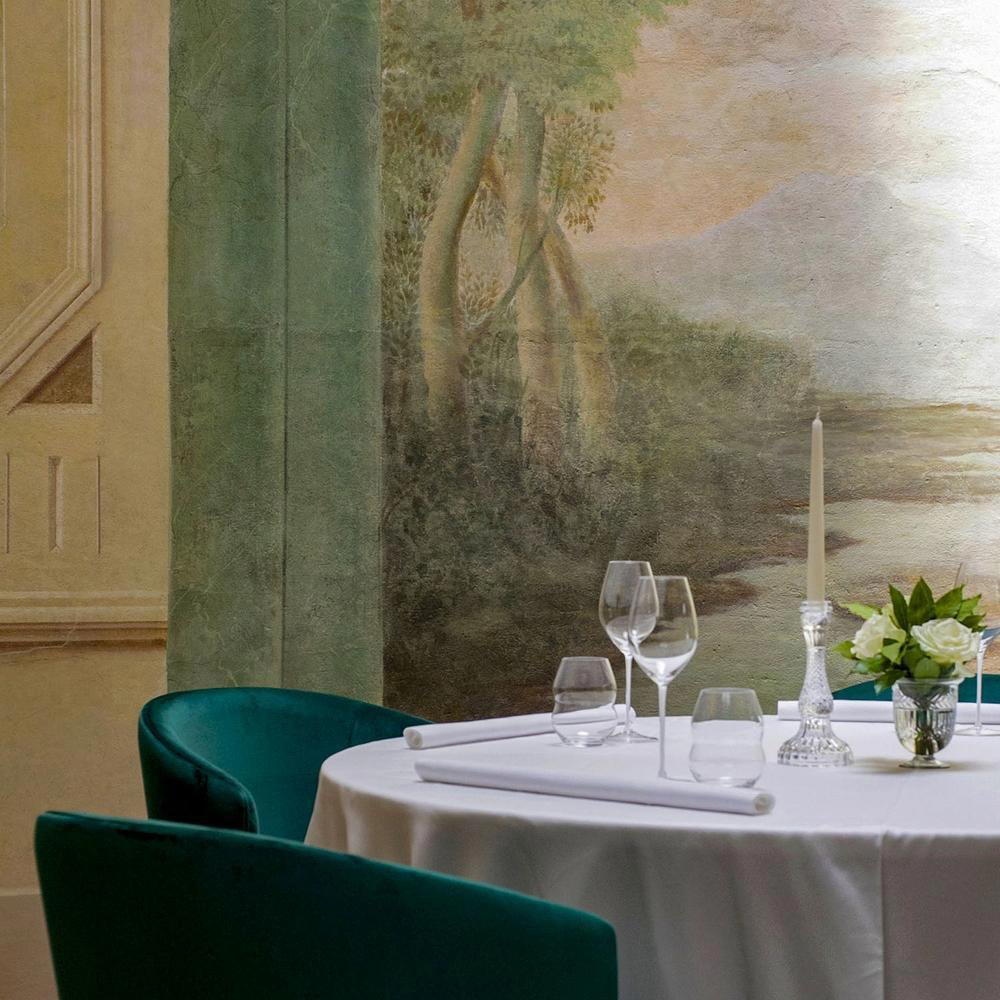
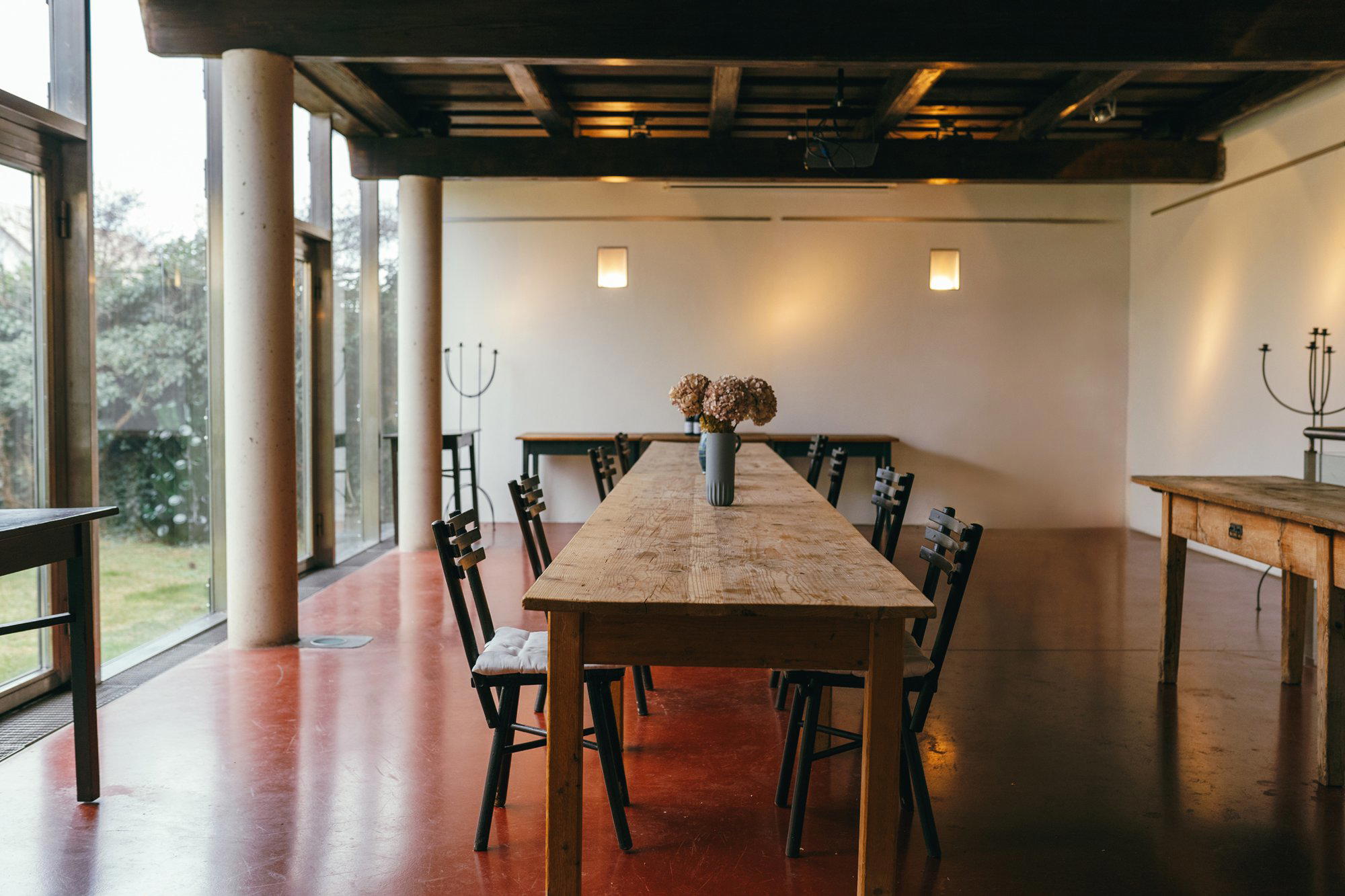
At Griechenbeisl, the physical setting comes first. The physical environment precedes the food in the sequence of impression. The series of rooms inside the building, some vaulted, some panelled, some with ceilings low enough to feel genuinely medieval, create a dining context that no amount of contemporary interior design can reproduce. That context shapes how food is received. A bowl of goulash eaten in a room with five hundred years of use on its walls is a different act than the same dish in a purpose-built brasserie, and the distinction is not sentimentality.
The service culture at traditional Viennese establishments like this one carries institutional knowledge that is generational rather than programmatic. The interplay between kitchen, floor, and cellar at a restaurant with this depth of history tends toward a kind of informal precision, where the waiter's recommendation of a Grüner Veltliner to accompany a Schnitzel is not a script but a reflex built over years of the same pairing. That collaboration between kitchen output, sommelier instinct, and table knowledge is what separates a functioning historic restaurant from one that coasts on atmosphere alone.
Planning a Visit
Griechenbeisl is located at Fleischmarkt 11 in Vienna's first district, within walking distance of the Schwedenplatz U-Bahn station. For visitors oriented around Vienna's fine dining circuit, it sits at the opposite end of the formality and price spectrum from the creative-tier restaurants clustered around the Innere Stadt and the Stadtpark. It reads well either as a first-night orientation to what Viennese food actually means at the civic level, or as a deliberate counterpoint after a meal at a tasting-menu restaurant. Neither use is wrong.
For those building a broader Austrian itinerary, restaurants in the country's secondary cities and regions offer useful context: Schwarzer Adler in Hall in Tirol, Restaurant 141 by Joachim Jaud in Mieming, Ois in Neufelden, and Taubenkobel in Schützen am Gebirge each represent the Austrian table in a different register. The EP Club's full Vienna restaurants guide maps the city's dining scene in more detail.
For international reference points: the kind of institutional gravity that Griechenbeisl carries in Vienna is comparable, structurally if not stylistically, to what Le Bernardin in New York City represents in the American fine dining conversation, or what Lazy Bear in San Francisco represents in the community-dinner format. Each is a restaurant whose category statement matters as much as any single dish.
Price and Positioning
Comparable venues nearby, for context on price, style, and recognition.
| Venue | Cuisine | Price | Notes |
|---|---|---|---|
| GriechenbeislThis venue — the venue you are viewing | Innere Stadt, Traditional Viennese | $$$ | Not listed |
| Lokal im Hof | Not listed | $$$ | Favoriten, Modern Austrian with International Influences |
| Heu & Gabel | Gaudenzdorf, Austrian Seasonal Organic | $$$ | Not listed |
| Bitzinger The Passion | Innere Stadt, Modern Viennese | $$$ | Not listed |
| Wirtschaft am Markt | Not listed | $$ | Gaudenzdorf, Modern Viennese Market Cuisine |
| Plachutta Stammhaus Hietzing | Hietzing, Classic Viennese Cuisine | $$$ | Not listed |
At a Glance
- Historic
- Cozy
- Rustic
- Classic
- Well Known
- Special Occasion
- Celebration
- Date Night
- Historic Building
Current opening hours
- Monday
- 2–11 PM
- Tuesday
- 2–11 PM
- Wednesday
- 2–11 PM
- Thursday
- 2–11 PM
- Friday
- 12–11 PM
- Saturday
- 12–11 PM
- Sunday
- 12–11 PM
Hours can change for holidays and private events. Last verified .
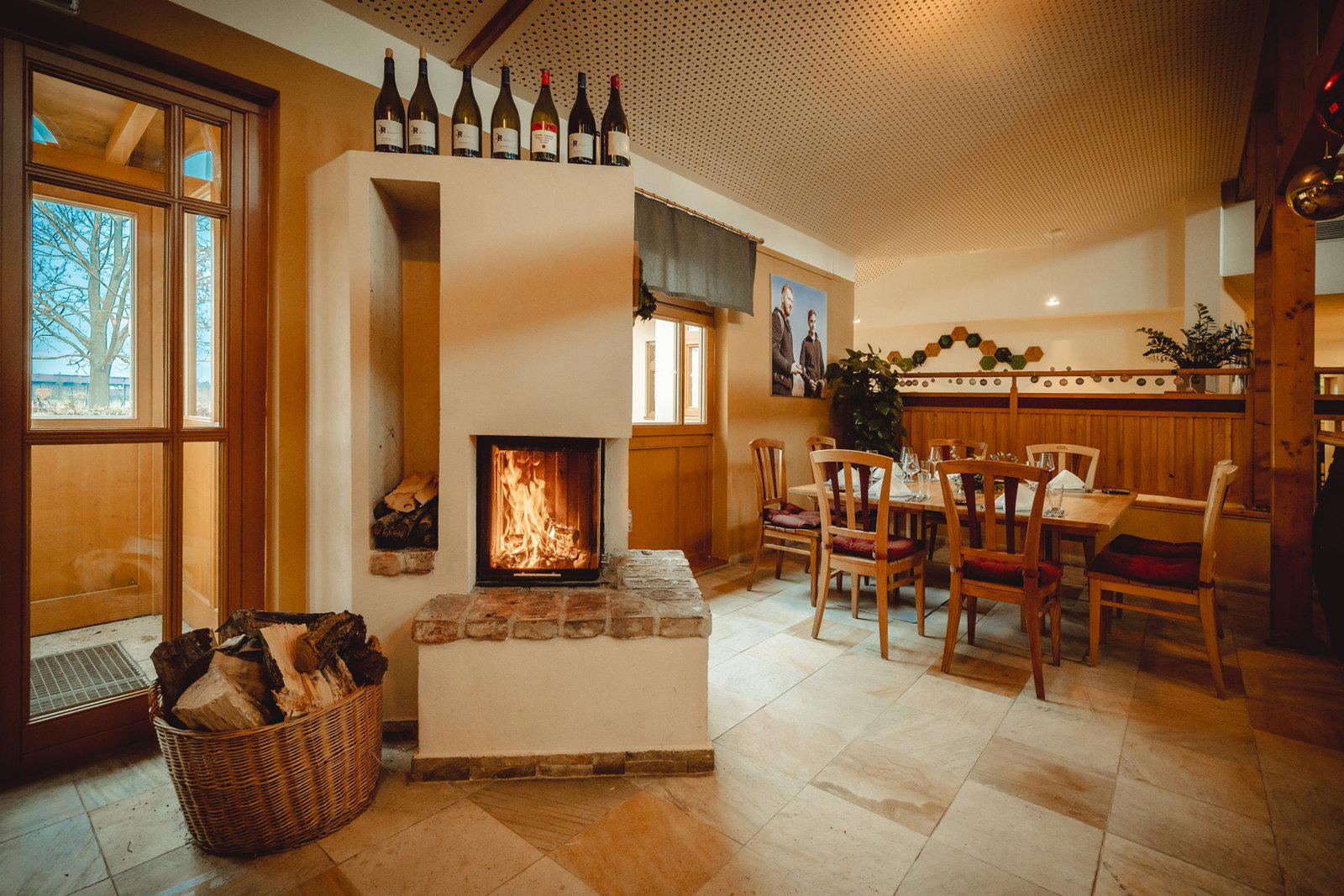
Cozy historic interior with wood paneling, low ceilings, vaulted rooms, flickering candlelight, and medieval charm.