Graziano's
On a commercial strip in West Miami-Dade, Graziano's has built a reputation that extends well beyond its address, anchoring the Argentine dining tradition in a city more accustomed to ceviche counters and omakase bars. The parrilla format here is serious, the wine program leans hard into South American labels, and the room fills with a crowd that treats the ritual of fire-cooked beef as exactly that: a ritual.
Pearl is the En Primeur Club membership app — saves, bookings, and concierge access live there. Same editors, same standards.
- Address
- 9227 SW 40th St, Miami, FL 33165
- Phone
- +13052250008
- Website
- grazianosgroup.com
- Directions
- Get directions
 Saves & bookings on Pearl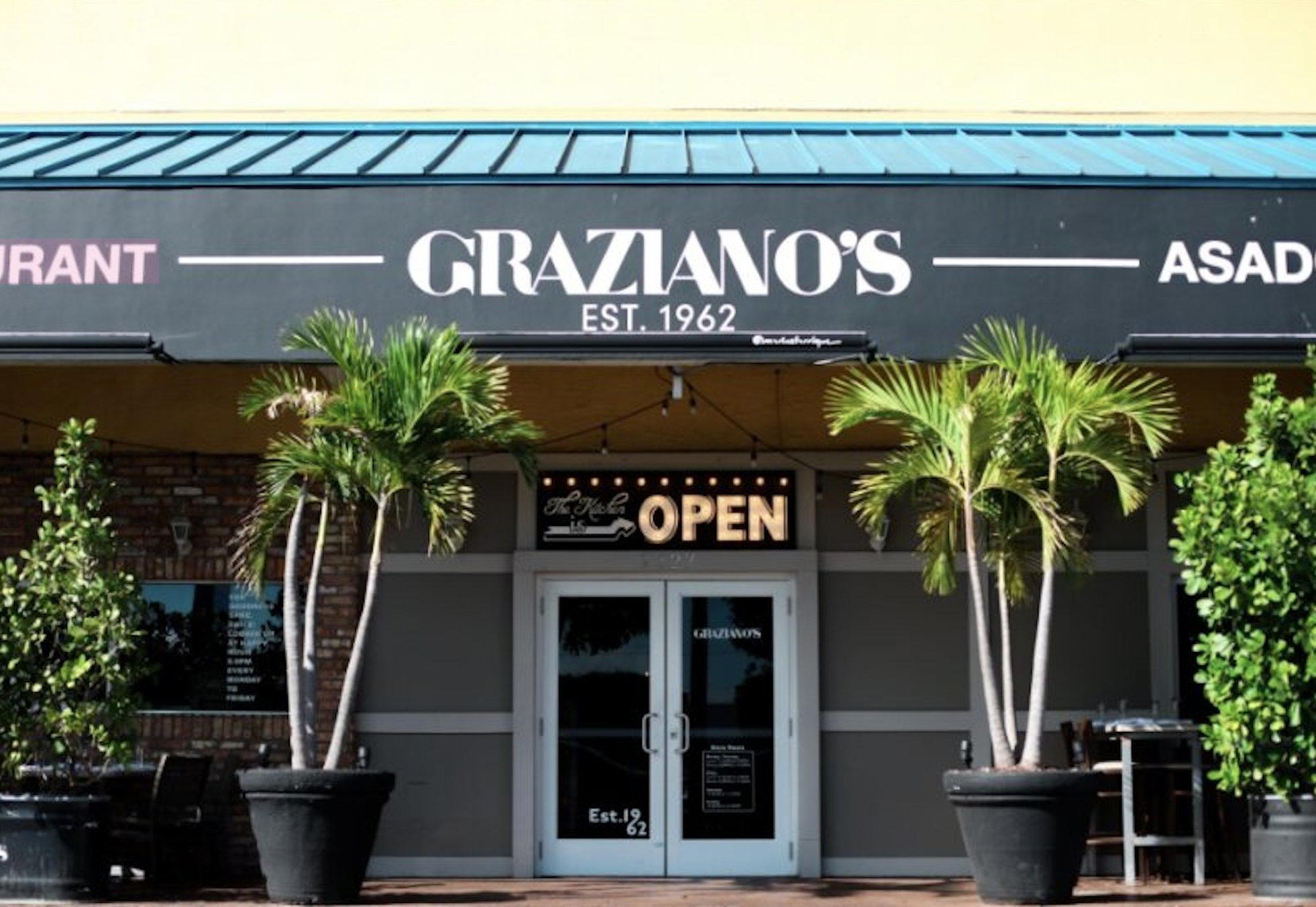
Where the Parrilla Tradition Holds Its Ground in Miami
Miami's dining conversation tends to cluster around Brickell towers and Wynwood facades, which is precisely why SW 40th Street reads as an outlier at first glance. The stretch is functional rather than fashionable, the kind of commercial corridor that most food media bypass on the way to something newer. That context matters, because restaurants that survive and earn loyalty in these locations do so on the food alone, not on foot traffic from hotel bars or proximity to art fairs. Graziano's, at 9227 SW 40th St, sits squarely in this category: a destination that operates without the staging of South Beach, where the draw is the cooking tradition rather than the room's address.
Argentine parrilla dining has its own internal logic that sets it apart from Brazilian churrascaria or Texan barbecue. The cuts are different, the pace is different, and the relationship between the grill and the cellar is fundamentally different. A serious parrilla house is expected to carry South American wines at a depth that matches the beef program, with Malbec from Mendoza occupying the structural role that Cabernet Sauvignon fills at a Napa steakhouse. In Miami's broader dining scene, where Cote Miami applies Korean precision to prime beef and Los Fuegos by Francis Mallmann stages Mallmann's fire theatre for a hotel audience, Graziano's occupies a different register: neighbourhood institution rather than concept restaurant.
The Wine Program as the Room's Organizing Principle
At Argentine restaurants operating at any meaningful level, the wine list is not an afterthought assembled from a distributor catalogue. It is the argument the restaurant makes about what it understands. The parrilla tradition presupposes a cellar that can move through the major Mendoza appellations, from the valley floor to the higher-altitude sub-regions around Luján de Cuyo and the Uco Valley, and that carries enough range in Malbec alone to make the choice between bottles a genuine editorial decision for the table.
South American wine culture has grown considerably more sophisticated over the past two decades. Producers like Achaval Ferrer, Zuccardi, Catena Zapata, and Clos de los Siete have built reputations that now circulate among collectors who also follow Burgundy and Napa. A restaurant that frames itself as a serious Argentine table is expected to engage with that producer landscape rather than stock only the commercial export tier. Within Miami's wine bar and restaurant scene, where programmes at places like Boia De have raised the baseline expectation for cellar curation, the pressure on any serious wine list has increased. The standard for what counts as considered curation has shifted upward across the city.
The wine program at a parrilla of Graziano's standing functions in direct conversation with the meat: Malbec against fatty short rib, a higher-acid Torrontés or Chardonnay from Patagonia alongside offal or lighter preparations. That sequencing logic, which mirrors what you find at the parrilla-focused end of Buenos Aires dining culture, is what separates a restaurant treating its cellar as a revenue stream from one treating it as a statement about the food.
The Broader Miami Argentine Tradition and Where This Address Fits
Miami has long hosted a substantial Argentine expatriate community, concentrated in neighbourhoods across Miami-Dade that are largely absent from the tourist circuit. That community created the demand for cooking that does not compromise on the fundamentals: proper provoleta, the correct resting of the beef, chimichurri made with attention rather than speed. Restaurants serving that community do not perform Argentineness for an outside audience; they simply do it. Graziano's address in West Miami-Dade puts it squarely inside this geography, which is a signal about whose palate the kitchen is cooking for.
Comparing this positioning to Miami's more performance-oriented dining tier is instructive. At Ariete, the framework is modern American cooking with Cuban reference points, calibrated for a Coconut Grove audience. At ITAMAE, the subject is Peruvian technique applied with chef-driven precision. At L'Atelier de Joël Robuchon Miami, the format is the globally replicated Robuchon counter, imported wholesale. Graziano's belongs to none of these categories. Its reference point is not a chef's personal vision or a hospitality group's rollout plan; it is a cooking tradition that predates all of them and does not require a concept overlay to justify itself.
Across American cities, the restaurants that sustain Argentine parrilla cooking with any authenticity tend to be independent, community-rooted, and relatively unsentimental about trends. That description applies equally to serious Argentine tables in New York, Los Angeles, and Chicago, and it applies here. The geography of SW 40th Street is not incidental; it is part of what the restaurant is.
Planning a Visit
The address at 9227 SW 40th St places Graziano's west of Coral Gables and north of Kendall, reachable by car in roughly fifteen minutes from downtown Miami depending on traffic on the Dolphin Expressway. Street parking is available, and the surrounding area operates at a pace that makes arriving a few minutes before or after a reservation time unremarkable. For visitors whose Miami dining map extends from Wynwood down to Coconut Grove, this location requires a deliberate detour; it is not on the route between any two fashionable stops. That deliberateness is in some ways the point. For context on how this fits within Miami's broader dining picture, our full Miami restaurants guide maps the city's dining geography across neighbourhoods and price tiers.
Across the United States, restaurants anchoring serious culinary traditions in non-obvious locations have repeatedly proved their staying power. Lazy Bear in San Francisco, Addison in San Diego, Providence in Los Angeles, Blue Hill at Stone Barns in Tarrytown, The French Laundry in Napa, Single Thread Farm in Healdsburg, Le Bernardin in New York City, Alinea in Chicago, Atomix in New York City, Emeril's in New Orleans, and The Inn at Little Washington in Washington all demonstrate that destination-grade cooking does not require a central district address. What it requires is a reason to go. At Graziano's, the parrilla tradition and a wine programme built to match it supply that reason.
How Graziano's Miami compares with similar nearby venues.
| Venue | Cuisine |
|---|---|
| Tropical Chinese | Chinese |

At a Glance
- Rustic
- Classic
- Family
- Group Dining
- Celebration
- Open Kitchen
- Extensive Wine List
- Local Sourcing
Current opening hours
- Monday
- 11:30 AM–3 PM, 5–10:30 PM
- Tuesday
- 11:30 AM–3 PM, 5–10:30 PM
- Wednesday
- 11:30 AM–3 PM, 5–10:30 PM
- Thursday
- 11:30 AM–3 PM, 5–10:30 PM
- Friday
- 11:30 AM–3 PM, 5–11:30 PM
- Saturday
- 12–11:30 PM
- Sunday
- 12–10 PM
Hours can change for holidays and private events. Last verified .
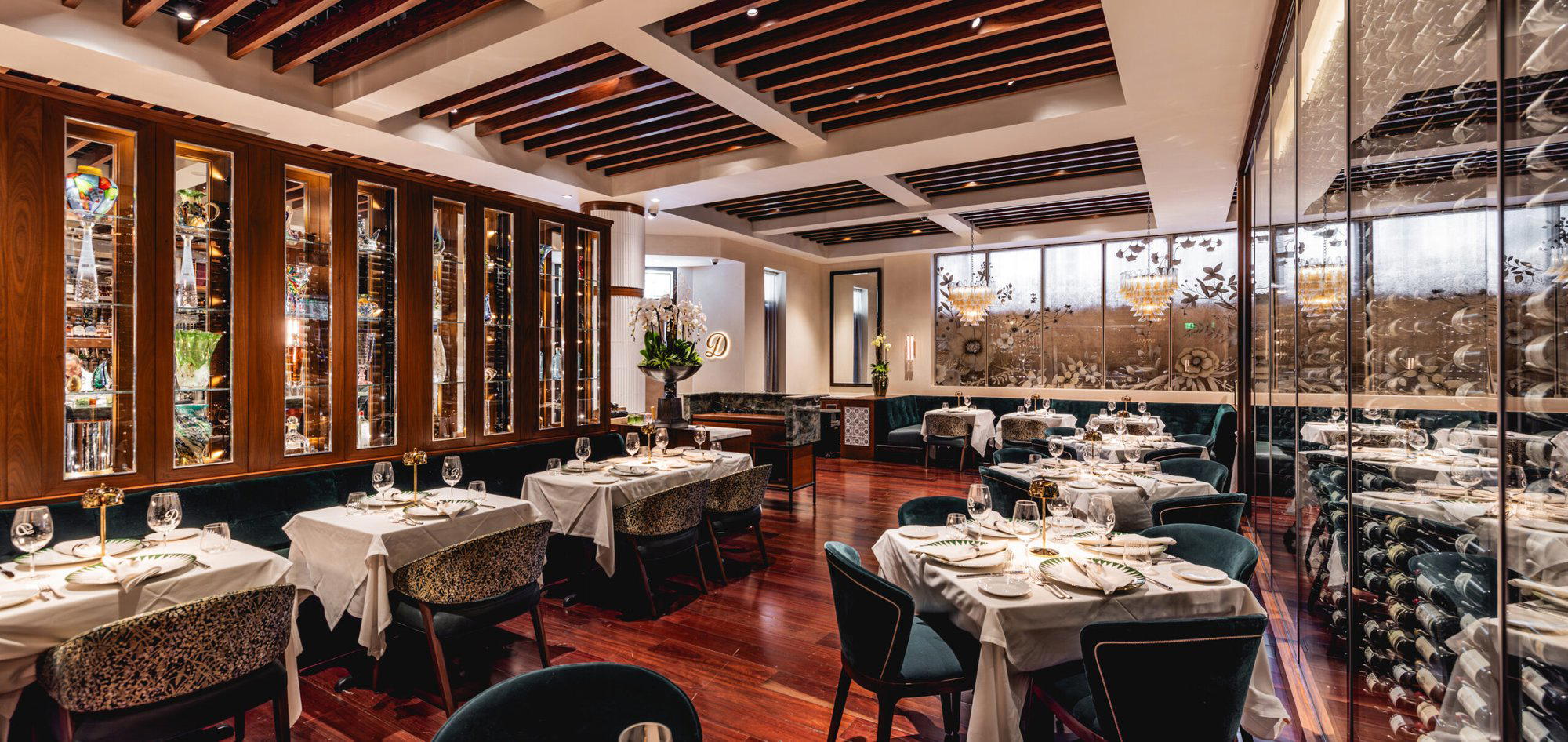
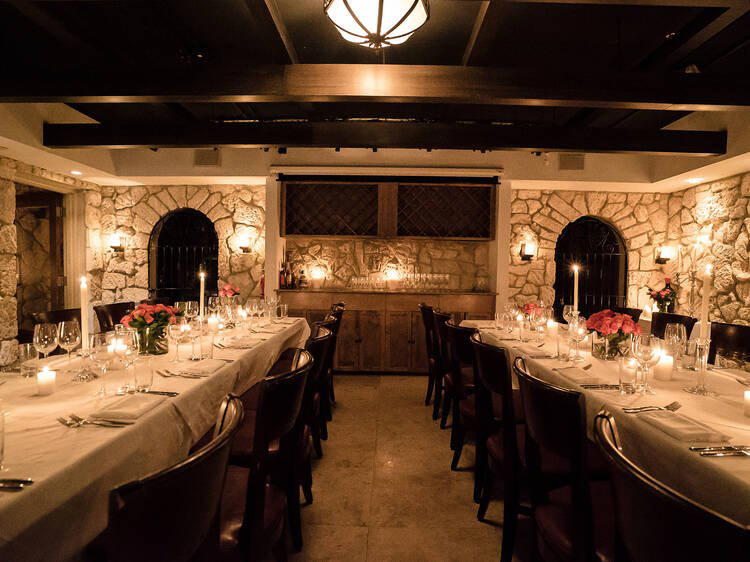
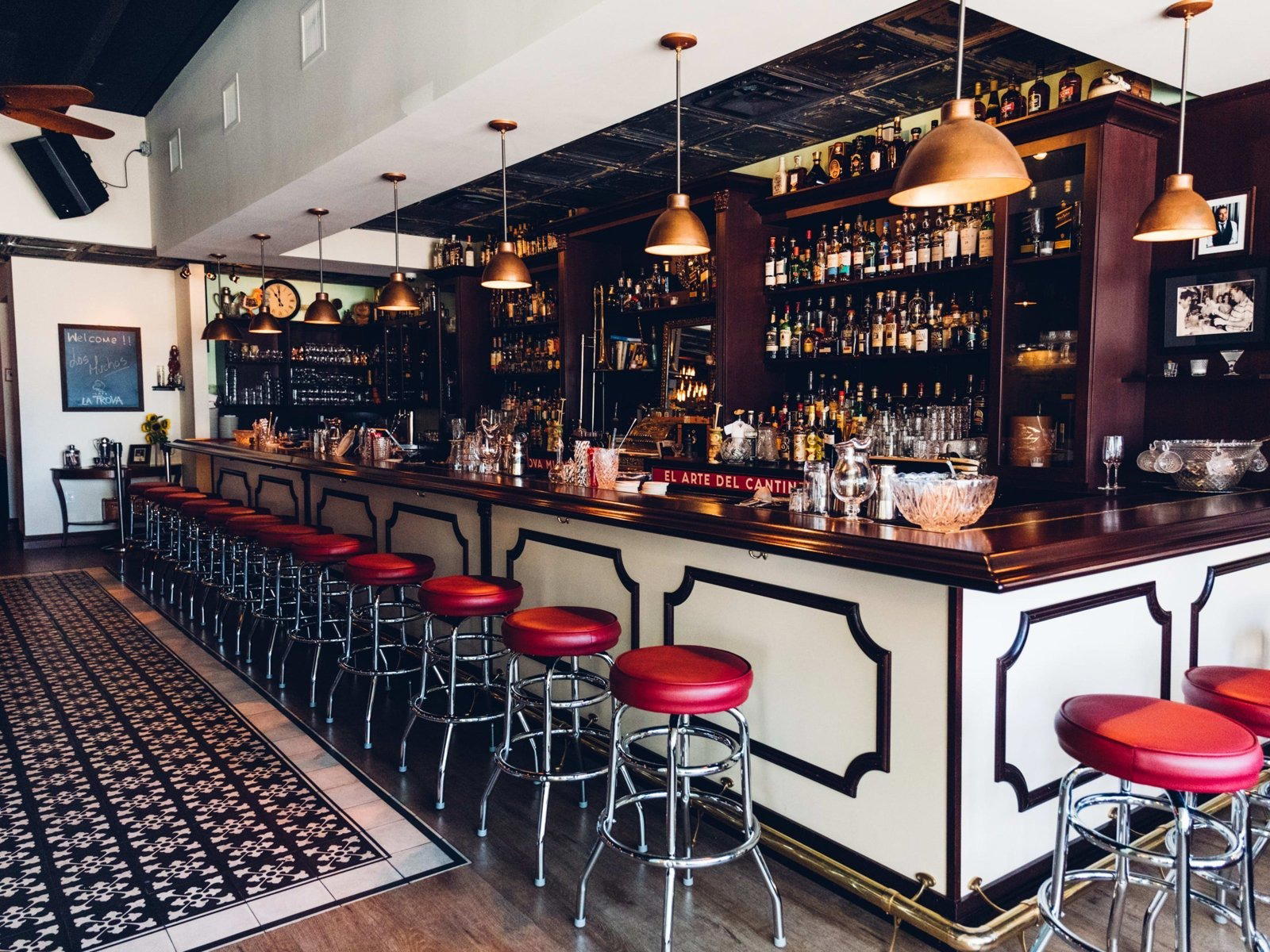
Rustic decor featuring a dramatic wood fire grill and lively family atmosphere.
Know Before You Go
- Getting there
- 9227 SW 40th St, Miami, FL 33165