Grand Cholan
Grand Cholan serves Authentic South Indian Tamil Cuisine at 3 Turnberry Quay, with waterfront views, conversational pacing, and dishes including Cholan Chettinad Chicken Curry, Chicken Biriyani, and Dosa.
Pearl is the En Primeur Club membership app — saves, bookings, and concierge access live there. Same editors, same standards.
- Address
- 3 Turnberry Quay, London E14 9RD, United Kingdom
- Phone
- +442075156888
- Website
- grandcholan.com
- Directions
- Get directions
 Saves & bookings on Pearl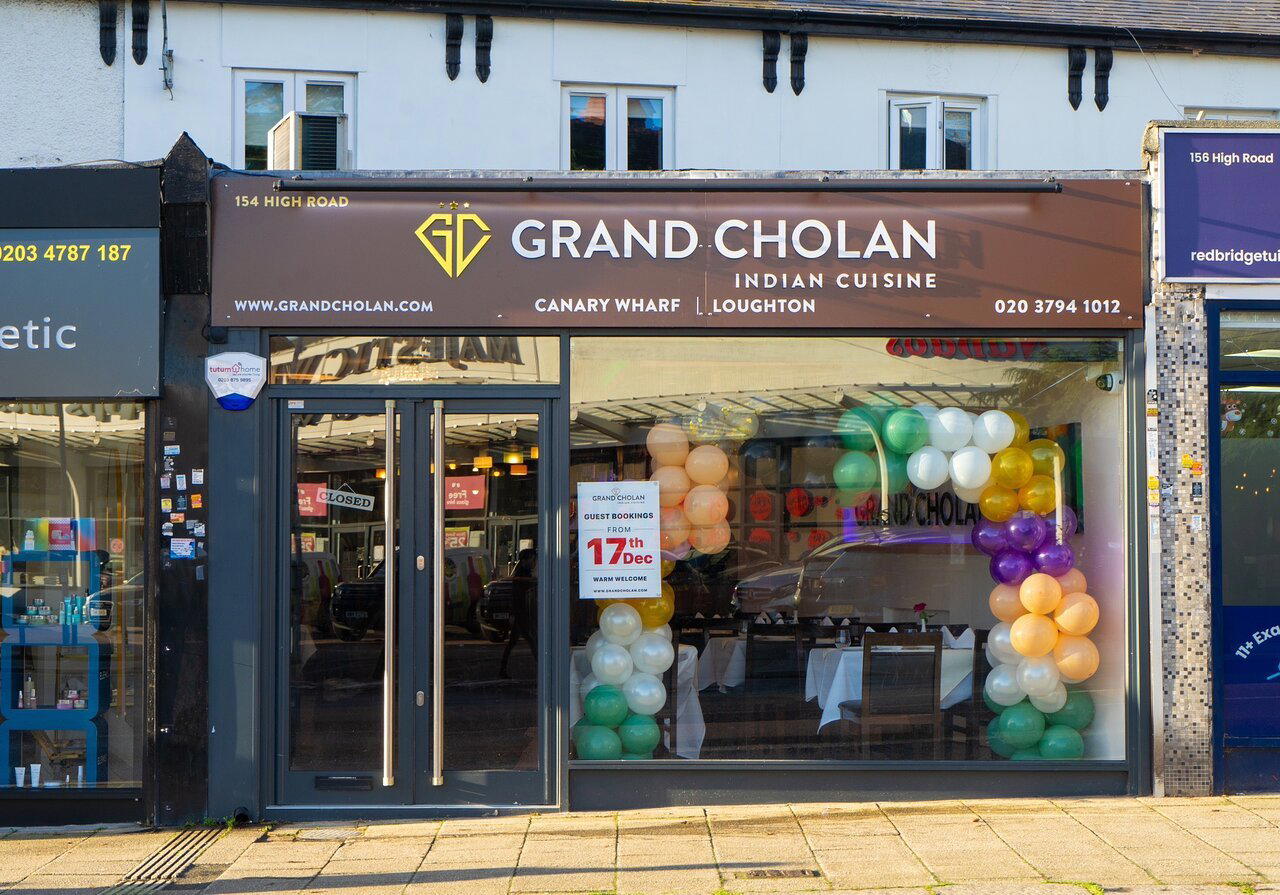
Docklands South Indian: Where East London Meets the Coromandel Coast
The stretch of Canary Wharf's residential waterfront that runs along Turnberry Quay sits at an interesting remove from central London's restaurant density. The towers here were built for finance, not food culture, and the dining options that have taken root around the docks tend to reflect that: safe, international, pitched at expense accounts. Grand Cholan occupies 3 Turnberry Quay, London E14 9RD, and operates against that backdrop as an Authentic South Indian Tamil Cuisine restaurant in a postcode where South Indian cooking is not the default register. That positioning alone is worth noting before you consider the food.
South Indian cuisine in London has historically clustered in Tooting and Wembley, where Tamil diaspora communities established the ingredients supply chains and customer base that serious regional cooking requires. The Canary Wharf iteration represents something different: a restaurant bringing Cholan-era Tamil culinary tradition to a corporate waterfront, without the surrounding neighbourhood infrastructure that usually supports this kind of cooking. Whether that works depends almost entirely on the coherence of the team running the room.
The Collaborative Logic of South Indian Service
The editorial angle that matters most at Grand Cholan is how a kitchen rooted in a highly specific regional tradition functions when it is geographically separated from its natural habitat. In the leading South Indian restaurants operating outside the traditional diaspora corridors, the answer is almost always a tight internal collaboration: a kitchen team that sources deliberately, a front-of-house that can translate unfamiliar ingredients and preparation methods to an audience that may encounter dishes like kozhukattai, kuzhambu, or rasam for the first time, and a floor team that understands the difference between an explanatory menu and a condescending one.
That dynamic matters because South Indian cooking is not a cuisine that simplifies well. The spice logic is distinct from North Indian cooking, tamarind and curry leaf rather than cream and garam masala, and the rice-forward structure of a proper meal service requires explanation for diners expecting a naan-and-tikka framework. Restaurants that get this right, like Opheem in Birmingham, which has done serious work translating Indian regional specificity to a fine-dining audience, show that the front-of-house translation function is as important as what happens in the kitchen. The sommelier or drinks lead at a South Indian restaurant also carries unusual weight: pairing a wine or cocktail list with tamarind-heavy broths and coconut milk curries is a genuinely technical challenge that the leading teams solve through specific selection rather than generic crowd-pleasers.
Reading the Room: E14 as a Restaurant Context
Canary Wharf and its surrounding E14 postcodes have seen meaningful restaurant investment over the past decade, driven by the residential expansion along the waterfront and the arrival of Crossrail, which has made the area more accessible from central London. The dining tier that has emerged is largely middle-market, with a few outliers at either end. At the higher end, the area benefits from a captive audience of finance professionals with significant dining budgets; at the lower end, the density of new residential builds has created demand for reliable neighbourhood options.
South Indian cooking occupies an interesting position in this context. It is not fine dining by traditional Michelin metrics, but at its serious end, think the Chettinad cooking tradition, or the elaborate sadya feasts of Kerala, it requires sourcing discipline, technique, and ingredient knowledge that sit comfortably alongside any premium European kitchen. The Chola dynasty, whose culinary legacy Grand Cholan references in its name, presided over one of South Asia's most sophisticated court cultures. That heritage, translated into a 21st-century London restaurant, should theoretically produce food that sits above the standard curry-house register without needing to adopt European fine-dining language to signal its ambition.
For comparison, London's highest-tier European restaurants, CORE by Clare Smyth, Restaurant Gordon Ramsay, Sketch, The Lecture Room and Library, The Ledbury, and Dinner by Heston Blumenthal, have each built their reputations on the coherence between kitchen ambition and floor execution. The question for any serious South Indian restaurant in London is whether it can articulate that same coherence in its own culinary language, without defaulting to either the generic curry-house format or an awkward hybrid that serves neither tradition well.
South Indian Cooking in the UK: The Wider Picture
The broader UK dining scene has increasingly recognised regional Indian cooking as distinct from the homogenised Anglo-Indian restaurant model that dominated for decades. Outside London, serious work is being done at venues operating in varied formats and price points, the kind of restaurant culture that has made cities like Birmingham worth visiting specifically for Indian food. Within London, the story is more fragmented: pockets of serious regional cooking exist in the outer boroughs, while central and east London remain underserved by Tamil and other South Indian traditions relative to the quality and variety of South Asian cooking available in cities like Toronto or Singapore.
That gap represents both the challenge and the opportunity for a restaurant like Grand Cholan. The audience in E14 includes a substantial international population familiar with serious South Indian food; it also includes a larger audience of diners who have encountered the cuisine primarily through chain formats. A well-run room that can hold both audiences simultaneously, offering genuine regional depth for those who know what to look for, while providing the navigation tools for those who do not, is doing something harder than it looks. For context on what ambitious UK restaurant teams achieve at their most focused, it is worth tracking destinations like L'Enclume in Cartmel, Moor Hall in Aughton, and Midsummer House in Cambridge, not as direct comparators, but as examples of the discipline that separates a good regional restaurant from a destination one.
Planning Your Visit
The restaurant is located at 3 Turnberry Quay, London E14 9RD, on the Canary Wharf waterfront. The nearest DLR stations are South Quay and Crossharbour, both within reasonable walking distance; the Elizabeth line at Canary Wharf connects the area to central London in under fifteen minutes. Reservations are recommended. Dress code: smart casual. Budget: about $25 per person.
The Quick Read
Comparable venues nearby, for context on price, style, and recognition.
| Venue | Cuisine | Price | Notes |
|---|---|---|---|
| Grand CholanThis venue — the venue you are viewing | Not listed | $$ | Not listed |
| Tangawizi | Not listed | $$ | St. Margaret's, Modern Indian |
| SPARSH | Forest Hill, Indian and Nepalese Cuisine | $$ | Not listed |
| Kricket Shoreditch | Shoreditch, Modern Indian | $$ | Not listed |
| Club 2000 | Not listed | $$ | South Harrow, Traditional Indian Curry House |
| OMNOM | Not listed | $$ | Islington, Authentic Indian Vegetarian & Vegan |
Continue exploring
More in London
Restaurants in London
Browse all →
Bars in London
Browse all →
Hotels in London
Browse all →

At a Glance
- Family Friendly
- Welcoming
- Family
- Group Dining
- Special Occasion
- Waterfront
- Private Dining
- Waterfront
Current opening hours
- Monday
- Closed
- Tuesday
- 12–3 PM, 5–10 PM
- Wednesday
- 12–3 PM, 5–10 PM
- Thursday
- 12–3 PM, 5–10 PM
- Friday
- 12–3 PM, 5–10 PM
- Saturday
- 12–3 PM, 5–10 PM
- Sunday
- 12–3 PM, 5–10 PM
Hours can change for holidays and private events. Last verified .
Serene waterfront setting with welcoming family atmosphere.