

Tabelog 100 #51
Our verdict
A kaiseki counter in Nishiazabu that has tracked steadily through Opinionated About Dining's Japan rankings since 2023, Highly Recommended to #164 in 2024, then #203 in 2025. Chef Takeshi Kubo operates evening-only sittings six nights a week from a third-floor address on a quiet residential lane, placing Goryukubu firmly in Tokyo's mid-to-upper tier of serious kaiseki without the institutional weight of the city's Michelin-decorated flagships.

Pearl is the En Primeur Club membership app, where members save venues, book tables and use the concierge.
The menu
What to order
- Spring mountain herbs with ayu
- Summer translucent sashimi on hand-chiseled ice
- Autumn mushroom broth
- Winter snow-white crab with rice
A Third-Floor Room in Nishiazabu
The approach to Goryukubu sets expectations accurately. Nishiazabu's backstreets run quieter than the main Roppongi arteries a few minutes south, and the building at 1-13-14 Shalom Nishiazabu has little street presence beyond a modest entrance and a staircase. By the time a guest reaches the third floor on a weekday evening, the city's noise has already receded. That spatial compression, dense Tokyo outside, contained and deliberate room inside, is a structural feature of the kaiseki format rather than a detail specific to this address. The tradition requires a closed, unhurried environment; the room here delivers it.
Evening-only operations, Monday through Saturday with doors open at 6 pm and last orders by 9 pm, place Goryukubu in the cohort of Tokyo counters and dining rooms that treat the dinner sitting as a singular event rather than one of two or three daily services. That choice has operational implications: the kitchen prepares for one wave, service is calibrated to a single tempo, and there is no lunch trade to dilute the evening focus. It is a common structural decision among serious kaiseki restaurants across Japan, from Ifuki in Kyoto to Ankyu and beyond.
Kaiseki in Tokyo's Mid-to-Upper Tier
Kaiseki in Tokyo occupies a wide band. At one end sit the Michelin-decorated institutions, Kikunoi Tokyo and RyuGin among them, where three-star recognition and international visitor traffic shape the experience as much as the cooking does. At the other end, a generation of smaller rooms has emerged, often without Michelin stars but with sustained recognition from the research-heavy Opinionated About Dining survey, which draws on scores from thousands of experienced diners across Japan rather than a small anonymous inspector corps.
Goryukubu sits in the latter group. The OAD trajectory is instructive: Highly Recommended in 2023, ranked #164 in Japan in 2024, then #203 in 2025. The directional movement across three years, from unranked recognition to a named position and then a slight repositioning within the ranked list, reflects the way OAD rankings work in practice. A drop from #164 to #203 in a single year does not signal a decline in quality so much as the continuing growth of the ranked pool and the volatility inherent in a survey-based system. The restaurant's presence in all three consecutive cycles is the more durable signal.
Readers planning a broader Tokyo dining itinerary can consult our full Tokyo restaurants guide for a mapped view of where different tiers sit.
The Social Logic of Kaiseki Evenings
Kaiseki is sometimes discussed primarily as a cooking format, but its social architecture is equally defining. A multi-course progression that unfolds over two to three hours, with sake or wine poured across the sequence and dishes designed to prompt conversation about season and ingredient, functions more like an extended izakaya evening than a tasting-menu performance. The distinction matters: at a high-pressure tasting counter, the interaction is largely vertical, diner watches kitchen. In the better kaiseki rooms, the interaction is lateral, conversation moves across the table or counter, the pacing is negotiated rather than fixed, and the food arrives as punctuation rather than as the sole event.
Nishiazabu's dining culture has long favoured that lateral register. The neighbourhood hosts a range of serious Japanese and French rooms, Hirosaku and Ajihiro both operate nearby, and the area attracts a clientele that combines local regulars with a smaller share of informed international visitors. It is not Ginza's showcase strip or Minami-Aoyama's design-conscious corridor; Nishiazabu functions at a slightly lower register of visibility, which tends to keep room sizes modest and service less performative. For context on drinking and evening culture in the same part of the city, our full Tokyo bars guide covers the neighbourhood's after-dinner options.
Chef Takeshi Kubo and the Seasonal Framework
In kaiseki, the chef's role is as much editorial as technical. The tradition demands that each menu reflect the moment in the Japanese culinary calendar with precision: ingredients shift not just by season but by the week within a season, and the sequence of courses, from sakizuke through hassun to shokuji, is a deliberate argument about what the current moment tastes like. Chef Takeshi Kubo operates within that framework at Goryukubu.
For comparison across Japan's kaiseki spectrum, Gion Sasaki in Kyoto represents the haute end of the tradition, while HAJIME in Osaka and akordu in Nara show how kaiseki's vocabulary extends into neighbouring cities. Further south, Goh in Fukuoka and 6 in Okinawa apply related sensibilities to distinct regional ingredient bases. Goryukubu, operating within Tokyo's own seasonal market access, works with a different pantry than any of these, the city's position as Japan's largest distribution hub means access to ingredients from across the country's fishing ports and vegetable producers on very short lead times.
Planning a Visit
The address, third floor, Shalom Nishiazabu, 1-13-14 Nishiazabu, Minato-ku, is confirmed. The nearest major intersection is the Nishiazabu crossing, accessible from Hiroo Station (Hibiya Line) or Roppongi Station (Hibiya and Toei Oedo lines). Evening service runs 6–9 pm, six nights a week; Sunday is closed.
| Venue | Format | Price Tier | OAD Japan 2025 | Service Hours |
|---|---|---|---|---|
| Goryukubu | Kaiseki, evening only | Not confirmed | #203 | Mon–Sat, 6–9 pm |
| Akasaka Ogino | Kaiseki/Japanese | ¥¥¥¥ | OAD listed | Evening service |
| Aoyama Jin | Japanese | ¥¥¥¥ | OAD listed | Evening service |
| RyuGin | Kaiseki | ¥¥¥¥ | Michelin 3★ | Evening service |
For broader Tokyo trip planning, our full Tokyo hotels guide, wineries guide, and experiences guide cover accommodation and activity options near the Nishiazabu and Minato area. Readers with itineraries extending beyond Tokyo can use 1000 in Yokohama as a nearby reference point for comparative dining in the greater metropolitan region.
What Should I Eat at Goryukubu?
Goryukubu serves kaiseki, the multi-course Japanese format structured around seasonal progression. What kaiseki menus at this tier typically include, across the category rather than as a claim specific to this kitchen, is a sequence that moves from lighter, more acidic preparations through richer courses toward a closing rice and pickles service, with each dish anchored to what is in season at the time of the visit. The format rewards guests who arrive with time rather than those working to a tight schedule; the 6–9 pm window is the operational boundary, not the expected duration of every sitting.
Comparable Options
A quick peer list to put this venue’s basics in context.
| Venue | Cuisine | Price | Awards | Notes |
|---|---|---|---|---|
| GoryukubuThis venue (the venue you are viewing) | Modern Kaiseki Omakase | $300–500 | Tabelog 100 #51 | Not listed |
| Harutaka | Edo-Style Omakase Sushi | $200–300 | 3 Michelin Stars · World's 50 Best #76 | Sushi |
| RyuGin | Modern Kaiseki | $500+ | 3 Michelin Stars · World's 50 Best #41 | Kaiseki, Japanese |
| L'Effervescence | Modern French with Japanese Influences | $200–300 | 3 Michelin Stars · World's 50 Best #69 | French |
| HOMMAGE | Modern French with Japanese Influences | $150–200 | 2 Michelin Stars · World's 50 Best #78 | Innovtive French, French |
| MAZ | Innovative Peruvian-Japanese Fusion | $150–200 | 2 Michelin Stars · World's 50 Best #28 | Innovative |
Recognition history
Dated appearances from independent guides and award organizations, with the underlying list record or original source where available.
Opinionated About Dining Top Restaurants in Japan Recommended
Opinionated About Dining
Tabelog 100 #51 · No. 51
Tabelog · Tabelog 100 - Japanese cuisine - TOKYO - 2025
Full recognition history (5 entries)
Opinionated About Dining Top Restaurants in Japan Ranked #203
Opinionated About Dining
Opinionated About Dining Top Restaurants in Japan Ranked #164
Opinionated About Dining
Opinionated About Dining Top Restaurants in Japan Highly Recommended
Opinionated About Dining
Continue exploring
More in Tokyo
Restaurants in Tokyo
All restaurants in Tokyo →


Bars in Tokyo
All bars in Tokyo →





Details
- Intimate
- Elegant
- Quiet
- Sophisticated
- Special Occasion
- Date Night
- Chefs Counter
- Open Kitchen
- Standalone
- Sake Program
- Sommelier Led
- Local Sourcing
- Omakase
- Counter Dining
- Tasting Menu
- Sake
- Rare Tea
Current opening hours
- Monday
- 6–9 PM
- Tuesday
- 6–9 PM
- Wednesday
- 6–9 PM
- Thursday
- 6–9 PM
- Friday
- 6–9 PM
- Saturday
- 6–9 PM
- Sunday
- Closed
Hours can change for holidays and private events. Hours as of .
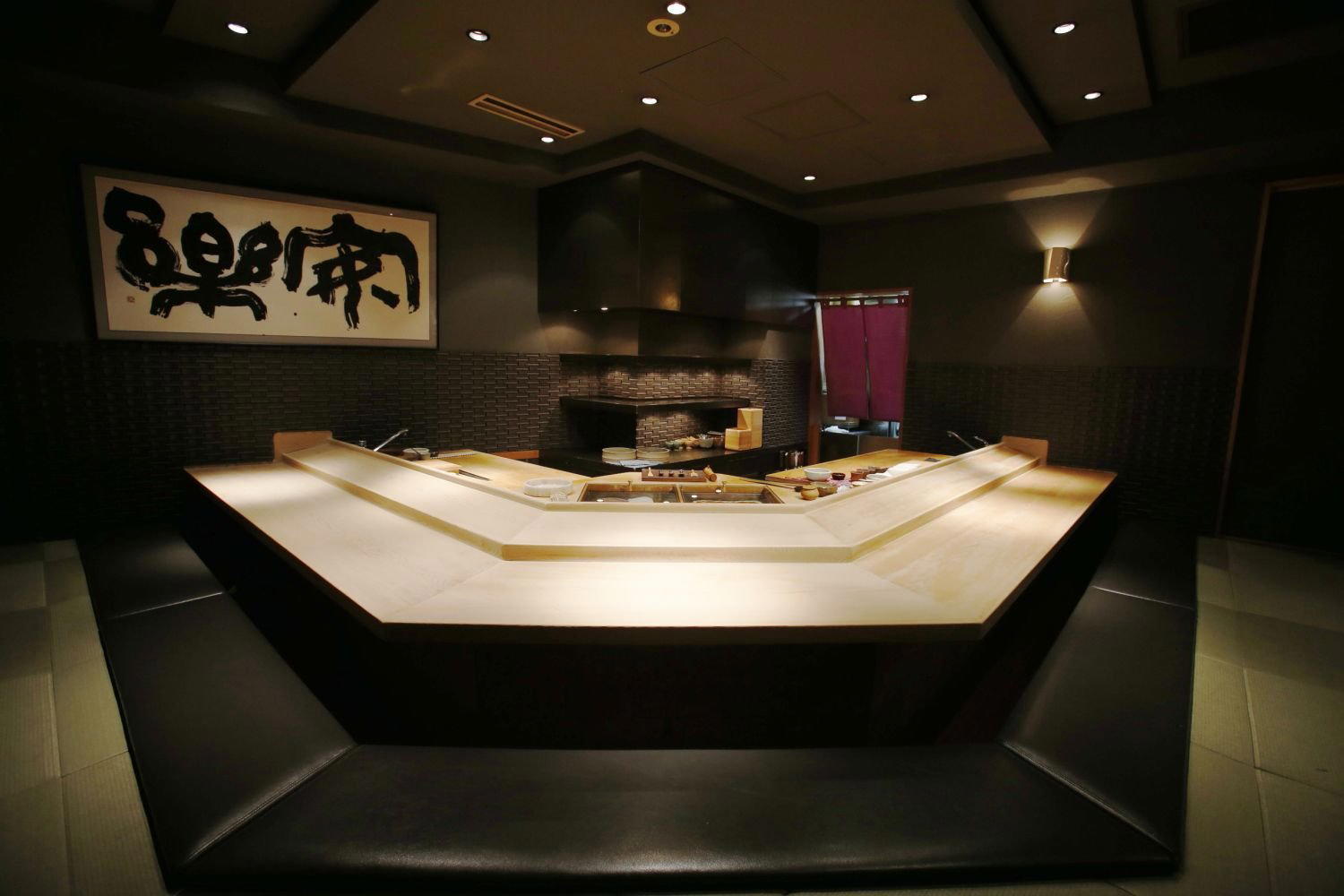
Cedar and soft clay hues bathe the intimate counter in calming glow; polished hinoki wood arcs like a stage for culinary intimacy, with service so intuitive it feels like silent choreography.