
Ginza yakitori sits in a different register from Tokyo’s casual grilled-chicken shops: tighter counters, higher spend, and reservations that reward advance planning. Ginza Birdland belongs to that serious tier, with a Tabelog Yakitori EAST 100 selection in 2025, 33 seats, and a dinner price band that puts it firmly in special-occasion territory.
Pearl is the En Primeur Club membership app — saves, bookings, and concierge access live there. Same editors, same standards.
- Address
- Japan, 〒104-0061 Tokyo, Chuo City, Ginza, 4 Chome−2−15 塚本素山ビルディング B1F
- Phone
- +81 3-5250-1081
- Website
- ginza-birdland.sakura.ne.jp
 Saves & bookings on Pearl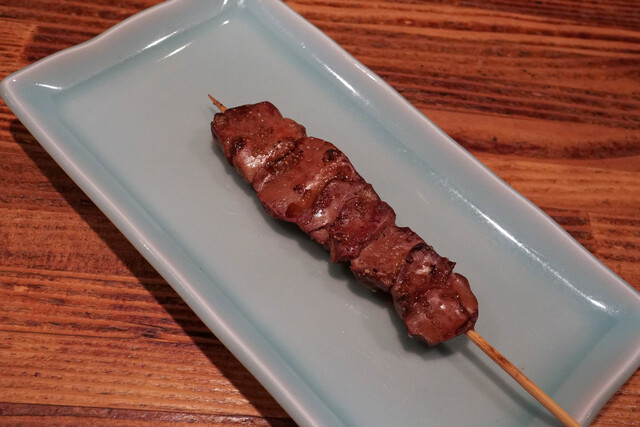
Below street level in Ginza, yakitori changes tempo. Above, the neighborhood speaks polished retail, department-store entrances, watch boutiques, and office towers; downstairs, it becomes charcoal, counter service, and the steady sequencing of skewers. Serious yakitori in Tokyo rewards planning because the choice is not simply grilled chicken for dinner, but which version of the tradition fits the evening: casual drinking food, chef-led counter work, or a higher-spend Ginza table built around chicken as the main event.
Ginza Birdland sits in that last category. Listed for yakitori and chicken dishes, it carries a 2025 Tabelog Yakitori EAST 100 selection and operates at a dinner band of JPY 10,000 to JPY 14,999, with review-based spending shown higher at JPY 15,000 to JPY 19,999. Those figures matter because Tokyo yakitori ranges widely: at one end, an after-work staple; at the other, counter dining where sourcing, pacing, smoke management, and alcohol pairings turn a familiar format into a structured meal.
Ginza yakitori belongs to Tokyo's serious counter-dining tier
Tokyo yakitori culture is built on repetition and precision: different cuts, cooking times, fat levels, and salt decisions. The craft is easy to underestimate because the object is simple. A skewer, heat, seasoning, and timing leave little room for camouflage. In Ginza, that simplicity becomes more exacting as rent, expectation, and diner fluency rise together.
The comparison is not only with other yakitori rooms. Ginza trains diners to think in categories: sushi counters such as Sukiyabashi Jiro represent one mode of high-discipline Japanese dining, while アルマーニ / リストランテ, 六雁, and BLT STEAK GINZA show the district’s appetite for formal, international, and expense-account meals. Against that backdrop, a yakitori specialist must justify attention through focus rather than spectacle. The appeal is narrower but clearer: chicken, charcoal, pacing, and a room scaled for close attention.
The 33-seat count is part of that equation. It is neither a vast dining room built for turnover nor an ultra-private counter with only a handful of places. It occupies the middle ground serious Tokyo restaurants often use well: enough seats for energy, few enough for structure. For visitors planning several Tokyo dinners, this matters. A Ginza yakitori reservation occupies a different slot from a sushi counter, kaiseki meal, or casual izakaya night; it is focused, protein-led, and best treated as the central dinner rather than a prelude.
The recognition tells you where to place it, not what to order
A Tabelog 100 selection is useful because it places a restaurant within a category judged by Japanese diners and platform signals, not international mythology alone. Ginza Birdland appears in the Yakitori EAST 100 for 2025, with selection history also listed in 2024, 2023, 2021, 2019, and 2018. That continuity is the point. Tokyo constantly produces new counters and specialists; repeated category recognition suggests the restaurant has stayed visible in a competitive field, not simply benefited from one season of attention.
The ranking number should not be read like a league table. The stronger editorial signal is category presence. For travelers, the restaurant belongs on a shortlist when the brief is serious yakitori in central Tokyo, not novelty, theatrical plating, or a broad Japanese tasting menu. The menu category is tight: yakitori and chicken dishes. That narrowness is an advantage for a deep reading of one tradition, and a limitation if the table needs a wide spread of non-chicken options.
Booking discipline follows. Reservations are available, and the combination of Ginza location, award recognition, limited seats, and evening-only service pattern makes advance planning sensible. Tokyo punishes vague dinner planning more than many large cities. Decide early whether the trip needs a dedicated yakitori night, then place that dinner around other fixed meals rather than using it as a flexible fallback.
How to fit it into a Tokyo dining itinerary
Ginza works well for travelers who want dinner near transport, shopping, and hotels, but its restaurants often split between polished international rooms and specialist Japanese formats. Yakitori gives the district a sharper edge: less ceremonial than sushi, less expansive than kaiseki, and more intimate than a steakhouse or hotel dining room. It suits a two-person dinner or small group seeking focus without full tasting-menu formality.
The trade-off is range. A chicken-led restaurant is a poor fit for diners seeking a broad vegetarian meal or a table built around seafood, beef, or rice dishes. For families, the price band and evening format favor older children comfortable with structured dinner over tables needing speed and flexibility. For business travelers, the non-smoking policy, credit-card acceptance, and central Ginza address simplify logistics compared with many small Tokyo specialists, though the absence of private rooms keeps the experience public rather than secluded.
Tokyo planning benefits from clustering, and Ginza can anchor a wider food itinerary without absorbing the whole trip. For other restaurant research in the city, see Our full Tokyo restaurants guide, with nearby and category contrasts such as . 鮪と炭火焼き うお炭 秋葉原店, 12/10 Shinjuku ten, 124. KAGURAZAKA (Yakitori), 2D Cafe, and 3 Chome no Curry Ya San. Travelers building a broader stay can cross-check Our full Tokyo hotels guide, Our full Tokyo bars guide, Our full Tokyo wineries guide, and Our full Tokyo experiences guide.
For trips beyond Tokyo, the wider Japan file includes -Grilled beef Sukiyaki- KAMAKURA TANUKIAN 鎌倉 たぬき庵 in Kamakura.cafe in Osaka.know in Kumamoto, (Shoku) Vietnam in Kawasaki, [Curry Senmon Ten] Maruyama Kyoju. in Sapporo, and [ki:] in Kyoto. Japanese dining references abroad sit in a different context, but Jōdo Saké Bar in Los Angeles and Onigiri Time in Pasadena remind us that format travels differently once it leaves Japan.
The verdict is narrow by design: Ginza Birdland is for travelers who want yakitori treated as a complete dinner in central Tokyo, backed by repeated category recognition and a serious price point. It is less suitable as a flexible group compromise. Plan it as the yakitori night, not as a generic Ginza meal, and the decision makes sense.
Comparable Spots
Comparable venues to anchor price and recognition.
| Venue | Cuisine | Price | Notes |
|---|---|---|---|
| Ginza BirdlandThis venue — the venue you are viewing | Michelin‑starred Yakitori (Grilled Chicken Skewers) | $$$ | Not listed |
| Imakatsu (六本木 イマカツ) | Premium Tonkatsu | $$$ | Roppongi |
| Ginza Maru | Modern Japanese Kappō & Kaiseki | $$$ | Chūō |
| Yakitori Nakamura | Yakitori Omakase | $$$ | Minato |
| 焼鳥 髙はし | Michelin-Starred Yakitori | $$$ | Chūō |
| Tenmo | Traditional Edomae Tempura Omakase | $$$ | Chūō |
Recognition history
Dated appearances from independent guides and award organizations, with the underlying list record or original source where available.
Tabelog 100 #45 · No. 45
Tabelog · Tabelog 100 - Yakitori - EAST - 2025







At a Glance
- Intimate
- Cozy
- Lively
- Classic
- Well Known
- Sophisticated
- Date Night
- Business Dinner
- Solo
- Special Occasion
- After Work
- Group Dining
- Chefs Counter
- Open Kitchen
- Standalone
- Design Destination
- Sake Program
- Corkage Allowed
- Local Sourcing
Current opening hours
- Monday
- Closed
- Tuesday
- 5–10 PM
- Wednesday
- 5–10 PM
- Thursday
- 5–10 PM
- Friday
- 5–10 PM
- Saturday
- 5–9:30 PM
- Sunday
- Closed
Hours can change for holidays and private events. Last verified .
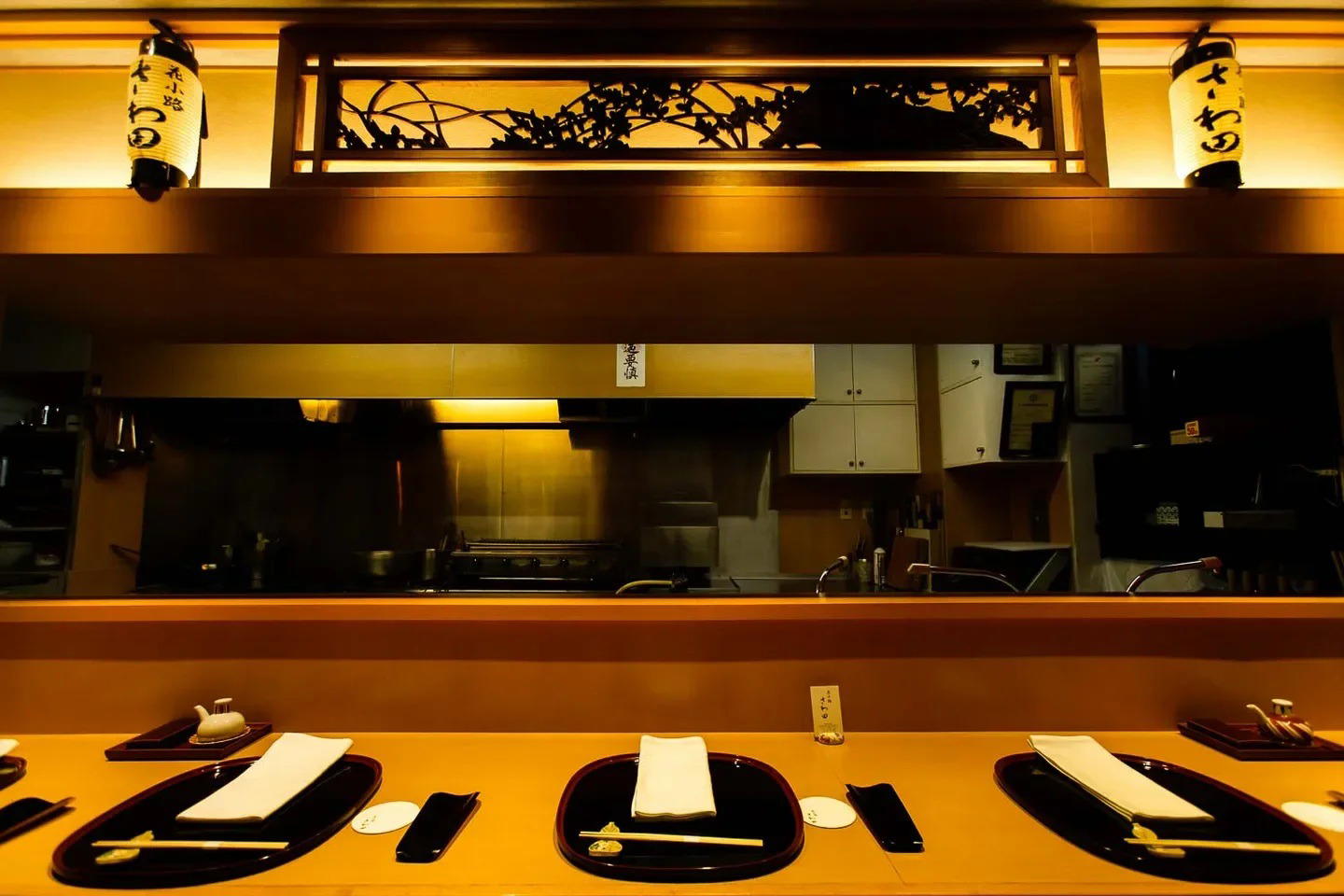
Warm, counter‑centric basement space with close views of the charcoal grill, simple wood finishes, and a relaxed but focused atmosphere that feels both intimate and quietly sophisticated rather than flashy.