Tabelog 100 #60
Our verdict
GAZTA brings Tokyo’s cake culture into the small-format sweets category that rewards precision over spectacle. Selected for Tabelog 100 Sweets Tokyo 2023, it is a Shirokane-Takanawa take-out specialist with a JPY 1,000–1,999 spend range and a clear place in the city’s serious pâtisserie circuit.

Pearl is the En Primeur Club membership app, where members save venues, book tables and use the concierge.
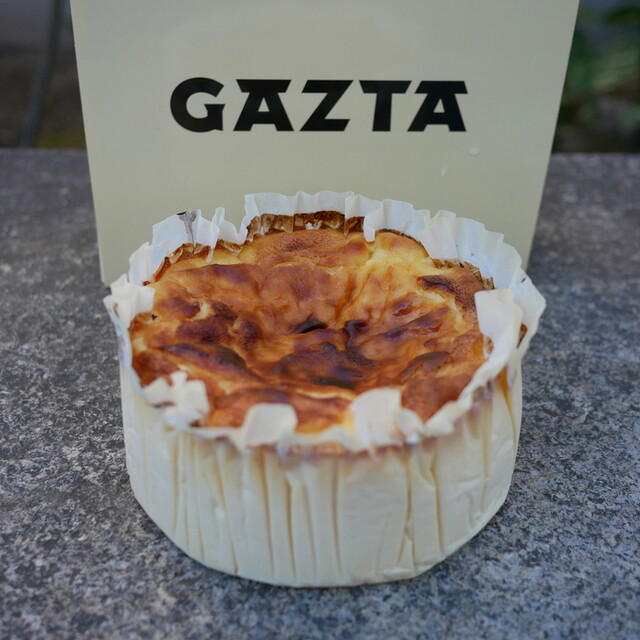
Tokyo has a quieter register than its department-store dessert floors: polished, deliberate, and often built around a narrow purchase made with intent. That matters for GAZTA, because Tokyo’s cake scene splits usefully into the showpiece salon, where afternoon stretches into plated service, and the compact specialist, where selection, timing, and restraint are the point.
In that second category, reputation is built differently. A cake shop needs no long dégustation to create progression; the sequence comes from the customer’s choices, from one piece taken away to a small box assembled for a visit. Tokyo understands this form. The city treats sweets as punctual gifts, office diplomacy, seasonal gestures, and private luxuries, so packaging, portion, and repeatability matter as much as dining-room theatre.
Tokyo's serious sweets circuit, without the salon ritual
Read GAZTA not as a substitute for a restaurant meal, but as part of Tokyo’s high-functioning sweets infrastructure. Tabelog recognised it in 2023 in its Hyakumeiten listings, with GAZTA appearing in the cake category and carrying a listed score of 3.84. The category matters: Tokyo’s dense dessert culture rewards recognised shops that sustain focus across daily trade, not just photogenic short-run items.
That distinction separates it from peer formats. MAISON D'AHNI occupies a comparable Tokyo sweets bracket, while dining rooms such as Imafuku or Wagyu Yakiniku KIM answer another question: a seated meal built around meat, service rhythm, and table time. Italian restaurants such as AlCeppo and TARANTELLA da luigi sit in another lane, where dessert may close the meal but rarely defines the visit. Cake specialists ask for sharper judgment because there is less surrounding theatre to soften assessment.
Tokyo visitors often over-plan sushi counters and under-plan sweets. That is a mistake. The city’s dessert addresses can be as revealing as its more formal dining rooms, showing how local taste handles sweetness, texture, gifting, and seasonality. A shop like this works well as a planned stop, not a dinner afterthought. The format rewards a clean errand: arrive with a purpose, choose quickly, and build the day around a focused sweets purchase.
The tasting progression happens by the box
The arc here is not chef-led courses but buyer-led sequencing. In a restaurant tasting menu, the kitchen controls progression: opening bite, savoury rise, sweet landing. In a cake shop, order is private. The first decision is whether the purchase is for immediate eating, a later hotel-room pause, or a gift; each changes what makes sense. Tokyo’s compact sweets counters can therefore feel more exacting than casual cafés, compressing multi-course logic into a few selections.
GAZTA’s public category is cake. That fact defines the experience without inventing a menu. This is not a venue to judge by the rituals of a long restaurant comparison, but by the discipline of a focused sweets purchase in Tokyo. The value is in product clarity and category precision, not hospitality choreography.
The spend range keeps it useful for travellers. Tokyo has dessert counters where the bill can approach full lunch territory, and convenience sweets that make excellent daily habits. This shop sits between them: serious enough for citywide sweets recognition, accessible enough to fold into a day of eating without displacing a restaurant reservation. That JPY 1,000–JPY 1,999 bracket is where Tokyo excels, letting visitors compare technique and taste across several specialist stops without committing to full afternoon tea or a plated dessert course.
For a wider Tokyo food day, the contrast can be instructive. A route might pair a precise sweets stop with other Tokyo dining, a grill-focused meal, or another specialist setting. The point is not ranking unlike formats, but reading Tokyo through specialisation: narrow commitments executed repeatedly.
How to place it within a Tokyo itinerary
GAZTA sits within Tokyo rather than the default tourist dessert shorthand, which works in its favour. The stop suits travellers who understand that the city’s food map is broader than its best-known shopping and nightlife districts. A sweets purchase here pairs naturally with a slower Tokyo day, especially if the itinerary avoids overloading seated meals. Other dessert and restaurant formats elsewhere in the city belong to different rhythms, but GAZTA’s appeal is the narrow, specialist errand.
Visitors building a broader Tokyo edit should use the category guides rather than treating every address as interchangeable. Our full Tokyo restaurants guide helps separate specialist dining from casual stops, while Our full Tokyo hotels guide helps decide whether a dessert suits the trip back to the room. Drinks-led evenings belong in our full Tokyo bars guide, while our full Tokyo experiences guide covers the cultural planning around a day in the city. For wine-minded readers, our full Tokyo wineries guide keeps the beverage side separate from the sweets conversation.
The larger Japanese comparison is also useful. Across Japan, food travel rewards specificity by city and format: sweets counters, casual specialists, and more formal dining rooms each answer different needs. Even outside Japan, Japanese casual forms translate differently from place to place. GAZTA belongs to the Tokyo version of that principle: narrow scope, disciplined category, and a visit that makes sense when the day has room for a precise sweets errand.
Frequently asked questions
Where exactly is GAZTA?
Tokyo.
What price level is GAZTA?
Pricing at GAZTA is listed as JPY 1,000 - JPY 1,999.
What time does GAZTA open and close?
Current opening hours are not provided in the verified venue details here. Check the venue's official channels for the latest details.
What do critics highlight about GAZTA?
Critics point first to its 2023 Tabelog Hyakumeiten recognition, with a listed score of 3.84 and a public category of cake. Pricing is listed at JPY 1,000–JPY 1,999, so the focus is on a specialist sweets purchase rather than a restaurant-style comparison.
Is GAZTA good for vegetarians?
GAZTA is listed in the cake category in Tokyo, but ingredient-level vegetarian details are not provided in the verified venue details here. Check the venue's official channels for the latest details.
Is GAZTA child-friendly?
Child-friendliness details are not provided in the verified venue details here. GAZTA is in Tokyo, with pricing listed at JPY 1,000–JPY 1,999. Check the venue's official channels for the latest details.
Price and Positioning
Comparable venues for orientation by cuisine and category.
| Venue | Cuisine | Price | Awards | Notes |
|---|---|---|---|---|
| GAZTAThis venue (the venue you are viewing) | Basque cheesecake specialty shop | $10–20 | Tabelog 100 #60 | Not listed |
| Hainan Jeefan Shokudo 2 (海南鶏飯食堂2) | Authentic Singaporean Hainanese Chicken Rice | $10–20 | Not listed | Ebisu, Authentic Singaporean Hainanese Chicken Rice |
| Mr Cheesecake | Cheesecake Specialty Café | $10–20 | Not listed | Ginza, Cheesecake Specialty Café |
| A Cote Patisserie | Minato, French-Style Patisserie | $10–20 | Tabelog 100 #55 | Not listed |
| Cafe Casa | Not listed | $10–20 | Tabelog 100 | Shibuya, European-inspired cafe with coffee, desserts, and comfort food |
| CAFÉ FAÇON Nakameguro honten | Meguro, Specialty coffee & sweets café | $10–20 | Tabelog 100 #37 | Not listed |
Recognition history
Dated appearances from independent guides and award organizations, with the underlying list record or original source where available.
Tabelog 100 #60 · No. 60
Tabelog · Tabelog 100 - Sweets - TOKYO - 2023