Our verdict
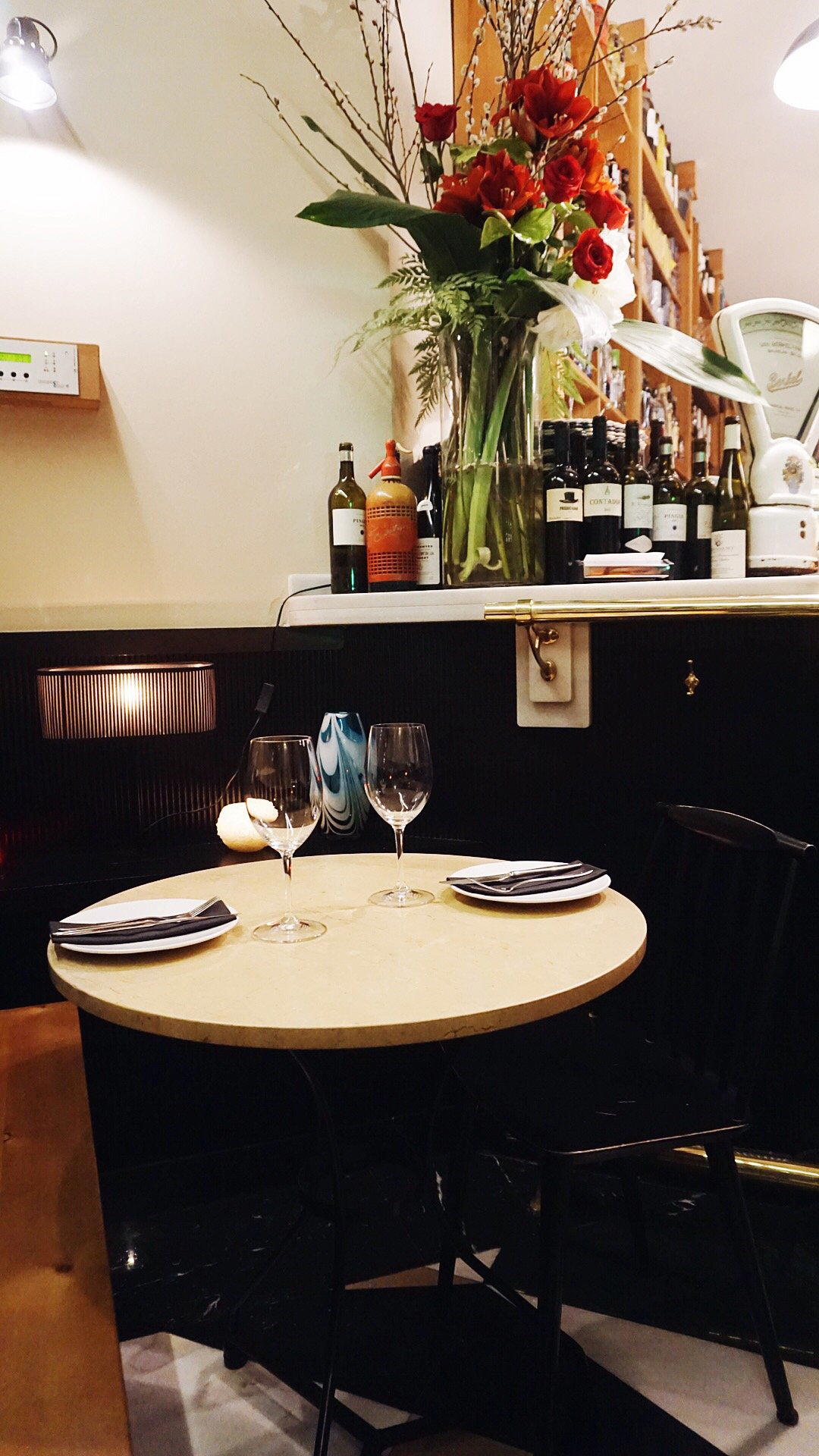
Gabatxo serves Spanish-French fusion tapas and cocktails on Carrer d'Enric Granados, with a leisurely, conversational pace that suits dinner or late night.

Pearl is the En Primeur Club membership app, where members save venues, book tables and use the concierge.

The menu
What to order
- Combo Cocktail Tapa
- Traditional Spanish Paella
Carrer d'Enric Granados and the Bar That Takes Wine Seriously
Enric Granados is one of those streets that rewards the visitor who slows down. A pedestrianised strip running through L'Eixample, it has a different register from the louder stretches of the Eixample grid: narrower terraces, fewer tour groups, a pace that feels closer to the city's own rhythm than to the version packaged for visitors. Along this corridor, Gabatxo occupies a position in a neighbourhood pattern that has been shifting for several years, as the pedestrian boulevard has attracted a small cluster of bars and restaurants that prioritise craft over spectacle.
In Barcelona's wine bar scene, the most interesting split is not between Spanish and imported bottles, but between venues that treat wine as a beverage category and those that build the entire experience around cellar curation. Gabatxo falls clearly in the latter group. The format is that of a bar rather than a restaurant, which means the structure of an evening here is more fluid than at Barcelona's formal dining establishments, where the arc from arrival to coffee is largely predetermined.
The Wine List as the Main Argument
Barcelona's position in the Spanish wine conversation is geographically interesting. The city sits close to several of the country's most compelling wine regions: Priorat and Montsant to the southwest, Penedes directly to the south, Emporda to the north. A focused wine bar in the Eixample is well-placed to draw from all of them, and the strongest programmes in this part of the city tend to index toward Catalan producers while maintaining enough range to hold conversations about the broader Iberian picture and beyond.
What separates a list from a comprehensive one is editorial judgment: the willingness to make an argument about what belongs and what does not. Spain's wine culture has diversified considerably over the past decade, with natural and minimal-intervention producers gaining ground in regions like Terra Alta, Conca de Barbera, and the cooler subzones of Penedes. A bar operating at Gabatxo's address, in a neighbourhood that skews toward a younger, more wine-literate clientele, is positioned to make a case for that shift rather than defaulting to the safe Rioja reserva anchors that populate more conservative lists.
For context, the formal end of Barcelona's dining spectrum, restaurants like Disfrutar, Cocina Hermanos Torres, and Lasarte, operate with full sommelier teams and tasting menu formats where wine service is integrated into a multi-hour progression. ABaC and Enigma sit in a similar bracket. Gabatxo operates at a different register: the bar format allows for shorter engagements, single-glass exploration, and the kind of low-stakes conversation about a bottle that tasting menus structurally discourage. These are not competing categories so much as different entry points into the same city's wine culture.
Where Gabatxo Sits in the Barcelona Bar Picture
The Eixample's wine bar population has grown steadily over the past five years, tracking a broader European pattern in which independent, cellar-focused bars have displaced tapas-and-sangria formats in neighbourhoods with rising food literacy. Enric Granados, specifically, has attracted a mix of locals and internationally-minded visitors, which creates a different audience than the tourist-facing zones around Las Ramblas or even parts of the Gothic Quarter.
In a bar at this address, the physical environment tends toward a compact footprint with an emphasis on the counter and bottle display rather than dining-room formality. The evening dynamic on a pedestrianised street also means that the relationship between indoor seating and terrace shifts by season, with the open-air terrace becoming the primary draw from late spring through early autumn, when Enric Granados fills with a cross-section of the city that few other streets assemble quite as naturally.
For visitors who have already worked through the major-format restaurants, who have a reservation at El Celler de Can Roca in Girona or who are comparing Barcelona's creative scene against reference points like Quique Dacosta in Dénia, Arzak in San Sebastián, or Mugaritz in Errenteria, a bar like Gabatxo functions as the informal counterpoint: the place where the evening either begins or, more usefully, where it continues after a formal dinner ends.
That position in an itinerary is not a secondary one. Some of the most productive wine conversations in any city happen in smaller bars where the list is tight enough to be discussable and the format is loose enough to allow for it. Internationally, analogues exist at places like Le Bernardin in New York City, which maintains one of the Atlantic seaboard's more serious wine programmes in a formal context, and Lazy Bear in San Francisco, where beverage curation is treated as an equal editorial partner to the food. Gabatxo operates at a smaller scale and in a looser format, but the underlying logic is similar: the drink programme is not an afterthought.
Spain's Wider Wine Argument and How It Lands in Barcelona
Spain's wine identity beyond Rioja and Ribera del Duero has been one of the more significant stories in European wine over the past fifteen years. Producers in Galicia's Rias Baixas and Ribeira Sacra, in Jerez, in Bierzo, and across Catalonia's own appellations have moved from regional curiosity to serious critical standing. Venues like Atrio in Cáceres, with one of the most documented cellars in the country, have made the case for Spanish wine on a European scale. Aponiente in El Puerto de Santa María, DiverXO in Madrid, Azurmendi in Larrabetzu, Martin Berasategui in Lasarte-Oria, and Ricard Camarena in València all operate within a national fine dining conversation where beverage programmes are expected to hold their own against the food. A focused bar in Barcelona's Eixample participates in that same conversation from a different position in the format spectrum.
Planning a Visit
Gabatxo is located at Carrer d'Enric Granados, 115, in L'Eixample, Barcelona. The street is pedestrianised and accessible by foot from Diagonal and Provença metro stations. Given the bar format and the terrace dynamic, timing a visit around the shoulder hours, early evening before the main dinner wave, tends to allow for more attentive service and easier conversation about the list. For the broader Barcelona dining picture, including the formal restaurants that bracket a visit like this, see our full Barcelona restaurants guide.
Logistics at a Glance
| Detail | Gabatxo | Typical Eixample wine bar | Barcelona formal dining |
|---|---|---|---|
| Format | Bar / wine-focused | Bar / tapas | Tasting menu restaurant |
| Price tier | Not confirmed | € – €€ | €€€€ |
| Booking | Check directly | Walk-in typical | Advance reservation required |
| Leading timing | Early evening or late | Any evening | Set dinner service |
| Wine depth | Curated, bar-scale list | Varies widely | Full sommelier programme |
Frequently asked questions
Is Gabatxo a good choice for exploring Catalan wines specifically?
Barcelona's Eixample wine bars are among the more reliable places in the city to find Catalan producers represented with genuine depth, given the proximity to Priorat, Penedes, and Emporda and the neighbourhood's appetite for independent, cellar-led programming. A bar at Gabatxo's address on Enric Granados is positioned to make the case for Catalan wine specifically, particularly producers from the cooler subzones of Penedes and the schist-heavy terroir of Priorat, which have drawn serious critical attention over the past decade. For a full picture of how Barcelona's dining and drinking culture sits within the broader Spanish fine dining conversation, our Barcelona guide covers the relevant context.
Reputation First
Comparable venues nearby, for context on price, style, and recognition.
| Venue | Cuisine | Price | Awards | Notes |
|---|---|---|---|---|
| GabatxoThis venue (the venue you are viewing) | Spanish-French Fusion Tapas & Cocktails | $30–50 | Not listed | Not listed |
| Demo Gastrobar | Modern Spanish Gastrobar Tapas | Not listed | Not listed | la Vila de Gracia |
| Txokoa Barcelona | Traditional Spanish Gastrobar | $30–50 | Not listed | les Corts |
| Candela en Rama | Modern Spanish Tapas with Ember-Grilled Flavors | $30–50 | Macarfi 7.1 Food Rating | Sant Antoni |
| La Taverna Del Suculent | Modern Spanish Tapas | Not listed | Not listed | el Raval |
| Tramendu El caliu de la brasa | Traditional Catalan Grill | $30–50 | Not listed | la Bordeta |
Continue exploring
More in Barcelona
Restaurants in Barcelona
All restaurants in Barcelona →
Bars in Barcelona
All bars in Barcelona →
Hotels in Barcelona
All hotels in Barcelona →

Details
- Trendy
- Lively
- Intimate
- Casual Hangout
- Date Night
- Craft Cocktails
- Small Plates
- Signature Cocktails
Current opening hours
- Monday
- Closed
- Tuesday
- 5 PM–1 AM
- Wednesday
- 5 PM–1 AM
- Thursday
- 5 PM–2 AM
- Friday
- 5 PM–2 AM
- Saturday
- 5 PM–2 AM
- Sunday
- Closed
Hours can change for holidays and private events. Hours as of .
lively and distinctive atmosphere with a welcoming, laid-back neighborhood feel.