
Tabelog 100 #11
Our verdict
Furai Bo is a counter-only ramen address in Nagaokakyo, west of central Kyoto, with Tabelog Ramen WEST “Tabelog 100” selections in 2023, 2024, and 2025. Its value lies in a tight format: tsukemen, tantan-men, and ramen served in a small room where the city’s noodle culture feels closer to daily habit than destination dining.

Pearl is the En Primeur Club membership app, where members save venues, book tables and use the concierge.
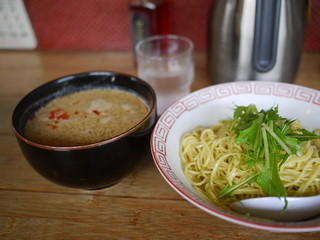
Approaching a focused ramen shop in Kyoto shifts the tempo of Kyoto dining. Formal restaurants and polished dining rooms ask for ceremony; a specialist noodle meal asks for attention. Steam, turnover, and bowls arriving in quick sequence define the experience more than décor. Furai Bo sits in Kyoto’s compact ramen genre: brief meal, disciplined format, and value measured not by luxury signals, but by how much concentration fits into one bowl.
Visitors often misread Kyoto’s ramen culture, arriving for refinement and seasonality alone. The city also has a serious noodle habit running through station-adjacent shops, university districts, commuter areas, and small dining rooms beyond the tourist grid. Kyoto matters in this register. This is not hotel-dining-room Kyoto, but everyday-specialist Kyoto, where a focused menu earns a following because repeat local use tests consistency harder than passing curiosity.
A focused ramen format with a value argument
Furai Bo’s case is clearest against Kyoto’s price spread. At one end are more formal dining rooms such as anpeiji and Tempura Kawatatsu, where cost, pacing, and occasion shape the choice before the first course. At the other are compact specialists such as Hashiri Imochi Roho and Tsukemen Kirari, where a low-ticket meal can carry serious local credibility. Furai Bo works in that second lane, with tsukemen, tantan-men, and ramen as the core categories rather than a long catalogue for every table.
That restraint is central. In Japanese ramen culture, breadth is not automatically a virtue. Shops often define themselves through a few variations: dipping noodles for texture and concentration, spicy soup noodles for heat and depth, and standard ramen for broth-and-noodle balance. A focused format sharpens the equation. Production and service feel immediate, and diners have little room to hide behind the rituals of a longer meal. The cooking becomes easier to judge.
The trust signal is practical, not ornamental. Furai Bo is recognized in the 2025 Tabelog Hyakumeiten data, recognition in a competitive field rather than a mere neighbourhood recommendation. Its Tabelog score is 3.65, which in Japan’s rating culture means more than travellers used to inflated five-star platforms may assume. The restaurant’s listed categories are tsukemen, tantan-men, and ramen, giving it a clear identity rather than a broad, unfocused brief.
The value proposition is precise: not a cheap meal as consolation, but a low-cost specialist meal with external recognition and a focused format. Kyoto offers many ways to spend heavily and eat well. The sharper question for seasoned travellers is where the city delivers culinary specificity without turning every meal into an event. Here, a focused ramen stop can be more useful than another formal reservation.
Why Kyoto changes the meal
Central Kyoto dining often brings friction: international demand, hotel concierge traffic, and visitors moving between major sightseeing and shopping areas. Furai Bo sits within Kyoto’s broader everyday-dining landscape. The trade-off is clear: the setting asks for intent, but frames the meal closer to local life. A ramen stop here reads differently from a bowl grabbed between sightseeing sites; it becomes a short study in how Kyoto eats beyond the postcard version of the city.
That distinction helps when building a Kyoto itinerary. A traveller comparing noodle specialists with broader city dining might place Furai Bo beside casual specialists, then reserve another meal for a different register elsewhere in Kyoto. Kyoto rewards contrast. Its appeal is not one dining identity, but the ability to move from quick specialist food to more formal cooking and long-running local traditions within the same cultural frame.
For readers mapping the city by category, Our full Kyoto restaurants guide gives the dining context, while Our full Kyoto hotels guide, Our full Kyoto bars guide, Our full Kyoto wineries guide, and Our full Kyoto experiences guide help separate a noodle detour from the rest of a trip. Furai Bo makes strongest sense within that wider planning logic, not as a solitary trophy stop.
How to read it against Japan's casual specialists
Japan’s casual dining strength lies in specialization. Across the country, focused rooms may share little in cuisine, but they reflect the same national habit of narrowing the offer until the decision is simple. Cross-category comparisons can help, though the names matter less than the pattern: choose the specialist when the category itself is the reason to go. Furai Bo fits that logic because its listed categories point directly to tsukemen, tantan-men, and ramen.
That principle travels beyond Japan, but Kyoto’s ramen specialists carry their own pressure. They compete in a domestic market where diners know the grammar of broth, noodles, spice, dipping style, and pacing. Recognition there is a meaningful filter, especially when paired with a clearly stated category focus and a modest listed budget.
The editorial verdict is practical rather than romantic. Furai Bo is for travellers who value specificity over spectacle, and for Kyoto itineraries needing one meal grounded in the city’s everyday appetite. The focused format, 2025 Tabelog Hyakumeiten recognition, and narrow noodle focus give it more substance than the casual price point suggests. It is not for a long evening or dressed-up occasion; choose it when the point is ramen, judged on ramen’s own terms.
Frequently asked questions
What are the operating hours at Furai Bo?
Current operating hours are not provided here; confirm directly with Furai Bo before visiting.
What does dinner at Furai Bo typically cost?
Pricing at Furai Bo is listed as - JPY 999 - JPY 999.
Where do I go for Furai Bo?
Kyoto.
What is Furai Bo known for?
Furai Bo is known for tsukemen, tantan-men, and ramen in Kyoto, with 2025 Tabelog Hyakumeiten recognition and a Tabelog score of 3.65.
A Credentials Check
Comparable venues at a glance for context.
| Venue | Cuisine | Price | Awards | Notes |
|---|---|---|---|---|
| Furai BoThis venue (the venue you are viewing) | Nagoya-style Japanese izakaya & chicken wings | $20–30 | Tabelog 100 #11 | Not listed |
| ほしぞら | Korean-style Yakiniku | $20–30 | Not listed | Shimogyo-ku |
| Aje Matsubara honten | Yakiniku & Horumon (Offal) Barbecue | $30–50 | Tabelog 100 #42 | Shimogyō |
| Ichijoji Nakatani | Kyoto wagashi & cafe with Japanese–Western fusion sweets | $10–20 | Tabelog 100 #5 | Sakyō |
| Nakamura Tokichi Honten Kyoto eki ten | Matcha sweets & soba café | $10–20 | Tabelog 100 #69 | Shimogyō |
| Daigokuden Honpo Honten | Traditional Japanese Wagashi & Sweets Café | $10–20 | Tabelog 100 #18 | Nakagyō |
Recognition history
Dated appearances from independent guides and award organizations, with the underlying list record or original source where available.
Tabelog 100 #11 · No. 11
Tabelog · Tabelog 100 - Ramen - WEST - 2025
Continue exploring
More in Kyoto
Restaurants in Kyoto
All restaurants in Kyoto →
Bars in Kyoto
All bars in Kyoto →
Hotels in Kyoto
All hotels in Kyoto →
Wineries in Kyoto
Browse all →
Details
- Lively
- Casual
- Cozy
- Casual Hangout
- After Work
- Group Dining
- Family
- Late Night
- Solo
- Standalone
- Beer Program
- A La Carte
- Small Plates
- Beer
Current opening hours
- Monday
- 11:30 AM–2:45 PM, 6–8:45 PM
- Tuesday
- 11:30 AM–2:45 PM, 6–8:45 PM
- Wednesday
- 11:30 AM–2:45 PM, 6–8:45 PM
- Thursday
- 11:30 AM–2:45 PM, 6–8:45 PM
- Friday
- 11:30 AM–2:45 PM, 6–8:45 PM
- Saturday
- 11:30 AM–2:45 PM, 6–8:45 PM
- Sunday
- 11:30 AM–2:45 PM, 6–8:45 PM
Hours can change for holidays and private events. Hours as of .
Casual izakaya-style tavern in the Kyoto Avanti basement with bright, practical lighting, closely set tables, and a bustling, beer-friendly atmosphere focused on sharing plates and Nagoya soul food.