Our verdict
Fru Larsen sits at Østergade 1 in Langå, a small Danish market town in the Jutland interior where restaurant ambitions tend to run quiet but serious. The kitchen draws on the agricultural character of the surrounding region, placing it within Denmark's broader tradition of provincial dining that sources close and cooks with intent. For those travelling through central Jutland, it represents the kind of local address worth planning around.

Pearl is the En Primeur Club membership app, where members save venues, book tables and use the concierge.
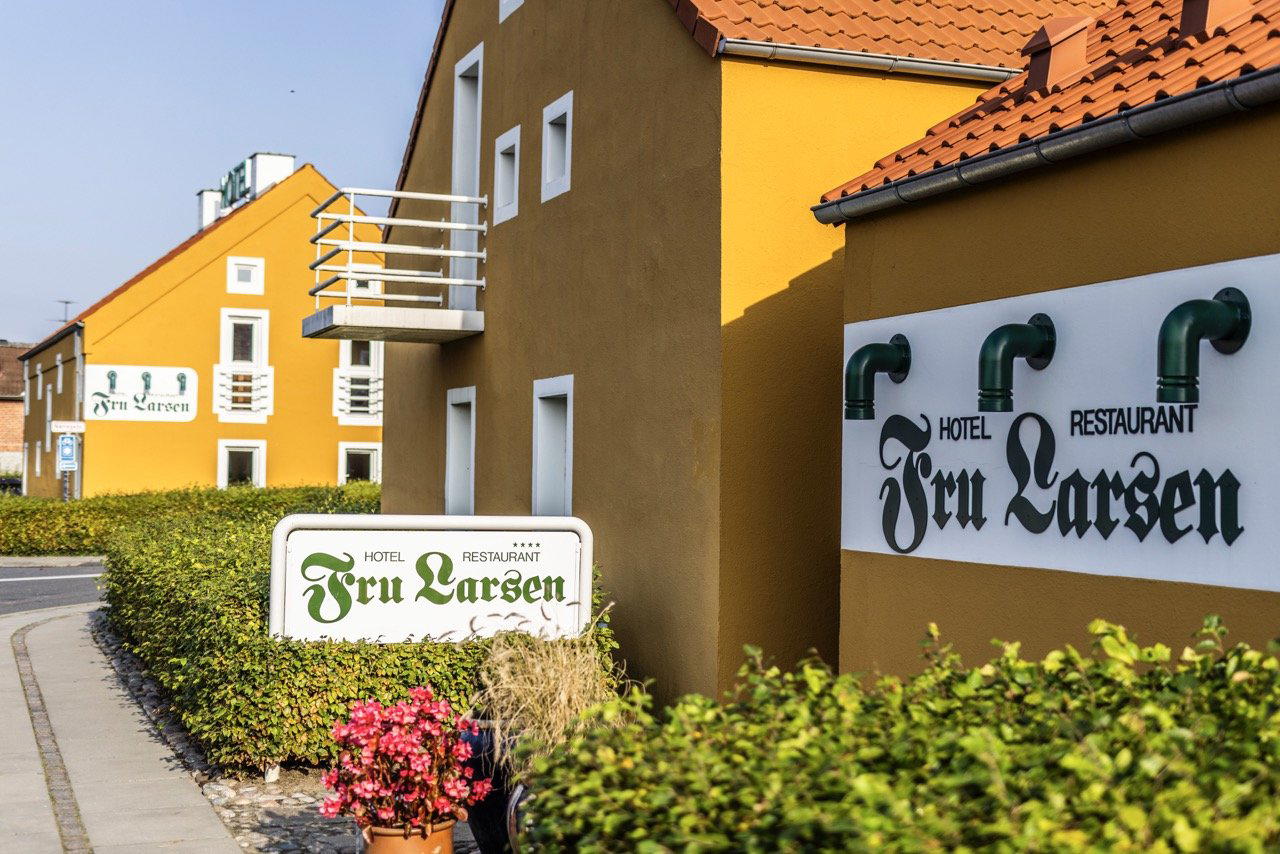
Provincial Seriousness: Dining in Denmark's Interior
Denmark's most discussed restaurant addresses cluster around Copenhagen and, to a lesser extent, Aarhus. Geranium in Copenhagen and Jordnær in Gentofte anchor the capital's upper tier, while Frederikshøj in Aarhus holds a comparable position in Jutland's largest city. But Denmark has a longer, quieter tradition of serious cooking that operates at the provincial scale, in market towns and rural settlements where the sourcing proposition is not a marketing angle but a practical reality. Ingredients travel shorter distances, supplier relationships are face-to-face, and the menu reflects what the surrounding landscape actually produces rather than what a sophisticated urban clientele expects to see.
Fru Larsen occupies that provincial tier. Located at Østergade 1 in Langå, a small town in the Viborg municipality of central Jutland, the restaurant sits in a setting where agricultural proximity is a structural condition of the kitchen rather than a chosen identity. The Jutland interior produces grain, root vegetables, dairy, and livestock at scale. A kitchen embedded in that environment has access to ingredients at a point in their cycle that urban restaurants rarely see.
What the Jutland Interior Provides
The ingredient sourcing argument for provincial Danish cooking rests on geography rather than philosophy. Central Jutland is not a romantic agricultural edge case; it is one of Denmark's most productive farming regions, with a density of small producers, cooperative dairies, and heritage-breed livestock operations that urban kitchens have to work considerably harder to access. Restaurants further along the Danish provincial tradition, including Henne Kirkeby Kro in Henne and Dragsholm Slot Gourmet in Hørve, have built their reputations partly on this kind of embedded sourcing, where the kitchen's relationship to the land is a function of physical proximity as much as intention.
At Fru Larsen, Langå's position within this agricultural interior means the kitchen operates with that same structural advantage. The town itself sits between the larger centres of Randers and Viborg, in a stretch of Jutland where small farms, rivers, and woodland create a sourcing range that a town of Langå's modest size can draw on without the logistics that burden bigger operations. That kind of access shapes a menu in ways that are less about seasonal storytelling and more about practical specificity: what is available this week, from whom, and at what point of maturity.
The Provincial Format and What It Signals
Provincial Danish dining at the serious end of the spectrum tends to operate with fewer covers, tighter menus, and a stronger reliance on repeat local customers than its urban counterparts. This is the format context for addresses like Ti Trin Ned in Fredericia, LYST in Vejle, and Syttende in Sønderborg, each of which serves a regional audience while maintaining kitchen standards that compare favourably with larger city peers. The format demands a different kind of discipline: menus cannot rely on the volume of a Copenhagen service, and the supply chain is necessarily more local because the logistics of importing premium product to a small Jutland town are prohibitive.
Fru Larsen fits that operational model. Langå is not a dining destination in the way that a coastal resort or a well-mapped rural inn might be. It is a working market town, and a restaurant here draws from the community around it. That grounding tends to produce kitchens that are less performative and more straightforwardly focused on the plate, a quality that is increasingly visible across Denmark's provincial scene as younger cooks choose smaller towns over urban competition.
Placing Fru Larsen in the Danish Provincial Scene
The broader Danish provincial restaurant scene has diversified considerably over the past decade. Addresses such as Frederiksminde in Præstø, Tri in Agger, and Pearl by Paul Proffitt in Kruså demonstrate that serious cooking is distributed across the country in ways that reward travellers willing to move beyond the obvious urban nodes. Domæne in Herning, ARO in Odense, Alimentum in Aalborg, and Parsley Salon in Hellerup each represent a strand of this distribution, from second-tier cities to suburban addresses that operate outside the capital's gravitational pull.
Fru Larsen sits at the smaller, more local end of this spectrum. Langå is not attempting to be a destination dining town in the manner of, say, a Danish equivalent to the internationally mapped rural inn. The restaurant's address on Østergade, the kind of central commercial street that anchors most Danish market towns, places it within the everyday life of the community rather than at a remove from it. That positioning is part of what defines the provincial tier: these are restaurants that exist for the people who live nearby, with visiting travellers a secondary rather than primary audience.
For those making the journey, the access point is Langå station, which sits on the main rail line between Aarhus and Viborg, making the town reachable from either city without a car. Anyone travelling through central Jutland and consulting our full Langå restaurants guide will find the town easy to include in a regional itinerary. The comparison set for Fru Larsen is not the multi-course tasting menu operations of Copenhagen, nor the internationally known addresses like Le Bernardin in New York City or Lazy Bear in San Francisco, but the quieter, more rooted category of provincial European restaurants that derive their authority from place rather than from profile.
Planning Your Visit
Fru Larsen is located at Østergade 1, 8870 Langå, in the Viborg municipality of central Jutland. Langå is accessible by rail from Aarhus, approximately 30 kilometres to the south-east, and from Viborg to the north-west. Provincial Danish restaurants at this scale often operate on reduced weekly schedules or seasonal closures that are not consistently reflected in third-party listings.
Frequently asked questions
Can I bring kids to Fru Larsen?
Langå is a working market town in the Viborg municipality of central Jutland, and restaurants in that context tend to operate without the formality or counter-service format that makes some serious dining rooms awkward for families. For specific seating arrangements or booking terms, contacting the restaurant directly at Østergade 1, 8870 Langå is the most reliable route.
What is the atmosphere like at Fru Larsen?
Langå sits outside the award-circuit pressure that defines Copenhagen addresses like Geranium or the design-conscious dining culture of Aarhus, and that distance shapes what to expect at Fru Larsen. The register at provincial Danish restaurants in market towns of this size is typically grounded and local-facing, built around repeat custom rather than destination tourism. Think fewer theatrical flourishes and more direct, room-focused hospitality.
Is Fru Larsen worth visiting from Aarhus for a day trip?
Langå is accessible by rail from Aarhus in approximately 30 minutes, making Fru Larsen a plausible day-trip destination from Denmark's second city rather than a long detour. The case for making the journey rests on what provincial Danish cooking offers that Aarhus cannot: smaller covers, tighter menus, and a direct relationship with the Viborg municipality's agricultural supply lines. Whether the specific kitchen and format justify the round trip is best assessed against current menus and opening hours, which should be confirmed with the venue at Østergade 1, 8870 Langå before travelling.
What do people recommend at Fru Larsen?
Central Jutland's sourcing geography, agricultural land, freshwater systems, and proximity to the Gudenå river basin, informs the kind of ingredient-led cooking that provincial Danish restaurants in this region characteristically produce. Seasonal and locally sourced preparations are the baseline expectation across the Danish interior dining scene. Check the venue's official channels for the latest details.
What's the address for Fru Larsen?
Fru Larsen is located at Østergade 1, 8870 Langå, Denmark, Langa.
Quick Comparison
Comparable venues nearby, for context on price, style, and recognition.
| Venue | Cuisine | Price | Awards | Notes |
|---|---|---|---|---|
| Fru LarsenThis venue (the venue you are viewing) | Contemporary Nordic | Not listed | Not listed | Not listed |
| SyvNi13 | Nordic Social Dining | Not listed | Not listed | Midtbyen |
| Det Glade Vanvid | Seasonal Danish Fine Dining | $50–100 | Not listed | Østervold |
| Østergade | French-inspired Fine Dining with Seasonal Danish Produce | Not listed | Not listed | Randers C |
| Restaurant Piaf | Southern French with Danish influences | Not listed | Not listed | Quartier Latin |
| Aotori & Akaton | Traditional Japanese Yakitori | Not listed | Michelin Plate | Østerbro |
Continue exploring
More in Langa
Restaurants in Langa
All restaurants in Langa →
Bars in Langa
Browse all →
Details
- Cozy
- Elegant
- Date Night
- Special Occasion
- Hotel Restaurant
- Extensive Wine List
- Local Sourcing
- A La Carte
Bright and modern with some traditional rooms featuring fireplaces, cozy amid woods and hills.