Foreign & Domestic


Diners, Drive-Ins and Dives Featured Restaurant
Our verdict
Foreign & Domestic on East 53rd Street sits at the quieter end of Austin's New American scene, earning an Opinionated About Dining Gourmet Casual recommendation in 2023. Led by Sarah Heard and Nathan Lemley, the kitchen works within a neighbourhood-restaurant format that prioritises ingredient sourcing and seasonal precision over spectacle. It is the kind of place that rewards repeat visits more than first impressions.

Pearl is the En Primeur Club membership app, where members save venues, book tables and use the concierge.
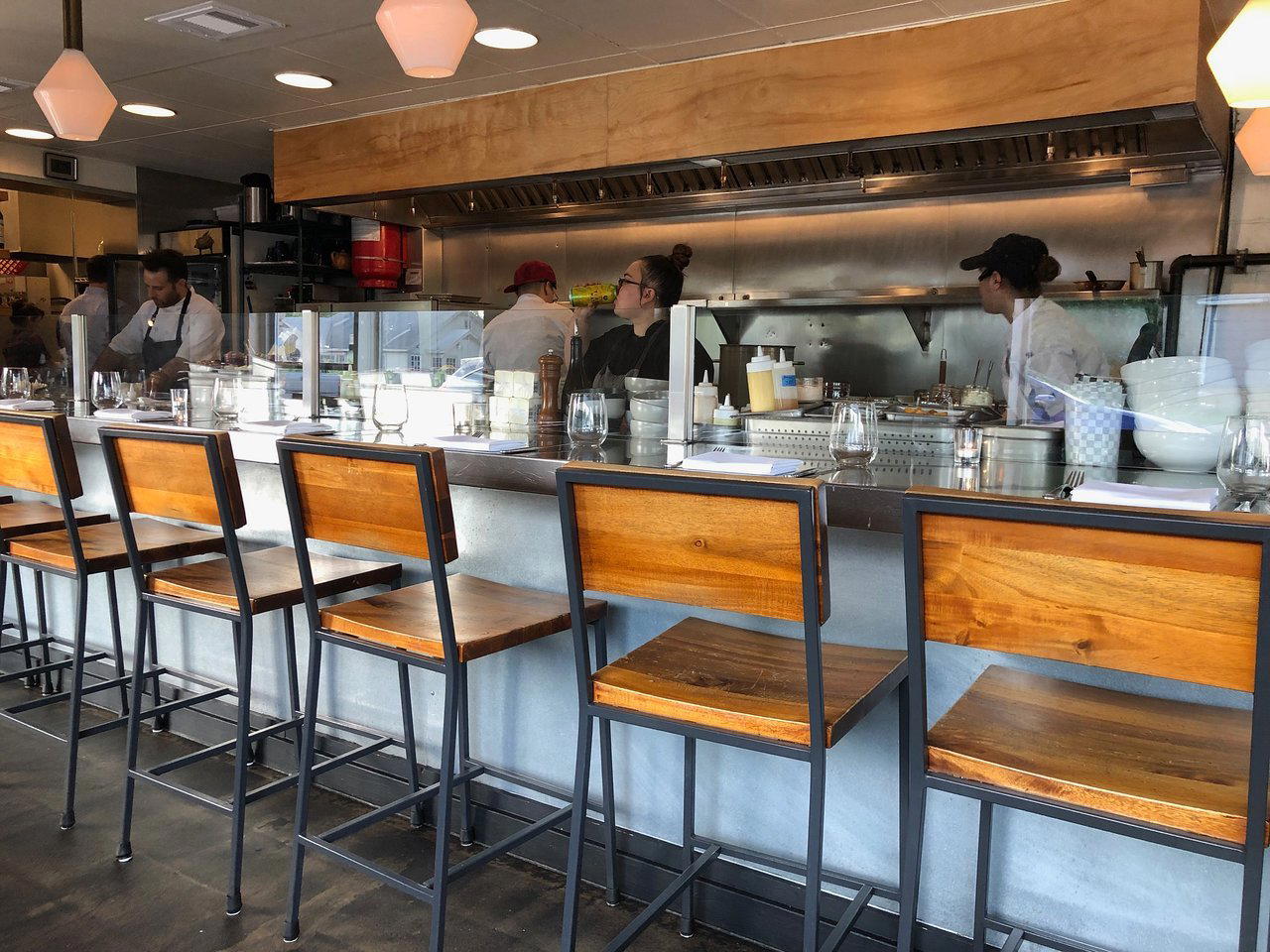
A Neighbourhood Kitchen in a City That Has Largely Moved On From Them
Austin's restaurant culture has accelerated sharply over the past decade. The city now sustains Michelin-recognised barbecue counters like la Barbecue, live-fire New American rooms like Hestia, and omakase formats like Craft Omakase that would hold their own in larger coastal markets. In that context, a modest house on East 53rd Street in Hyde Park running a straightforwardly seasonal New American programme can feel almost anachronistic. That is, until you consider what Foreign & Domestic has chosen not to do: no tasting menus engineered for social media, no concept pivots chasing the next dining trend, no expansion plays. The restaurant has stayed in its lane for well over a decade, and the Opinionated About Dining Gourmet Casual Dining in North America recommendation it earned in 2023 reflects exactly that consistency.
Where the Food Comes From Is the Story
The broader shift in American restaurant culture toward transparent sourcing has, in many cities, become its own kind of performance. Chalkboards list farm names. Menus read like agricultural directories. At its worst, the trend substitutes procurement theatre for cooking. What distinguishes the more credible end of this approach, across New American restaurants from Single Thread Farm in Healdsburg to Bayona in New Orleans, is that sourcing decisions show up in the food itself, not just on the printed page. Foreign & Domestic operates in that more credible register. The kitchen's reputation has been built around ingredient-driven cooking that responds to what is actually available in Central Texas rather than engineering a fixed menu backward from a concept. That approach requires genuine supplier relationships and a willingness to let the menu shift when the season demands it, which is harder operationally than it appears from the outside.
Texas's agricultural calendar gives a kitchen like this real material to work with. The state's ranching infrastructure means quality beef, lamb, and pork are accessible at a scale that coastal chefs often envy. Seasonal produce across the Hill Country and the broader Central Texas region runs from spring morels and asparagus through summer stone fruit and tomatoes into fall root vegetables. A kitchen that actually tracks these cycles, rather than approximating them, produces food that reads differently on the plate. The flavour logic is seasonal rather than stylistic, which is a less common thing than menus typically suggest.
The Gourmet Casual Tier and What It Actually Means
Opinionated About Dining's gourmet casual designation is worth pausing on. It identifies restaurants where the cooking meets a serious standard without the overhead architecture of formal dining: no amuse-bouches engineered to signal sophistication, no choreographed service sequences. Foreign & Domestic earns its place in that group against competition that includes well-capitalised restaurants in larger markets. For Austin diners situating it locally, the comparison set sits below the Michelin-recognised tier occupied by Barley Swine but operates at a different register than the city's barbecue institutions like InterStellar BBQ. It is a room for people who want accomplished cooking in a setting that does not require that accomplishment to be announced.
Nationally, the New American category has bifurcated. One branch runs toward elaborate tasting formats at the level of Alinea in Chicago or The French Laundry in Napa, where the format itself is the product. The other branch, where Foreign & Domestic sits, maintains the a la carte or short-menu structure of a proper restaurant while holding the kitchen to a standard that the format does not advertise. Restaurants in the latter category tend to have lower profiles than their quality warrants, which is a structural feature of the segment rather than a reflection of the cooking. The Inn at Little Washington and Le Bernardin in New York sit at the formal end of serious American cooking, but the ethos of kitchen-first operations carries through to smaller neighbourhood formats that choose depth over theatre.
Sourcing, Waste, and the Ethics of a Seasonal Kitchen
The sustainability argument for seasonal cooking is sometimes overstated as a marketing position, but its operational logic is sound. A kitchen that builds menus around available regional product rather than air-freighting out-of-season ingredients generates less embedded transport carbon, creates more direct economic relationships with regional producers, and tends to produce less waste because procurement is tied to what will actually be used. These are not romantic claims; they are the practical outcomes of running a kitchen the way Foreign & Domestic appears to run its. Whole-animal and whole-product approaches, common in restaurants with serious sourcing commitments, also reduce the fraction of purchased product that ends up as waste, and they demand a level of butchery and kitchen technique that raises the cooking across the menu rather than concentrating effort on a few signature cuts.
Compared to the environmental footprint of a large-format restaurant running a fixed menu year-round with global suppliers, a kitchen of this type operates at a materially lower impact level. That is not a headline the restaurant is likely to make, but it is the measurable outcome of the approach. For diners who factor sourcing ethics into restaurant choices, the question is less about whether a restaurant claims to be sustainable and more about whether its operational structure makes sustainability the default. Seasonal, regional, ingredient-led kitchens answer that question structurally rather than rhetorically.
The Hyde Park Address and What It Signals
Hyde Park sits north of the University of Texas campus, separated from the downtown dining corridor by enough distance to select for a neighbourhood clientele rather than a tourist or expense-account one. Restaurants that survive long-term in that location do so because local residents return regularly, which means the kitchen has to hold its standard across repetition rather than across novelty. That kind of sustained rating at that volume reflects genuine operational consistency.
For visitors approaching Austin's dining scene from outside, the full picture extends well beyond this block. Our full Austin restaurants guide maps the city's range, from the Michelin-recognised barbecue pits to the new-wave Japanese counters and live-fire American rooms. Complementary itinerary planning is covered in our Austin hotels guide, bars guide, wineries guide, and experiences guide.
Planning a Visit
Foreign & Domestic operates at a neighbourhood pace: the address on East 53rd Street is accessible by car with street parking typical of a residential Austin block, and the scale of the room is consistent with a smaller Hyde Park operation rather than a high-volume destination. Arriving with a reservation rather than as a walk-in is the practical approach, and reserving a week or more ahead for weekend visits is reasonable given the restaurant's profile. Dress is consistent with the neighbourhood casual register that gourmet casual restaurants of this type establish: there is no formal code, but the cooking warrants treating the visit as a proper dinner rather than a casual drop-in. The kitchen's sourcing approach means the menu changes with supply, so arriving with a fixed dish in mind is less useful than arriving open to what the current season offers.
Visitors building a broader New American itinerary in Austin might also consider Barley Swine for the Michelin-recognised end of the local contemporary spectrum, and reference Emeril's in New Orleans or Lazy Bear in San Francisco for how the gourmet casual and chef-driven formats have evolved in comparable American cities.
Frequently asked questions
Where is Foreign & Domestic in Austin?
Foreign & Domestic is located at 306 E 53rd St, Austin, TX 78751, Austin.
How far ahead should I plan for Foreign & Domestic?
Booking at least a week ahead for weekends is a reasonable baseline; the OAD Gourmet Casual designation adds out-of-neighbourhood traffic that tightens availability further during peak Austin periods like SXSW and ACL.
What's Foreign & Domestic best at?
The consistent case for Foreign & Domestic is its execution of seasonal, ingredient-led New American cooking within a format that does not attach destination-restaurant pricing or ceremony to the experience. Opinionated About Dining's 2023 Gourmet Casual recommendation specifically identifies this tier: serious cooking, accessible setting, Hyde Park address on East 53rd Street rather than the downtown corridor.
A Pricing-First Comparison
Comparable venues nearby, for context on price, style, and recognition.
| Venue | Cuisine | Price | Awards | Notes |
|---|---|---|---|---|
| Foreign & DomesticThis venue (the venue you are viewing) | Modern French Bistro | $50–100 | Diners, Drive-Ins and Dives Featured Restaurant | Not listed |
| Serenade | Contemporary French-American Brasserie | $30–50 | Not listed | Warehouse District, Contemporary French-American Brasserie |
| Le Calamar | Modern French Bistro with Texas Flair | $50–100 | Bon Appétit Best New Restaurant · Esquire Best Martinis in America | Bouldin, Modern French Bistro with Texas Flair |
| Juniper | Modern Northern Italian | $50–100 | Not listed | Holly, Modern Northern Italian |
| Lambert’s Downtown Barbecue | Upscale Barbecue | $30–50 | Not listed | Downtown, Upscale Barbecue |
| Grizzelda's | Central & Coastal Mexican with Tex-Mex | Not listed | Not listed | Govalle, Central & Coastal Mexican with Tex-Mex |
Recognition history
Dated appearances from independent guides and award organizations, with the underlying list record or original source where available.
Diners, Drive-Ins and Dives Featured Restaurant
Diners, Drive-Ins and Dives · 2026 Diners, Drive-Ins and Dives Featured Restaurants
Opinionated About Dining Gourmet Casual Dining in North America Recommended
Opinionated About Dining
Continue exploring
More in Austin
Restaurants in Austin
All restaurants in Austin →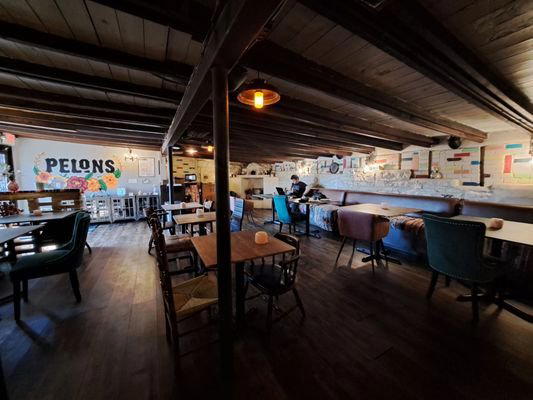
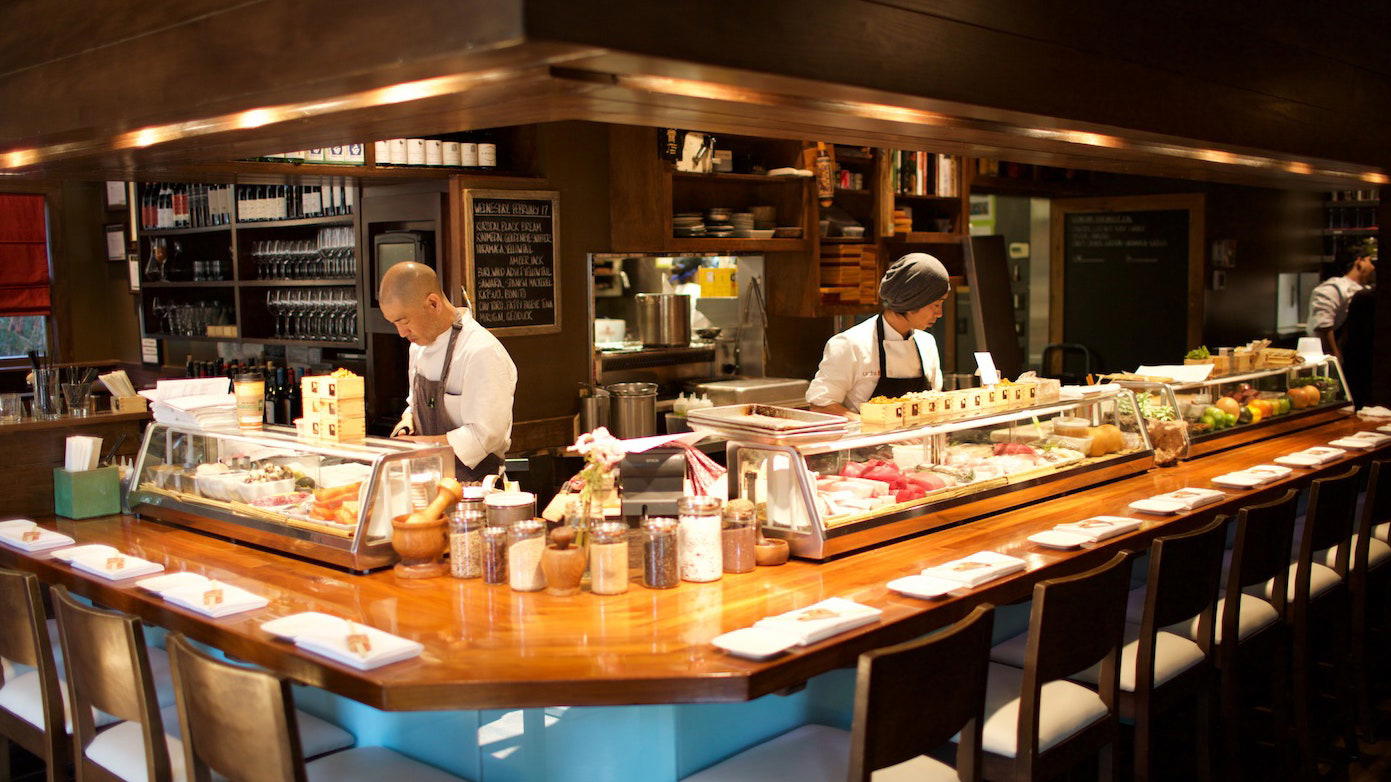
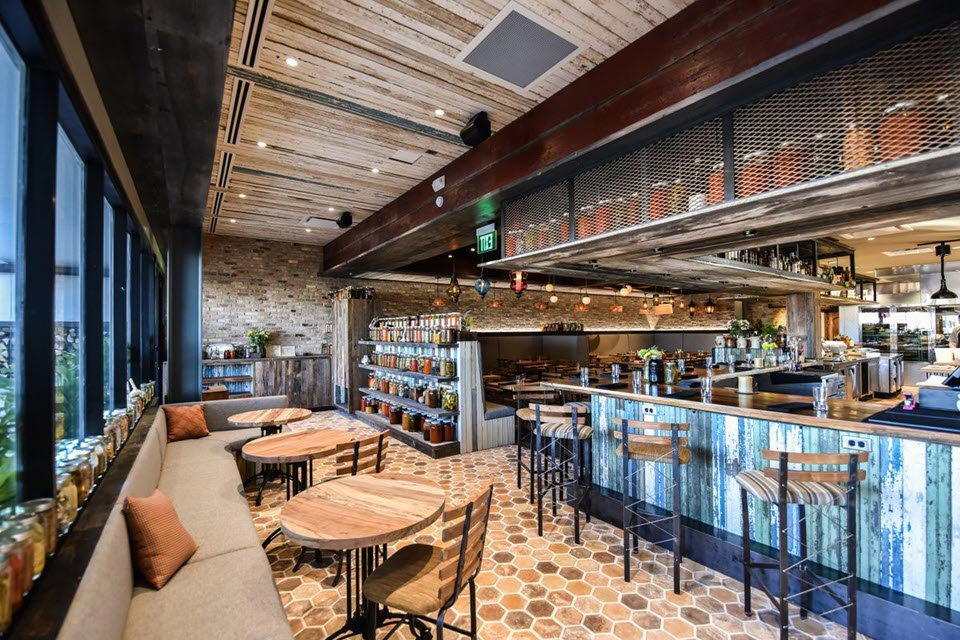
Bars in Austin
All bars in Austin →









Details
- Cozy
- Trendy
- Intimate
- Rustic
- Date Night
- Special Occasion
- Open Kitchen
- Extensive Wine List
- Local Sourcing
- A La Carte
- Small Plates
Current opening hours
- Monday
- Closed
- Tuesday
- 5–9:30 PM
- Wednesday
- 5–9:30 PM
- Thursday
- 5–9:30 PM
- Friday
- 5–10:30 PM
- Saturday
- 5–10:30 PM
- Sunday
- 10:30 AM–2:30 PM
Hours can change for holidays and private events. Hours as of .
Cozy and neighborhood feel with an open kitchen view, comfortable yet eclectic with a rustic, non-pretentious atmosphere.