Floral Restaurant- 繁花
Floral Restaurant (繁花) occupies a quietly significant address at 63 Cooper Square in Manhattan's East Village, where Chinese culinary tradition meets contemporary technique at a level rarely seen in New York's broader fine-dining circuit. The name, 繁花, meaning 'blooming flowers', signals an aesthetic philosophy that runs through the room and the plate alike. For those tracking where serious Chinese fine dining is moving in New York, this address belongs on the list.
- Address
- 63 Cooper Sq, New York, NY 10003
- Phone
- +19174770059
- Website
- fanhuafloral.com
- Directions
- Get directions
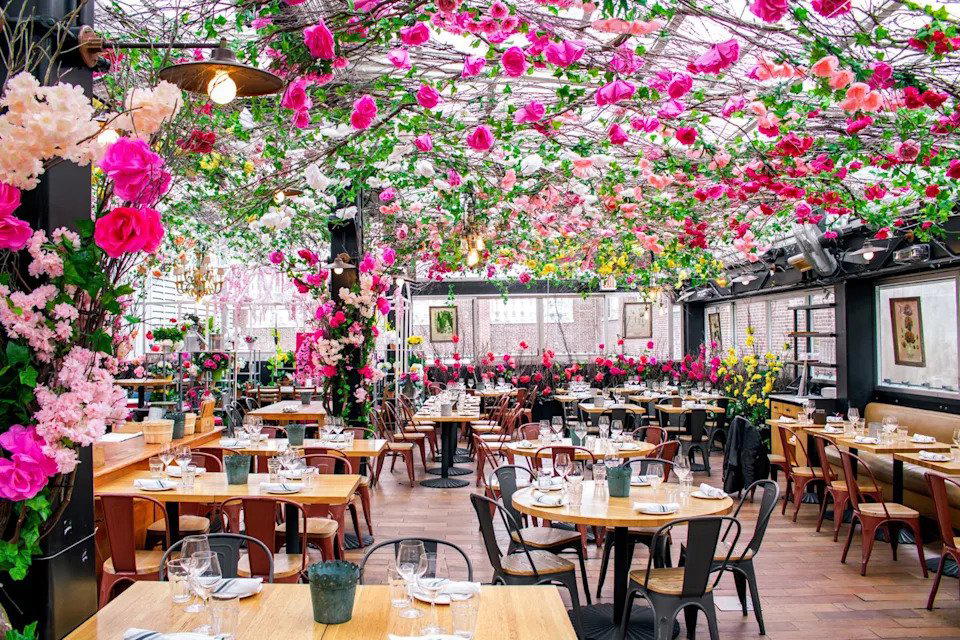
Where East Village Meets the Upper Register of Chinese Fine Dining
New York's fine-dining map has long been anchored by French and Japanese kitchens. The restaurants that consistently draw comparison in the top tier, Le Bernardin, Masa, Per Se, Eleven Madison Park, share a common thread: they operate within established Western or Japanese critical frameworks that critics and award bodies know how to evaluate. Chinese fine dining has historically sat outside that framework in New York, even as the cuisine's technical depth rivals any tradition on the planet. Floral Restaurant (繁花) at 63 Cooper Square in New York City's East Village represents a correction to that gap, positioning itself where serious Chinese cooking and the language of contemporary fine dining occupy the same room.
The Intersection of Imported Technique and Chinese Culinary Logic
The broader shift happening across ambitious Chinese kitchens in North America involves the application of European and Japanese fine-dining structures, tasting-menu format, brigade discipline, plating precision, onto a culinary tradition that has its own equally rigorous set of references. This is not fusion in the lazy, mid-2000s sense. It is closer to what happened when Japanese chefs absorbed French technique in the 1970s and 1980s and produced something that belonged entirely to neither tradition and fully to both. The result, when executed with discipline, is a category of cooking that draws on centuries of Chinese flavor theory, the management of umami through fermentation, the use of aromatics like aged Shaoxing wine and Sichuan pepper in layered rather than blunt application, while deploying the plating vocabulary and sourcing logic that Western diners recognize from kitchens like Smyth in Chicago or Single Thread Farm in Healdsburg.
Floral Restaurant engages with this framework at Cooper Square, where the East Village's density of serious independent restaurants provides a neighborhood context that rewards ambition without the midtown expectation of spectacle. The address, 63 Cooper Square, places it close enough to NYU's academic corridor to draw a cosmopolitan crowd, but far enough from the Michelin-tourist circuit to maintain a local identity. Restaurants operating in this register in other cities, like Lazy Bear in San Francisco or Providence in Los Angeles, often build their reputations through a combination of critical attention and word-of-mouth among a food-literate audience.
Chinese Cuisine and the Local-Ingredient Question
One of the more interesting tensions in contemporary Chinese fine dining in North America involves sourcing. Traditional Chinese cooking is deeply ingredient-specific: Yunnan black truffles, Shandong abalone, Jinhua ham. These are not interchangeable with local substitutes. The serious kitchens working in this space have had to develop a position on that tension, whether to import the canonical ingredients, to find North American analogs, or to build menus that do both depending on the dish. Kitchens that have resolved this most convincingly tend to treat local American ingredients as the primary material and apply Chinese technique as the primary method, rather than the reverse. This is the approach that produces cooking with genuine authority: a Long Island duck prepared with the slow-braising logic of Hong Kong roast culture, or a Hudson Valley foie gras treated through the lens of Cantonese steaming. The parallel in the broader American farm-to-table tradition is visible at places like Blue Hill at Stone Barns in Tarrytown, where the sourcing argument is itself the main editorial point of the menu.
For reference points further afield, the kitchens that have navigated this most rigorously in the European context include Atelier Moessmer Norbert Niederkofler in Brunico, which applies strict regional-sourcing logic to Alpine Italian cooking, and Dal Pescatore in Runate, where generational commitment to a regional tradition produces cooking of deep contextual authority. The question for Chinese fine dining in New York is whether the same depth of commitment is achievable in a diaspora context. The address and positioning suggest the attempt is being made seriously.
comparable set and Critical Context
In New York, the closest critical comparison for what Floral Restaurant is attempting is Atomix, where Korean culinary tradition meets tasting-menu fine-dining structure at the level that has attracted sustained Michelin attention. The Korean fine-dining moment in New York, and in the broader American context, demonstrated that a non-Western culinary tradition, presented through a format that award bodies recognize, can achieve the highest critical recognition. The Chinese fine-dining equivalent of that moment has been slower to arrive in New York than in cities like San Francisco or Los Angeles, in part because New York's Chinese restaurant culture has been dominated by regional specialists and neighborhood institutions rather than format-driven fine-dining projects. Floral Restaurant's positioning at Cooper Square, under the name 繁花, suggests an ambition to occupy the space that has been waiting.
Comparable ambition in other American cities can be tracked through restaurants like Addison in San Diego, which achieved Michelin three-star status by applying California produce logic to French technique, and The French Laundry in Napa, which remains the benchmark for what sustained technical commitment looks like over decades. In the mid-range fine-dining context, Frasca Food and Wine in Boulder and Emeril's in New Orleans both illustrate how regional identity, when handled with specificity rather than sentiment, produces restaurants with genuine staying power. The Inn at Little Washington adds another data point: longevity and a clearly stated culinary philosophy, held consistently, are the factors that move a restaurant from critical curiosity to institutional status.
Planning Your Visit
Floral Restaurant (繁花) is located at 63 Cooper Square, New York, NY 10003, in Manhattan's East Village. Dress: smart casual. Reservations are recommended.
Price and Positioning
Comparable venues nearby, for context on price, style, and recognition.
| Venue | Cuisine | Price | Notes |
|---|---|---|---|
| Floral Restaurant- 繁花This venue — the venue you are viewing | East Village, Modern Chinese Hotpot | Not listed | Not listed |
| Nom Wah Tea Parlor | Not listed | $$ | Chinatown-Two Bridges, Hong Kong-Style Dim Sum |
| Tim Ho Wan Hell's Kitchen | Hell's Kitchen, Hong Kong-Style Dim Sum | $$ | Not listed |
| Chun Vegetarian | Not listed | $$ | Bedford-Stuyvesant (West), Chinese Vegetarian |
| Royal Seafood | Not listed | $$ | SoHo-Little Italy-Hudson Square, Cantonese Dim Sum |
| Wok In Duane | Not listed | $$ | Tribeca-Civic Center, Modern Pan-Asian Wok |
Continue exploring
More in New York City
Restaurants in New York City
Browse all →

Bars in New York City
Browse all →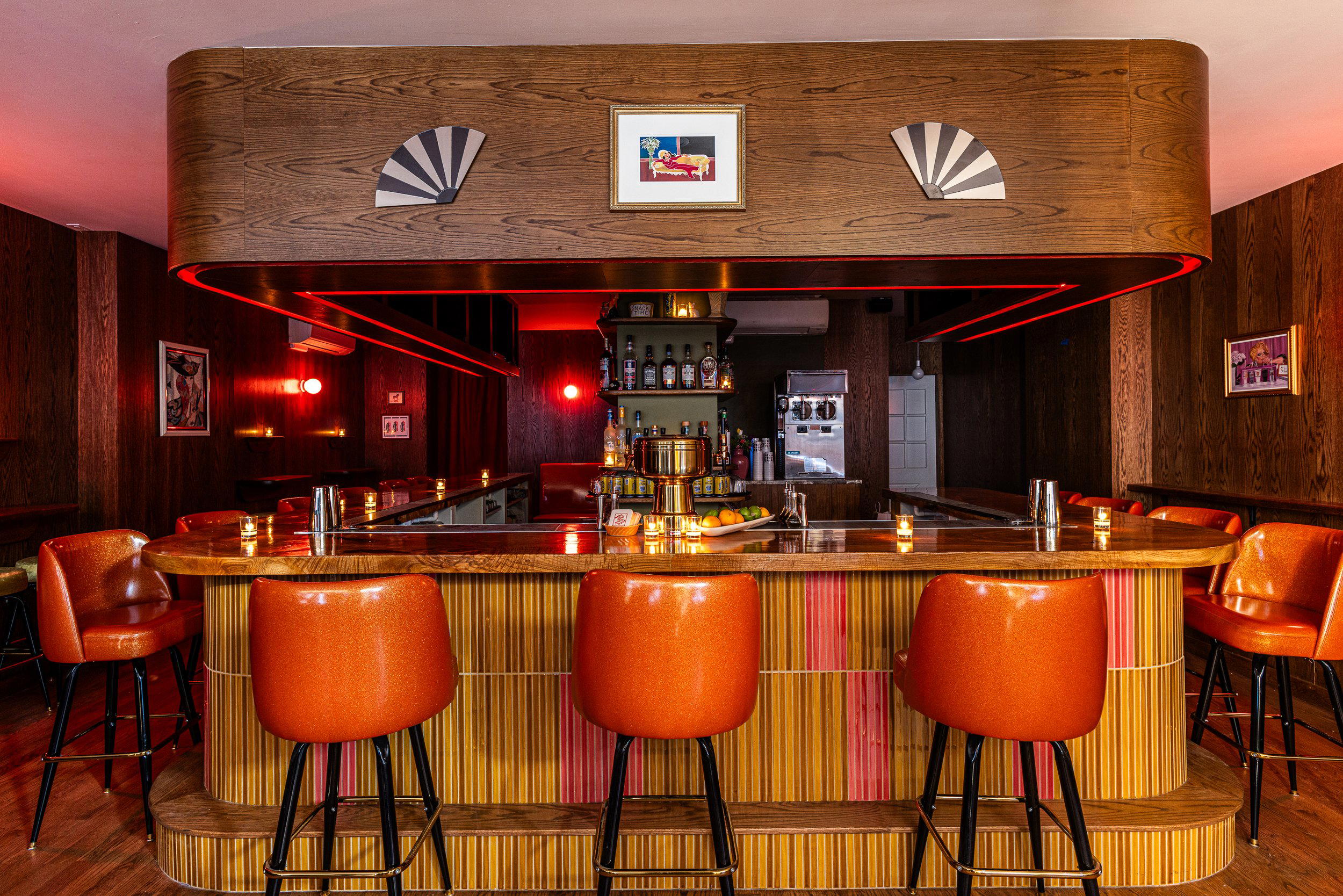
Hotels in New York City
Browse all →








At a Glance
- Date Night
- Group Dining
- Celebration
- Design Destination
- Craft Cocktails
Elegant and nostalgic atmosphere with retro decorations like vintage telephones, record players, and bubble light rooms for photos.