Tim Ho Wan Hell's Kitchen
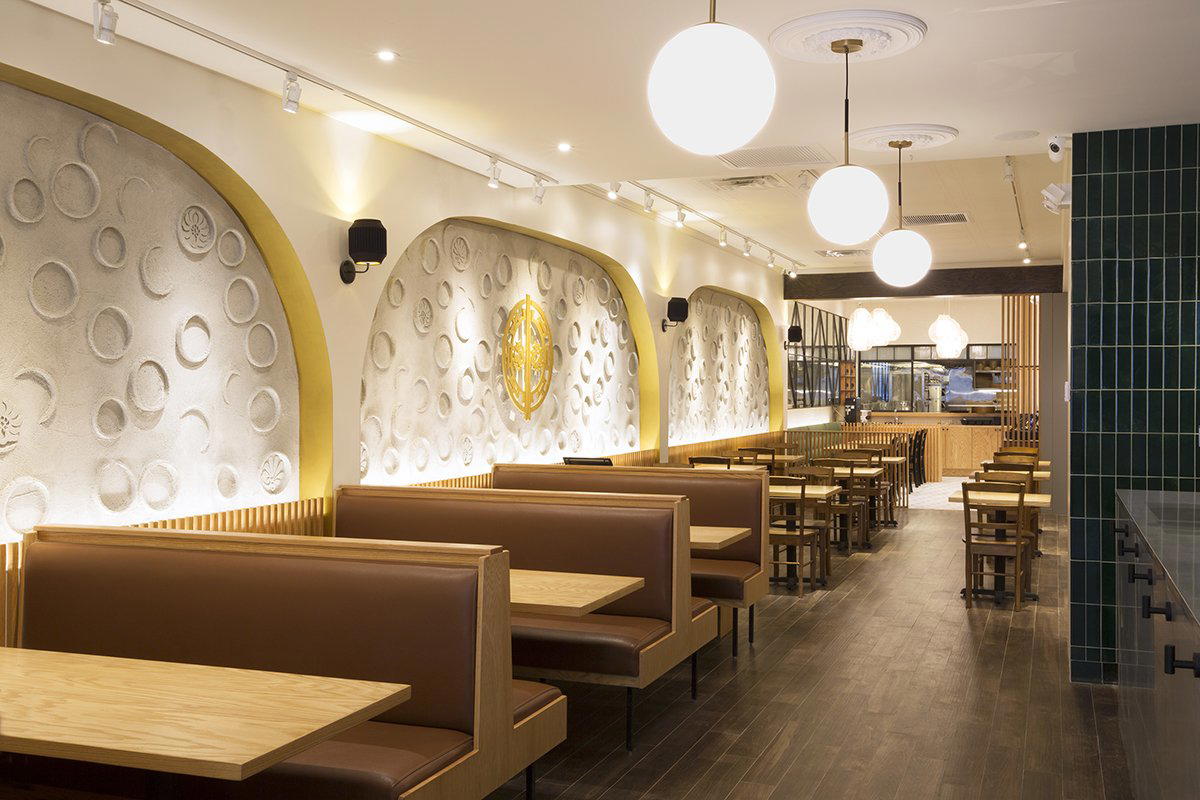
Tim Ho Wan's Hell's Kitchen outpost brings the Hong Kong dim sum institution's Michelin-recognized format to Ninth Avenue, where the combination of accessible pricing and disciplined kitchen technique has built one of Midtown's more consistent casual followings. The baked BBQ pork buns that earned the original its reputation travel well across menus and cities.
Pearl is the En Primeur Club membership app — saves, bookings, and concierge access live there. Same editors, same standards.
- Address
- 610 9th Ave, New York, NY 10036
- Phone
- +1 212 228 2802
- Website
- timhowanusa.com

When Hong Kong's Cheapest Michelin Star Arrived in Midtown
Tim Ho Wan is a Hong Kong-style dim sum restaurant in Hell's Kitchen, New York City, with a price tier of about $25 per person. That original star, earned by the Hong Kong outpost, reframed what low-cost dim sum could mean in terms of kitchen discipline. The Hell's Kitchen location at 610 9th Ave serves a clientele that ranges from tourists working through a checklist to Ninth Avenue regulars who have settled into a rotation of dishes they order without consulting the menu. In a neighborhood where dim sum has no deep historical roots, Tim Ho Wan represents a deliberate transplant of a proven format rather than an organic local tradition.
The Ninth Avenue Context
Hell's Kitchen has never been a natural home for Cantonese cooking. The neighborhood's culinary character skews toward the quick and international, serving pre-theater crowds, midtown office workers, and a dense residential population that wants reliability over ceremony. The dim sum format fits that demand well: the meal is inherently modular, priced by item, and requires no particular occasion to justify. What Tim Ho Wan offers on Ninth Avenue is something that almost no other option in the immediate vicinity provides, which is a kitchen organized around steam baskets and char siu pastry rather than burgers or Italian-American standards. For context, the closest concentration of traditional dim sum remains downtown in Chinatown or across the East River in Flushing. The Hell's Kitchen address answers a geographic gap as much as a culinary one.
New York's dim sum geography matters here. Flushing and Chinatown carry decades of accumulated technique, family-run kitchens, and the cart-service ritual that defines the traditional weekend format. Tim Ho Wan operates on a different model: no carts, a printed menu, and a streamlined kitchen designed for throughput. That approach has trade-offs. The experience is less theatrical than a traditional dim sum hall, but it runs faster and requires no knowledge of when the shrimp dumpling cart will pass again. For regulars who prioritize the food over the format, that trade-off reads as a reasonable one.
What Keeps the Regulars Returning
The editorial angle at any Tim Ho Wan location is less about discovery and more about confirmation. The people who return regularly are not returning because the menu surprises them. They are returning because the baked BBQ pork buns, the item most closely associated with the brand since its Mong Kok origins, meet a consistent standard. In a category where quality drifts between visits at many operations, consistency is the actual product being sold. That is the implicit contract Tim Ho Wan has with its repeat clientele: not revelation, but reliability at a price point that makes frequency possible.
The loyalty dynamic at accessible dim sum operations differs substantially from what drives regulars at New York's tasting menu tier. At Le Bernardin, Atomix, or Per Se, returning guests are often seeking a specific occasion or a known luxury at a known price. At Tim Ho Wan, the return visit is frictionless: no dress code consideration, no tasting menu commitment, no reservation required in many cases. The barrier is low enough that regulars can treat it as a weeknight option, which is precisely how a dependable neighborhood following builds in Midtown. Compare that dynamic to what makes someone a regular at Masa or Eleven Madison Park, and the distinction becomes clear: those are occasion restaurants. Tim Ho Wan is a Tuesday restaurant, and in New York, Tuesday restaurants build the denser following.
The menu at any well-established Tim Ho Wan location centers on a core set of items that experienced visitors tend to return for. The baked BBQ pork bun is the obvious anchor. Beyond that, the steamed items, particularly the har gow and siu mai, represent the kitchen's technical baseline: thin wrappers, correctly seasoned filling, proper steam timing. These are the dishes that dim sum regulars use to calibrate any new kitchen, and at Tim Ho Wan they are the ones that have sustained the brand's credibility across its international expansion.
Tim Ho Wan Among New York's Broader Restaurant Map
Placing Tim Ho Wan in New York's restaurant picture requires category separation. The city's highest-profile restaurants operate at a different register entirely. Blue Hill at Stone Barns in nearby Tarrytown, Eleven Madison Park in the Flatiron district, and the broader network of multi-course destinations documented in our full New York City restaurants guide occupy a different tier of investment, both financial and temporal. Tim Ho Wan's comparable set is not those rooms. Its comparable set is the category of accessible, technically disciplined operations that have achieved enough consistency to generate genuine repeat business without relying on occasion-driven traffic.
Across the United States, this kind of operation sits in interesting contrast to destination restaurants: Lazy Bear in San Francisco, The French Laundry in Napa, Smyth in Chicago, Single Thread Farm in Healdsburg, Providence in Los Angeles, Addison in San Diego, Emeril's in New Orleans, The Inn at Little Washington, and Frasca Food and Wine in Boulder all represent high-investment, high-ceremony dining. Even internationally, restaurants like Atelier Moessmer Norbert Niederkofler in Brunico and Dal Pescatore in Runate operate at the ceremonial end of the spectrum. Tim Ho Wan's proposition is the opposite: all the kitchen discipline, almost none of the ceremony, at a price that makes the math work for weekly visits.
Know Before You Go
Address: 610 9th Ave, New York, NY 10036
Neighborhood: Hell's Kitchen, Midtown Manhattan
Price tier: Low to moderate (dim sum pricing by basket)
Reservations: Walk-ins are commonly available
Leading approach: Arrive at off-peak hours to avoid pre-theater queues on weeknights
Getting there: Accessible from the A/C/E lines at 42nd St-Port Authority or the 1/2/3 at 50th St
Category Peers
Comparable venues nearby, for context on price, style, and recognition.
| Venue | Cuisine | Price | Awards | Notes |
|---|---|---|---|---|
| Tim Ho Wan Hell's KitchenThis venue — the venue you are viewing | Hong Kong-Style Dim Sum | $$ | , | |
| Rulin | Modern Chinese Hand-Pulled Noodles | $$ | , | Union Square |
| Mazu Szechuan Cuisine | Elevated Szechuan Cuisine | $$ | , | Murray Hill-Kips Bay |
| Pig Heaven | Taiwanese-Style Chinese with Pork Specialties | $$ | , | Upper East Side-Carnegie Hill |
| Tim Ho Wan East Village | Hong Kong Style Dim Sum | $$ | , | East Village |
| Chun Vegetarian | Chinese Vegetarian | $$ | , | Bedford-Stuyvesant (West) |
Continue exploring
More in New York City
Restaurants in New York City
Browse all →Bars in New York City
Browse all →Hotels in New York City
Browse all →At a Glance
- Lively
- Casual
- Family
- Group Dining
- Casual Hangout
- Brunch
- Open Kitchen
- Sake Program
Vibrant and casual atmosphere perfect for families and groups with brisk, friendly table service.