Nom Wah Tea Parlor

Our verdict
Nom Wah Tea Parlor on Doyers Street has anchored Chinatown's dim sum tradition since 1920, making it one of the oldest continuously operating Chinese restaurants in New York City. The kitchen turns out a menu of traditional Cantonese small plates in a room that reads more like a working lunch counter than a tourist destination. Practical, consistent, and deeply tied to the neighbourhood's food history.

Pearl is the En Primeur Club membership app, where members save venues, book tables and use the concierge.
The menu
What to order
- House Special Roast Pork Bun
- Pork Siu Mai
- Shrimp and Snow Pea Leaf Dumplings
- Rice Rolls with Spare Ribs
- Turnip Cake
Doyers Street and the Dim Sum Continuum
Doyers Street occupies a peculiar position in Lower Manhattan's food geography. The curved, narrow block connecting Pell Street to the Bowery has been central to Chinatown's social life for well over a century, and it is on this block that Nom Wah Tea Parlor has operated since 1920. That date places it before the post-war immigration waves that reshaped the neighbourhood, before the Hong Kong-style dim sum boom of the 1980s and 1990s, and well before the recent generation of modernist Chinese restaurants that have drawn fresh critical attention to the cuisine in New York. Whatever else changes around it, Nom Wah remains at 13 Doyers St as a fixed reference point in the city's Chinese dining history.
The broader context matters here. New York's Chinese restaurant scene has split over the past two decades between the banquet-hall tradition, the fast-casual dumpling category, and an emerging tier of technique-forward modern Chinese kitchens. Nom Wah doesn't occupy any of those categories cleanly. It sits instead in the classical Cantonese tea parlor tradition, where the social ritual of yum cha, tea drinking accompanied by small plates, is the organizing principle rather than the meal format itself. That tradition is practiced widely across the Chinese diaspora but rarely survives in cities as an institutional form. The fact that it persists on Doyers Street in recognisable shape is an editorial point worth making plainly.
The Cantonese Grammar of Small Plates
Dim sum's culinary logic is older than any individual restaurant. The category originated in Southern Chinese teahouse culture, where small portions of steamed, fried, and baked preparations were designed to accompany tea rather than constitute a meal in themselves. What arrived in New York through successive waves of Cantonese immigration was a compressed, adapted version of this tradition, one that absorbed local ingredients and American lunch-counter timing while keeping the core format intact. Nom Wah's kitchen works inside that inherited grammar: the repertoire is anchored in Cantonese technique, with steamed dumplings, rice noodle rolls, and baked preparations forming the structural backbone of the menu.
The intersection of imported method and local context is where dim sum's American story gets interesting. Cantonese chefs arriving in mid-century New York didn't have access to the same ingredients or equipment available in Guangdong. Adjustments were made, sourcing shifted, and what emerged in kitchens like Nom Wah's was a distinctly New York Cantonese idiom: technically rooted in Southern Chinese tradition, but calibrated to what the city's supply chains and customer base actually looked like. That calibration has continued through subsequent decades and kitchen generations. The result is neither a museum piece nor a modern reinvention but something more durable: a working restaurant that has absorbed change without abandoning the form that defines it.
For readers oriented toward the high-end tasting menu tier, the comparative frame is useful. Restaurants like Atomix or Jungsik New York sit in a bracket where Korean culinary tradition is reframed through fine dining architecture. The conversation at Le Bernardin, Per Se, or Masa operates at a price point and formality level that places those rooms in a different category entirely. Nom Wah's position in the city's dining ecosystem is not that. It functions as a neighbourhood institution with accessible pricing, a counter-service or light table-service format, and a menu built on repetition and consistency rather than seasonal reinvention. Both modes of dining have their place. The mistake is evaluating one against the criteria of the other.
Neighbourhood, Timing, and the Practical Case
Chinatown's boundaries have shifted considerably over the past three decades. The neighbourhood absorbed waves of Fujianese immigration beginning in the 1990s, which diversified its restaurant culture considerably and introduced regional Chinese cuisines that existed nowhere else in the city at comparable quality or price. Cantonese dominance in the blocks around Doyers and Mott has been tempered by this diversity, making the area more interesting as a dining destination even as individual Cantonese institutions have faced pressure. Nom Wah's longevity within this shifting context speaks to its function as an anchor rather than a specialist newcomer.
Practically, the restaurant draws both neighbourhood regulars and visitors arriving from elsewhere in the city. Weekend mornings trend busier, in keeping with the yum cha tradition where dim sum functions as a late morning or early afternoon meal rather than a dinner format. Arriving before the late-morning rush on a weekday offers a quieter experience and shorter waits. The address at 13 Doyers St is accessible from the Canal Street subway stations on multiple lines, placing it within easy reach of most Manhattan neighbourhoods. No reservation infrastructure is needed for solo diners or small parties willing to work around peak hours.
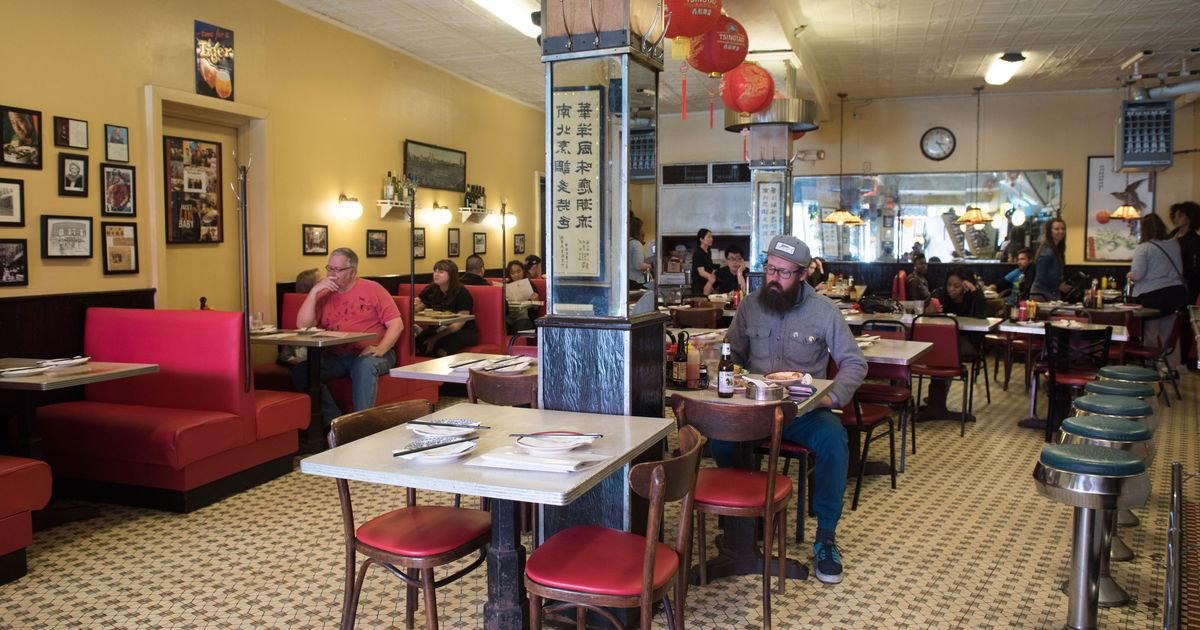
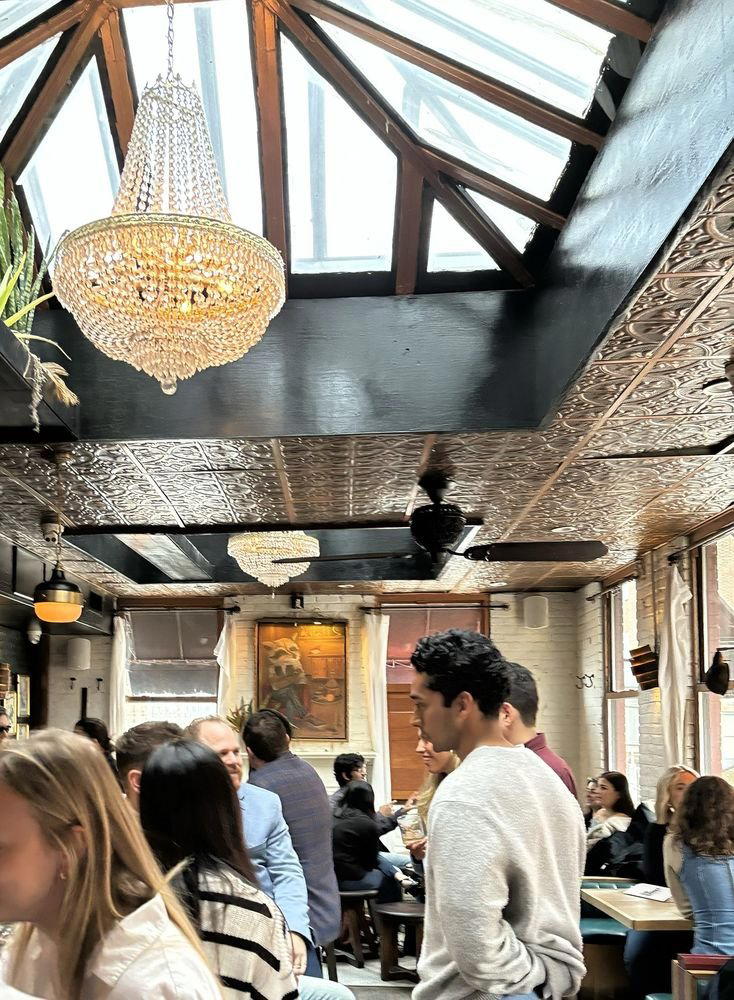
The current ownership era, which brought the restaurant to a new generation's attention in the early 2010s, preserved the room's vintage character while stabilising operations. The physical space retains the feel of an earlier period in New York Chinese dining: a narrow room with booths and counter seating, walls that carry decades of accumulated character, and a pace that hasn't been smoothed into hospitality-industry efficiency. That character is now something of a rarity in a city where comparable spaces have been converted or replaced.
For readers building out a broader American dining itinerary beyond New York, the contrast is instructive. Destination restaurants like The French Laundry in Napa, Alinea in Chicago, or Blue Hill at Stone Barns in Tarrytown each represent the tasting-menu tier's engagement with American ingredients and technique. At the other pole of the same question, places like Nom Wah show how immigrant foodways established in the early twentieth century have maintained continuity across a very different kind of culinary century. Both are worth understanding as part of any serious account of how America eats. The same observation applies when you compare experiences across cities: Lazy Bear in San Francisco, Providence in Los Angeles, Single Thread Farm in Healdsburg, Emeril's in New Orleans, Addison in San Diego, Bacchanalia in Atlanta, and The Inn at Little Washington all represent different answers to the question of what an American restaurant can be. Internationally, 8 1/2 Otto e Mezzo Bombana in Hong Kong and Alain Ducasse at Louis XV in Monte Carlo each represent how culinary tradition gets codified at the highest formal tier. Nom Wah's contribution is less formal and more embedded: a continuous thread of Cantonese practice running through a century of New York City life. See our full New York City restaurants guide for broader context on how the city's dining categories map across neighbourhoods and price points.
Frequently asked questions
Where is Nom Wah Tea Parlor in New York City?
Nom Wah Tea Parlor is located at 13 Doyers St, New York, NY 10013, New York City.
How does Nom Wah Tea Parlor compare to other dim sum destinations in New York City?
Nom Wah occupies a different position from the large-format Cantonese banquet halls in Flushing, Queens, which tend to offer broader trolley service and higher table turnover. At 13 Doyers St in Manhattan's Chinatown, the parlor is smaller in scale and carries a historical identity tied to the neighbourhood's early Chinese immigrant settlement. For visitors based in Lower Manhattan, it represents the most historically rooted dim sum option within walking distance of the Bowery.
What's the signature dish at Nom Wah Tea Parlor?
Nom Wah's identity is anchored in traditional Cantonese dim sum formats rather than a single marquee dish. The parlor at 13 Doyers St has built its menu around the teahouse tradition of small plates served through the day, spanning dumplings, rice noodle rolls, and steamed buns. Specific current menu items and pricing are best confirmed directly with the venue before visiting.
Is Nom Wah Tea Parlor reservation-only?
Nom Wah Tea Parlor on Doyers Street has historically operated as a walk-in counter-service and table-service destination, consistent with the dim sum teahouse format. Given its location on one of Chinatown's most concentrated dining blocks, wait times during weekend lunch hours can be considerable. check the venue's official channels for current reservation or queuing policy.
What has Nom Wah Tea Parlor built its reputation on?
Nom Wah's standing in New York City's Chinatown traces to its position as one of the oldest continuously operating dim sum parlors on the Lower Manhattan circuit. Its address at 13 Doyers St, a block with documented ties to early 20th-century Chinese immigrant life, gives the venue a historical grounding that newer Flushing and sunset Park dim sum halls lack. The reputation rests on continuity and Cantonese teahouse format, not Michelin recognition or a named chef.
Nearby-ish Comparables
Comparable venues nearby, for context on price, style, and recognition.
| Venue | Cuisine | Price | Notes |
|---|---|---|---|
| Nom Wah Tea ParlorThis venue (the venue you are viewing) | Hong Kong-Style Dim Sum | $20–30 | Not listed |
| Baohaus | Taiwanese Gua Bao & Street Food | $30–50 | East Village |
| Hey Yuet | Traditional Cantonese Dim Sum | $30–50 | Chelsea-Hudson Yards |
| Mazu Szechuan Cuisine | Elevated Szechuan Cuisine | Not listed | Murray Hill-Kips Bay |
| Vybes 109 ï¼æ°æ´¾é æ¥¼ï¼ | Southern Style Chinese | Not listed | SoHo-Little Italy-Hudson Square |
| Atlas Kitchen | Modern Chinese (Hunan & Sichuan) | Not listed | Morningside Heights |
Recognition history
Dated appearances from independent guides and award organizations, with the underlying list record or original source where available.
Opinionated About Dining Casual in North America Recommended
Opinionated About Dining
Continue exploring
More in New York City
Restaurants in New York City
All restaurants in New York City →
Bars in New York City
All bars in New York City →





Details
- Well Known
- Classic
- Lively
- Group Dining
- Casual Hangout
- Brunch
- Historic Building
- Standalone
- A La Carte
- Family Style
- Tea
- Vegetarian Friendly
- Vegan Options
- Allergy Accommodating
Current opening hours
- Monday
- 11 AM–9 PM
- Tuesday
- 11 AM–9 PM
- Wednesday
- 11 AM–9 PM
- Thursday
- 11 AM–9 PM
- Friday
- 11 AM–9 PM
- Saturday
- 11 AM–9 PM
- Sunday
- 11 AM–9 PM
Hours can change for holidays and private events. Hours as of .
Nostalgic diner atmosphere with a casual, bustling energy reflecting its century-old heritage as a neighborhood staple.