Royal Seafood
On Mott Street in the heart of Manhattan's Chinatown, Royal Seafood occupies a well-worn place in the neighborhood's banquet-hall tradition, drawing families and groups for occasion dining anchored in classic Cantonese seafood. The format runs to shared plates, whole fish, and live-tank selections that define the genre across this stretch of lower Manhattan.
Pearl is the En Primeur Club membership app — saves, bookings, and concierge access live there. Same editors, same standards.
- Address
- 103 Mott St, New York, NY 10013
- Phone
- +12122192338
- Website
- royalseafoodorder.com
- Directions
- Get directions
 Saves & bookings on Pearl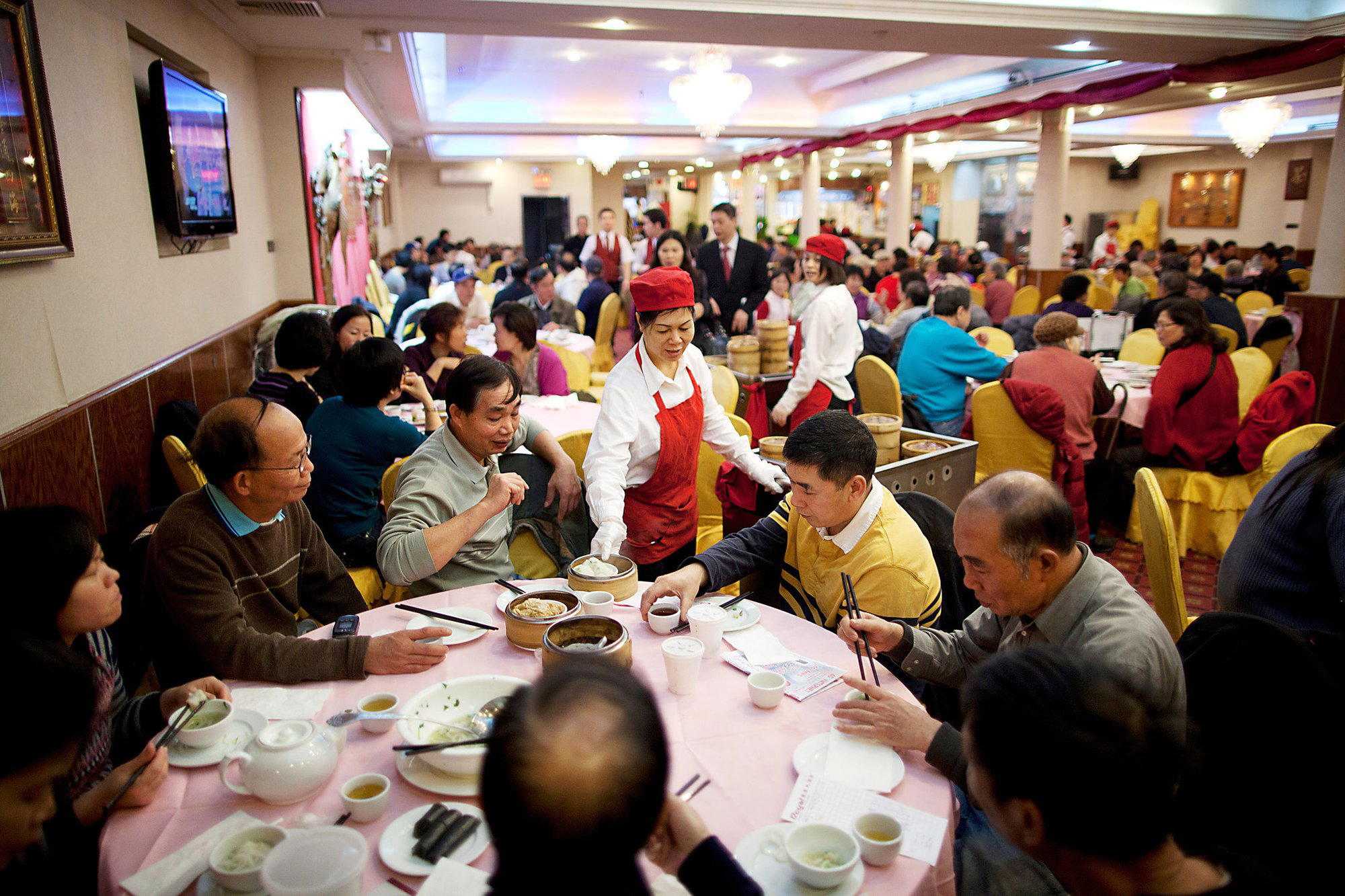
Chinatown's Banquet Tradition, Table by Table
Mott Street does not announce itself as a dining destination the way Midtown's fine-dining corridors do. The street runs through the oldest continuously operating Chinatown in the United States, and the dining culture here has its own internal logic: large round tables, lazy Susans stacked with shared plates, whole fish arriving to mark the midpoint of a meal, and a noise level that reads as festivity rather than chaos. Royal Seafood is a Cantonese dim sum restaurant at 103 Mott St in New York City, priced around $25 per person, and it sits inside that tradition rather than apart from it. Understanding what to expect here means understanding the Cantonese banquet format that shaped this neighborhood's restaurant culture across generations.
That format has a specific grammar. Occasion meals in this register, birthdays, Lunar New Year gatherings, wedding banquets, graduations, follow a sequence of cold appetizers, soup, whole proteins, stir-fried vegetables, and a starch course at the end. The logic is communal: dishes arrive at the table's center, everyone serves everyone else, and the meal's length is determined by the number of people rather than a fixed tasting sequence. It is a structure that resists the single-diner format entirely, and it rewards groups who know to let the kitchen lead with whatever is fresh from the live tanks that morning.
Occasion Dining in Lower Manhattan's Most Durable Format
New York's milestone-meal market has splintered in recent years. On one end, restaurants like Le Bernardin, Per Se, and Masa command prix-fixe prices that place them in a bracket most diners reserve for once-a-year meals. On the other, the Chinatown banquet houses have maintained a different kind of occasion authority, one rooted in family scale, culinary tradition, and the sociability of the round table. A ten-person birthday dinner at a Cantonese seafood restaurant on Mott Street carries a different cultural weight than a reservation at Atomix or Jungsik New York, but it is no less deliberate as a choice of setting.
The Cantonese seafood house as an occasion venue has an advantage that tasting-menu restaurants do not: it scales. A group of six and a group of twenty can both be served within the same format, with the kitchen adjusting the number of dishes rather than the structure of the meal. Lunar New Year season, which runs through late January and February, represents the calendar peak for this kind of dining across Chinatown. Restaurants along Mott and Canal fill weeks in advance during that window, with multi-generational tables booking the larger round tables for reunion dinners that are as much ritual as meal.
What the Live-Tank Menu Signals
The presence of live tanks in a Cantonese seafood restaurant is a logistical commitment that shapes the menu's character. Maintaining healthy lobster, crab, fish, and shellfish in holding tanks requires daily supply management and a kitchen prepared to dispatch and cook to order. In the Chinatown tradition, the tank selection is both a quality signal and a menu anchor: the freshest item is whatever swam that morning, and the preparation methods, steamed with ginger and scallion, baked with salt and garlic, stir-fried with black bean sauce, are calibrated to let the protein carry the plate rather than mask it.
Across North America's Cantonese seafood houses, the live-tank approach has remained a marker of the category's more serious practitioners. The same philosophy, scaled up and refined, underlies the approach at destination seafood restaurants from Providence in Los Angeles to Emeril's in New Orleans, the idea that proximity to live product defines the ceiling of what a kitchen can achieve. At the Chinatown banquet-house level, that ceiling is expressed in the directness of the cooking.
The Neighborhood Context
Chinatown's restaurant culture has absorbed decades of external pressure, rising rents, demographic shifts, competition from Flushing's newer Chinese dining corridors, without losing its density or its function as a neighborhood that feeds its own community first. Mott Street in particular has resisted the homogenization that has reshaped other lower Manhattan neighborhoods. The restaurants here are not performing authenticity for tourists; they are operating within a living food culture where the regulars are often the same extended families who have been coming for decades.
That context matters for first-time visitors. The Chinatown banquet-house experience operates on different codes than the restaurant categories covered by, say, Blue Hill at Stone Barns or Alinea in Chicago. Service is efficient and task-oriented rather than explanatory. Menus may be extensive, and the Chinese-language sections sometimes carry different selections than the English menu. Arriving with a clear sense of group size, a willingness to order by table count rather than individual preference, and some appetite for the room's particular energy produces a better meal than approaching it as a conventional sit-down restaurant. For groups planning an occasion dinner in lower Manhattan, this is the operating logic of the category, not a quirk of a single venue.
Planning a Visit
Royal Seafood is located at 103 Mott St in Manhattan's Chinatown, reachable on foot from the Canal Street stop on the N, Q, R, W, J, and Z lines. The surrounding blocks hold a concentration of Cantonese and Cantonese-adjacent restaurants, and street-level browsing is part of the experience. Walk-in dining is welcome, though larger groups may still prefer to contact the restaurant in advance.
For reference points at the higher end of shared-format seafood traditions globally, 8 1/2 Otto e Mezzo Bombana in Hong Kong represents the fine-dining expression of a city where seafood occasion dining operates at an entirely different price tier. Domestically, the range runs from Single Thread Farm in Healdsburg and The French Laundry in Napa at the destination-tasting end, to Addison in San Diego, Bacchanalia in Atlanta, The Inn at Little Washington, and Lazy Bear in San Francisco, each representing a different regional answer to the question of what a special-occasion dinner should feel like. The Chinatown banquet house is its own answer to that question, and it is not a lesser one.
Same-City Peers
Comparable venues nearby, for context on price, style, and recognition.
| Venue | Cuisine | Price | Notes |
|---|---|---|---|
| Royal SeafoodThis venue — the venue you are viewing | Cantonese Dim Sum | $$ | Not listed |
| Vybes 109 ï¼æ°æ´¾é æ¥¼ï¼ | Southern Style Chinese | $$ | SoHo-Little Italy-Hudson Square |
| The Braised Shop | Taiwanese Luwei Braised Dishes | $$ | East Village |
| Ming Mun | Authentic Cantonese Dim Sum | $$ | Downtown Brooklyn-DUMBO-Boerum Hill |
| Breeze | Sichuan with Dim Sum | $$ | Greenpoint |
| La Nueva Victoria | Chinese-Cuban Fusion | $$ | Upper West Side (Central) |
Continue exploring
More in New York City
Restaurants in New York City
Browse all →
Bars in New York City
Browse all →
Hotels in New York City
Browse all →





At a Glance
- Lively
- Group Dining
- Casual Hangout
- Open Kitchen
Current opening hours
- Monday
- 9 AM–9 PM
- Tuesday
- 9 AM–9 PM
- Wednesday
- 9 AM–9 PM
- Thursday
- 9 AM–9 PM
- Friday
- 9 AM–9 PM
- Saturday
- 9 AM–9 PM
- Sunday
- 9 AM–9 PM
Hours can change for holidays and private events. Last verified .
Traditional Asian decor with a lively, packed atmosphere.