
Kyoto’s bread culture sits between daily errand and small celebration, and FLEUR DE FARINE belongs to the compact take-out tier rather than the café-lunch circuit. Its Tabelog 100 Bread WEST 2022 selection, bread-and-sandwich focus, and Karasuma Oike setting make it a practical stop for travellers building a picnic, hotel-room breakfast, or low-key occasion around craft baking.
Pearl is the En Primeur Club membership app — saves, bookings, and concierge access live there. Same editors, same standards.
- Address
- Sanmonjicho, Nakagyo Ward, Kyoto, 604-8135, Japan
- Phone
- +81752235070
- Website
- tabelog.com
 Saves & bookings on Pearl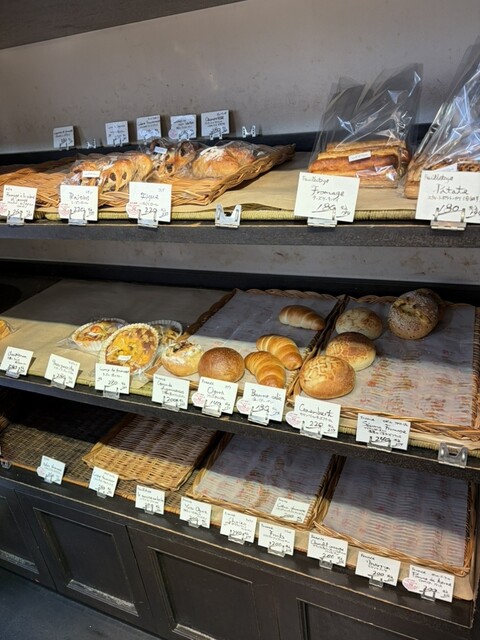
Central Kyoto has a particular rhythm around bread shops: shutters up before lunch, office workers moving between Karasuma and Oike, and travellers quietly assembling the day’s provisions before temples, trains, or check-in. The appeal is not ceremony in the dining-room sense. It is the small precision of choosing bread for later, carrying it through the city, and turning a bench, hotel desk, or riverside pause into a private occasion.
FLEUR DE FARINE fits that Kyoto pattern neatly. The format is bread and sandwiches, with take-out rather than eat-in service, so the experience belongs to the street and the itinerary rather than a table. That distinction matters in a city where milestone meals often mean kaiseki counters or formal dining rooms: not every celebration needs lacquerware. Sometimes the better move is a carefully chosen bakery stop before a train to the coast, a birthday breakfast in a machiya room, or a quiet pause between gallery appointments.
Kyoto's occasion bakery, not a café pretending to be lunch
Japanese bakery culture has long absorbed French technique, local habits, and convenience-store discipline, but Kyoto gives that mix a calmer register. Around Nakagyo, bread shops compete less through spectacle than through consistency, compact formats, and products that travel well. A bakery in this part of the city has to work for residents buying daily bread and for visitors who need something portable between reservations.
The Tabelog 100 Bread WEST 2022 selection places FLEUR DE FARINE inside a regional bread conversation rather than a generic snack category. Tabelog’s Hyakumeiten lists matter in Japan because they identify specialist venues by category and geography; bread is judged against bread, not against restaurants with tasting menus or hotel cafés. That makes the recognition useful for travellers: it signals a focused bakery with enough local traction to register beyond neighbourhood convenience.
There is also a clear decision point here. Kyoto has polished dining rooms for long celebrations, from Japanese formats such as 3TOKU6MI Shijo karasuma ten to contemporary addresses such as [ki:] and French-leaning rooms like Abbesses. A bread shop serves another purpose. It compresses the occasion into a short stop and pushes the pleasure into the rest of the day. For travellers planning several serious meals, that restraint can be the point.
The value is in format discipline
Take-out only changes how a bakery should be judged. There is no room design to rescue a weak purchase, no drinks list to extend the visit, and no service choreography to turn a simple order into theatre. The product has to justify the detour, and the customer has to know where it fits into the day. FLEUR DE FARINE’s bread-and-sandwich identity makes it useful for morning provisioning, lunch on the move, or a low-pressure celebration that avoids the weight of another reservation.
That portability is especially relevant in Kyoto, where the day often breaks into segments: museum, shrine, shopping arcade, train platform, hotel. Compared with maison de frouge, which sits in a sweeter patisserie orbit, or contemporary restaurants such as MASHIRO and SATOWA, this bakery occupies a lighter lane. The editorial distinction is not luxury versus casual; it is fixed-seat occasion versus movable occasion. One asks the guest to arrive and stay. The other lets the city become the room.
The price tier also keeps the experience grounded. This is not the performative end of dining, and it should not be treated as such. Its appeal lies in making a small spend feel intentional, especially for travellers who have already allocated serious budget to dinner. Kyoto rewards that kind of calibration. A day can include temple gardens, a formal restaurant, and a bakery stop without every pleasure being forced into the same register.
For a wider view of how this choice fits the city, Our full Kyoto restaurants guide maps the broader dining field, while Our full Kyoto hotels guide, Our full Kyoto bars guide, Our full Kyoto wineries guide, and Our full Kyoto experiences guide help place a bakery stop within the rest of the trip. Kyoto’s casual food culture also has its own spectrum, from the practical pull of 551蓬莱 to older snack traditions at Aburi Mochi Honke Nemoto Kazariya.
How to use it in a Kyoto itinerary
The smart use case is a planned interlude rather than a hungry accident. Build it into a Nakagyo morning, pair it with nearby shopping or transit, and treat the purchase as part of the day’s pacing. Because there is no eat-in format, the follow-through matters: a hotel room, a park bench, or a train ride will shape the experience as much as the bakery counter itself.
For milestone travel, that can be an advantage. Anniversaries and birthdays in Kyoto often accumulate formality quickly; a take-out bakery stop offers a softer counterweight. It suits the couple leaving a ryokan before check-in elsewhere, the solo traveller marking a personal date without a long meal, or the group that wants something considered before a later reservation. The absence of table service is not a compromise when the occasion is built around mobility.
Travellers comparing cities can think of it alongside other focused casual formats rather than fine dining rooms:.cafe in Osaka.know in Kumamoto, (Shoku) Vietnam in Kawasaki, [Curry Senmon Ten] Maruyama Kyoju. in Sapporo, -Grilled beef Sukiyaki- KAMAKURA TANUKIAN 鎌倉 たぬき庵 in Kamakura, and. 鮪と炭火焼き うお炭 秋葉原店 in Tokyo all show how Japan’s smaller food formats can carry a trip without requiring a full dining-room commitment. For readers tracing Japanese casual food abroad, Jōdo Saké Bar in Los Angeles and Onigiri Time in Pasadena extend that conversation into a different urban setting.
The critical read is simple: use the restaurant when the occasion calls for precision without ceremony. Its strength is not in replacing Kyoto’s formal meals, but in giving the day a well-judged pause between them.
At a Glance
Comparable venues to calibrate price, style, and recognition.
| Venue | Cuisine | Price | Notes |
|---|---|---|---|
| FLEUR DE FARINEThis venue — the venue you are viewing | Not listed | $ | Not listed |
| COFFEE HOUSE maki | Not listed | $ | Kamigyō, Traditional Kyoto coffee house & sandwich cafe |
| CLAMP COFFEE SARASA | Nakagyō, Specialty coffee & toast café | $ | Not listed |
| coneruya | Not listed | $ | Nakagyō, Artisanal Japanese Bakery & Cafe |
| Kashi Shokunin | Not listed | $ | Ukyō, Japanese Cake Shop / Patisserie |
| Croa | Kita, Artisanal Bakery | $ | Not listed |
Recognition history
Dated appearances from independent guides and award organizations, with the underlying list record or original source where available.
Tabelog 100 #97 · No. 97
Tabelog · Tabelog 100 - Bread - WEST - 2022
Continue exploring
More in Kyoto
Restaurants in Kyoto
Browse all →

Bars in Kyoto
Browse all →



Hotels in Kyoto
Browse all →

Wineries in Kyoto
Browse all →
At a Glance
- Cozy
- Classic
- Solo
- Casual Hangout
- After Work
- Standalone
- Design Destination
- Street Scene
Current opening hours
- Monday
- Closed
- Tuesday
- 11 AM–7 PM
- Wednesday
- 11 AM–7 PM
- Thursday
- 11 AM–7 PM
- Friday
- 11 AM–7 PM
- Saturday
- 11 AM–7 PM
- Sunday
- Closed
Hours can change for holidays and private events. Last verified .
A compact, take‑out‑only French‑style bakery tucked off Karasuma Oike, with a simple non‑smoking interior that feels like a classic neighborhood boulangerie focused on display cases of bread rather than eat‑in space.