Our verdict
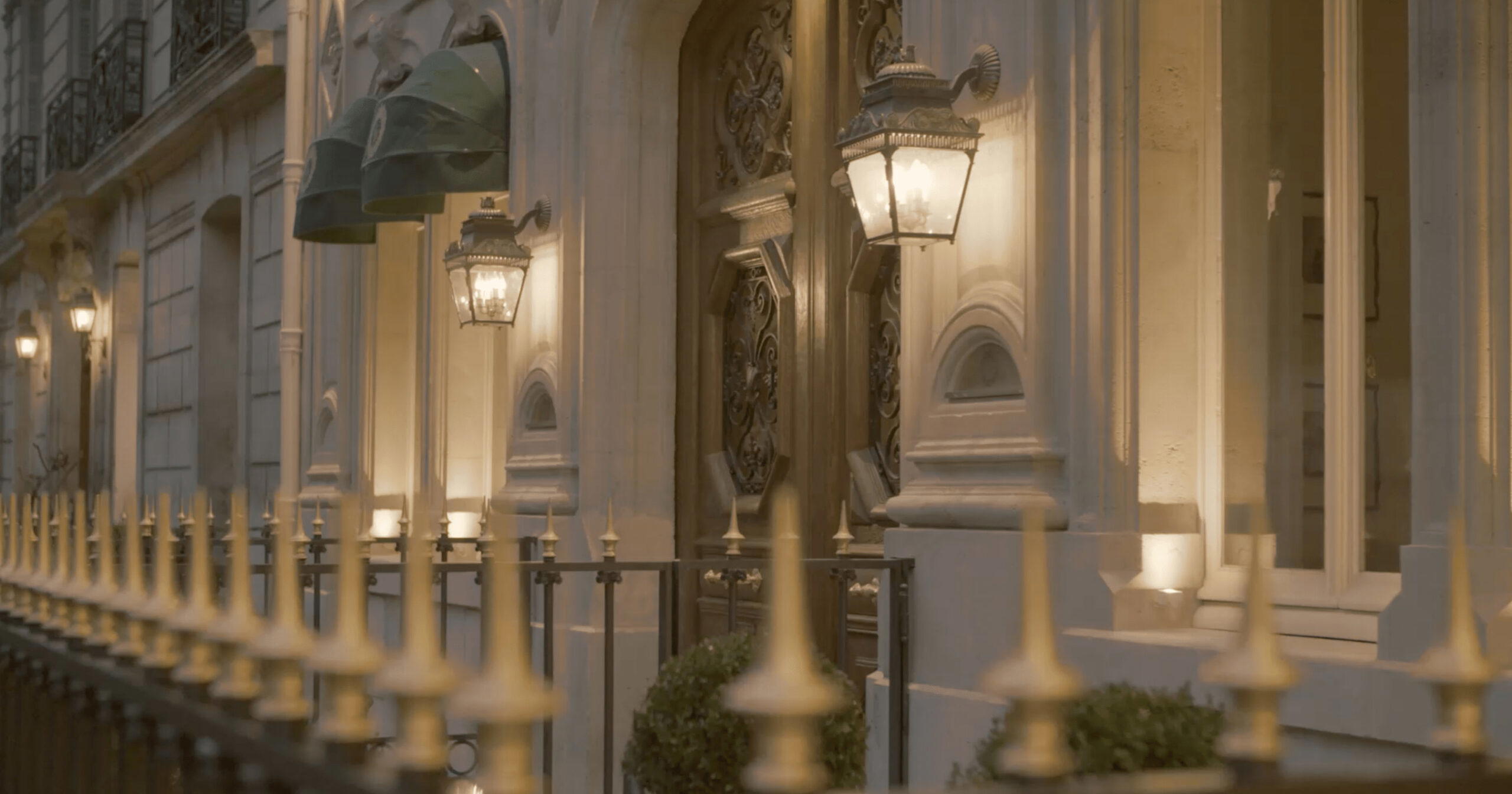
Fitzgerald occupies a discreet address on the Boulevard de la Tour-Maubourg in Paris's 7th arrondissement, a neighbourhood where the dining scene rewards those who look past the grand brasseries toward quieter, more considered rooms. The address places it squarely in the orbit of left-bank fine dining, where the meal's progression, rather than its spectacle, is the main event.

Pearl is the En Primeur Club membership app, where members save venues, book tables and use the concierge.

The menu
What to order
- Truffle Croque Monsieur
- Entrecote
- Linguine au homard
The 7th Arrondissement and the Case for Quiet Ambition
Paris's 7th arrondissement has never been the city's loudest dining district. The neighbourhood around the Invalides and the Champ-de-Mars operates at a remove from the theatre of the Champs-Élysées corridor or the dense concentration of starred addresses in the 8th. What it offers instead is a particular kind of seriousness: rooms where the service operates without performance anxiety, where the architecture tends toward the restrained, and where the clientele skews toward those who have already been impressed elsewhere and are now seeking something more considered. Fitzgerald, at 54 Boulevard de la Tour-Maubourg, sits in this tradition. The boulevard itself is a wide, tree-lined axis running south from the Esplanade des Invalides, the kind of address that signals permanence rather than trend-chasing.
Arpège has defined vegetable-led haute cuisine from its rue de Varenne address for decades. L'Ambroisie on the Place des Vosges represents the classical French tradition at its most austere and exacting. Against this backdrop, a restaurant on the Tour-Maubourg boulevard must earn its position through the quality and coherence of what happens at the table, not through neighbourhood cachet alone.
The Architecture of a Meal: Progression as the Point
The logic of serious French dining is sequence. A meal structured around multiple courses is not simply a delivery mechanism for food, it is a form of argument, where each stage either reinforces or complicates what came before. The leading rooms in Paris understand this, and the discipline with which they manage the arc of a meal separates the genuinely accomplished from the merely expensive. Counter formats at the technical end of the spectrum, think of the way Kei on the rue du Coq Héron structures its Franco-Japanese progression, demonstrate how sequencing can itself become a kind of editorial statement about flavour and culture.
At Fitzgerald, the address on the Tour-Maubourg places it in the context of a neighbourhood that has historically supported this kind of deliberate, course-by-course approach. The 7th's dining culture is not one of drop-in informality. Guests arrive having planned ahead, and the expectation on both sides of the pass is that time at the table will be spent, not rushed. This is the environment in which tasting menu formats have historically thrived in Paris, and it remains the dominant mode for addresses seeking serious critical attention.
Across France's broader fine dining map, the progression format has taken different shapes depending on region and influence. Mirazur in Menton structures its menu around garden cycles and coastal proximity. Flocons de Sel in Megève draws on alpine terroir to anchor its sequencing. Troisgros in Ouches has evolved its legendary progression format across generations. In Paris, the competition is more compressed: within the city limits, restaurants at the serious tier must differentiate themselves through technique, sourcing discipline, and the coherence of a meal's internal logic rather than through the drama of landscape or regional ingredient monopoly.
Where Fitzgerald Sits in the Paris Tier
The upper bracket of Paris dining is well-documented. Alléno Paris au Pavillon Ledoyen operates at the creative apex of French haute cuisine. Le Cinq at the Four Seasons George V represents the grand hotel dining tradition at its most complete. Below that apex, but above the neighbourhood bistro tier, sits a cohort of addresses where the cooking is technically serious, the sourcing is traceable, and the room operates with the discipline of a kitchen that has thought carefully about what it wants to say. This is the competitive set most relevant to Fitzgerald's Boulevard de la Tour-Maubourg address: not the three-star circuit, but the tier where critical attention and repeat custom depend on consistent quality rather than accumulated prestige.
For context across France's fine dining geography, addresses like Auberge de l'Ill in Illhaeusern, Bras in Laguiole, and Auberge du Vieux Puits in Fontjoncouse each demonstrate how regional French addresses build identity through a specific terroir logic that Parisian restaurants cannot replicate. In Paris, identity is built differently: through the internal coherence of a menu, the discipline of a service team, and the accumulated opinion of critics and regulars over time. Paul Bocuse in Collonges-au-Mont-d'Or and Assiette Champenoise in Reims each show how sustained quality creates a reputation that outlasts any single season's menu. Fitzgerald operates within that same logic of accumulation, building its case through the meal rather than through the address.
For those mapping Paris against international fine dining, the comparison points extend further. Le Bernardin in New York demonstrates how a French-origin restaurant can sustain critical relevance through technical discipline alone. Atomix in New York shows how a rigorous tasting progression can function as both culinary and cultural argument. Paris addresses competing at the serious tier understand that they are now operating in a genuinely international reference frame, where the progression format is measured against global standards. AM par Alexandre Mazzia in Marseille and Au Crocodile in Strasbourg each represent regional French answers to this same competitive pressure.
Planning Your Visit
Fitzgerald is located at 54 Boulevard de la Tour-Maubourg in the 7th arrondissement, close to the La Tour-Maubourg metro station on line 8. The 7th is well-served by public transport and walkable from the Invalides RER stop. For a broader view of Paris's dining scene at every tier, see our full Paris restaurants guide. Given the nature of serious dining rooms in this neighbourhood, booking ahead is strongly advisable; walk-in availability at this tier in the 7th is limited, particularly on weekend evenings. Specific pricing, hours, and reservation policy should be confirmed directly with the venue, as these details were not available at the time of writing.
Frequently asked questions
Where exactly is Fitzgerald?
Fitzgerald is located at 54 Bd de la Tour-Maubourg, 75007 Paris, France, Paris.
Does Fitzgerald suit a pre- or post-visit dinner around the Musée d'Orsay or Invalides?
Fitzgerald's address at 54 Boulevard de la Tour-Maubourg places it within walking distance of both the Invalides complex and the broader 7th arrondissement museum corridor. For visitors pairing a cultural afternoon with dinner, the neighbourhood logistically supports that itinerary without requiring a cross-city transfer. A course-structured meal here runs longer than a brasserie sitting, so allow two hours minimum and book accordingly.
What do regulars order at Fitzgerald?
The restaurant sits on Boulevard de la Tour-Maubourg, a corridor associated with considered, course-driven French dining rather than signature-dish culture. Regulars in this tier of Parisian restaurant tend to defer to the kitchen's progression rather than ordering à la carte anchors.
Is Fitzgerald reservation-only?
Restaurants at Fitzgerald's address and positioning in the Paris 7th typically operate on a reservation basis, particularly for dinner service. Arriving without a booking at this type of venue carries risk; contacting the restaurant directly is the practical course.
What do critics highlight about Fitzgerald?
No named critical citations or awards are currently attached to Fitzgerald in documented sources. What the 7th arrondissement context does supply is a frame: this is a neighbourhood where dining rooms earn attention through consistency and restraint rather than press-cycle openings. Critical focus in this quarter of Paris tends to reward precision over provocation.
How does Fitzgerald handle allergies?
No allergy or dietary accommodation policy is documented in available venue data for Fitzgerald. The standard practice at course-structured French restaurants in Paris is to gather dietary information at the time of reservation. Communicating requirements when booking, rather than at the table, gives the kitchen the lead time to adjust a structured progression without compromising the meal's coherence.
Is Fitzgerald worth the price?
Pricing is not publicly listed for Fitzgerald, so a direct value calculation isn't possible here. What the 7th arrondissement address does signal is a positioning distinct from tourist-facing brasseries and from the headline-priced grandes maisons of the 8th; restaurants along Boulevard de la Tour-Maubourg have historically occupied a mid-to-upper bracket where the spend reflects the kitchen's ambition rather than the postcode's prestige. Whether that ratio works depends on what you're willing to pay for a meal structured around sequence rather than spectacle.
At-a-Glance Comparison
Comparable venues nearby, for context on price, style, and recognition.
| Venue | Cuisine | Price | Awards | Notes |
|---|---|---|---|---|
| FitzgeraldThis venue (the venue you are viewing) | Modern French Bistro with Mediterranean Touches | $50–100 | Not listed | Not listed |
| 6 New-York | Modern French Bistro | $50–100 | Not listed | 16th Arr. - Passy |
| Nonos & comestibles | Modern French Brasserie & Grill | $50–100 | Not listed | 8th arrondissement |
| Bistrot Flaubert | Modern French Bistro | $50–100 | Michelin Plate · Relais Chateaux Award | Plaine de Monceaux |
| Le Café Marly | Modern French Brasserie | $50–100 | Not listed | Louvre/Palais-Royal |
| Le Moulin de la Galette | Traditional French Bistro | $30–50 | Not listed | Montmartre |